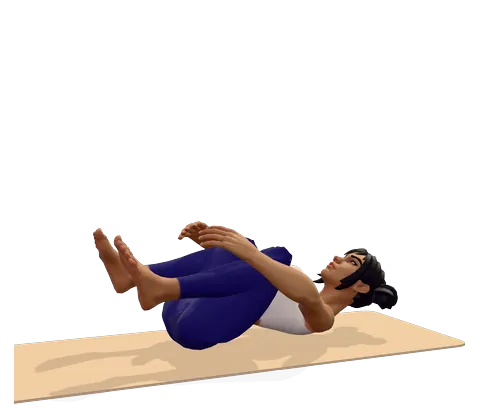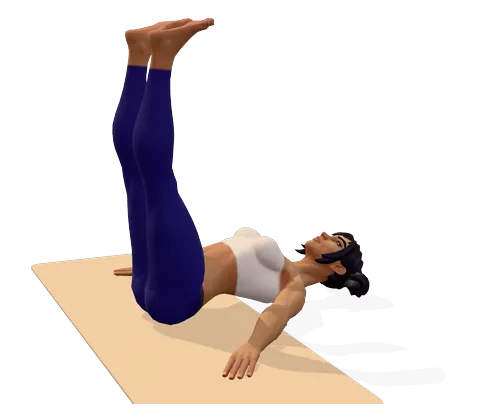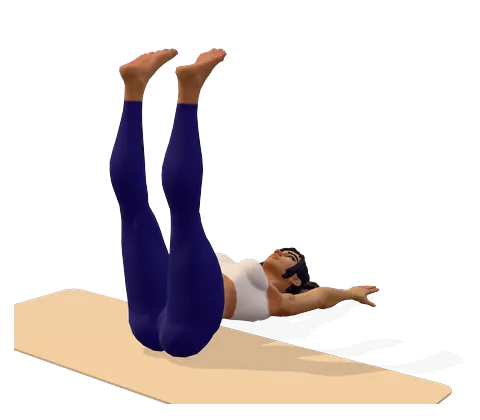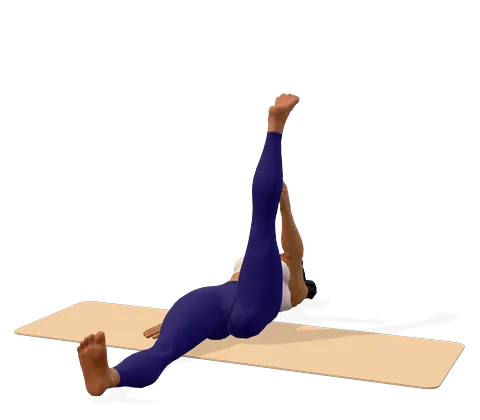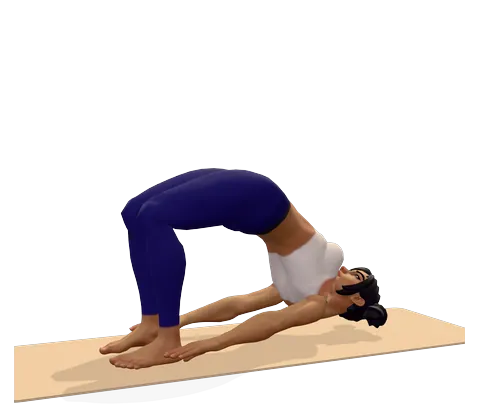
How to do Bridge Pose step by step
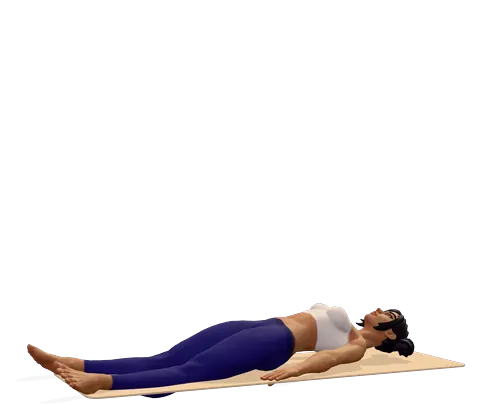
- Lie on your back with your knees bent and your feet flat on the mat, hip-width apart. Walk your heels in until your fingertips can just brush them.
- Rest your arms beside your body, palms down. Keep your head still and look straight up — do not turn it while your hips are lifted.
- Press your feet and upper arms into the floor. Breathing in, lift your hips, peeling your spine off the mat from the tailbone upward.
- Keep your knees in line with your hips and ankles. A block held gently between the thighs stops the knees from falling apart.
- Roll your shoulders under a little so your chest lifts toward your chin. If it feels easy, interlace your hands under your back.
- Hold for 5–8 breaths (about 30 seconds). Keep your weight on your shoulders and feet, never on your neck.
- Breathing out, release your hands and lower your spine slowly, one section at a time, until your hips rest. Hug your knees to your chest for a few breaths.
Where you feel Bridge Pose: what it stretches and strengthens
Press through your feet and lift your hips. In the 3D guide, turn on Body guide: areas that stretch glow green and areas that work glow saffron.
Stretches
- Hip flexors
- Chest
- Front thighs
Strengthens
- Glutes
- Hamstrings
- Lower back
Benefits and precautions
Benefits
- Strengthens the glutes, hamstrings and the muscles along the spine
- Stretches the hip flexors, chest and front of the shoulders
- A gentle backbend that counters long hours of sitting and slouching
- Used in yoga programmes for low back pain and knee osteoarthritis
- A mild inversion that many people find calming at the end of a practice
- Prepares the body for wheel pose and shoulder stand
Avoid or modify if
- Neck injury or neck pain — keep the lift low and never turn your head while in the pose
- Pregnancy after the first trimester — avoid long holds lying flat; ask your midwife and keep it short or supported
- Recent back, knee or abdominal surgery — wait until your surgeon or physiotherapist clears you
- Uncontrolled high blood pressure or glaucoma — keep the hips low and never hold your breath
- Stop if you feel pinching in the lower back (lower your hips) or a hamstring cramp (walk your feet closer)
Bridge pose (Setu Bandhasana) is a gentle backbend done lying on your back: your feet stay on the floor, your hips rise, and your body makes an arch like a small bridge. It builds strength in the hips and the backs of the legs, opens the chest, and is one of the easiest ways for beginners to try a backbend safely. This guide explains what the name means, how to do it correctly, the benefits and muscles worked, the most useful variations, and who should take care.
What is bridge pose in yoga?
Bridge is a supine (face-up) backbend and a mild inversion, because your heart lifts higher than your head. Is bridge pose a backbend? Yes, but a moderate one: the legs lift the pelvis, so the lower back arches far less than in cobra or camel. That is why teachers use it early in a class and again near the end.
The full bridge pose Sanskrit name is Setu Bandha Sarvangasana, usually shortened to Setu Bandhasana. Setu means "bridge", bandha means "lock" or "building", sarvanga means "the whole body" and asana means "pose". So the meaning is "building a bridge with the whole body". The name links it to shoulder stand (Sarvangasana), which also rests on the shoulders. A simple pronunciation guide is SAY-too BAHN-dah-sah-nah.
How to do bridge pose correctly
The steps above take you in and out safely. These bridge pose cues help you feel the right muscles doing the work:
- Feet parallel, heels under knees. If your feet are too far away the hamstrings cramp; too close and the knees ache.
- Push through the heels. Lifting from the glutes and the backs of the thighs protects your lower back.
- Lengthen the tailbone toward the knees before you lift, so the arch spreads along the spine instead of pinching one spot.
- Keep the chin slightly away from the chest. There should be a small space under the back of your neck.
Bridge pose common mistakes and fixes
| Mistake | Fix |
|---|---|
| Knees fall out to the sides | Squeeze a block or folded towel between the thighs |
| Hips pushed too high, lower back crunches | Lower a little and lift the chest toward the chin instead |
| Turning the head to look around | Keep the gaze straight up; the neck carries no weight |
| Hamstring cramp | Walk the feet a little closer to your hips and press through the heels |
How long to hold bridge pose
Hold for 20–60 seconds, or 4–10 slow breaths. Beginners do better with 3–5 short lifts than one long hold. For bridge pose yoga breathing, lift on an inhale and lower on an exhale when moving; while holding, breathe slowly into the ribs and upper chest.
Bridge pose benefits (bridge pose ke fayde)
What are bridge exercises good for? Mostly strength behind you and openness in front of you, which is exactly what long hours of sitting take away.
Bridges for back pain
Strong glutes and back muscles share the load that otherwise falls on the lower back. Gentle bridges appear in many yoga for back pain programmes, and studies of yoga for chronic low back pain have found less pain and better function than usual care. Physiotherapists often pair the bridge with the bird dog exercise for the same reason. Keep the lift low if your back is sore.
Knees, hips and posture
Bridge strengthens the hamstrings and glutes without loading the knee joint, which is why it features in yoga for knee pain plans. It also stretches tight hip flexors and rolls the shoulders back, a useful counter to a rounded desk posture.
Setu bandha sarvangasana for thyroid
In traditional yoga the chin-toward-chest position is linked to the throat. There is no good evidence that it changes thyroid hormone levels, so keep taking your prescribed medicine; see our yoga for thyroid page for a realistic plan.
Bridge pose benefits for weight loss
Bridge works large muscles, but no single pose burns belly fat. As part of a regular routine with active flows and a healthy diet, it supports weight loss. The benefits for female and male practitioners are the same; women often like the supported version for comfort during menopause.
Muscles used in bridge pose
| Strengthens | Stretches |
|---|---|
| Gluteus maximus and hamstrings | Hip flexors and quadriceps |
| Erector spinae (muscles along the spine) | Chest and front of the shoulders |
| Inner thighs, when you squeeze a block | Back of the neck (gently) |
So what do bridges strengthen? Mainly the hips and the whole back line of the body.
Bridge pose for beginners and variations
- Supported bridge pose: lift your hips and slide a yoga block under the flat bone at the base of your spine (the sacrum), then relax onto it for 1–3 minutes. Start with the block on its lowest height. You get the benefits of a backbend with almost no effort.
- Dynamic bridge: lift on the inhale while your arms sweep overhead, lower on the exhale. Repeating it 5–8 times makes a short warm-up.
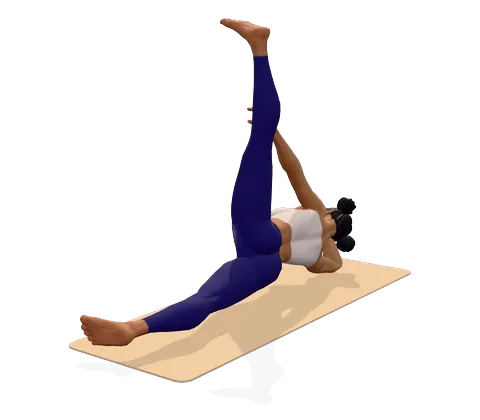
- One-legged bridge (Eka Pada Setu Bandha Sarvangasana): from the lifted pose, raise one leg straight up without letting the hips drop. A clear bridge pose progression for strength.
- Bridge on elbows: bend your arms and place your hands on your lower back, elbows on the floor, for extra support.
- Bridge pose on a chair: lie on the floor with your heels on a chair seat and lift. The hamstrings work harder.
What gymnasts call a full bridge is what yogis call wheel pose (Urdhva Dhanurasana), with hands and feet pressing the body up. Practise bridge until it is easy before moving from bridge pose to wheel pose. Children enjoy it as "make a bridge for the cars to drive under" — see yoga for kids.
Bridge pose vs glute bridge and Pilates bridge
The gym glute bridge keeps the spine neutral and focuses on the hips; the Pilates bridge rolls the spine up one bone at a time. The yoga version adds a chest opening and a longer, quieter hold. Unlike squats, all three train the glutes with no load on the knees.
Bridge pose contraindications and precautions
Read the caution box above first. With neck problems, keep the lift low and the head still. Bridge pose and high blood pressure: most people whose blood pressure is controlled can do a low, short bridge with easy breathing; if yours is not controlled, ask your doctor first. During pregnancy, many women keep a brief, low lift in the early months, but after the first trimester avoid long holds flat on your back and follow your midwife's advice.
Poses to do before and after bridge
Good prep poses: cat-cow, a low lunge to open the hip flexors, and locust to wake up the back. Afterwards, rest in knees-to-chest pose and a supine twist. You can practise the full bridge pose yoga sequence with voice guidance in the guided sessions.
सेतु बंधासन (Bridge Pose) — हिंदी में: पीठ के बल लेट जाएँ, घुटने मोड़ें और पैर ज़मीन पर कूल्हों की चौड़ाई पर रखें। हाथ शरीर के पास, हथेलियाँ नीचे। साँस लेते हुए कूल्हे ऊपर उठाएँ और 20–30 सेकंड रुकें, फिर साँस छोड़ते हुए धीरे-धीरे नीचे आएँ। इसके फायदे: कूल्हे, जाँघों के पीछे की मांसपेशियाँ और कमर मज़बूत होती है, छाती खुलती है। गर्दन में चोट हो तो सिर न घुमाएँ और सावधानी रखें।
Health conditions this pose is used for
Yoga for back pain · Yoga for knee pain and osteoarthritis · Yoga for knee replacement recovery · Yoga for sciatica · Yoga for posture and tech neck · Yoga for desk workers and sitting all day · Yoga for hip replacement recovery · Yoga for arthritis · Yoga for slip disc (herniated disc) · Yoga for spondylolisthesis · Yoga for degenerative disc disease · Yoga for scoliosis · Yoga for osteoporosis and bone health · Yoga for fibromyalgia · Yoga for chronic pain · Yoga for ankylosing spondylitis · Yoga for lupus · Yoga for height and posture · Yoga for balance and fall prevention · Yoga for diabetes · Yoga for weight loss · Yoga for low blood pressure · Yoga for thyroid · Yoga for high cholesterol · Yoga for fatty liver · Yoga for uric acid and gout · Yoga for kidney health · Yoga for kidney stones · Yoga for hormonal balance · Yoga for anemia (low hemoglobin) · Yoga for healthy weight gain · Yoga for pcos and pcod · Yoga for menopause · Yoga for fertility · Yoga for irregular periods · Yoga for endometriosis · Yoga for pms (premenstrual syndrome) · Yoga for postpartum recovery · Yoga for pelvic floor and urinary incontinence · Yoga for prostate health · Yoga for male fertility · Yoga for erectile dysfunction · Yoga for depression · Yoga for grief and loss · Yoga for bipolar disorder (complementary care) · Yoga for eating disorder recovery · Yoga for shift work and night-shift sleep · Yoga for migraine and headache · Yoga for exam stress · Yoga for epilepsy (complementary care) · Yoga for autism (children) · Yoga for ptsd and trauma · Yoga for social anxiety · Yoga for self-confidence · Yoga for burnout and exhaustion · Yoga for addiction and quitting smoking · Yoga for memory in older adults · Yoga for stroke recovery · Yoga for multiple sclerosis · Yoga for restless legs syndrome · Yoga for asthma · Yoga for copd · Yoga for bronchitis · Yoga for long covid recovery · Yoga for snoring and sleep apnea · Yoga for cold and cough · Yoga for sinusitis and allergies · Yoga for immunity · Yoga for acidity and acid reflux · Yoga for gastritis · Yoga for gallstones · Yoga for hernia (safe movement) · Yoga for piles (hemorrhoids) · Yoga for ulcerative colitis and ibd · Yoga for hair fall and hair growth · Yoga for premature grey hair · Yoga for glowing skin and acne · Yoga for dark circles · Yoga for psoriasis and eczema · Yoga for varicose veins · Yoga for cold hands and feet (circulation) · Yoga for cancer recovery (supportive care)
Where this practice is used
Chakras: Manipura (Solar Plexus Chakra) · Anahata (Heart Chakra) · Vishuddha (Throat Chakra)
Frequently asked questions
What is bridge pose good for?
Bridge pose strengthens the glutes, hamstrings and back muscles, stretches the hip flexors and chest, and counters slouching. It is used in yoga programmes for back pain and knee pain, and it prepares you for deeper backbends.
How long should I hold bridge pose?
Hold for 20–60 seconds (4–10 slow breaths). Beginners can lift and lower 3–5 times instead of holding one long bridge.
Is bridge pose safe during pregnancy?
Short, low bridges are usually fine early in pregnancy if your midwife agrees. After the first trimester, avoid lying flat on your back for long and stop if you feel dizzy or breathless.
What is the difference between bridge pose and wheel pose?
In bridge your shoulders and head stay on the floor and only the hips lift. In wheel pose you press up on hands and feet, so it needs far more back, shoulder and wrist strength.
Can bridge pose help with lower back pain?
It often helps, because it strengthens the glutes and back muscles that support the spine. Keep the lift low, stop if pain spreads down a leg, and ask a physiotherapist if you have a disc problem.
Bridge pose se kya hota hai?
Setu bandhasana (bridge pose) kamar, kulhe aur jaanghon ke peechhe ki mansapeshiyon ko mazboot karta hai aur chhati kholta hai. Gardan mein dard ho to sir bilkul na ghumayein.
This page is for general education. Check with your doctor before starting yoga if you are pregnant, have a medical condition or an injury. Stop if you feel pain, dizziness or shortness of breath.