Your sleep and insomnia yoga plan
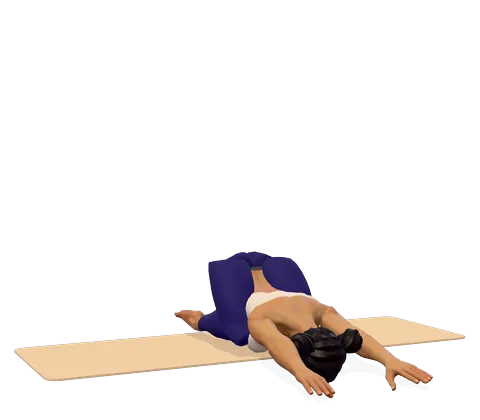 Child’s PoseBalasana
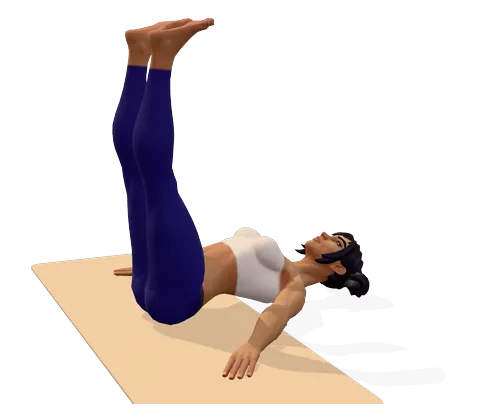 Legs-Up-the-Wall PoseViparita Karani
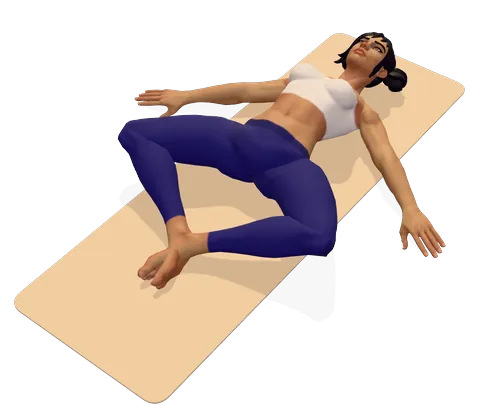 Reclining Bound Angle PoseSupta Baddha Konasana
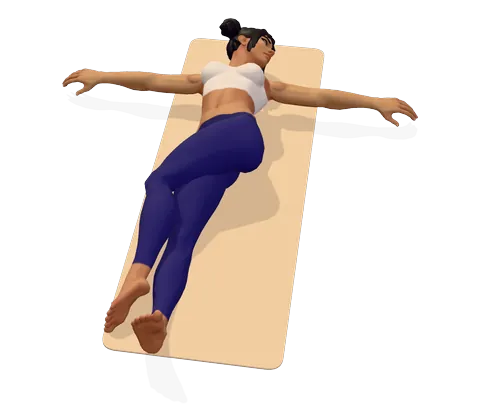 Supine Spinal TwistSupta Matsyendrasana
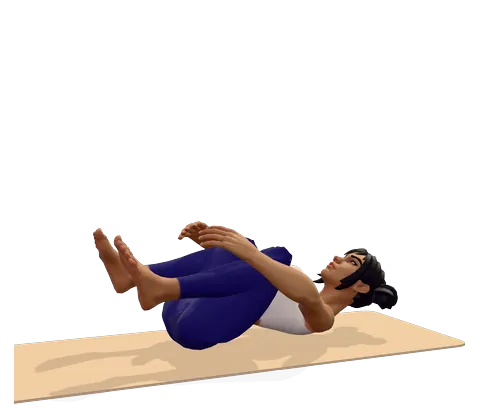 Wind-Relieving PosePavanamuktasana
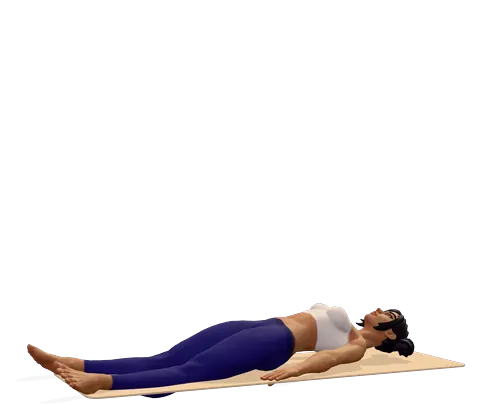 Corpse PoseSavasana
More poses that help with sleep and insomnia
Add these once the session above feels easy, or swap one in when a pose does not suit you.
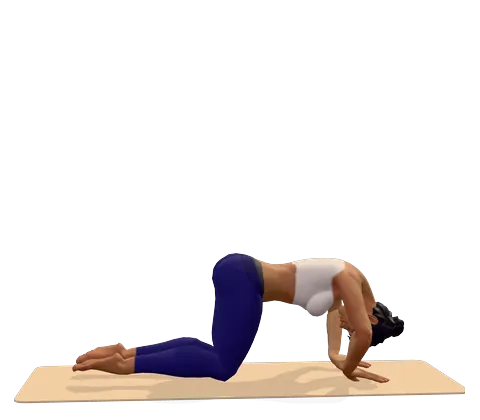 Cat PoseMarjaryasana
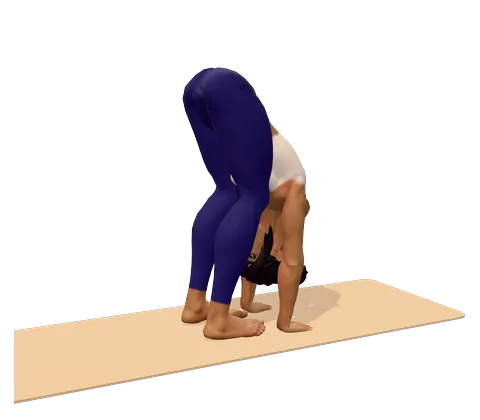 Standing Forward BendUttanasana
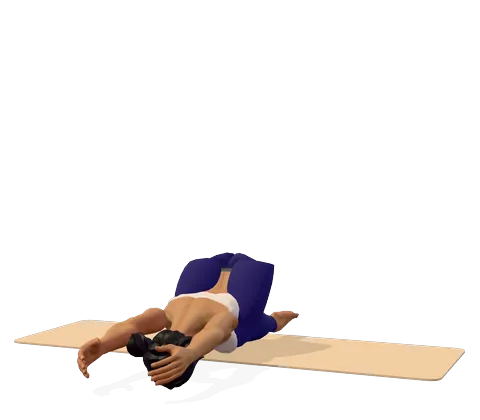 Hare PoseShashankasana
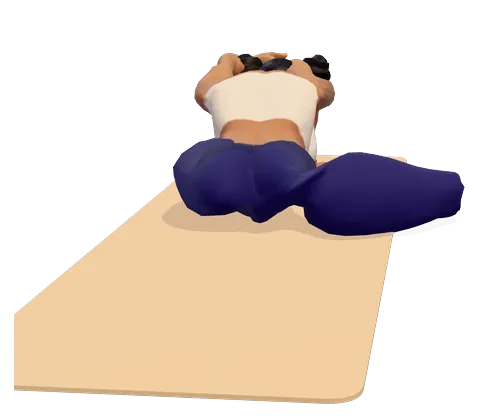 Head-to-Knee PoseJanu Sirsasana
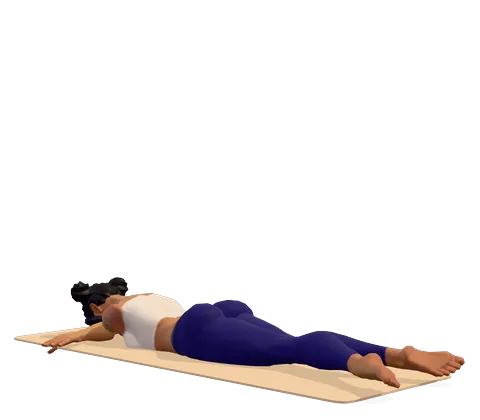 Crocodile PoseMakarasana
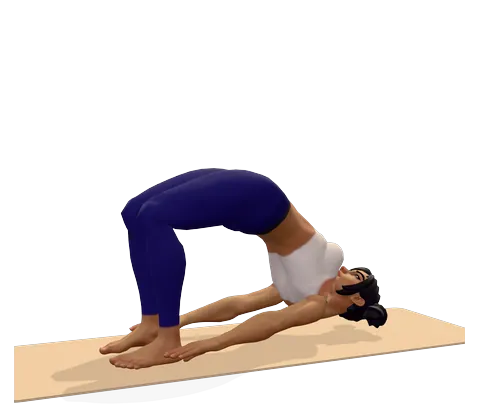 Bridge PoseSetu Bandhasana
Mudras for sleep and insomnia
Hold a mudra while you sit for the breathing practice or a few minutes of quiet. Mudras are a traditional practice; research on them is limited.
Breathing practice
Avoid
Energising backbends, fast breathing and bright screens in the hour before bed.
Moderate evidence: Randomised trials show a benefit; more research is under way.
Guided meditation for sleep and insomnia
Sleep Meditation (20 min, voice in 28 languages) · Body Scan Meditation (15 min, voice in 28 languages)
Yoga for sleep works by lowering the "alert" signals that keep you awake: a racing mind, a fast heart and tense muscles. This bedtime yoga routine uses six slow, mostly lying-down poses and a calming breath, and you can do most of it in bed. Below: why yoga may help insomnia, what the studies found, why each pose is in the plan, how to use Yoga Nidra, a weekly routine, and when poor sleep needs a doctor rather than a mat.
How does yoga help with sleep?
Two systems decide when you fall asleep. Sleep pressure builds the longer you are awake, and your body clock (circadian rhythm) opens a "sleep window" in the evening as light fades, melatonin rises and body temperature starts to drop. Insomnia often happens when a third thing gets in the way: hyperarousal. Stress hormones, worry and muscle tension keep the brain on guard even when you are tired.
Bedtime yoga targets that arousal:
- Slow breathing with a longer exhale shifts the nervous system toward "rest and digest" and slows the heart.
- Gentle, supported poses release tension in the back, hips and belly without warming you up the way exercise does.
- A fixed routine becomes a cue: after a week or two, your body starts to link these poses with sleep.
- Attention on the body gives the thinking mind something quiet to do instead of replaying the day.
This also explains why yoga makes some people sleepy: when the stress response eases, the tiredness that was already there finally shows up. Put simply, the benefits of yoga before bed come from calming arousal, not from tiring you out, and many people find yoga before sleep benefits them most on stressful days — yoga for sleep and stress relief overlap.
Does yoga help with sleep? What the research says
Randomised trials suggest it does. A 2020 meta-analysis of 19 randomised trials with 1,832 women with sleep problems found that yoga improved sleep quality compared with control groups, with no serious side effects reported. The effect was smaller in some groups, such as women with breast cancer or around menopause.
In a 2021 randomised trial in adults with long-term trouble falling asleep, eight weeks of daily Kundalini yoga improved sleep onset time, total sleep time and sleep efficiency more than sleep-hygiene education, and the gains held at six months. A small randomised trial from India found that Yoga Nidra improved sleep in people with chronic insomnia, with results comparable to cognitive behavioural therapy for insomnia (CBT-I) on several sleep-diary measures. A recent network meta-analysis of exercise for insomnia ranked yoga among the most effective options, though the certainty of most findings was low.
So yoga practice for insomnia is a reasonable, low-risk step, and yoga for insomnia and anxiety together makes sense because the two often feed each other. It is not yet proven to replace CBT-I, which remains the recommended first treatment for chronic insomnia.
Best yoga poses for sleep, pose by pose
Each of these yoga poses for insomnia is slow, low and cooling rather than energising. Used as yoga poses for insomnia treatment, they support, not replace, what your doctor recommends. Hold each for 1–3 minutes if you like; the guided session keeps it shorter.
Child's pose (Balasana)
Child's pose starts the routine by turning your attention inward and slowing the breath against your thighs. Modify: in bed, kneel on the mattress and rest your chest on a pillow. With knee pain, skip to the lying poses.
Legs up the wall (Viparita Karani)
Legs up the wall is often called the best yoga position to fall asleep afterwards. Tired legs rest, and the body feels heavy. Modify: in bed, rest your legs on the headboard or on a stack of pillows. Avoid it with glaucoma or in later pregnancy.
Reclining bound angle (Supta Baddha Konasana)
Reclining bound angle gently opens the hips and lets the belly soften. Modify: support each knee with a pillow so nothing strains; this is a perfect pose for yoga in bed for sleep.
Supine spinal twist (Supta Matsyendrasana)
Supine spinal twist releases the lower back after a day of sitting. Modify: keep the twist small, with a pillow between or under your knees. Go gently if you have a disc problem.
Wind-relieving pose (Pavanamuktasana)
Wind-relieving pose — hugging your knees — calms the lower back and can ease a bloated belly after dinner. Modify: hug one knee at a time. Avoid pressing hard on the belly after abdominal surgery or in pregnancy.
Corpse pose (Savasana)
Corpse pose — the classic "sleeping yoga" name people search for — is where you let go completely. In bed, simply stay here and let sleep come. Modify: lie on your side if lying flat is uncomfortable.
Breathing and Yoga Nidra for sleep
Chandra Bhedana (left-nostril breathing) is traditionally used as a cooling, calming breath before bed; skip it if you have low blood pressure. Bhramari (humming bee breath) lengthens the exhale with a soft hum and suits yoga for sleep and anxiety. 4-7-8 breathing is another popular choice; start with four rounds. Use the breathing timer with its light turned low.
These yoga techniques for sleep work best together: pose, breath, then deep rest. What is Yoga Nidra for sleep? It means "yogic sleep": you lie still while a voice guides your attention around the body and breath, which makes it one of the most useful relaxation exercises for insomnia. Yoga Nidra for sleep benefits include deep rest even if you do not fall asleep. Among Yoga Nidra for insomnia benefits, the small trial above found improvements in deeper sleep stages, so Yoga Nidra for insomnia and deep sleep is worth trying. Our guided Yoga Nidra runs 10, 20 or 30 minutes; the 10-minute version works well in bed.
A bedtime yoga routine for the week
Consistency trains your body clock, so this night time yoga for sleep repeats the same few yoga moves for sleep every evening. Keep the same bedtime and practise in dim light.
| Day | Evening practice (20–30 min before bed) | Time |
|---|---|---|
| Monday | Guided session on this page + Chandra Bhedana | 12 min |
| Tuesday | Legs up the wall, supine twist, then 4-7-8 breathing in bed | 10 min |
| Wednesday | Guided session + Bhramari | 12 min |
| Thursday | Yoga Nidra (10 min) in bed | 10 min |
| Friday | Guided session with longer holds | 15 min |
| Saturday | Bedtime yoga stretches in bed: knees to chest, twist, reclining bound angle | 8 min |
| Sunday | Yoga Nidra (20 min), then lights out | 20 min |
Can we sleep after yoga? Yes — after a gentle routine like this you can go straight to sleep. After a vigorous class, allow one to two hours, because strong exercise raises your temperature and alertness. Keep power yoga and energising backbends for the morning; our morning yoga page has ideas.
How to combat insomnia beyond yoga
How to fix insomnia usually means combining several habits. These support any yoga for better sleep at night:
- Get up at the same time every day, even after a bad night.
- Get daylight in the morning and dim lights and screens in the last hour.
- If you are awake for what feels like 20 minutes, get up, do something calm in low light, and return when sleepy.
- Cut caffeine after midday and avoid alcohol as a sleep aid.
- Ask about CBT-I, the recommended treatment for chronic insomnia, if the problem lasts.
For beginners, seniors and kids
Beginners: bedtime yoga for beginners needs no flexibility, and yoga for sleep for beginners can use the same yoga positions for sleep shown in the plan. If short on time, do yoga for sleep in 5 minutes: legs up the wall, then humming breath lying down. There is no trick to sleep fast; the aim is to relax and let sleep come. See yoga for beginners.
Seniors: yoga for age-related insomnia and yoga for sleep for seniors over 70 can be done entirely in bed or as chair yoga for insomnia: seated breathing, gentle neck and shoulder rolls, then lie down. Get up slowly to avoid dizziness.
Kids: yoga for sleep for kids works as a calm ritual. Bedtime yoga for kids can be child's pose, "butterfly" lying down, and three bee-breath hums. Keep it to 5 minutes and skip breath holds. More ideas in yoga for kids.
Yoga for sleep apnea and other sleep disorders
Yoga for sleeping problems such as mild insomnia or sleeplessness is a good first step, but sleeping problems treatment with yoga alone is not enough for true sleep disorders. Yoga for sleep apnea is not a treatment. Obstructive sleep apnea — loud snoring, pauses in breathing, gasping, and daytime sleepiness — needs a proper diagnosis and treatment such as a CPAP machine, because it affects the heart and blood pressure. Yoga can be part of an active lifestyle alongside that care. The same applies to other sleep disorders such as restless legs.
See a doctor if: you snore loudly or someone sees you stop breathing in sleep; you are so sleepy in the day that you nod off while driving; insomnia lasts more than three months; or poor sleep comes with low mood, anxiety or thoughts of self-harm (contact your local emergency number or a crisis line straight away). Keep taking prescribed sleep or other medicines until your doctor advises otherwise. Yoga for sleep side effects are rare; stop any pose that causes pain, dizziness or reflux.
नींद के लिए योग (neend ke liye yoga — yoga for insomnia and better sleep in Hindi): सोने से 20–30 मिनट पहले रोशनी कम करें और मोबाइल दूर रखें। बालासन, दीवार पर पैर रखकर लेटना (विपरीत करणी), सुप्त बद्ध कोणासन, लेटकर मरोड़ और शवासन करें — ये बिस्तर पर भी हो सकते हैं। चंद्र भेदन या भ्रामरी प्राणायाम से मन शांत होता है, और योग निद्रा गहरी नींद में मदद कर सकती है। तीन महीने से ज़्यादा अनिद्रा या ज़ोर से खर्राटे हों तो डॉक्टर से मिलें।
Tonight: dim the lights and start the guided 3D bedtime session at the top of this page. The voice guides you in your language, the screen stays awake, and the ring on the mat helps you slow your breath.
Research behind this plan
- Wang 2020, BMC Psychiatry — meta-analysis of 19 randomised trials (1,832 women): yoga improved sleep quality in women with sleep problems, with no serious adverse events
- Khalsa and Goldstein 2021, Journal of Clinical Sleep Medicine — randomised trial: 8 weeks of Kundalini yoga improved sleep onset, total sleep time and sleep efficiency more than sleep hygiene
- Datta 2021, National Medical Journal of India — randomised trial in chronic insomnia: Yoga Nidra improved sleep, comparable to CBT-I on several measures
- Bu 2026, BMJ Evidence-Based Medicine — network meta-analysis of 22 trials in insomnia: yoga, Tai Chi and walking were among the most effective exercise options (mostly low-certainty evidence)
- NCCIH (US National Institutes of Health) — Yoga: what you need to know, including studies on sleep
Frequently asked questions
Which yoga is best for sleep?
Slow, restorative yoga and Yoga Nidra are best for sleep. Poses such as child's pose, legs up the wall, reclining bound angle, a supine twist and corpse pose calm the body without energising it.
Does yoga help with insomnia?
Randomised trials suggest yoga can improve sleep quality and help people fall asleep faster. It works best as a regular evening routine and alongside CBT-I, the recommended treatment for chronic insomnia.
Can I do bedtime yoga in bed?
Yes. Reclining bound angle, knees to chest, a supine twist, legs up the headboard and corpse pose all work on a mattress. Use pillows for support.
Can we sleep right after yoga?
After a gentle bedtime routine, yes. After a strong, sweaty class, wait one to two hours, because vigorous exercise can keep you alert.
What is Yoga Nidra and does it help sleep?
Yoga Nidra ("yogic sleep") is guided relaxation lying down. Small studies suggest it can improve sleep in people with insomnia, and it gives deep rest even if you stay awake.
Why does yoga make me sleepy?
Slow breathing and relaxation switch the nervous system toward rest. If you were already short of sleep, that tiredness shows up once the stress eases.
Can yoga help sleep apnea?
No, not as a treatment. Sleep apnea needs a medical diagnosis and treatment such as CPAP. Yoga can support general health alongside that care.
How long before bed should I do yoga?
Start 20–30 minutes before your usual bedtime, in dim light, and go to bed as soon as you finish. Bedtime yoga helps you sleep best when it is the last thing you do.
Is yoga for good sleep better than sleeping pills?
They do different jobs. Yoga for sound sleep builds calm habits with few side effects, while some medicines help in the short term. Do not stop or change prescribed medicines on your own; ask your doctor about combining yoga, CBT-I and medicine for sleeping better.
Medical note: yoga supports treatment; it does not replace it. Keep taking prescribed medicine and talk to your doctor before you start, especially with heart disease, uncontrolled blood pressure, recent surgery, pregnancy, epilepsy or severe pain. Read our medical disclaimer.