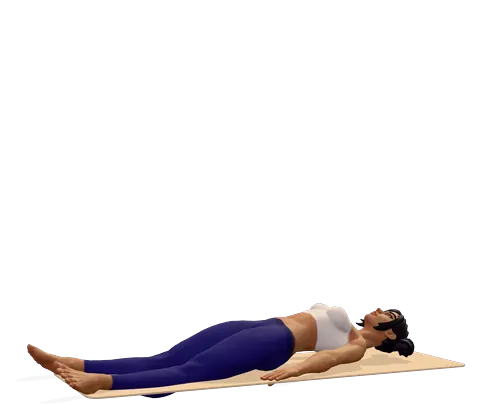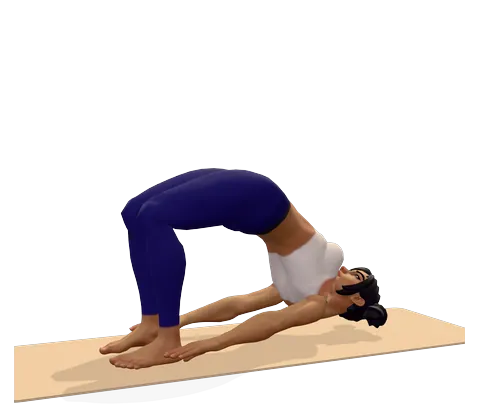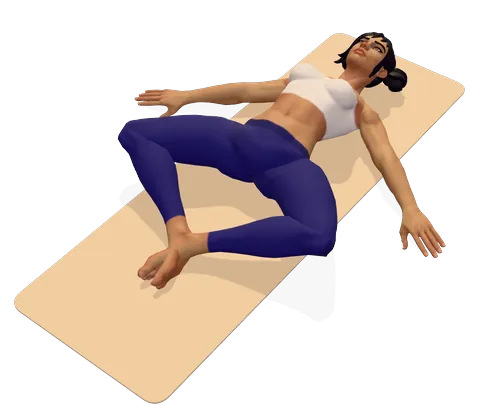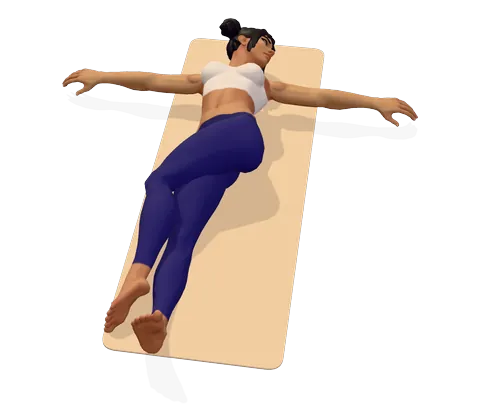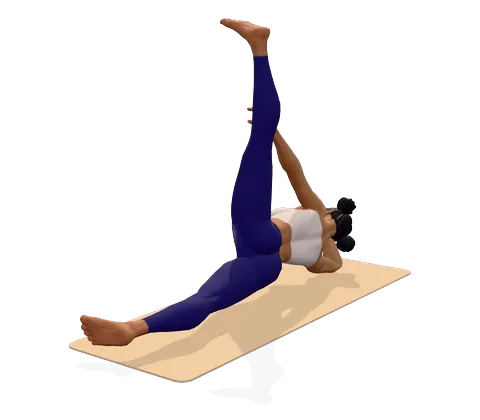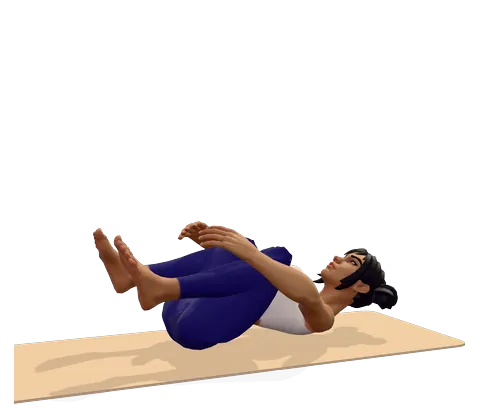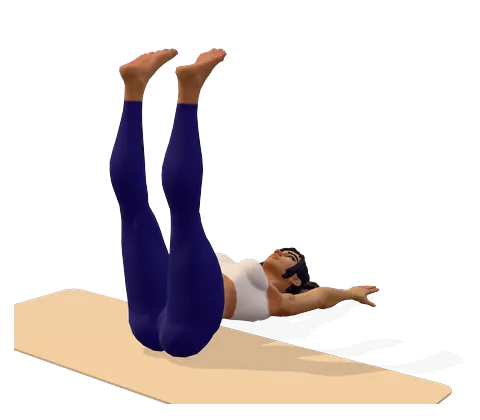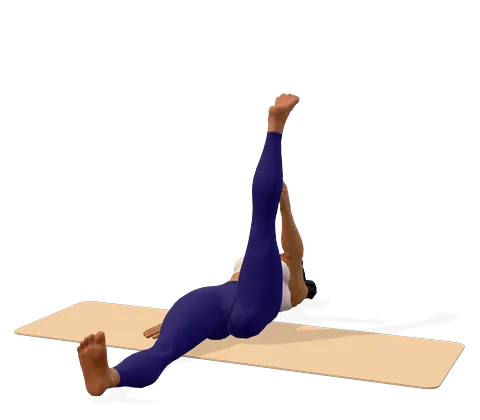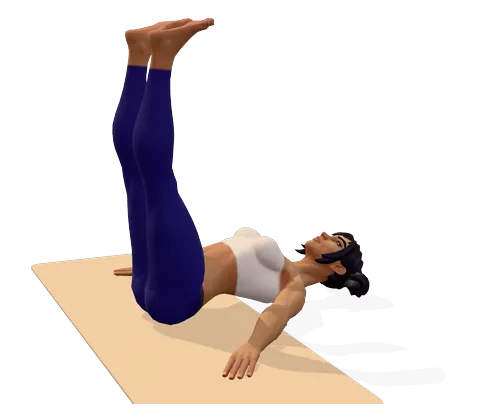
How to do Legs-Up-the-Wall Pose step by step
- Sit sideways on the floor with one hip touching a wall and your knees bent. Keep a folded blanket nearby if you want support under your hips.
- Lean back onto your forearms, then swing your legs up the wall as you lower your back and head to the floor.
- Shuffle your hips as close to the wall as feels comfortable. With tight hamstrings, stay further away and let your knees bend a little.
- Rest your legs against the wall, hip-width apart, feet relaxed. Keep your head and shoulders flat on the floor.
- Rest your arms out to the sides, palms up, or place your hands on your belly.
- Close your eyes and breathe slowly for 3–10 minutes.
- To come out, bend your knees, roll onto your right side and rest for a few breaths before pressing yourself up slowly.
Where you feel Legs-Up-the-Wall Pose: what it stretches and strengthens
Rest your legs up and let your belly soften. In the 3D guide, turn on Body guide: areas that stretch glow green and areas that work glow saffron.
Stretches
- Hamstrings
- Lower back
Benefits and precautions
Benefits
- Raising the legs above the heart helps fluid drain from tired, heavy legs and feet
- Slows the breath and helps many people unwind before sleep
- Gently stretches the hamstrings and backs of the legs
- Rests the lower back, especially with a blanket under the hips
- Used in yoga programmes for stress, anxiety, sleep and menopause symptoms
- Easy enough for beginners and older adults
Avoid or modify if
- Glaucoma, retinal problems, uncontrolled high blood pressure or heart disease — ask your doctor before any inversion, even this gentle one
- Pregnancy — lying flat on your back can cause dizziness after the first trimester; rest on your side instead or ask your midwife
- A known blood clot (DVT) or serious vein disease — check with your doctor first
- During a migraine attack — skip inversions and practise only between attacks
- Acid reflux or hiatus hernia — practise on an empty stomach and keep the hips low
- Pins and needles or numb feet — bend your knees or come down
Legs-up-the-wall pose (Viparita Karani) is the easiest inversion in yoga: you lie on your back with your hips near a wall and your legs resting up it. There is nothing to balance and almost nothing to hold, which makes Viparita Karani ideal for beginners and is why it is a favourite at the end of a class, after a long day on your feet, and before bed. This guide explains the name, how to set it up, how long to stay, what it may help with, its side effects and who should skip it.
What is legs-up-the-wall pose?
The Sanskrit name of the legs-up-the-wall yoga pose is Viparita Karani: viparita means "inverted" or "reversed" and karani means "doing" or "action", so Viparita Karani is "the inverted action". In the old Hatha Yoga texts it was a mudra rather than a pose: the hips were lifted and supported so the body was turned upside down, rather like a half shoulder stand. Today "viparita karani mudra" still refers to that classical version, while most classes use Viparita Karani as the asana name for the relaxed legs-up-the-wall pose.
Viparita Karani and Sarvangasana
In shoulder stand (Sarvangasana) your body weight rests on your shoulders and the neck is strongly bent. In legs-up-the-wall, the whole back lies on the floor and the neck stays neutral, so it has none of those risks. Is legs up the wall a yin yoga pose? It is used in yin classes, but it belongs more to restorative yoga: fully supported and held for several minutes.
How to do legs-up-the-wall pose
The steps above get you in and out. Getting into this legs-up-the-wall yoga pose takes beginners a try or two — sitting sideways first is the trick. These legs-up-the-wall pose cues and props make it more comfortable:
- Supported legs-up-the-wall pose: a folded blanket or low bolster under the hips lifts the pelvis slightly and eases the lower back. As a yoga pose for lower back pain, it is restful rather than corrective.
- A strap around the thighs lets the legs rest without effort.
- Legs up the wall pose without a wall: rest your calves on a chair seat or sofa, or lie on your bed with your legs against the headboard. You can also hold the legs up freely, as the 3D figure does, but that takes more effort. A chair is the easiest legs-up-the-wall pose alternative if getting down to the floor is hard.
How long to do legs-up-the-wall
Beginners can start with 3–5 minutes. Most people find 5–15 minutes ideal, and legs up the wall pose for 15 minutes or longer is fine if your legs do not go numb. When should you do legs up the wall? Evenings and bedtime are the most popular time to do legs-up-the-wall pose, and it feels good after running, a flight or a long shift standing. After eating, wait one to two hours; right after dinner the pose can bring on reflux.
Legs-up-the-wall pose benefits
What does legs up the wall pose do? The health benefits of the legs-up-the-wall yoga pose come from two things: gravity helps fluid flow back from the legs, and lying still with slow breathing calms the body.
Tired legs and varicose veins
What does putting your legs up the wall do for the legs? It raises them above the heart, a standard self-care tip for heavy, swollen legs. The health benefits of raising, elevating or simply holding your legs up on a wall are mostly about circulation and comfort. Used for varicose veins, the pose can ease aching and heaviness for a while, but it does not remove the veins; see our yoga for varicose veins page and follow your doctor's advice on compression and treatment.
Sleep, stress and anxiety
Many people use legs up the wall pose for sleep, stress and anxiety because it is simple, still and warm. Viparita Karani breathing techniques are simple too: a longer exhale or soft Ujjayi breathing deepens the effect. It is part of our plans for better sleep and anxiety.
Benefits for women
Women often use legs-up-the-wall pose during periods, when stronger inversions feel wrong. Its benefits for PCOS and menopause are mainly relaxation and better sleep. You may also read about legs up the wall pose benefits for conceiving, or advice to do it after embryo transfer. There is no good evidence that it improves the chance of pregnancy; it may help you relax during a stressful time, so follow your fertility clinic's advice. Our yoga for fertility page explains what yoga can and cannot do.
Face and weight loss claims
Your face may look flushed for a few minutes after coming down, but there is no evidence of lasting legs-up-the-wall pose benefits for the face or skin. The pose burns very few calories, so it does not cause weight loss on its own. The legs-up-the-wall pose benefits for men and women are the same: rest, recovery and lighter legs.
Legs-up-the-wall pose side effects
Like its benefits, the side effects of Viparita Karani are mild:
- Pins and needles in the feet or legs: bend your knees, move your hips away from the wall, or come down.
- Dizziness when getting up: roll to your side and sit up slowly.
- Pressure in the head or face: lower the hips (remove the blanket) or shorten the hold.
- Pulling behind the knees or sciatic-type pain: move further from the wall and bend the knees. With sciatica, keep the stretch mild.
Viparita Karani variations
These legs-up-the-wall yoga pose variations change the stretch. In every version, the legs up the wall pose stretch on the hamstrings grows as you move your hips closer to the wall.
- Butterfly legs: bring the soles together and let the knees open down the wall for a hip stretch.
- Wide legs: let the legs slide apart into a V to stretch the inner thighs.
- Classical Viparita Karani: lift the hips onto a block or support them with your hands, legs overhead. This is a stronger inversion, so the precautions above matter more.
Viparita Karani precautions
Even a gentle inversion raises pressure in the head a little. Skip it or ask your doctor if you have glaucoma, uncontrolled high blood pressure or heart disease, and avoid it during a migraine attack. What about pregnancy? In the first trimester it is usually comfortable; later, lying flat on your back can make you dizzy, so rest on your side and ask your midwife.
Where it fits in a sequence
In a Viparita Karani yoga sequence, the pose usually comes near the end: after backbends, twists and forward bends, and before final relaxation. You can follow it with voice guidance in the bedtime and stress sessions in guided practice.
विपरीत करणी — legs up the wall pose benefits in Hindi: दीवार के पास पीठ के बल लेटें और दोनों पैर दीवार पर ऊपर टिका दें। हाथ दोनों तरफ़ ढीले रखें और 5–10 मिनट धीमी साँस लें। इसके फायदे: थके और भारी पैरों को आराम, मन शांत होता है और नींद अच्छी आने में मदद मिलती है। ग्लूकोमा, अनियंत्रित हाई बीपी या हृदय रोग हो तो डॉक्टर से पूछें; गर्भावस्था के बाद के महीनों में पीठ के बल देर तक न लेटें।
Health conditions this pose is used for
Yoga for low blood pressure · Yoga for thyroid · Yoga for menopause · Yoga for fertility · Yoga for anxiety · Yoga for stress relief · Yoga for sleep and insomnia · Yoga for jet lag and travel fatigue · Yoga for shift work and night-shift sleep · Yoga for migraine and headache · Yoga for burnout and exhaustion · Yoga for restless legs syndrome · Yoga for chronic fatigue syndrome · Yoga for varicose veins
Where this practice is used
Chakras: Vishuddha (Throat Chakra) · Sahasrara (Crown Chakra)
Frequently asked questions
How long should you do legs up the wall?
Start with 3–5 minutes. Most people stay 5–15 minutes; come down sooner if your feet tingle or go numb.
What are the benefits of legs up the wall pose?
It helps tired, heavy legs drain, slows the breath and calms the body, gently stretches the hamstrings and rests the lower back. Many people use it to wind down before sleep.
When should you do legs up the wall — morning or night?
Either, but evening is most popular because it is so relaxing. It also helps after running, travel or long hours standing. Avoid it straight after a meal.
Is legs up the wall pose safe during pregnancy?
It is usually fine in early pregnancy. After the first trimester, lying flat on your back can cause dizziness, so rest on your side and ask your midwife.
Can I do Viparita Karani during my period?
Many women find the gentle wall version comfortable during their period. Some traditions avoid all inversions then; do what feels right for your body.
Does legs up the wall help you get pregnant?
There is no good evidence that it improves fertility or implantation. It can help you relax, but follow your doctor's or clinic's advice after embryo transfer.
Why do my legs tingle in legs up the wall?
Blood flow to the feet drops a little when they are raised. Bend your knees, move your hips away from the wall, or come down and rest.
This page is for general education. Check with your doctor before starting yoga if you are pregnant, have a medical condition or an injury. Stop if you feel pain, dizziness or shortness of breath.