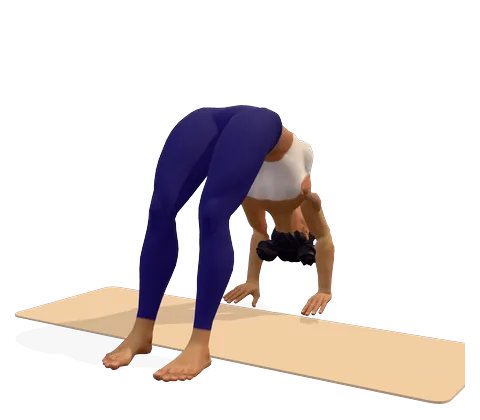
How to do Wheel Pose step by step
- Warm up first with a few rounds of Surya Namaskar, low lunges and two or three bridge poses. Never start cold.
- Lie on your back with your knees bent and your feet flat on the floor, hip-width apart and parallel, heels close to your hips.
- Bend your elbows and place your palms on the floor beside your ears, fingers pointing toward your shoulders, elbows pointing up.
- Press into your feet and lift your hips into bridge. Then press into your hands and lift onto the crown of your head. Pause here and draw your elbows in.
- Breathe in, push evenly through hands and feet and straighten your arms to lift your head off the floor. Let your head hang between your arms.
- Keep your knees and feet parallel and your thighs rolling slightly inward. Hold for 3–5 breaths (about 10–20 seconds).
- To come down, tuck your chin, bend your elbows and knees, and lower slowly onto the back of your shoulders, then your spine. Rest with knees hugged or in a gentle twist.
Where you feel Wheel Pose: what it stretches and strengthens
Push through hands and feet to lift into a full arch. In the 3D guide, turn on Body guide: areas that stretch glow green and areas that work glow saffron.
Stretches
- Chest
- Hip flexors
- Shoulders
Strengthens
- Arms
- Glutes
- Lower back
Benefits and precautions
Benefits
- Stretches the chest, shoulders, abdomen and hip flexors deeply
- Strengthens the arms, wrists, shoulders, legs, buttocks and back muscles
- Builds shoulder and spine mobility for other advanced backbends
- An energising pose that many people find uplifting and wakes the body up
- A clear marker of progress in flexibility and strength over time
Avoid or modify if
- Back injury, disc problems, spondylolisthesis or spinal stenosis — do not practise wheel pose
- Pregnancy — skip it entirely
- High blood pressure, heart disease, glaucoma or recent eye surgery, as the head goes below the heart
- Wrist, shoulder or neck injury, or carpal tunnel syndrome
- Not for beginners or a cold body — only after a thorough warm-up and when bridge pose feels easy
- Stop at once if you feel pinching in the lower back, dizziness or pain in the wrists or shoulders
Wheel pose (Urdhva Dhanurasana) is a full backbend: from lying on your back you press up onto your hands and feet until your body forms a high arch, like a wheel or a drawn bow. It opens the chest and shoulders and strengthens the arms and legs, but it asks a lot of the spine, wrists and shoulders. This guide covers how to prepare, how to do wheel pose step by step, the muscles worked, safer variations and who should not practise it.
What is wheel pose in yoga?
What is wheel pose in Sanskrit? Urdhva means "upward", dhanura means "bow" and asana means "pose", so Urdhva Dhanurasana is the "upward bow". Many schools, especially in India, call it Chakrasana, from chakra, "wheel". In Hindi, Chakrasana is written चक्रासन. Full wheel, upward bow and Chakrasana all describe the same shape.
Two similar names cause confusion. The Ardha Chakrasana meaning is "half wheel": it usually refers to a standing backbend with the hands supporting the lower back. Kati Chakrasana is a gentle standing waist twist. Neither is the full wheel described here.
Is wheel pose advanced?
Yes. How difficult is the wheel pose? It needs open shoulders, open hip flexors, strong arms and a supple upper back all at once. Most people need months of regular backbend practice. It is not a beginner pose, and you should be comfortable in bridge, bow and camel before you try it.
Is wheel pose an inversion? Your head goes below your heart, so many teachers treat it as a mild inversion. That matters if you have high blood pressure or eye problems.
Wheel pose prep: warm up first
Never try wheel pose with a cold body. A short, focused warm-up of 10–15 minutes makes it both safer and easier:
- Two or three rounds of Surya Namaskar to warm the whole body.
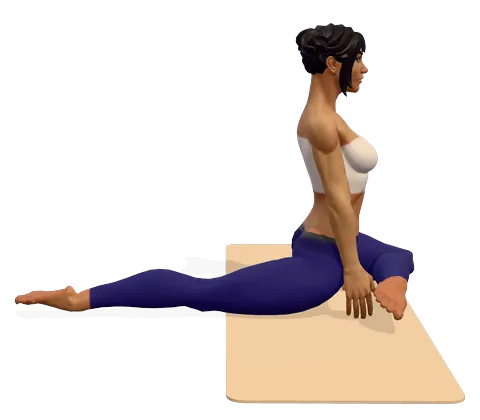
- Low lunge on each side to open the hip flexors.
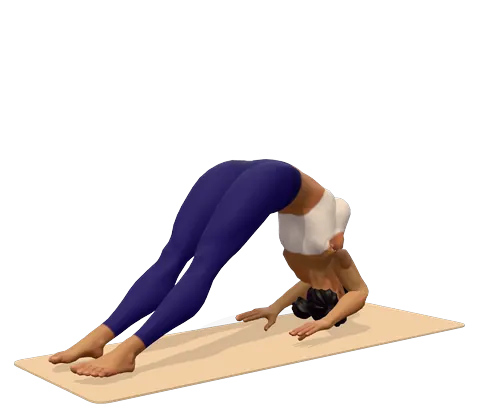
- Shoulder openers: arms overhead against a wall, or puppy pose.
- Two or three bridge poses, lifting a little higher each time.
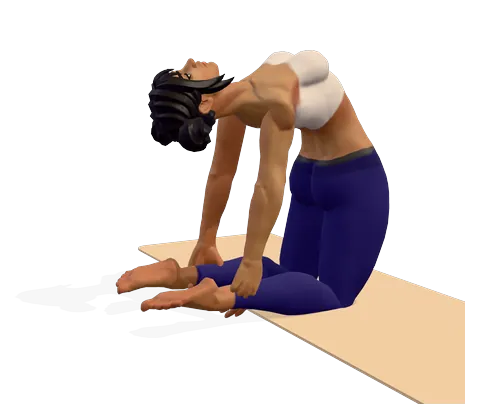
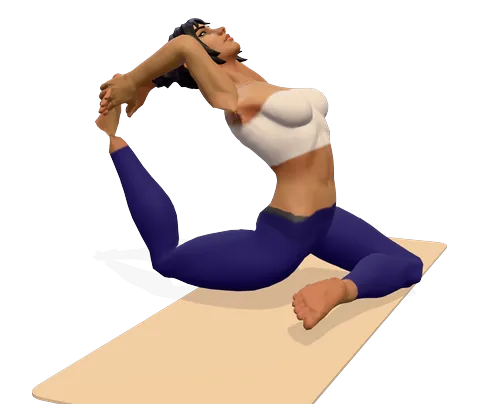
- One camel or bow pose to warm the upper back.
How to do wheel pose step by step
The Urdhva Dhanurasana steps above lift you in two stages: first onto the crown of the head, then to straight arms. The pause on the head lets you set your elbows. Do not put much weight on the head, and do not move the neck while it is on the floor.
Wheel pose cues and alignment
- Feet parallel. Turned-out feet and splayed knees squeeze the lower back. Some teachers put a block between the thighs to keep them in line.
- Elbows in. Keep the elbows over the wrists, not flaring out, so the shoulders stay stable.
- Spread the bend. Push the chest toward the wall behind your hands. Wheel pose shoulders should open so the bend is shared along the whole spine, not dumped into the lower back.
- Legs work, buttocks soft. Press through the feet and lengthen the thighs. Clenching the buttocks hard pinches the sacrum.
- Breathe. If you cannot breathe, come down.
Wheel pose benefits
Urdhva Dhanurasana benefits come from the depth of the stretch and the strength needed to hold it:
- Chest and shoulder opening. Few poses stretch the front of the body so fully.
- Whole-body strength. Arms, shoulders, legs and buttocks all hold you up.
- Spine mobility. Chakrasana benefits for the spine are about extension range in a healthy back; it is not a treatment for back pain and should be avoided with a back injury.
- Energy. Deep backbends are stimulating, which is why they are best done earlier in the day, not before bed.
Claims about wheel pose benefits for skin, weight loss or hormones are not backed by research. Wheel pose benefits for female and male bodies are the same; during pregnancy it should be avoided.
Wheel pose anatomy: muscles worked
| Strengthens | Stretches |
|---|---|
| Triceps, deltoids and wrist muscles | Chest (pectorals) and front of the shoulders |
| Back muscles along the spine | Abdominal muscles |
| Gluteal muscles and hamstrings | Hip flexors and front of the thighs |
| Quadriceps | Latissimus dorsi (sides of the back) |
Wheel pose yoga for beginners: progression and modifications
Urdhva Dhanurasana for beginners means building up in stages. Move to the next stage only when the current one is pain-free:
- Bridge pose held for several breaths.
- Crown of the head: lift into bridge, then onto the top of the head with the elbows set. Stay here, then come down.
- Wheel pose with blocks: put two blocks against a wall, tilted, and place your hands on them. The extra height makes straightening the arms easier.
- Wheel pose at the wall: place your hands at the base of a wall so the wall supports your fingers.
- Full wheel pose with straight arms.
If wheel pose is not right for your body, bridge pose is the best wheel pose alternative. It gives a similar chest opening with far less load on the wrists and back.
Wheel pose vs bridge
In bridge, your shoulders and head stay on the floor and only the hips lift. In wheel, your hands lift the upper body too, so the backbend is much deeper and the arms take weight. Bridge is a beginner pose; wheel is advanced.
Advanced Urdhva Dhanurasana variations
- Eka Pada Urdhva Dhanurasana: wheel pose with one leg up. From full wheel, shift your weight and lift one straight leg toward the ceiling. This is how to do one-legged wheel pose; keep the hips level.
- Forearm wheel pose: the forearms rest on the floor, as in inverted staff pose. It needs very open shoulders.
- Wheel pose with straight legs: walking the feet away to straighten the legs. Very strong on the back.
- From standing: dropping back from standing into wheel is an advanced skill. Learn it only with an experienced teacher and a spotter.
A simple wheel pose yoga sequence
Warm-up (sun salutations, lunges), bridge, camel or bow, then wheel two or three times with rest in between. Afterwards, cool down with knees to chest, a gentle supine twist and a short forward fold. Avoid jumping straight into a deep forward bend. You can build your own backbend sequence with the sequence builder.
Urdhva Dhanurasana precautions
Chakrasana pose precautions are strict. Do not practise wheel pose if you have a back injury, disc problem, spondylolisthesis or spinal stenosis; if you are pregnant; or if you have high blood pressure, heart disease or glaucoma. Wrist, shoulder or neck injuries also rule it out. With scoliosis, ask a physiotherapist first. Come down at once if you feel pinching in the lower back, dizziness or pain in the wrists.
चक्रासन (Chakrasana) — हिंदी में: यह एक कठिन आसन है; पहले सूर्य नमस्कार और सेतुबंधासन से शरीर गरम करें। पीठ के बल लेटें, घुटने मोड़ें, हथेलियाँ कानों के पास रखें। पैरों और हाथों पर ज़ोर देकर कूल्हे और छाती ऊपर उठाएँ और बाँहें सीधी करें। 10–20 सेकंड रुककर धीरे से नीचे आएँ। चक्रासन के फायदे: छाती और कंधे खुलते हैं, बाँहें, पैर और पीठ मज़बूत होते हैं। कमर की चोट, गर्भावस्था, हाई बीपी या हृदय रोग में यह आसन न करें।
Frequently asked questions
What are the benefits of wheel pose?
Wheel pose stretches the chest, shoulders, abdomen and hip flexors and strengthens the arms, legs, buttocks and back. It also builds the mobility needed for other advanced backbends.
Is wheel pose safe for beginners?
No. It is an advanced pose. Build up with bridge, bow and camel, then use blocks or a wall. Always warm up first.
How long should I hold wheel pose?
Hold for 3–5 breaths (about 10–20 seconds), rest, and repeat two or three times if it feels good.
Why does my lower back hurt in wheel pose?
Usually because the feet turn out, the knees splay or the shoulders are tight, so the bend collapses into the lower back. Keep the feet parallel, work on shoulder opening, and stop if the pain is sharp.
Who should not do Chakrasana?
Anyone with a back injury, pregnancy, high blood pressure, heart disease, glaucoma, or wrist, shoulder or neck injuries.
What is the difference between Chakrasana and Urdhva Dhanurasana?
None: they are two names for the same wheel pose. Chakrasana means wheel pose and Urdhva Dhanurasana means upward bow pose.
What is wheel pose called in Hindi?
It is called चक्रासन (Chakrasana): "chakra" means wheel and "asana" means pose. The Hindi box on this page sums up the steps and wheel pose benefits in Hindi.
This page is for general education. Check with your doctor before starting yoga if you are pregnant, have a medical condition or an injury. Stop if you feel pain, dizziness or shortness of breath.