Your anxiety yoga plan
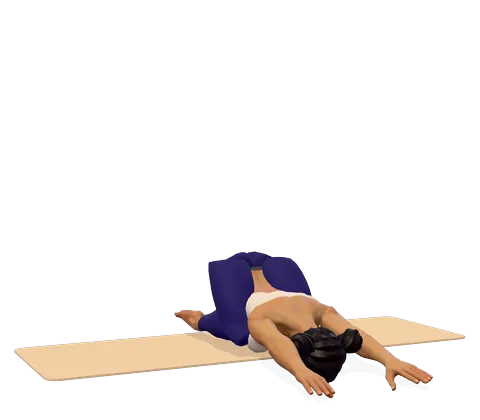 Child’s PoseBalasana
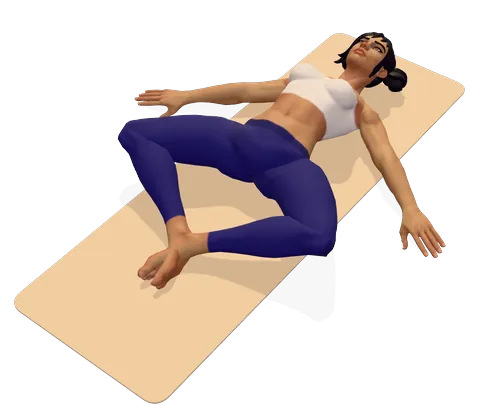 Reclining Bound Angle PoseSupta Baddha Konasana
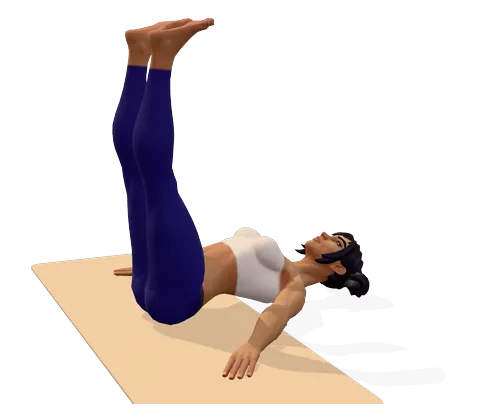 Legs-Up-the-Wall PoseViparita Karani
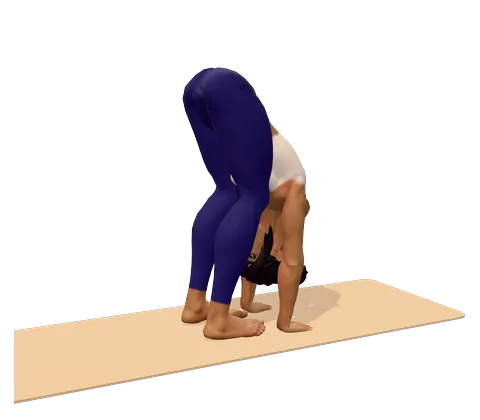 Standing Forward BendUttanasana
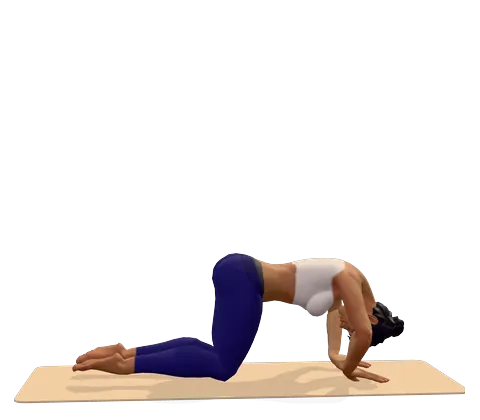 Cat PoseMarjaryasana
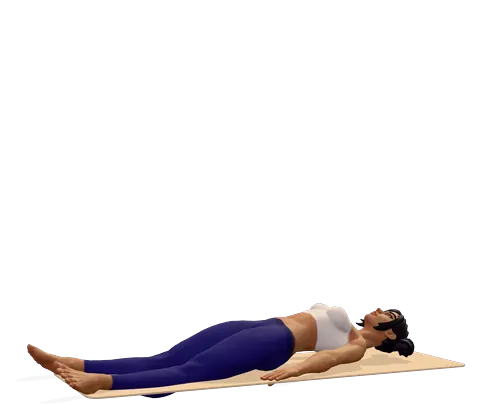 Corpse PoseSavasana
More poses that help with anxiety
Add these once the session above feels easy, or swap one in when a pose does not suit you.
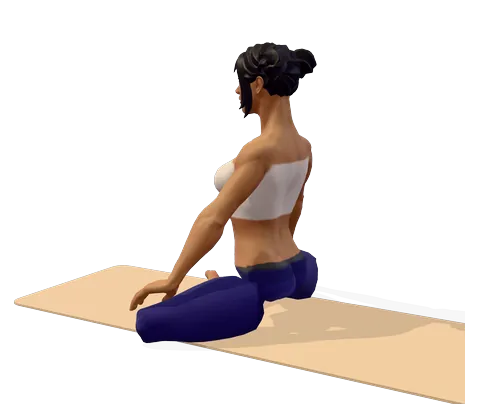 Easy PoseSukhasana
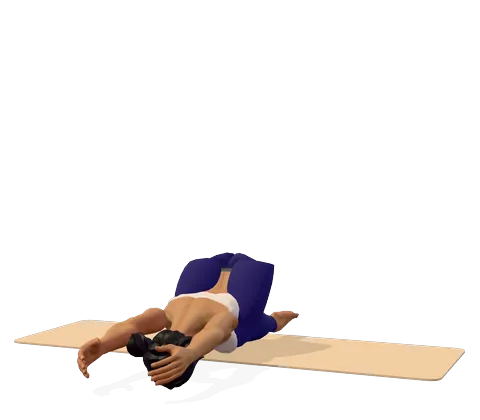 Hare PoseShashankasana
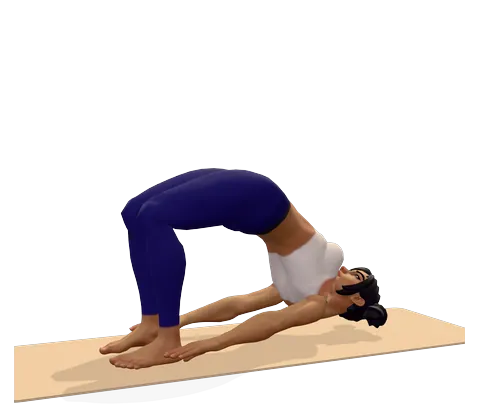 Bridge PoseSetu Bandhasana
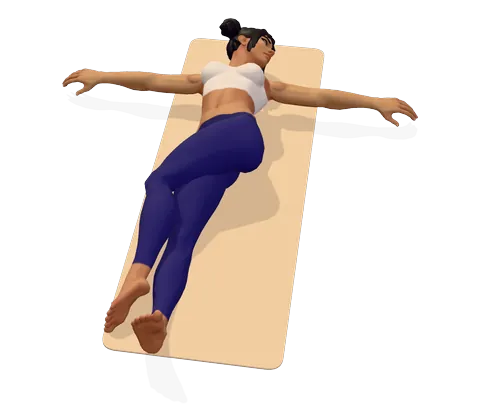 Supine Spinal TwistSupta Matsyendrasana
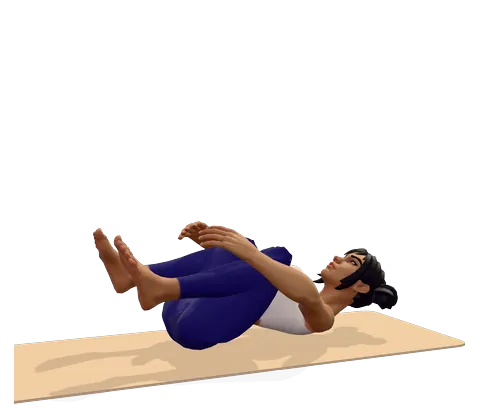 Wind-Relieving PosePavanamuktasana
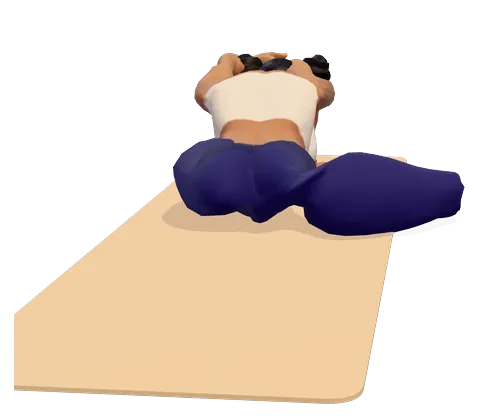 Head-to-Knee PoseJanu Sirsasana
Mudras for anxiety
Hold a mudra while you sit for the breathing practice or a few minutes of quiet. Mudras are a traditional practice; research on them is limited.
Breathing practice
Avoid
Fast breathing practices (Kapalbhati, Bhastrika) if they make you light-headed or panicky.
Moderate evidence: Randomised trials show a benefit; more research is under way.
Guided meditation for anxiety
Breath Awareness Meditation (10 min, voice in 28 languages) · Body Scan Meditation (15 min, voice in 28 languages) · Loving-Kindness Meditation (12 min, voice in 28 languages)
Yoga for anxiety works mainly through the body: slow movement, a longer out-breath and deliberate rest tell your nervous system that you are safe. Below: how that works, what the research shows, why each pose is in the plan, the best breathing for different moments, and when anxiety needs more than a mat. Yoga supports therapy or medicine; it does not replace them.
How can yoga help with anxiety?
Anxiety is partly a body state. When your brain senses a threat, the sympathetic ("fight or flight") nervous system speeds up your heart, tightens your muscles and makes your breathing fast and high. That is why yoga for stomach anxiety and somatic anxiety — the knot in the gut, the tight jaw — starts with the body rather than with thoughts. Three things matter most:
- The out-breath. Breathing out slowly and for longer than you breathe in gives more influence to the parasympathetic ("rest and digest") side of the nervous system, which slows the heart. Every breathing practice on this page lengthens the exhale.
- Steady, predictable movement. Moving with the breath gives an anxious mind something simple to follow, which is why yoga for anxiety and overthinking helps: attention has a job.
- Letting muscles release. Supported poses such as child's pose and legs up the wall let the body settle without effort. Many people notice the mind calms a little after the body does.
So what is yoga for anxiety, in practice? Not flexibility or hard work, but gentle yoga techniques for anxiety that teach you to notice tension early and bring your breathing back down.
Yoga for anxiety research: what the studies say
Does yoga reduce anxiety? Randomised trials say it can, with some honest limits. A 2018 meta-analysis of randomised trials found small short-term reductions in anxiety compared with no treatment. A larger 2023 review in the British Journal of Sports Medicine found that yoga-based programmes reduced anxiety symptoms in adults diagnosed with an anxiety disorder, but rated the certainty of the evidence as very low because many trials were small or at risk of bias.
The most useful single trial compared Kundalini yoga, cognitive behavioural therapy (CBT) and stress education in 226 adults with generalised anxiety disorder. Yoga helped more people than stress education, but it was not as effective as CBT, and the authors concluded CBT should stay first-line. That matches the NHS approach in the UK, where talking therapies such as CBT come first for an anxiety disorder and yoga is a helpful addition.
In short: yoga is good for anxiety as a regular, low-risk practice alongside proper care, but yoga cannot cure anxiety.
Best yoga poses for anxiety, pose by pose
The plan cards above show the six poses. Here is why each one is in this yoga sequence for stress and anxiety and how to adjust it.
Child's pose (Balasana)
Child's pose folds you inward, rests your forehead and lets you feel your back ribs move as you breathe. Modify: place a cushion between your heels and hips, or rest your head on stacked fists. With sore knees, lie on your back and hug your knees instead.
Reclining bound angle (Supta Baddha Konasana)
Reclining bound angle is the yoga for anxiety and opening chest pose in this plan: the chest widens while the body is fully supported, so you can feel open without feeling exposed. Modify: put pillows under each knee and a folded blanket under your head.
Legs up the wall (Viparita Karani)
Legs up the wall is deeply restful and a favourite for yoga for anxiety and sleep. Modify: move your hips a hand's width from the wall, or rest your calves on a chair seat instead. Skip it if you have glaucoma or are in later pregnancy.
Standing forward bend (Uttanasana)
Standing forward bend lets the head hang and the back of the neck soften. Modify: bend your knees generously and rest your hands on blocks or a chair. Come up slowly, head last, if you tend to feel dizzy.
Cat pose (Marjaryasana)
Cat pose, flowing with cow, links every movement to one breath. Use it when you feel too restless to lie still. Modify: pad your knees, or do it seated on a chair with your hands on your knees.
Corpse pose (Savasana)
Corpse pose is where the benefits of yoga for anxiety come together: nothing to do, just noticing the breath. Modify: if lying flat with eyes closed makes you uneasy, keep your eyes open with a soft gaze, bend your knees or lie on your side.
Breathing exercise for anxiety, step by step
Which is the best breathing exercise for anxiety? The one that lengthens your exhale without strain, because a slow exhale is the breathing exercise to reduce anxiety fastest. Try each of these calming yoga techniques for a week and keep what works. The breathing exercise timer guides every pattern below with a ring that grows and shrinks.
- Bhramari (humming bee breath): breathe in through the nose, then hum on a long out-breath. The hum naturally slows the exhale and gives a busy mind a sound to follow. Children usually love it.
- Sama Vritti (box breathing): in, hold, out, hold for equal counts. It is steadying when you feel scattered. If the holds cause air hunger, drop them and breathe in and out evenly.
- Nadi Shodhana: slow alternate-nostril breathing that asks for focus, which crowds out worry. Skip the breath hold if you have high blood pressure or heart disease.
- 4-7-8 breathing: in for 4, hold for 7, out for 8. The 4-7-8 breathing exercise for anxiety works well at bedtime; start with four rounds because it can make you light-headed.
A 5 minute breathing exercise for anxiety is enough to start. For a deep breathing exercise for anxiety, let the belly move quietly instead of forcing huge breaths.
Yoga for anxiety and panic attacks: what to do in the moment
During an anxiety attack, fast breathing can cause tingling and dizziness that make the fear worse. A simple anxiety attack breathing exercise helps: sit or stand with your feet on the floor, breathe in gently through the nose for about 4, and out through pursed lips for about 6–8, as if cooling soup. Name five things you can see. Repeat for a few minutes. Avoid breath holds while you panic.
The same breathing exercise for anxiety while flying works quietly in your seat. Poses are for the calmer times in between; regular practice makes these skills easier to reach. If panic attacks are frequent, or you avoid places because of them, see a doctor — panic disorder responds well to treatment.
A weekly plan: how often to do yoga for anxiety
How often to do yoga for anxiety? Trials usually use two to three sessions a week for eight weeks or longer, and a little every day tends to feel better than one long session. Here is a realistic week:
| Day | Practice | Time |
|---|---|---|
| Monday | Guided session on this page + 3 minutes of Bhramari | 12 min |
| Tuesday | Box breathing on the timer, then a short walk | 10 min |
| Wednesday | Guided session + Nadi Shodhana | 15 min |
| Thursday | Guided Yoga Nidra (lying down) | 10–20 min |
| Friday | Guided session, longer holds in child's pose and legs up the wall | 12 min |
| Saturday | Cat–cow and forward bend, then sitting quietly with the meditation timer | 10 min |
| Sunday | Rest, or 4-7-8 breathing before bed | 5 min |
Yoga Nidra anxiety benefits come from deep, guided rest without needing to "clear your mind". Yin yoga benefits for anxiety are similar: long, quiet holds in supported shapes, a steady way of reducing stress and anxiety.
Yoga for anxiety for beginners, kids and teens
Beginners: doing yoga for anxiety needs no flexibility. Keep every pose small and stop anything that makes you feel trapped or dizzy. Our yoga for beginners guide covers the basics.
Chair yoga for stress and anxiety: seated cat–cow, a seated forward fold and humming breath work at a desk or for anyone who cannot get to the floor.
Yoga for anxiety in children: kids yoga for anxiety should be playful and short. A breathing exercise for anxiety kids enjoy is "balloon breath" (hands on the belly, slowly fill and empty the balloon) or Bhramari as a bee buzz. Keep breath holds out of practice for young children. Breathing exercises for anxiety for teens can be the same as for adults, done lying down or before exams.
Social anxiety and fear: yoga for social anxiety and fear will not remove the trigger, but a slow exhale before a meeting or phone call can take the edge off. Practise at home first so the skill is familiar when you need it.
Yoga for anxiety side effects and when to get help
Yoga is generally safe, but a few things can backfire. Fast breathing such as Kapalbhati or Bhastrika can trigger light-headedness or panic — skip it. Long breath holds can cause air hunger. Lying still with eyes closed can bring up difficult feelings, especially after trauma; keep your eyes open and control the pace.
Get help now if: you have thoughts of harming yourself or ending your life — contact your local emergency number or a crisis line straight away (for example 988 in the US, Samaritans on 116 123 in the UK and Ireland, or Tele-MANAS on 14416 in India). Also see a doctor if anxiety stops you working, sleeping or leaving home, if you have chest pain or palpitations you have not had checked, or for yoga for severe anxiety. Yoga is not a substitute for care.
If anxiety comes with low mood, see yoga for depression; for day-to-day pressure, try the lighter yoga for stress relief plan, a gentle way to relieve anxiety before it builds.
चिंता के लिए योग (yoga for anxiety in Hindi): धीरे-धीरे साँस लें और साँस छोड़ने का समय लंबा रखें — यही सबसे आसान उपाय है। बालासन, सुप्त बद्ध कोणासन, दीवार पर पैर (विपरीत करणी) और शवासन मन को शांत करते हैं। भ्रामरी प्राणायाम (भौंरे की तरह गुनगुनाना) रोज़ 3–5 मिनट करें। कपालभाति जैसी तेज़ साँस से चक्कर या घबराहट हो तो उसे न करें। योग दवा या थेरेपी की जगह नहीं लेता — डॉक्टर की सलाह जारी रखें।
Ready to try it? Start the guided 3D session at the top of this page. The figure shows each pose, the voice talks you through it in your language, and the ring on the mat grows as you breathe in and shrinks as you breathe out — follow it to slow your breath.
Research behind this plan
- Martínez-Calderon 2023, British Journal of Sports Medicine — systematic review: yoga-based interventions reduced anxiety symptoms in anxiety disorders; certainty of evidence very low
- Cramer 2018, Depression and Anxiety — meta-analysis of 8 randomised trials: small short-term effects of yoga on anxiety versus no treatment
- Simon 2021, JAMA Psychiatry — randomised trial in 226 adults with generalised anxiety disorder: yoga beat stress education but was not as effective as CBT
- NCCIH (US National Institutes of Health) — Yoga: what you need to know, including anxiety and safety
Frequently asked questions
Is yoga good for anxiety?
Yes, for most people. Randomised trials show yoga can reduce anxiety symptoms, especially when practised regularly for several weeks. The evidence is still limited in quality, so use yoga alongside therapy or medicine, not instead of them.
Which yoga is good for anxiety?
Gentle, slow styles work best: restorative yoga, Hatha, Yin yoga and Yoga Nidra. The best yoga poses for anxiety are supported ones such as child's pose, reclining bound angle, legs up the wall and corpse pose, paired with a long, slow exhale.
Can yoga cure anxiety?
No. Yoga can ease symptoms and give you tools to calm your body, but it does not cure an anxiety disorder. Talking therapies such as CBT remain the first-line treatment, and yoga works well alongside them.
What is the best breathing exercise for an anxiety attack?
Breathe in gently through the nose for about 4 counts and out through pursed lips for 6–8 counts, feet on the floor, for a few minutes. Avoid breath holds and fast breathing while you are panicking.
How often should I do yoga for anxiety?
Aim for 10–20 minutes on most days, or at least two to three sessions a week. Most studies ran for eight weeks or more, so give it time before you judge the results.
Can yoga make anxiety worse?
Sometimes. Fast breathing, long breath holds, hot rooms or lying still with eyes closed can make some people more anxious. Keep your eyes open if you prefer, skip anything that feels wrong and choose slow breathing with a long exhale.
Is yoga for anxiety safe for kids?
Yes, when it is playful and short. Humming bee breath, balloon breathing and a few easy poses suit children. Avoid breath holds for young children, and talk to a doctor if a child's worry is affecting school or sleep.
Medical note: yoga supports treatment; it does not replace it. Keep taking prescribed medicine and talk to your doctor before you start, especially with heart disease, uncontrolled blood pressure, recent surgery, pregnancy, epilepsy or severe pain. Read our medical disclaimer.