Your spondylolisthesis yoga plan
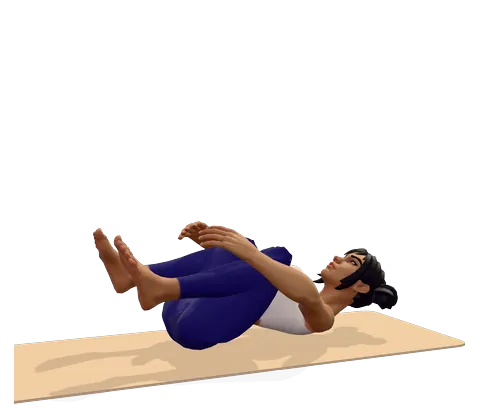 Wind-Relieving PosePavanamuktasana
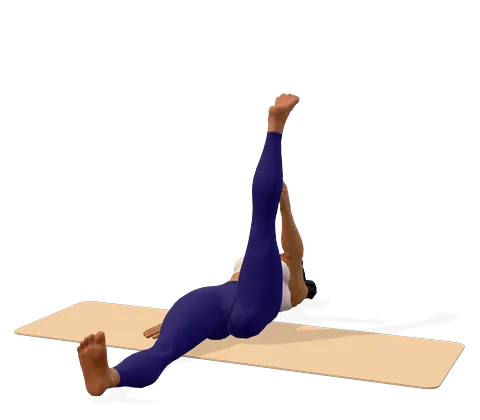 Reclining Hand-to-Big-Toe PoseSupta Padangusthasana
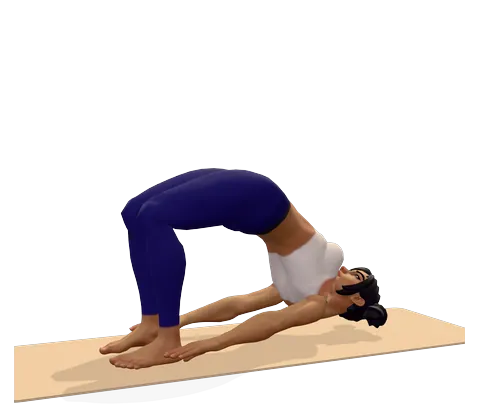 Bridge PoseSetu Bandhasana
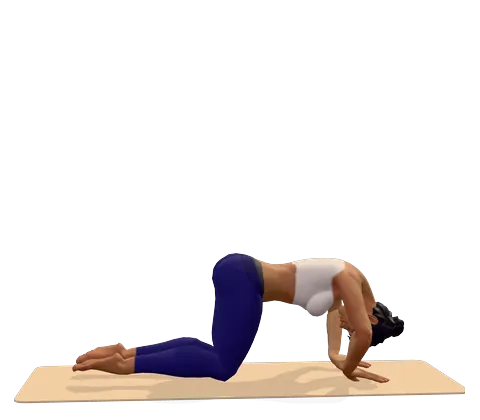 Cat PoseMarjaryasana
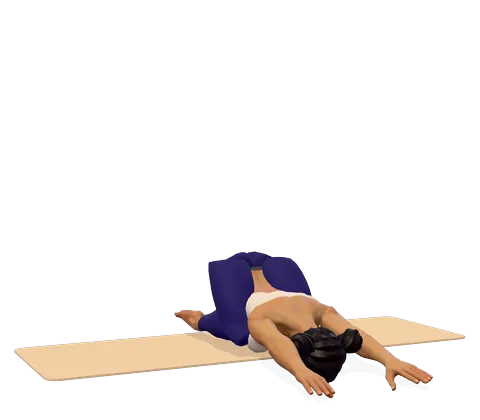 Child’s PoseBalasana
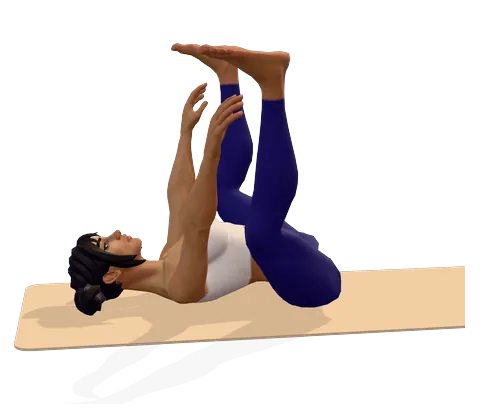 Happy Baby PoseAnanda Balasana
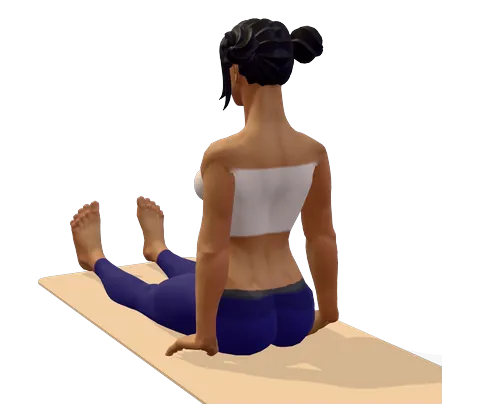 Staff PoseDandasana
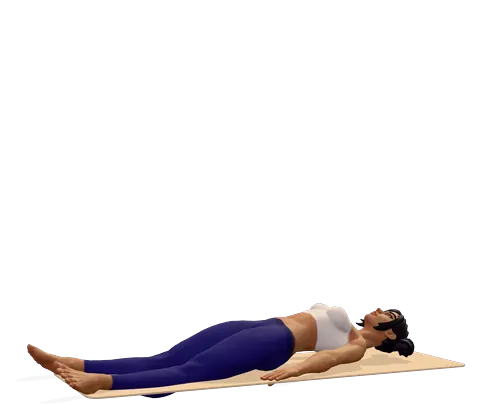 Corpse PoseSavasana
More poses that help with spondylolisthesis
Add these once the session above feels easy, or swap one in when a pose does not suit you.
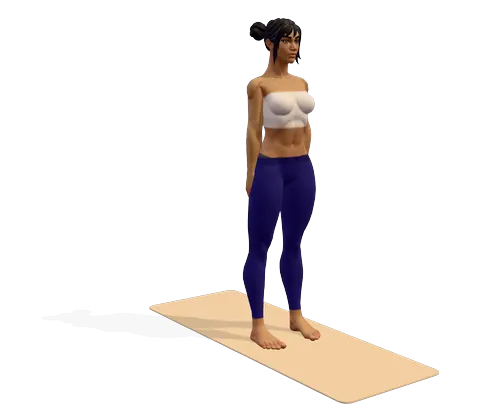 Mountain PoseTadasana
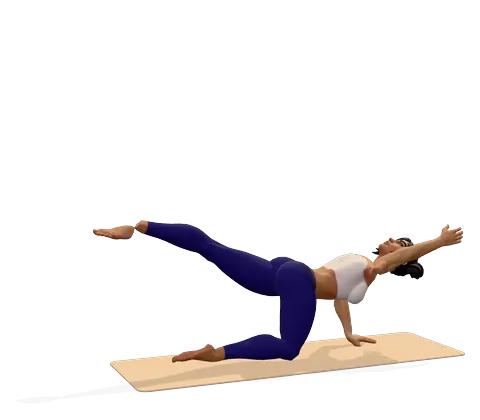 Tiger PoseVyaghrasana
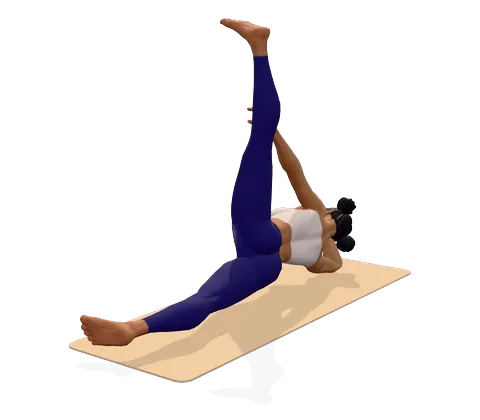 Side-Reclining Leg LiftAnantasana
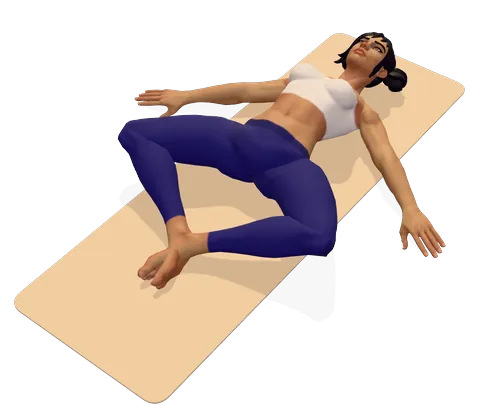 Reclining Bound Angle PoseSupta Baddha Konasana
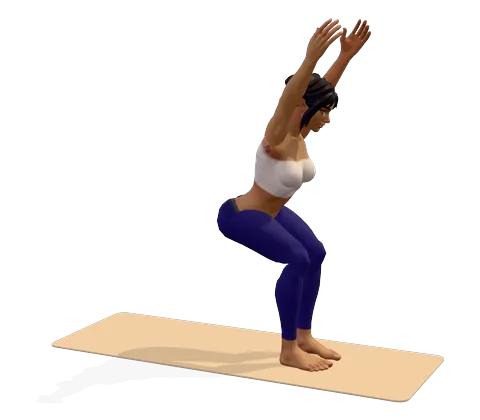 Chair PoseUtkatasana
Breathing practice
Avoid
Deep backbends (Camel, Bow, Wheel, high Cobra, Locust with legs high), strong twists and anything that arches or shears the lower back. Keep the belly gently firm and the bridge low. See a doctor for leg weakness, numbness or bladder or bowel changes.
Traditional practice: Used in classical yoga therapy; few clinical trials so far.
Yoga for spondylolisthesis is about stability first and flexibility second. In spondylolisthesis, one vertebra has slipped forward on the one below, most often at L5 on S1 or L4 on L5. The job of the muscles around it is to hold that segment steady, so the session above builds core and buttock strength in positions that keep the lower back neutral or gently rounded, and leaves out deep backbends and strong twists. This page explains the plan, what to avoid and when to see a specialist.
Go to emergency care at once for numbness around the groin or buttocks, new trouble passing urine or controlling your bowels, or leg weakness that is getting worse. See a doctor soon for leg numbness, pain that wakes you at night, or back pain in a child or teenager that does not settle.
What is spondylolisthesis?
The two most common types are quite different:
- Isthmic spondylolisthesis starts with a stress fracture in a thin part of the vertebra (the pars), called spondylolysis. It often begins in the teens, especially in sports that arch the back again and again, such as gymnastics, weightlifting and football.
- Degenerative spondylolisthesis comes from wear in the discs and facet joints with age. It is more common after 50, especially in women, and at L4 L5. It often narrows the spinal canal, causing spinal stenosis.
Doctors grade the slip by how far the vertebra has moved: grade 1 is up to a quarter of the way, grade 2 up to half, and grades 3 and 4 further. Most people with back pain from spondylolisthesis have grade 1 or 2, and many people with a grade 1 slip on an X-ray have no pain at all.
Is yoga good for spondylolisthesis, or is yoga bad for it?
Both answers can be true. Gentle, core-focused yoga is a reasonable part of care for many people with low-grade spondylolisthesis, while deep backbends and forceful twists, common in many classes, can aggravate it. The evidence level here is "traditional": there are no trials of yoga specifically for spondylolisthesis.
What is known is that conservative care, meaning physical therapy for spondylolisthesis with education, therapeutic exercise and graded training, is the usual first treatment, and the American Academy of Orthopaedic Surgeons lists physical therapy for flexibility and core strengthening among the main non-surgical options for low-grade slips. Good exercises for spondylolisthesis and PT exercises for spondylolisthesis share the same aim, and a careful yoga practice for lumbar spondylolisthesis can support that work. It cannot move the vertebra back into place.
Yoga for spine alignment? No exercise can realign a slipped vertebra. What yoga can do is make the muscles around it stronger and calmer, which often means less pain and more confidence.
Yoga poses for spondylolisthesis: why each one is in the plan
These yoga exercises for spondylolisthesis are safe exercises for spondylolisthesis of the lower spine for most people with a low-grade slip. They mix gentle stretches with strengthening exercises for spondylolisthesis, and they aim for control, not yoga for spinal mobility at the end of range.
Wind-Relieving pose: gentle flexion
Hugging your knees towards your chest in Wind-Relieving pose gently rounds the lower back and eases the "stuck" feeling many people have. Hold behind the thighs, not over the shins, and keep it soft.
Bridge, kept low: which yoga pose strengthens the spine
Bridge pose is the main strength pose here. First tilt your pelvis so the lower back flattens, then lift the hips a few centimetres, keeping the belly gently firm. Stop before your lower back arches. Bridge done this way is one of the best core exercises for spondylolisthesis, because it trains the buttocks and deep abdominals together.
Cat pose and Child's pose
Cat pose rounds the spine on hands and knees; keep the opposite movement (Cow) small and never sag into it. Child's pose with a cushion under the chest is a resting forward bend.
Reclining Hand-to-Big-Toe and Happy Baby
Tight hamstrings are very common with spondylolisthesis, especially in teenagers. A strap stretch lying on your back lengthens them without loading the spine. Happy Baby gently rounds the lower back and relaxes the hips.
Staff pose and Savasana
Staff pose teaches you to sit tall with the core lightly engaged; sit on a folded blanket so your lower back does not collapse. End in Savasana with your knees bent or supported.
Adding strength over time
When the basics feel easy, Tiger pose with a flat back, side-lying leg lifts and a shallow Chair pose from the extra poses list build yoga for strengthening the spine without arching it. This is also the answer to which yoga pose strengthens the spine best here: the ones where you hold it still while your arms and legs move.
Spondylolisthesis exercises to avoid
These spondylolisthesis movements to avoid, and the motions to avoid with spondylolisthesis in daily life, can push the slipped vertebra forward or strain the pars:
- Deep backbends: Camel, Bow, Wheel, high Cobra and Upward Dog, and Locust with the legs lifted high.
- Strong twists, especially a seated spinal twist yoga pose pulled with the arms. A reclined spinal twist yoga pose, if allowed at all, should be small and supported.
- Standing backbends and long holds in poses that hollow the lower back, such as deep lunges.
- Jumping, fast flows and heavy lifting, including heavy overhead lifts.
Spondylolisthesis: avoid flexion or extension? For most people it is extension (arching) that hurts more, which is why this plan is flexion-friendly. A few people, often with degenerative slips, find loaded forward bending painful too. Let your own symptoms and your physio decide. What should you not do with spondylolisthesis in daily life? Avoid heavy lifting with a rounded or arched back and long standing with a hollow lower back.
L5 S1 and L4 L5 spondylolisthesis exercises
Spondylolisthesis of L5 on S1 is the classic isthmic type seen in younger people. Spondylolisthesis L5 S1 exercises focus on hamstring length, deep core control and avoiding repeated arching. Yoga for L5 S1 spondylolisthesis follows the session above, with extra time on the strap stretch.
L4 and L5 spondylolisthesis is more often degenerative, in older adults, and often comes with leg symptoms from stenosis. L4 L5 spondylolisthesis exercises lean on flexion, walking tolerance and cycling. Our yoga for spinal stenosis page has more on this.
Exercises for spondylolisthesis grade 1 and grade 2
Exercises for spondylolisthesis grade 1 are usually the full session above, progressed over weeks. Grade 1 spondylolisthesis of L5 on S1 often responds well to conservative care. With grade 2 spondylolisthesis L5 on S1, keep every pose smaller and get your programme checked by a physio; exercises for spondylolisthesis grade 2 should never include deep backbends. Grades 3 and 4 need a specialist's advice before any yoga.
How to treat spondylolisthesis, and how to live with it
Treatment for slipped vertebrae, and which exercises to help spondylolisthesis, depends on the grade and symptoms. Exercises for slipped vertebrae are part of almost every plan. The best treatment for spondylolisthesis in most low-grade cases is conservative: activity changes, pain relief as advised, spondylolisthesis exercises physical therapy programmes and, sometimes, a brace for a short time. A back support for spondylolisthesis can help a teenager's stress fracture heal, but long-term use in adults can weaken the muscles.
How to fix spondylolisthesis for good, or how to correct lumbar spondylolisthesis, is a surgical question. L5 S1 spondylolisthesis surgery (usually a fusion) is considered for high-grade or worsening slips, nerve compression causing leg pain or weakness, or pain that does not improve with months of good conservative care. L4 L5 spondylolisthesis treatment follows the same logic.
How to sit with spondylolisthesis
Sit with your hips slightly higher than your knees and a small cushion behind your lower back, so it is neither slumped nor arched. Get up every 30 minutes. When standing for long, rest one foot on a low step; this flattens the lower back a little and often eases pain.
How to relieve spondylolisthesis pain at home
Lie on your back with your knees bent or hugged in, use heat, and take short, frequent walks. These spondylolisthesis exercises for pain relief work best when done little and often. How to live with spondylolisthesis long term, and good yoga for spine health, comes down to strong core muscles, a healthy weight and avoiding repeated arching under load.
Spondylolisthesis vs spondylosis vs spondylitis
These words sound alike but mean different things. Spondylosis is general wear of the spine with age: see yoga for cervical spondylosis and neck pain, while yoga for lumbar spondylosis follows the degenerative disc approach. Ankylosing spondylitis is an inflammatory disease that stiffens the spine; yoga for ankylosing spondylitis often uses more backbending, so see our ankylosing spondylitis page instead.
Breathing for a calmer back
Slow breathing such as Nadi Shodhana, lying with the knees bent, helps the back muscles stop guarding. Yoga for spinal health is not only about muscles: a calmer nervous system often means less pain.
Practise with the 3D guide
Start the session at the top of this page: the 3D teacher shows every pose, you can rotate her to check your lower back stays neutral, and the voice guides you in 28 languages. Choose the "shorter" hold time at first. Yoga for people with spondylolisthesis works best 10 to 15 minutes most days; if you are new, read yoga for beginners first.
Research behind this plan
- Vanti 2021, Archives of Physiotherapy — masterclass on lumbar spondylolisthesis: assessment and conservative treatment, including self-management, therapeutic exercise and graded supervised training
- OrthoInfo (American Academy of Orthopaedic Surgeons) — Spondylolysis and spondylolisthesis: repeated hyperextension as a cause, physical therapy for flexibility and core strength, temporary bracing, when surgery is needed
- NCCIH (US National Institutes of Health) — Yoga: What You Need To Know, including safety
Frequently asked questions
Is yoga good for spondylolisthesis?
Gentle, core-focused yoga can help many people with low-grade spondylolisthesis by strengthening the muscles that steady the spine. Avoid deep backbends and strong twists, and ask your doctor or physiotherapist first.
What yoga poses should I avoid with spondylolisthesis?
Avoid Camel, Bow, Wheel, high Cobra, Upward Dog, high Locust, deep lunges, standing backbends and strong or arm-pulled twists. Also avoid jumping and heavy lifting.
What are the best exercises for spondylolisthesis?
Pelvic tilts, a low Bridge, knees-to-chest, hamstring stretches with a strap, and core exercises where the spine stays still while the arms and legs move. A physiotherapist can tailor them to your grade.
Can yoga fix spondylolisthesis?
No. Yoga cannot move a slipped vertebra back. It can reduce pain and improve strength and control, which is what most people with low-grade slips need.
Should I avoid flexion or extension with spondylolisthesis?
Most people find arching (extension) more painful, so flexion-friendly exercise is the usual starting point. Some people with degenerative slips also dislike loaded bending; follow your symptoms and your physio.
Can I do yoga with grade 2 spondylolisthesis?
Often yes, with smaller poses, no deep backbends and a programme checked by a physiotherapist. Grades 3 and 4 need a specialist's advice first.
When does spondylolisthesis need surgery?
Surgery is considered for high-grade or worsening slips, nerve compression with leg pain or weakness, or pain that does not improve after months of good conservative treatment.
Medical note: yoga supports treatment; it does not replace it. Keep taking prescribed medicine and talk to your doctor before you start, especially with heart disease, uncontrolled blood pressure, recent surgery, pregnancy, epilepsy or severe pain. Read our medical disclaimer.