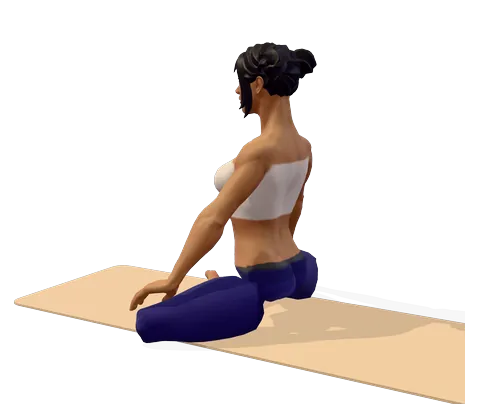
The 7 chakras of the body are a map from yoga and Tantra that places seven "wheels" (chakra means wheel or disc in Sanskrit) along the spine, from its base to the crown of the head. Each one is linked with a color, an element, a sound and a set of qualities. This guide explains the chakras in order, gives you a chakra chart you can read at a glance, lists the yoga poses and mudras traditionally paired with each center, and shows you a simple chakra meditation.
Read this map as a spiritual and meditative tradition, not as anatomy. Chakras do not appear on a scan and are not organs, nerves or glands. They are a way of directing attention to different parts of the body during practice. We are honest below about what the evidence does and does not show.
What are chakras? Meaning and definition
What is chakras meaning in simple words? A chakra is described as a point where subtle channels of energy (nadis) meet, and where life force (prana) is said to gather and turn like a wheel. The idea comes from medieval Hindu and Buddhist Tantric texts. Different texts count five, six, seven or more centers; the seven-center system that most people know today is based mainly on a 16th-century Sanskrit text, the Ṣaṭ-Cakra-Nirūpaṇa, which reached the West through a 1919 English translation.
The rainbow color scheme (red at the root to violet at the crown) is newer still. It became popular in the 20th century and does not match the colors in the older texts. That does not make it wrong to use; it simply means the map has been reshaped over time, like many parts of modern yoga.
How to say it
For chakras, the pronunciation starts with a "ch" as in "church": CHUK-ruh, not "shack-ra".
In Hindi, the 7 chakras of the body are called सात चक्र (saat chakra), and the chakras names in Hindi and English use the same Sanskrit words, such as मूलाधार (Muladhara).
The 7 chakras and their meanings: a chart
Here are the 7 chakras names, their location in the body, colors, elements and bija (seed) mantras, from the base upward. Read the chakras in order from row 1 to row 7.
| # | English name | Sanskrit name and meaning | Location (traditional) | Color | Element | Bija mantra |
|---|---|---|---|---|---|---|
| 1 | Root | Muladhara — "root support" | Base of the spine, pelvic floor | Red | Earth | LAM |
| 2 | Sacral | Svadhisthana — "one's own place" | Lower belly, below the navel | Orange | Water | VAM |
| 3 | Solar plexus | Manipura — "city of jewels" | Upper belly, around the navel | Yellow | Fire | RAM |
| 4 | Heart | Anahata — "unstruck (sound)" | Center of the chest | Green | Air | YAM |
| 5 | Throat | Vishuddha — "especially pure" | Throat | Blue | Space (ether) | HAM |
| 6 | Third eye | Ajna — "command, perception" | Between the eyebrows | Indigo | Mind (beyond the elements) | OM |
| 7 | Crown | Sahasrara — "thousand-petaled" | Top of the head | Violet or white | Pure awareness | Silence (some use OM) |
In chakras diagrams, each one is drawn as a lotus with a set number of petals (four at the root, two at the third eye, a thousand at the crown), and each has its own symbol, such as a square for earth and a downward triangle for fire. The symbols of the chakras are meant as objects of focus in meditation.
The seven chakras explained for beginners
Below, each center is described the way yoga teachers usually present it: the quality it stands for, and what it can mean to "work with" it in a practice. If you are new to this, treat the qualities as themes for reflection rather than diagnoses.
1. Root chakra (Muladhara)
The root chakra stands for stability, safety and feeling at home in your body. Teachers link it with the legs, feet and pelvic floor. Its theme is being grounded: standing firmly and breathing slowly.
2. Sacral chakra (Svadhisthana)
Linked with water, the sacral center stands for creativity, pleasure and emotional flow. Practices for it focus on the hips and lower belly, areas many people hold tight after long days of sitting.
3. Solar plexus chakra (Manipura)
Manipura is the fire center: willpower, confidence and digestion in the traditional sense of "digesting" food and experience. Core work, twists and warming breath belong here.
4. Heart chakra (Anahata)
The heart center is about compassion, connection and balance between the lower three centers and the upper three. Chest-opening backbends and slow breathing are the usual practices.
5. Throat chakra (Vishuddha)
Vishuddha is linked with communication, honest speech and listening. Poses that stretch the front and back of the neck, humming and chanting are used to bring attention to it.
6. Third eye chakra (Ajna)
The third eye meaning in yoga is inner vision: intuition, clarity and concentration. Focused gazing, such as Trataka candle gazing, and resting the forehead on the floor are classic practices.
7. Crown chakra (Sahasrara)
The crown is described less as a place and more as a state of open, quiet awareness. Stillness, meditation and deep rest are its practices rather than any effort.
Chakra yoga poses chart: poses and mudras for each chakra
These pairings of chakras with poses and exercises are traditional associations used by many teachers, not fixed rules; you will see small differences between schools. Choose one or two poses per center. All of them are also on our pose pages with a 3D demo you can rotate.
| Chakra | Yoga poses often used | Mudra |
|---|---|---|
| Root (Muladhara) | Mountain, Tree, Warrior II, Garland squat | Prithvi mudra (earth) |
| Sacral (Svadhisthana) | Bound Angle, Goddess, Pigeon | Varun mudra (water) |
| Solar plexus (Manipura) | Boat, Bow, Half Lord of the Fishes twist, Plank | Surya mudra (fire) |
| Heart (Anahata) | Camel, Cobra, Extended Puppy | Apana Vayu (heart) mudra, Ganesha mudra |
| Throat (Vishuddha) | Fish, Bridge, Lion | Shankh mudra |
| Third eye (Ajna) | Child's pose, Hare, Downward Dog | Hakini mudra |
| Crown (Sahasrara) | Lotus or Easy pose, Corpse pose | Dhyana mudra |
Root chakra yoga poses
Standing poses press the feet into the ground, which is why they are the usual root chakra yoga poses. Stand in Mountain pose for a minute and feel the weight spread across both feet before you move into Tree or Warrior II.
Sacral chakra yoga poses
Sacral chakra yoga poses open the hips: Bound Angle, Goddess and Pigeon. Move slowly; the hips often hold more tension than we expect.
Solar plexus and Manipura chakra yoga poses
Manipura chakra yoga poses build heat in the core. Boat and Plank strengthen the belly; twists wring it out. Many teachers add Kapalbhati breathing here, but it is not suitable in pregnancy or with high blood pressure, heart disease or epilepsy.
Heart chakra yoga poses
Heart chakra yoga poses lift and widen the chest. Start with Cobra or Extended Puppy; move to Camel only when your back is warm and pain-free.
Throat chakra yoga poses
Throat chakra yoga poses stretch the neck gently: Fish and Bridge open the front of the throat, and Lion pose adds a strong exhale with the tongue out. Humming Bhramari breath also fits this center. Shoulder stand is used too, but only with a healthy neck and good instruction.
Ajna chakra yoga poses
Ajna chakra yoga poses rest the forehead on the floor, a block or your hands, which draws attention to the point between the eyebrows. Nadi Shodhana is the breathing most often paired with the third eye.
Crown chakra yoga poses
Crown chakra yoga poses are the quietest: a steady seated posture for meditation, then Savasana. Headstand is traditionally linked to the crown, but it is an advanced pose and not needed for this practice.
Chakra yoga poses for beginners: pick one pose per row of the chart above, hold each for five slow breaths, and finish with five minutes of stillness. That is a complete 7 chakra yoga poses sequence in about 20 minutes. You can put these poses in order and play them with voice guidance in the sequence builder.
Chakra meditation: how to do it
This is a simple chakra daily meditation of about 10 to 15 minutes. It uses attention, breath and sound; no special beliefs are needed.
- Sit comfortably on a cushion or chair with your spine upright. Rest your hands in your lap or in Gyan mudra. Close your eyes.
- Breathe slowly through your nose for a minute to settle.
- Bring your attention to the base of the spine. Picture a red light there, or simply notice sensation. Silently or softly chant LAM for three to six breaths.
- Move up one center at a time: lower belly (orange, VAM), navel (yellow, RAM), chest (green, YAM), throat (blue, HAM), between the eyebrows (indigo, OM).
- At the crown, drop the sound and rest in silence for a few minutes.
- Take a deep breath, feel your whole body sitting on the floor, and open your eyes.
The seven bija mantras are often called the 7 chakras sounds. Chanting them slowly lengthens the out-breath, which is one likely reason the practice feels calming. Use our meditation timer with interval bells to move to the next center without watching a clock.
How to open 7 chakras or activate them through meditation
Many people search for how to activate 7 chakras of the human body or how to open all 7 chakras. In the traditional view, the centers are not "closed" like doors; practice is said to make them clearer and more balanced over time. In practical terms, regular meditation, pranayama and asana are the method. There is no quick trick, crystal or single session that "opens" them, and you should be wary of anyone who sells one.
How to cleanse your chakras at home
If you want a home routine, keep it simple: a few minutes of breathing, one pose per center, the chakra meditation above and a short rest. Consistency matters more than length.
When chakras become out of balance
Teachers often describe a blocked or overactive center with emotional labels, for example feeling ungrounded (root) or unable to speak up (throat). These are useful prompts for self-reflection. They are not medical signs. Feeling anxious, tired, in pain or low for weeks has real causes that a doctor can check, and "chakras aligned" is not a substitute for that care.
What does the evidence say? An honest note
There is no scientific evidence that chakras exist as physical structures or as centers of human energy, and no reliable studies show that balancing them treats disease. You will read that each center matches an endocrine gland or a nerve plexus, and some writers connect the heart and throat chakras with the vagus nerve.
Chakras vs. major glands and nerves is best seen as a modern analogy: the locations roughly line up, but that does not mean the systems are the same.
What research does support is the practice around the map. Yoga, slow breathing and meditation have been studied for stress, sleep and some kinds of pain, with modest benefits in many trials, according to the US National Center for Complementary and Integrative Health. So the real benefits of chakras work are likely to come from moving, breathing and paying attention, not from energy centers. That is still worth having.
The same applies to chakras for weight loss or pain relief: poses can build strength and ease stiffness, and meditation can change how pain feels, but no chakra practice melts fat or heals an injury. See yoga for stress relief for a plan based on the research.
Chakrasana: a pose, not a chakra practice
People often confuse the two words. In yoga, Chakrasana in English means "wheel pose", a deep backbend also called Urdhva Dhanurasana. The body forms a wheel shape; the name has nothing to do with the seven centers.
Chakrasana benefits are those of a strong backbend: it stretches the chest and front of the hips and strengthens the arms, legs and back. It is an advanced pose, so learn Bridge first.
सात चक्र (7 Chakras) — हिंदी में: योग परंपरा के अनुसार शरीर में रीढ़ के साथ सात चक्र माने जाते हैं: मूलाधार, स्वाधिष्ठान, मणिपुर, अनाहत, विशुद्ध, आज्ञा और सहस्रार। हर चक्र का एक रंग, तत्व और बीज मंत्र है — जैसे मूलाधार का "लं" और अनाहत का "यं"। ध्यान में नीचे से ऊपर हर चक्र पर ध्यान ले जाएँ और उसका बीज मंत्र धीरे-धीरे बोलें। यह एक आध्यात्मिक परंपरा है, शरीर-रचना नहीं; किसी बीमारी में डॉक्टर की सलाह ज़रूर लें।
Frequently asked questions
What are the 7 chakras in order?
From the base of the spine upward: Muladhara (root), Svadhisthana (sacral), Manipura (solar plexus), Anahata (heart), Vishuddha (throat), Ajna (third eye) and Sahasrara (crown).
What is the 7 chakras meaning in simple words?
Chakra means "wheel". In yoga tradition, the seven are centers of energy along the spine, each linked with a quality such as stability, creativity, willpower, love, expression, insight and awareness.
Are chakras real parts of the human body?
Not in the anatomical sense. They are a traditional meditative map. Their locations roughly match areas like the pelvis, heart and throat, but no scan or dissection shows a chakra.
What are the chakras colors?
In the modern system: red (root), orange (sacral), yellow (solar plexus), green (heart), blue (throat), indigo (third eye) and violet or white (crown). Older Sanskrit texts use different colors.
How do I do a chakra meditation?
Sit upright, breathe slowly, and move your attention from the base of the spine to the crown, pausing at each center for a few breaths while you picture its color or chant its bija mantra (LAM, VAM, RAM, YAM, HAM, OM). End in silence.
Which yoga poses are best for the root chakra?
Standing and grounding poses such as Mountain, Tree, Warrior II and Garland squat, often with Prithvi mudra.
Is working with chakras against God or my religion?
Chakras come from Hindu and Buddhist Tantric traditions. Some people of other faiths use only the physical poses and breathing and leave the spiritual map aside. It is a personal choice, and the physical practice works either way.
Can healing the chakras cure illness?
No. There is no good evidence that chakras healing treats disease. Yoga and meditation may help with stress and well-being, but keep any prescribed treatment and talk to your doctor about health problems.
How do you do wheel pose (chakrasana kaise karte hain)?
Chakrasana is wheel pose. Lie on your back, bend your knees, place your hands by your ears with fingers toward your shoulders, then press up into an arch. It is an advanced backbend; practice Bridge pose first and avoid it with back, wrist or shoulder injuries.