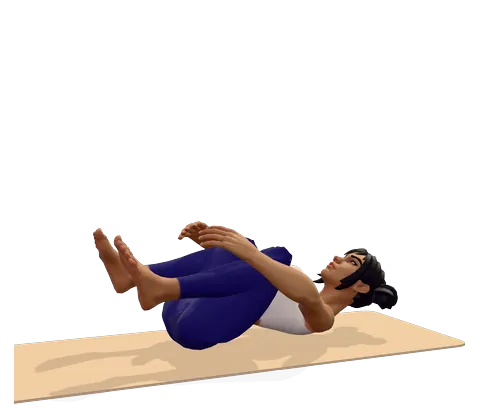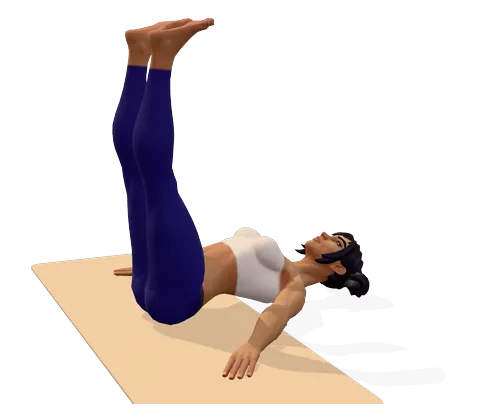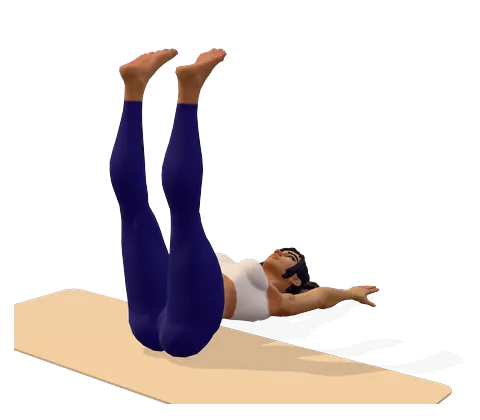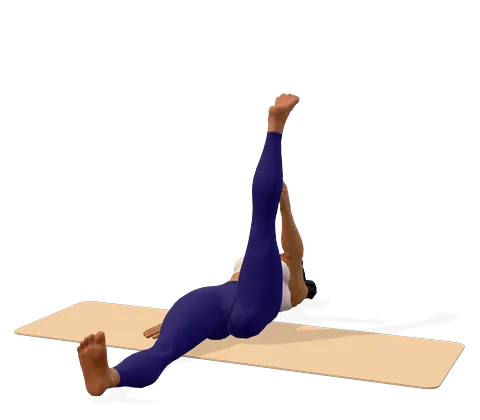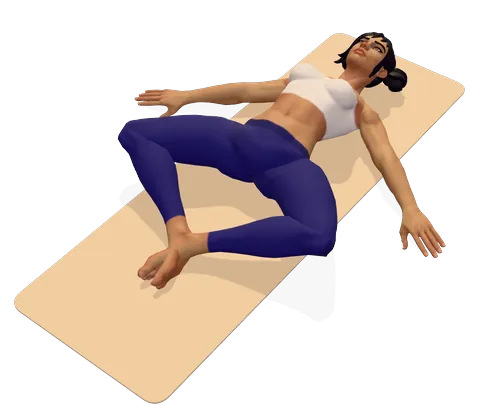
How to do Reclining Bound Angle Pose step by step
- Sit on the mat, bring the soles of your feet together and let your knees open to the sides. If you use a bolster, place it lengthwise behind you so it touches your lower back.
- Lean back onto your forearms, then lower your back and head to the floor or the bolster. Put a folded blanket under your head if your chin tips up.
- Adjust your feet: heels closer to your body for a stronger stretch, further away for a gentler one.
- Let your knees sink toward the floor under their own weight. If you feel strain in the groin or knees, slide a block or cushion under each thigh.
- Rest your arms on the floor about 45 degrees away from your body, palms facing up.
- Stay for 1–5 minutes (up to 10 in a restorative practice), breathing slowly into your belly.
- To come out, use your hands to bring your knees together, roll onto one side and press yourself up to sitting.
Where you feel Reclining Bound Angle Pose: what it stretches and strengthens
Let your knees fall open and relax completely. In the 3D guide, turn on Body guide: areas that stretch glow green and areas that work glow saffron.
Stretches
- Inner thighs
- Hip flexors
- Chest
Benefits and precautions
Benefits
- Gently stretches the inner thighs, groin and hips
- Opens the chest and belly so the breath can slow and deepen
- A restful pose used in yoga programmes for stress, anxiety and sleep
- May ease period cramps and menopause discomfort as part of a relaxing routine
- Rests the lower back when the knees and spine are supported
- A calm way to end a practice before Savasana
Avoid or modify if
- Groin, knee or hip injury — support both thighs with blocks or cushions and keep the stretch mild
- Hip replacement — ask your surgeon which hip positions are allowed before opening the knees wide
- Pregnancy after the first trimester — recline on a sloping bolster instead of lying flat, and check with your midwife
- Lower back discomfort — lie on a bolster or move your feet further from your body
- Sacroiliac (SI) joint pain — support the knees higher and come out slowly with the knees together
Reclining bound angle pose (Supta Baddha Konasana) is a lying-down yoga hip opener: you rest on your back, bring the soles of your feet together and let your knees fall open like a book. Gravity does the stretching, so the pose feels more like rest than work. Supta Baddha Konasana is a favourite yoga pose in restorative, yin and bedtime practice, and one of the most beginner friendly yoga poses there is. This page covers what the name means, how to set it up with props, the benefits, the muscles it stretches, and what to do if it hurts.
What is reclining bound angle pose?
It is the supine version of bound angle pose (Baddha Konasana), the seated "butterfly" in which you sit tall with the soles together. What is baddha konasana in plain words? A seated hip opener; the reclining form simply lies it down. In English-speaking yoga classes, Supta Baddha Konasana is also called reclined butterfly pose or supine bound angle pose. In Sanskrit, the butterfly pose is Baddha Konasana; "butterfly" is simply its popular yoga name.
The supta baddha konasana meaning is literal: supta means "reclining" or "lying down", baddha means "bound", kona means "angle" and asana means "pose". The "bound angle" is the diamond your legs make when the feet are held together. Put together, the Sanskrit name of the reclined bound angle pose describes exactly what you do.
How to do reclining bound angle pose with props
You can do it on a bare mat, but props are simple modifications for yoga poses that let you stay for several minutes without strain. Reclining bound angle pose with a bolster is the version most people love. Here is the classic supported reclined bound angle pose set-up:
| Prop | Where it goes | Why |
|---|---|---|
| Bolster or firm pillows | Lengthwise under your spine, from the lower back to the head | Lifts and opens the chest, rests the back |
| Two blocks or cushions | Under each outer thigh | Stops strain in the groin and knees |
| Folded blanket | Under the head | Keeps the chin level and the neck soft |
| Strap | Around the lower back, over the inner thighs and under the feet | Holds the feet in place so the legs can let go |
For the reclined bound angle pose with strap, make a large loop, sit inside it, pass it behind your sacrum and then over your shins and under your feet before you lie back. Tighten it just enough to draw your heels toward you in reclining bound angle pose, without pressure on the knees.
How long to stay and when to practise
Beginners can stay 1–3 minutes; with good support, 5–10 minutes is common in restorative classes. It works well in the evening, after a stressful day, or during your period when stronger poses feel like too much. As a reclining bound angle pose for sleep, try it in bed or on the floor before lights out.
Reclining bound angle pose benefits
The main benefits of Supta Baddha Konasana come from two things happening at once: a gentle stretch of the hips and a lying position that invites the body to rest. Reclined butterfly pose benefits are much like the benefits of butterfly pose done sitting, plus that deeper rest.
Stress, anxiety and sleep
Supported, still poses with slow breathing are part of many yoga programmes for anxiety and for better sleep. With the chest open and the belly soft, it is easy to breathe low and slow, which many people find calming.
Periods and menopause
Many women find this pose soothing for cramps, because the belly is open rather than squeezed. It appears in routines for period pain and menopause, where restful yoga may ease symptoms such as tension and poor sleep. It is not a treatment for heavy or very painful periods — see a doctor for those.
Blood pressure and the back
Because the head stays level with the heart, it suits people with high blood pressure as part of a relaxing practice; keep taking your medicine. It is not one of the strong yoga poses for back pain relief, but the benefits of supported reclining bound angle pose for the back are real: a bolster under the spine and blocks under the thighs let the lower back rest.
Butterfly stretch muscles worked
What muscles does the butterfly stretch? In the butterfly stretch, the muscles stretched most are the adductors on the inside of the thighs (adductor longus, brevis and magnus), plus the gracilis and pectineus near the groin. In the reclined form, the chest, front of the shoulders and belly also open. Almost no muscle has to work hard, which is why it is a resting pose and not a strength exercise.
Supta Baddha Konasana for beginners and variations
- Feet further away: a gentler shape for stiff hips or sore knees.
- Reclined bound angle pose, restorative style: full props, 5–10 minutes, eyes closed. See restorative yoga.
- Yin yoga: reclined butterfly pose in yin yoga uses fewer props and a 3–5 minute hold for a stronger, quiet stretch. See yin yoga.
- Arms overhead: rest the arms on the floor above your head for extra chest opening.
- Butterfly pose for kids: children can gently flap their knees like butterfly wings, then rest.
Reclining bound angle pose vs butterfly pose
In seated butterfly you have to sit up tall, which takes effort from the back and can round the spine if the hips are tight. In the reclining version the floor supports your back, so you can relax completely. Choose the seated pose to stretch actively and the reclining pose to rest. Butterfly sit-ups, a fitness exercise, use the same leg position but add a crunch, so they train the abs instead.
If reclining bound angle pose causes pain
- Knee pain: knee pain in reclining bound angle pose usually means the hip cannot open far enough, so the knee twists. Support each thigh higher and move your feet away from the body.
- Groin or inner-thigh pulling: use taller blocks. The stretch should feel mild after a minute, not sharper.
- Lower back ache: lie on a bolster or put a folded blanket under your hips.
- Numb or tingling legs: come out, straighten your legs and set up again with more support.
Reclining bound angle pose contraindications are few: mainly recent groin, knee or hip injuries and hip replacement (see the caution box). In pregnancy, lying flat on your back becomes uncomfortable after the first trimester; recline on a sloping bolster instead and follow your midwife's advice.
Poses to do before and after
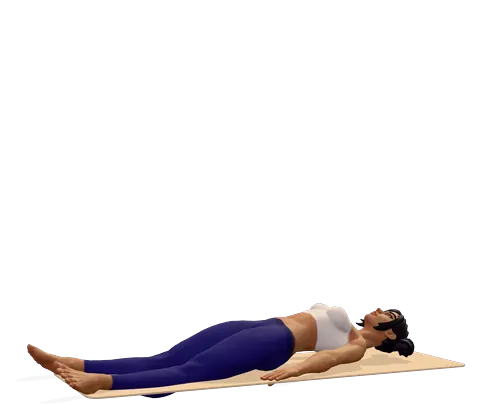
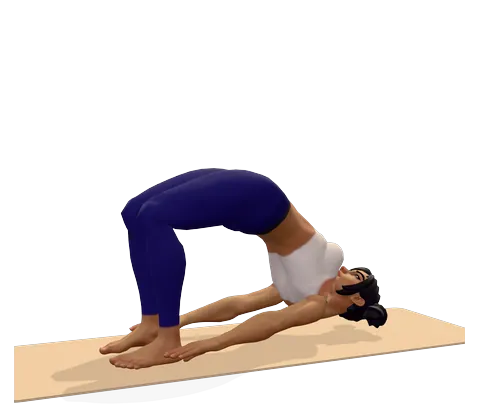
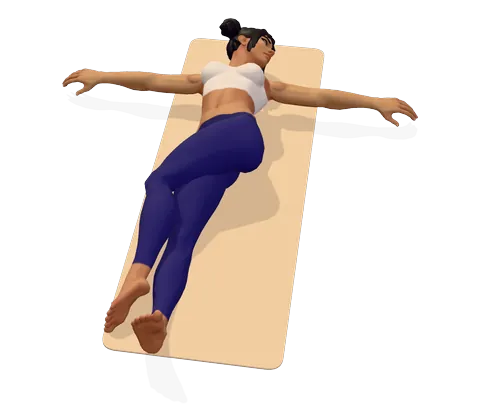
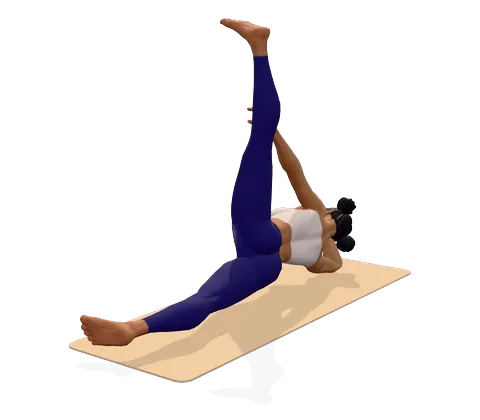
Before this yoga pose, warm up with seated bound angle pose, a few rounds of bridge and the reclined hand-to-foot pose (Supta Padangusthasana). Afterwards, rest in Savasana or listen to a guided Yoga Nidra. The bedtime and calm sessions in guided practice include this pose with voice cues.
सुप्त बद्ध कोणासन — reclining bound angle pose in Hindi: पीठ के बल लेटें, दोनों पैरों के तलवे आपस में मिलाएँ और घुटनों को धीरे से दोनों तरफ़ खुलने दें। हाथ शरीर से थोड़ा दूर, हथेलियाँ ऊपर। 1–5 मिनट आराम से साँस लेते रहें। यह आसन कूल्हे खोलता है, तनाव कम करता है और नींद के लिए अच्छा है। घुटनों में दर्द हो तो जाँघों के नीचे तकिया रखें।
Health conditions this pose is used for
Yoga for arthritis · Yoga for spinal stenosis · Yoga for fibromyalgia · Yoga for chronic pain · Yoga for lupus · Yoga for jaw pain (tmj) · Yoga for high blood pressure · Yoga for hyperthyroidism (overactive thyroid) · Yoga for uric acid and gout · Yoga for kidney health · Yoga for hormonal balance · Yoga for anemia (low hemoglobin) · Yoga for pcos and pcod · Yoga for menopause · Yoga for period pain and menstrual cramps · Yoga for fertility · Yoga for irregular periods · Yoga for endometriosis · Yoga for pms (premenstrual syndrome) · Yoga for postpartum recovery · Yoga for pelvic floor and urinary incontinence · Yoga for prostate health · Yoga for anxiety · Yoga for grief and loss · Yoga for bipolar disorder (complementary care) · Yoga for eating disorder recovery · Yoga for sleep and insomnia · Yoga for shift work and night-shift sleep · Yoga for epilepsy (complementary care) · Yoga for ptsd and trauma · Yoga for panic attacks · Yoga for burnout and exhaustion · Yoga for tinnitus · Yoga for multiple sclerosis · Yoga for restless legs syndrome · Yoga for chronic fatigue syndrome · Yoga for heart health · Yoga for long covid recovery · Yoga for acidity and acid reflux · Yoga for gastritis · Yoga for hernia (safe movement) · Yoga for ibs · Yoga for piles (hemorrhoids) · Yoga for ulcerative colitis and ibd · Yoga for dark circles · Yoga for psoriasis and eczema · Yoga for glaucoma (safe yoga) · Yoga for dry eyes · Yoga for motion sickness · Yoga for cancer recovery (supportive care) · Yoga for recovery after surgery
Where this practice is used
Chakras: Svadhisthana (Sacral Chakra)
Frequently asked questions
How long should you stay in reclining bound angle pose?
Stay 1–3 minutes as a beginner. With a bolster and blocks supporting you, 5–10 minutes is comfortable for most people.
Is reclining bound angle pose good for sleep?
Many people find it calming before bed because it is still, supported and lets the breath slow down. It works well as part of a short bedtime routine.
Can I do Supta Baddha Konasana during my period?
Yes, it is one of the gentlest poses for period days. Support your back and thighs and stay as long as it feels soothing.
Why does reclining bound angle pose hurt my knees?
Usually because the hips are tight and the knees take the strain. Put blocks or cushions under your thighs and move your feet further away.
Is reclining bound angle pose safe in pregnancy?
In early pregnancy it is usually fine. Later, avoid lying flat on your back: recline on a sloping bolster and ask your midwife.
What is Supta Baddha Konasana in English?
Reclining bound angle pose. It is also called reclined butterfly pose or supine bound angle pose.
What is the difference between bound angle and reclining bound angle pose?
Bound angle pose is done sitting up tall with the soles together; the reclining version is the same leg shape lying on your back, so it is more restful.
This page is for general education. Check with your doctor before starting yoga if you are pregnant, have a medical condition or an injury. Stop if you feel pain, dizziness or shortness of breath.