Your knee replacement recovery yoga plan
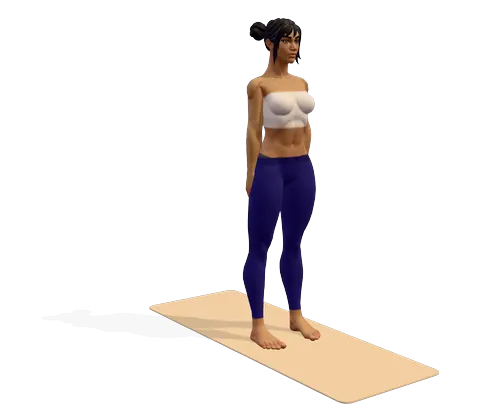 Mountain PoseTadasana
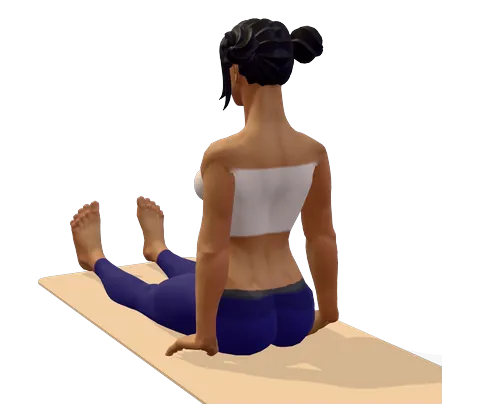 Staff PoseDandasana
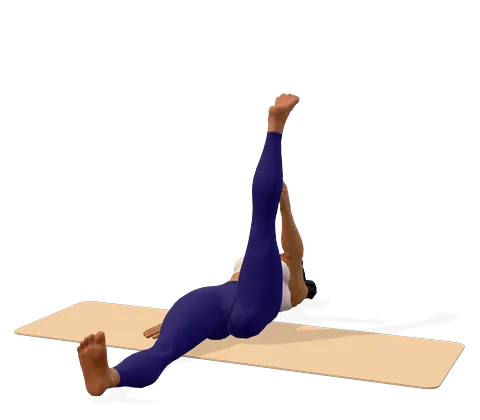 Reclining Hand-to-Big-Toe PoseSupta Padangusthasana
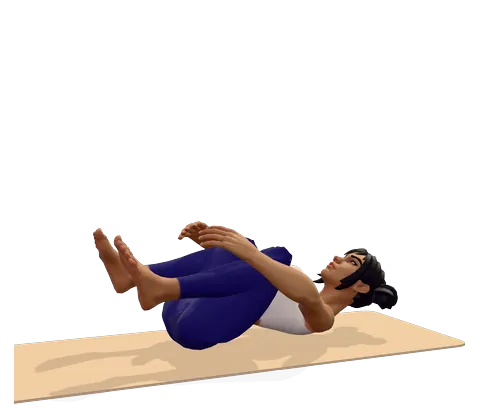 Wind-Relieving PosePavanamuktasana
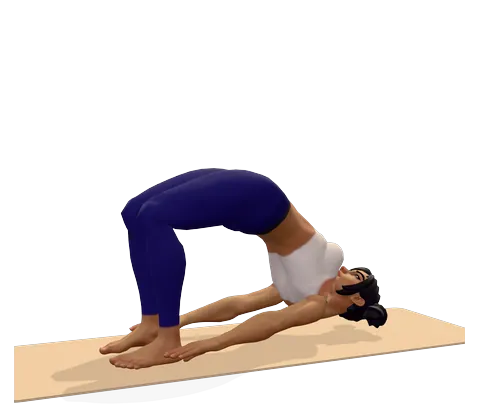 Bridge PoseSetu Bandhasana
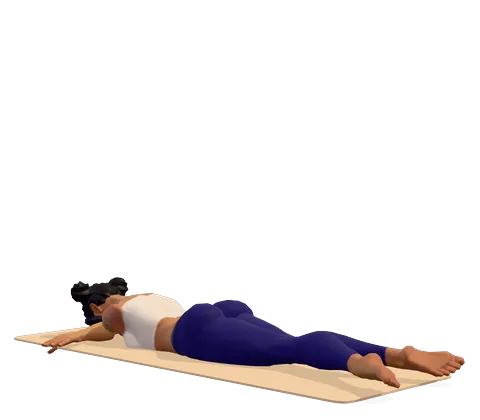 Crocodile PoseMakarasana
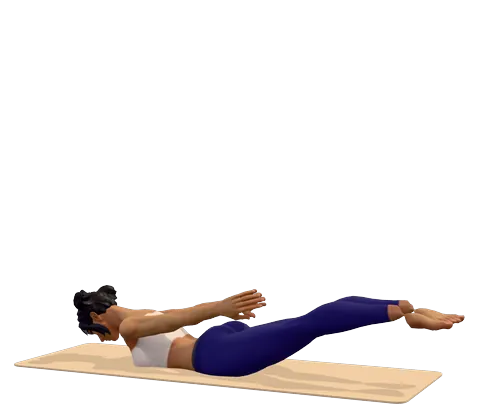 Locust PoseSalabhasana
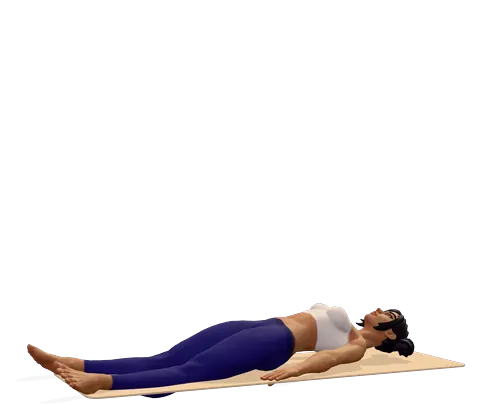 Corpse PoseSavasana
More poses that help with knee replacement recovery
Add these once the session above feels easy, or swap one in when a pose does not suit you.
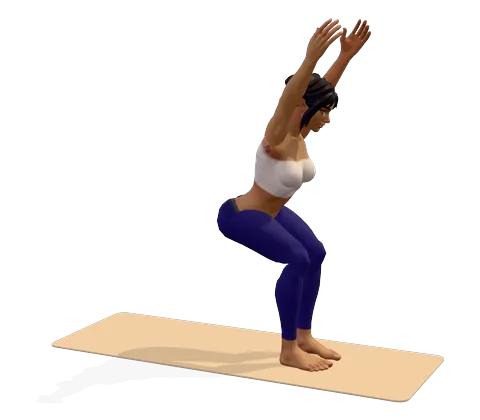 Chair PoseUtkatasana
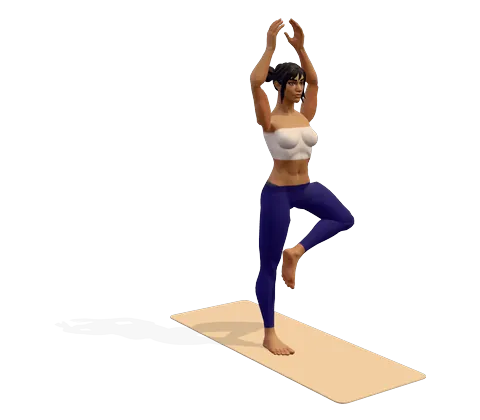 Tree PoseVrikshasana
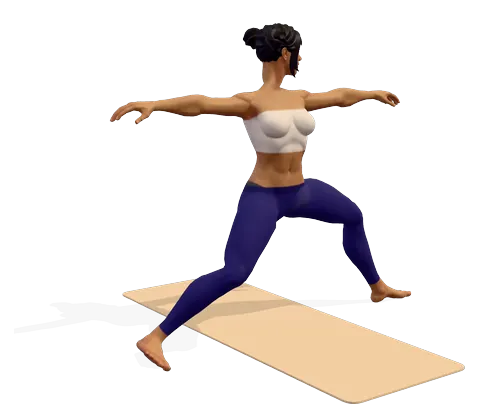 Warrior II PoseVirabhadrasana II
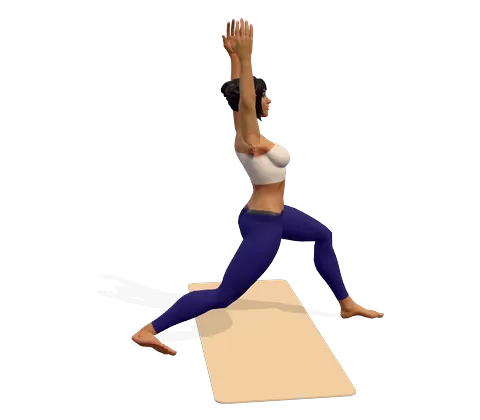 Warrior I PoseVirabhadrasana I
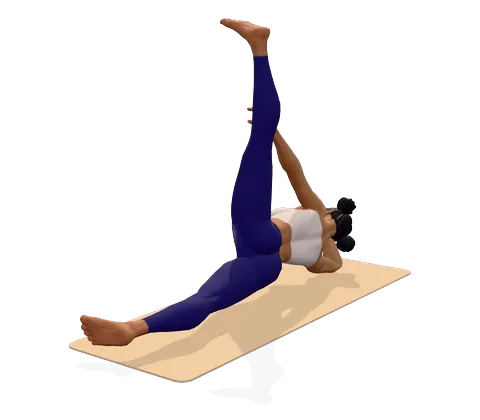 Side-Reclining Leg LiftAnantasana
Breathing practice
Avoid
Your surgeon’s and physiotherapist’s plan comes first. Until cleared, skip kneeling on the new knee, Vajrasana, deep squats, lotus and twisting on a planted foot. Stop and get help for new heat, redness or swelling, or pain and swelling in one calf (possible clot).
Emerging evidence: Small or early trials look promising.
Yoga after knee replacement works best as a calm add-on to your physiotherapy, not a replacement for it. A new knee needs two things to do well: a steady return of bend and straightening, and strong thigh and hip muscles to control it. The poses in the session above were chosen for both jobs, and none of them asks you to kneel on the new joint or twist on a planted foot.
Get medical help the same day if one calf becomes painful, swollen, warm or red, or if you feel short of breath or have chest pain: these can be signs of a blood clot, and the blood clot risk after knee replacement is highest in the first weeks. Also call your surgical team for a leaking wound, spreading redness or fever.
Can you do yoga after knee replacement?
Yes, yoga is possible after knee replacement for most people, once your surgeon or physiotherapist agrees. Yoga for people with knee replacements is mostly about gentle strength, balance and range of motion, which is exactly what physical therapy after a knee replacement aims for. It suits men and women of any age, including yoga after knee replacement for women over 60 who want better balance.
The research is still small, which is why the evidence level here is "emerging". In a study of 56 patients after total knee replacement surgery, those who added modified yoga poses to standard physiotherapy reported less pain and stiffness and better function at 6 weeks and 3 months than those who had physiotherapy alone. The groups were assigned alternately, not blinded, so the result is encouraging rather than final.
Your surgeon's plan comes first. If anything on this page clashes with what your team told you, follow your team.
Yoga for knee replacement recovery, stage by stage
Recovery from TKR surgery is gradual. Use these stages as a rough guide, not a timetable, and move on only when the current stage feels easy.
| Stage | Main goal | Yoga that fits |
|---|---|---|
| First 2 weeks | Straighten the knee, wake up the thigh, calm swelling | Savasana with the leg straight, Staff pose thigh squeezes, breathing |
| Weeks 3 to 6 | Build the bend, walk better | Wind-Relieving pose, strap leg lifts, low Bridge, Mountain pose |
| Weeks 6 to 12 | Strength and balance | Locust, Crocodile, Chair pose (shallow), Tree with a wall |
| After 3 months | Return to normal life and classes | Warrior poses, longer holds, a full gentle class |
Exercises immediately after knee replacement
In hospital, your physio will start the usual exercises for total knee replacement post op: ankle pumps, thigh tightening (quad sets), heel slides and straight-leg raises. These home exercises after total knee replacement come first. The only yoga you need now is slow breathing and resting in Savasana with the knee straight. Do not put a pillow under the new knee for long: it feels nice but can make the knee stiff in a bent position.
What to expect 3 weeks after TKR
By now many people walk with one crutch or a stick, and swelling and night pain are common. This is when gentle yoga after knee replacement can start at home, lying down, for about 10 minutes a day.
One month after TKR and TKR exercises after 4 weeks
One month after TKR, most people can add Bridge, the strap stretch and short standing work in Mountain pose. TKR exercises at 6 weeks usually add more standing strength. From this point, standing yoga poses after knee replacement can be added slowly.
Knee replacement exercises after 12 weeks and beyond
Exercises after TKR beyond 3 months focus on strength, balance and confidence: longer Chair pose holds, Warrior I and II, Tree pose and side leg lifts. Exercises 6 months after total knee replacement can look much like a normal gentle class. Keep building thigh strength for at least a year: yoga for knee strengthening is the main answer to how to strengthen the knee after knee replacement.
Yoga poses after knee replacement: how each one helps
Staff pose: the straightening pose
Staff pose is sitting with both legs straight in front of you. Press the back of the new knee gently down towards the floor, tighten the front of the thigh, hold and relax. This yoga version of the quad set matters: full straightening is as important as bending for normal walking.
Wind-Relieving pose: for knee flexion
Wind-Relieving pose is lying on your back and hugging your knees towards your chest. After surgery, hug one knee at a time, hold behind the thigh rather than over the shin, and let the new knee bend only as far as it comfortably goes. Small, frequent bends like this and heel slides are the best knee flexion exercises after TKR; they help more than one big forced stretch.
Reclining Hand-to-Big-Toe pose with a strap
Lie on your back, loop a strap around the foot of the new leg and lift it with the knee straight. This trains the thigh to hold the knee straight and gently stretches the back of the leg. Keep the other knee bent with the foot on the floor to protect your lower back.
Bridge pose: hips and thighs
Bridge pose strengthens the buttocks and the back of the thighs, which help take load off the knee. Keep your feet hip-width apart and your knees pointing forward, not falling in. Lift only a few centimetres at first.
Crocodile and Locust: lying on your front
Resting in Crocodile pose lets the knee lie straight with no weight on it. From there, Locust pose with one leg lifted a little works the hamstrings and buttocks. Put a folded towel under the thigh if lying on the front presses on the kneecap.
Mountain pose: standing evenly again
After surgery, people often lean away from the new knee. Mountain pose retrains even weight on both feet. Stand near a counter and spread your weight across both feet.
What not to do after knee replacement
These knee replacement therapy exercises to avoid and activity restrictions after knee replacement apply until your team clears you:
- Kneeling on the new knee, including Thunderbolt (Vajrasana), Hero pose, Cat–Cow on bare knees and Low Lunge.
- Deep squats and lotus, and sitting back on your heels.
- Twisting on a planted foot, such as turning your body in a standing pose while the foot stays still.
- Jumping, fast flows and hot yoga in the early months; heat can increase swelling.
- Heavy lifting. Lifting restrictions after knee replacement are usually strictest in the first 3 months.
The NHS advice also includes avoiding twisting, bending down too much and standing still for long periods in the first months, and not kneeling until your doctor says you can. Stop any pose that causes sharp pain.
How to kneel after knee replacement
Many people find kneeling uncomfortable for months, even when the knee is otherwise working well; the skin over the scar can feel numb or sore. When your surgeon says it is fine, start by kneeling on the old knee only, then on a thick pillow with both knees, for a few seconds at a time. A folded blanket or knee pad for yoga makes a big difference, and knee pads for yoga for bony knees are a good buy if you plan to go back to classes. Some people never enjoy kneeling again, and that is fine: most poses have a standing or lying version.
Chair yoga after knee replacement and for seniors
Chair yoga after knee replacement is a safe way to start if getting down to the floor is still hard. Sit on a firm chair for thigh squeezes and slow knee bends, and use the back of the chair for support in Mountain pose and shallow Chair pose. Yoga after knee replacement for seniors should put balance safety first: practise near a wall and wear shoes with grip if the floor is slippery. Our chair yoga page has more ideas; chair yoga for bad knees follows the same rules.
Yoga after double or partial knee replacement
Yoga after bilateral knee replacement (a double knee replacement) moves more slowly, because you have no "good" leg to lean on: stay with lying poses longer and use a chair for every standing pose. Yoga after partial knee replacement often progresses faster, but the kneeling and twisting rules still apply until you are cleared.
Yoga modifications for bad knees and sensitive knees
Even years after surgery, these yoga modifications for bad knees keep practice comfortable. They also help yoga for people with bad knees who have not had surgery, and yoga for knee injury in general:
- Fold the mat or use a knee pad under any kneeling pose.
- Keep the knee in line with the second toe in all standing poses.
- Bend less in Warrior and Chair poses; strength matters more than depth.
- Yin yoga after knee replacement is fine for the hips and back, but skip long-held kneeling or deep knee-bending poses.
For yoga for knees problems without a replacement, see yoga for knee pain. If you want to know how to avoid knee replacement surgery: exercise, weight management and physiotherapy can ease knee arthritis and may delay surgery for some, but cannot promise to avoid it.
Other exercise after total knee replacement surgery
Yoga fits alongside the best exercises after total knee replacement: walking, a static bike and water exercises after total knee replacement once the wound has healed. Pilates after TKR also builds core and hip strength. If you are still waiting for surgery, exercises for total knee replacement pre op (thigh and hip strengthening) can make recovery easier.
Can you run after a TKR? Many surgeons advise against regular running or jumping sports on a replaced knee, while walking, cycling, swimming and yoga are usually encouraged. Ask your own surgeon, and see them for knee pain that gets worse instead of better.
Breathing, pain and sleep
Slow breathing will not replace pain relief, but it helps you relax during PT exercises after total knee replacement. Try Anulom Vilom or box breathing for a few minutes before bed or before your exercises. Yoga after knee replacement back pain is also common, because you walk unevenly for a while; Bridge and Crocodile ease that too.
घुटना बदलने के बाद योग (knee replacement ke baad yoga) — हिंदी में ऑपरेशन के बाद पहले फिज़ियोथेरेपी के व्यायाम करें और डॉक्टर की अनुमति के बाद योग शुरू करें। शुरुआत में लेटकर किए जाने वाले आसन जैसे शवासन, दंडासन में जांघ कसना, पवनमुक्तासन (एक पैर से) और सेतुबंधासन करें। डॉक्टर की अनुमति तक नए घुटने पर न बैठें, वज्रासन और गहरा स्क्वाट न करें। पिंडली में दर्द या सूजन हो तो तुरंत डॉक्टर को दिखाएँ।
Practise with the 3D guide
Start the session at the top of this page: the 3D teacher shows every pose, you can rotate her to check your knee line from the side, and the voice guides you in 28 languages. Choose the "shorter" hold time at first. If you are new to yoga, read yoga for beginners, and log your sessions in your practice tracker so you and your physio can see your progress.
Research behind this plan
- Bedekar 2012, International Journal of Yoga — 56 patients after total knee arthroplasty: adding modified yoga asanas to physiotherapy gave better WOMAC pain, stiffness and function scores at 6 weeks and 3 months
- NHS — Recovering from a knee replacement: physiotherapy exercises, no kneeling until your doctor agrees, what to avoid in the first weeks
- NCCIH (US National Institutes of Health) — Yoga: What You Need To Know, including safety
Frequently asked questions
When can I start yoga after knee replacement?
Breathing and gentle lying poses can usually start in the first few weeks, alongside your physio exercises. Standing poses often come in around 4 to 6 weeks, and a regular gentle class after about 3 months. Always check with your surgeon or physiotherapist first.
Is yoga good for knees after a replacement?
Gentle yoga can help by building thigh and hip strength, improving balance and keeping the knee moving. A small study found that adding modified yoga poses to physiotherapy after total knee replacement gave better pain and function scores than physiotherapy alone.
Which yoga poses should I avoid after TKR?
Until you are cleared, avoid kneeling on the new knee, Vajrasana, Hero pose, deep squats, lotus, twisting on a planted foot, jumping and hot yoga.
Can I ever kneel after knee replacement?
Many people can kneel once the scar has healed and the surgeon agrees, though it often feels uncomfortable. Start on a thick cushion for a few seconds at a time, and use a knee pad in yoga.
How can I increase knee flexion after TKR?
Bend the knee little and often: heel slides, hugging one knee in Wind-Relieving pose, and seated knee bends. Take pain relief as advised before exercise, and tell your physio if the bend stops improving.
What are the warning signs after knee replacement?
Seek help quickly for calf pain or swelling, chest pain or breathlessness, fever, a leaking or red wound, or a knee that suddenly becomes much more swollen, hot or painful.
Medical note: yoga supports treatment; it does not replace it. Keep taking prescribed medicine and talk to your doctor before you start, especially with heart disease, uncontrolled blood pressure, recent surgery, pregnancy, epilepsy or severe pain. Read our medical disclaimer.