Your copd yoga plan
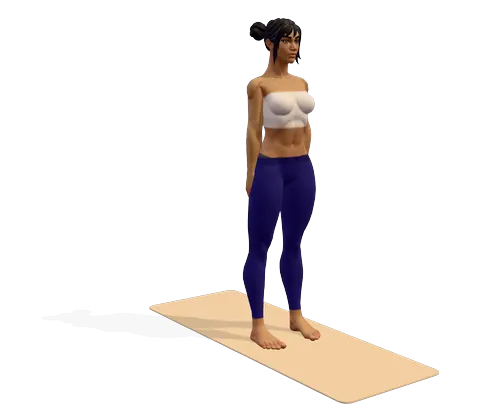 Mountain PoseTadasana
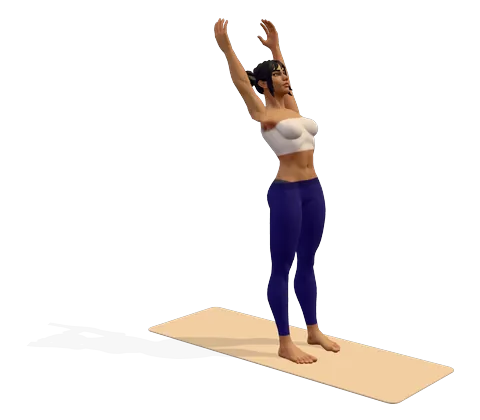 Raised Arms PoseHasta Uttanasana
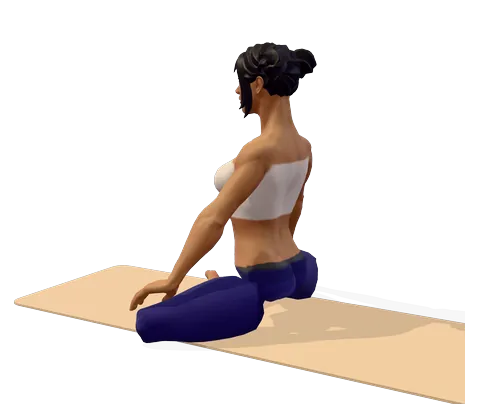 Easy PoseSukhasana
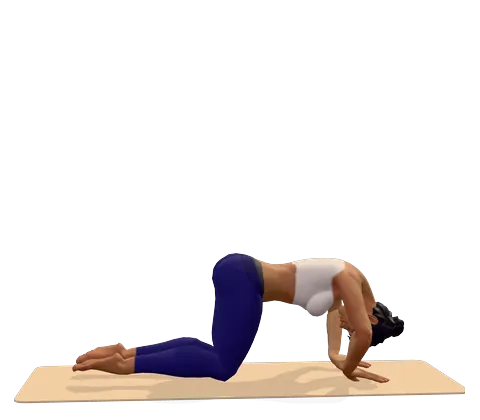 Cat PoseMarjaryasana
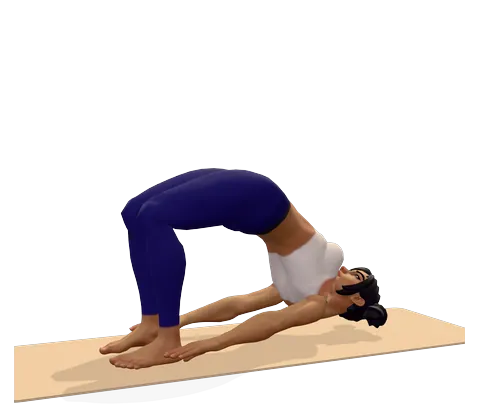 Bridge PoseSetu Bandhasana
More poses that help with copd
Add these once the session above feels easy, or swap one in when a pose does not suit you.
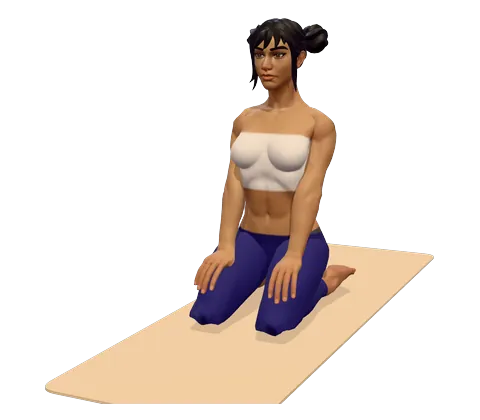 Thunderbolt PoseVajrasana
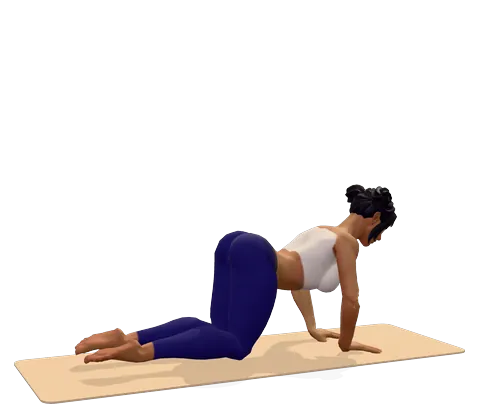 Cow PoseBitilasana
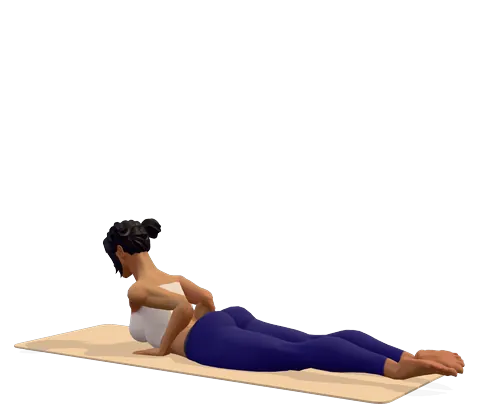 Cobra PoseBhujangasana
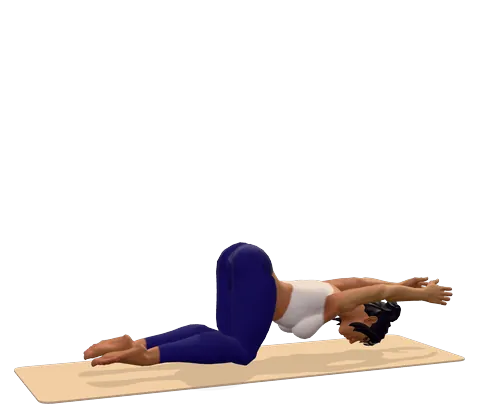 Extended Puppy PoseAnahatasana
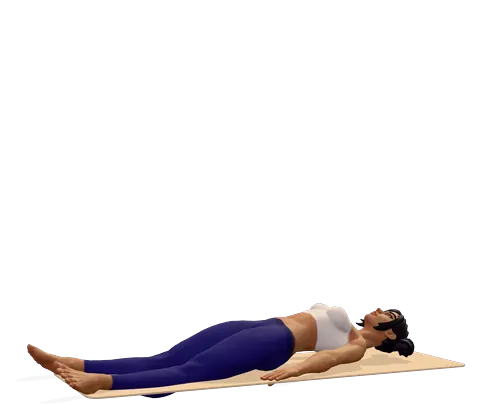 Corpse PoseSavasana
Mudras for copd
Hold a mudra while you sit for the breathing practice or a few minutes of quiet. Mudras are a traditional practice; research on them is limited.
Breathing practice
Avoid
Breath holding and fast breathing.
Moderate evidence: Randomised trials show a benefit; more research is under way.
Yoga for COPD (chronic obstructive pulmonary disease, which includes emphysema and chronic bronchitis) is mostly about breathing: slowing the breath down, emptying the lungs more fully and staying calm when you feel short of breath. Research on yoga breathing exercises for COPD is encouraging. This page explains how yoga may help, what the studies found, how to do each pose from a chair, and which breathing exercises for people with COPD to practise each day. It suits complete beginners: this is yoga that focuses on breathing, not on flexibility.
Yoga supports your COPD treatment; it does not replace it. Keep using your inhalers and oxygen exactly as prescribed, ask your doctor or respiratory team before you start, and if you are offered pulmonary rehabilitation, take it — yoga fits well alongside it.
Is yoga good for COPD?
For many COPD sufferers, gentle yoga therapy is a safe and useful addition, and it is good yoga for lung health in general. It cannot repair damaged lungs, but it can change how well you use the lungs you have:
- A better breathing pattern. COPD makes it hard to breathe out fully, so air gets trapped and the next breath feels short. Slow breathing with a long out-breath helps empty the lungs.
- Stronger breathing muscles and posture. Gentle stretches free the ribs, chest and shoulders, and sitting tall gives the diaphragm room to move.
- More stamina. Regular, paced movement builds leg and arm strength so daily tasks leave you less breathless.
- Less panic. Breathlessness and anxiety feed each other. Calm, practised breathing gives you something to do when you feel short of breath.
So can you use yoga for lungs (or any exercises to strengthen your lungs) to improve lung function? Not the lung tissue itself — but yoga can train the muscles and habits of breathing, which is what makes the difference day to day.
What the research says
The evidence is moderate. A 2019 meta-analysis of 11 randomised trials (586 patients) found that yoga improved exercise capacity — on average people walked about 26 metres further in a 6-minute walk test — and lung function (FEV1) compared with no yoga. The benefits appeared only in breathing-focused programmes, not in programmes built mainly on poses, which is why this plan puts COPD yoga breathing techniques first and uses the yoga asanas for COPD as support. An earlier review of 5 trials (233 patients) also found better lung function and walking distance, and a 2024 overview of reviews found that yoga increased exercise endurance in COPD. The US NCCIH summarises the same review: breathing-focused yoga had beneficial effects on exercise capacity, lung function and quality of life.
The weakness of yoga for COPD research papers is that most trials were small and short, and side effects were rarely reported in detail. Yoga has not been shown to slow the disease or to replace pulmonary rehabilitation.
Before you start
- Pace yourself with the talk test: you should be able to speak a short sentence at any point. Slightly breathless is fine; gasping is not.
- Use your reliever inhaler before practice if your doctor or nurse has advised it, and keep it beside you.
- If you use oxygen, use it during practice at the flow rate you have been prescribed.
- Choose a good time of day — often mid-morning, after you have cleared your chest — and practise in a warm, smoke-free room.
Chair yoga for COPD: the plan, pose by pose
Use a sturdy chair without arms or wheels. Chair yoga for COPD is not a “lesser” version: it lets you put all your attention on the breath.
1. Easy pose or tall sitting — the breathing seat
Sit near the front of the chair, feet flat, spine tall — the chair version of Easy pose (Sukhasana). If you are comfortable on the floor, sit cross-legged on a firm cushion. When you feel short of breath, lean forward and rest your forearms on your thighs, shoulders relaxed, and breathe out through pursed lips. Many people with COPD find this “forward lean” position eases breathlessness.
2. Mountain pose — stand tall with support
Mountain pose (Tadasana): stand behind the chair with both hands on its back. Spread your weight evenly, lengthen the spine and let the shoulders drop away from the ears. Take three slow breaths. Seated version: sit tall and press the feet into the floor.
3. Raised arms — ribs lift on the in-breath
Raised arms pose (Hasta Uttanasana): seated or standing, breathe in through the nose as you lift the arms forward and up, then lower them slowly while you breathe out through pursed lips. Lifting the arms can make some people more breathless, so start with one arm at a time or lift only to shoulder height. Repeat 4–6 times.
4. Seated cat–cow — free the chest and back
Cat pose (Marjaryasana) with cow pose, done on the chair: hands on knees, breathe in and gently lift the chest; breathe out and round the back, letting the head drop a little. Move slowly with your breath 6–8 times. If kneeling is easy for you, you can do it on hands and knees.
5. Bridge pose — legs and chest opening
Bridge pose (Setu Bandhasana): lie on a bed or mat with a pillow under your head, knees bent. Lift the hips a little on the in-breath and lower on a long out-breath, 3–5 times. If lying flat makes you breathless, skip it and do seated knee lifts instead.
Breathing exercises for COPD
These are the best breathing exercises for people with COPD and the most useful part of the plan. Physio breathing exercises for COPD taught in respiratory therapy use the same ideas. They need no equipment, so they work as gentle breathing exercises for COPD without any devices, and as simple home treatment for COPD alongside your medicines. Practise them when you feel well, so they are familiar when you need them.
Pursed-lip breathing
Breathe in gently through the nose for a count of two. Purse your lips as if blowing out a candle and breathe out slowly for a count of four or more. The gentle resistance helps keep the airways open so trapped air can leave. Use it while walking, climbing stairs or whenever breathlessness rises.
Belly (diaphragmatic) breathing
This is the simplest of the deep breathing exercises for COPD. One hand on the belly, one on the chest. Let the belly rise as you breathe in and fall as you breathe out slowly. Some people with severe COPD find this harder; if it makes you more breathless, go back to pursed-lip breathing.
Anulom Vilom and Viloma, slowly
Anulom Vilom (alternate nostril breathing) slows the breath and calms the mind — practise it gently and without breath holds. Viloma (interrupted breath) teaches you to breathe out in stages; keep each pause to a second and never strain. Avoid fast breathing (Kapalbhati, Bhastrika) and breath retention. The breathing exercise timer can pace a slow rhythm for you.
Breathing exercises for COPD and anxiety are the same exercises: a long out-breath is one of the quickest ways to calm the body. The yoga for anxiety plan has more calming practices.
Can exercise improve COPD?
Exercise does not reverse lung damage, but the benefits of exercise for COPD are well established: pulmonary rehabilitation — a programme of exercise and education, usually at least twice a week for six weeks in the UK’s NHS — improves how much you can do before you feel out of breath, as well as symptoms and confidence. What is the best exercise for COPD? Usually a mix of walking, light strength work for arms and legs, and breathing exercises — the best exercises for better breathing with COPD combine all three. If you live in the UK, ask your GP about NHS pulmonary rehabilitation, where a physiotherapist can check your breathing exercises for COPD and tailor physical therapy for you. How to exercise with severe COPD: go slower, sit down for more of it, rest between short bouts, use oxygen as prescribed and ask your respiratory team for a tailored exercise program for people with COPD.
Sample weekly routine
| Day | Practice | Time |
|---|---|---|
| Monday | Guided session on this page (chair versions) + pursed-lip breathing | 15–20 min |
| Tuesday | Short walks with pursed-lip breathing, resting as needed | 2 × 10 min |
| Wednesday | Belly breathing, slow Anulom Vilom, seated cat–cow | 15 min |
| Thursday | Arm and leg strength from a chair (sit-to-stands, arm raises) | 10–15 min |
| Friday | Guided session + Viloma | 15–20 min |
| Saturday | Walk or pulmonary rehab exercises | 20 min |
| Sunday | Rest; 5 minutes of calm breathing | 5–10 min |
Practise every day if you can, even for five minutes. You can build your own seated sequence in the sequence builder, and there are more supported poses in chair yoga.
Colds, chest infections and flare-ups
Yoga for cold and cough is simple: when you have a cold, swap the poses for rest and gentle breathing only, and drink enough fluids. With a chest (lungs) infection, rest and see your doctor rather than practising. There is no yoga for lungs cleansing or “lung detox”: the most powerful thing you can do for your lungs is to stop smoking and avoid smoke. And no, you cannot cure COPD naturally with yoga — but you can live better with it.
Contact your doctor if you become more breathless than usual, cough more, or your phlegm changes colour or becomes thicker — these can be signs of a flare-up. Call emergency services for severe breathlessness at rest, chest pain, blue or grey lips, confusion or drowsiness, or if you cannot speak in full sentences.
Start the guided COPD session
The session on this page runs at a gentle pace with a 3D guide and a calm voice in 28 languages; the saffron ring on the mat grows as you breathe in and shrinks as you breathe out. Set the hold time to “shorter”, keep your chair and inhaler close, and start the guided session.
Research behind this plan
- Cramer 2019, Clinical Rehabilitation — 11 trials, 586 patients: yoga improved 6-minute walk distance, FEV1 and quality of life; effects seen in breathing-focused yoga
- Liu 2014, Journal of Thoracic Disease — 5 trials, 233 patients: yoga training improved lung function and exercise capacity
- Heredia-Rizo 2024, Disability and Rehabilitation — overview of 27 reviews: yoga increased exercise endurance in COPD
- NHS, COPD treatment — pulmonary rehabilitation and signs of a flare-up
- NCCIH, Yoga: What You Need To Know — breathing-focused yoga had beneficial effects on exercise capacity, lung function and quality of life in COPD
Frequently asked questions
Is yoga good for COPD?
Yes, as an addition to treatment. A meta-analysis of 11 trials found that breathing-focused yoga improved walking distance and lung function (FEV1) in COPD. It does not repair the lungs or replace pulmonary rehabilitation.
What breathing exercises are good for COPD?
Pursed-lip breathing (in through the nose, slowly out through pursed lips), belly breathing, slow alternate nostril breathing without breath holds, and a gentle interrupted out-breath (Viloma).
Is yoga good for emphysema?
Emphysema is a type of COPD, so the same plan applies: slow breathing with a long out-breath, supported chair poses and regular walking. Ask your respiratory team before you start.
Can breathing exercises help COPD?
They can ease breathlessness and anxiety and help you stay in control during activity. They work alongside inhalers and oxygen, not instead of them.
How do I exercise with severe COPD?
Keep sessions short, sit for most exercises, rest between bouts, use oxygen as prescribed and use pursed-lip breathing throughout. A pulmonary rehabilitation team can set safe limits for you.
Can yoga increase lung capacity or strengthen the lungs?
Yoga cannot grow new lung tissue, and no pose is a lung-strengthening exercise in that sense. But yoga can train the breathing muscles, loosen the chest and help you empty your lungs more fully, so each breath works better.
How often should I do yoga for COPD?
A few minutes of breathing practice every day, plus two or three short pose sessions a week. Most trials ran for 8–12 weeks before measuring results.
What should people with COPD avoid in yoga?
Fast breathing (Kapalbhati, Bhastrika), breath holds, hot rooms, deep forward folds that squeeze the belly, and pushing on when you cannot speak a sentence.
Medical note: yoga supports treatment; it does not replace it. Keep taking prescribed medicine and talk to your doctor before you start, especially with heart disease, uncontrolled blood pressure, recent surgery, pregnancy, epilepsy or severe pain. Read our medical disclaimer.