Your scoliosis yoga plan
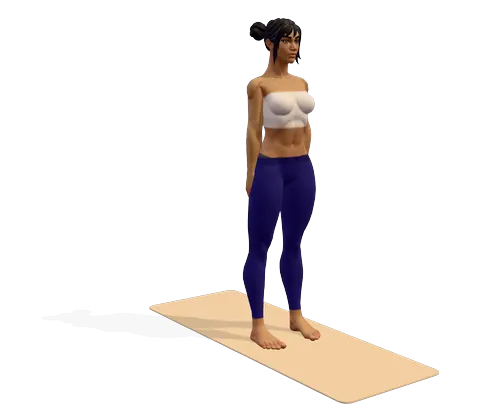 Mountain PoseTadasana
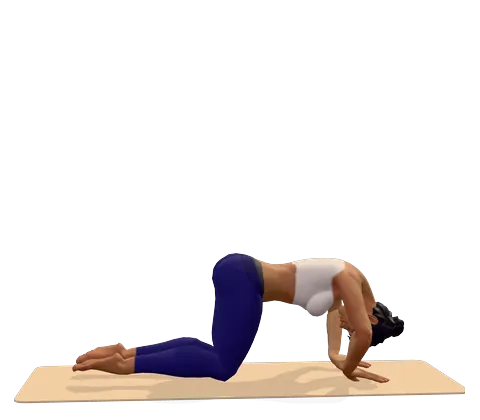 Cat PoseMarjaryasana
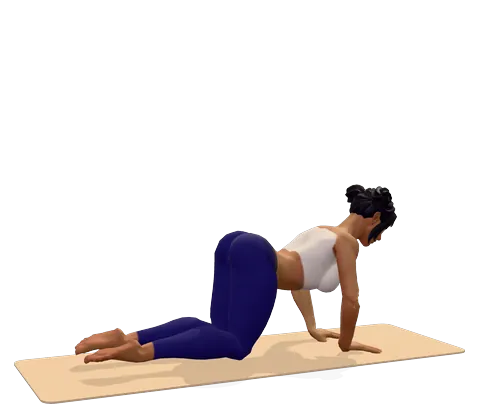 Cow PoseBitilasana
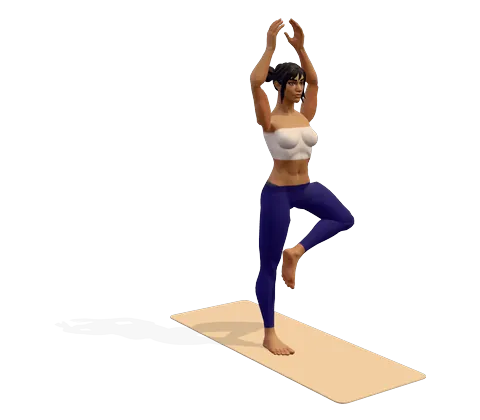 Tree PoseVrikshasana
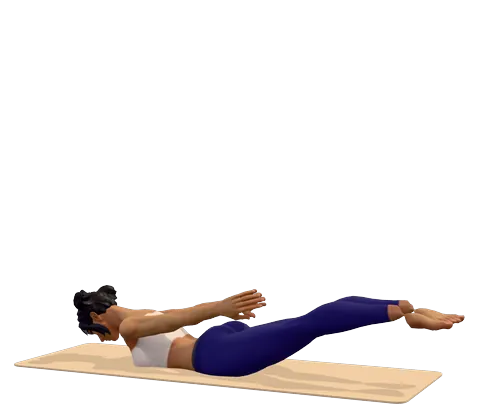 Locust PoseSalabhasana
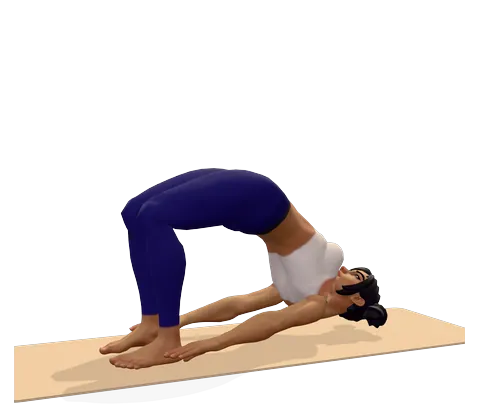 Bridge PoseSetu Bandhasana
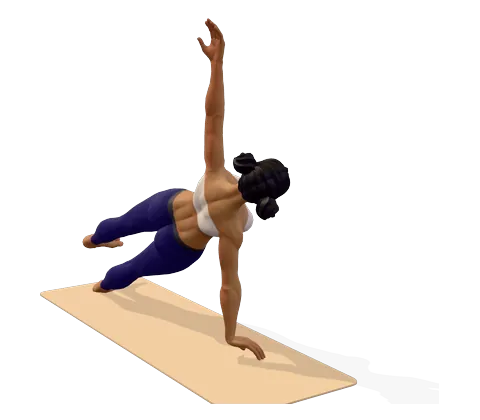 Side Plank PoseVasisthasana
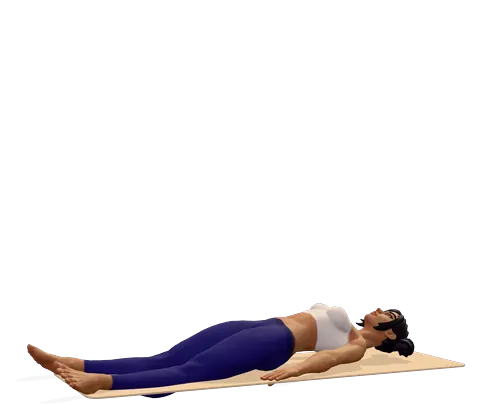 Corpse PoseSavasana
More poses that help with scoliosis
Add these once the session above feels easy, or swap one in when a pose does not suit you.
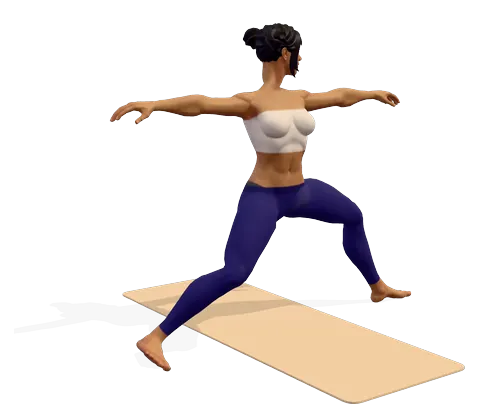 Warrior II PoseVirabhadrasana II
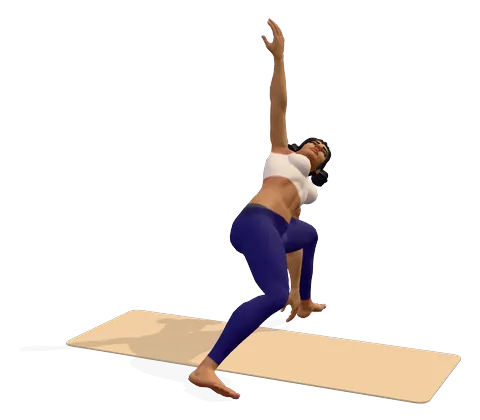 Triangle PoseTrikonasana
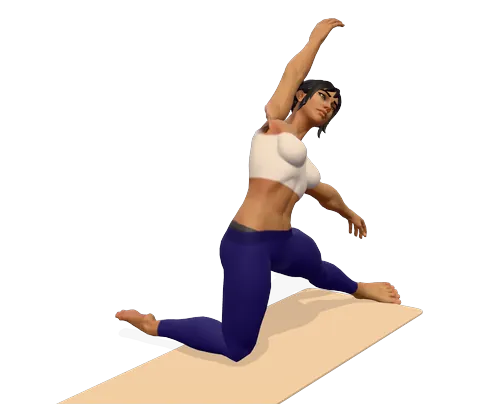 Gate PoseParighasana
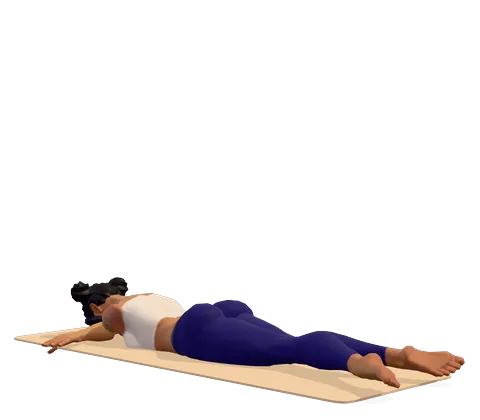 Crocodile PoseMakarasana
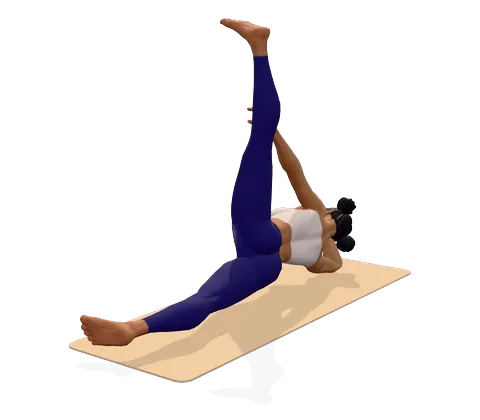 Side-Reclining Leg LiftAnantasana
Breathing practice
Avoid
Deep or forced twists and backbends that increase pain. Work with a teacher who knows your curve; yoga does not straighten a structural curve.
Emerging evidence: Small or early trials look promising.
Yoga for scoliosis can help you feel stronger, move more easily and manage back pain, but it is important to be honest from the start: yoga does not straighten a structural curve. What it can do is build even strength around the spine, improve balance and breathing, and give you a calm, regular routine that suits your body. This page explains how the plan above works, how to adapt poses to your curve, what to avoid and what the research shows.
What is scoliosis?
Scoliosis is a sideways curve of the spine, often with some rotation, so the spine looks like a C or an S from behind. Signs include one shoulder or hip higher than the other, a rib hump when bending forward, or clothes that hang unevenly. The most common type starts in the teenage growth spurt (adolescent idiopathic scoliosis). In older adults, wear of the discs and joints can cause a new curve (degenerative scoliosis).
Many curves are mild and never need treatment. Growing children with larger curves may need a brace, and a few need surgery. Adults usually need help with pain and stiffness. A doctor measures the curve on an X-ray (the Cobb angle) and decides what is needed; please see one if you notice signs of scoliosis in yourself or your child.
Is yoga good for scoliosis?
For people with scoliosis who are otherwise well, yes: yoga is a safe, useful form of exercise when it is done with care. The NHS notes that it is not clear whether back exercises improve scoliosis, but says physical activity is good for you and should not be avoided unless your doctor advises otherwise. Good reasons to practise:
- Even strength. The muscles on the two sides of a curve are often unequal. Poses held with care can build the weaker side.
- Spinal mobility. Gentle movement eases the stiffness many adults feel, especially in the thoracic spine (upper back).
- Breathing. A thoracic curve can squeeze one side of the rib cage. Slow breathing into the "flat" side helps you use the lungs fully.
- Balance and body awareness. Learning where "straight" feels for you helps posture in daily life.
- Pain and stress. Relaxation and breathing can reduce the tension that makes back pain worse.
Can yoga cure scoliosis or correct a curved spine?
No. Scoliosis cannot be cured by yoga, and no exercise reliably reverses a structural curve. You may see "yoga for scoliosis before and after" photos online; posture, lighting and how someone stands can change a photo a lot, so do not rely on them.
There is one interesting line of research. In a 2014 case series, 25 people with idiopathic or degenerative scoliosis practised Side Plank on the side of the curve's outer bend (the convex side) daily for about 7 months, and their main curve measured smaller on X-ray on average. But it had no control group and was small, so it cannot prove that yoga corrects curvature of the spine. This is why the evidence level for this page is "emerging". If you want to try a one-sided approach, do it with a physiotherapist who has seen your X-ray.
How to correct a curved spine? For growing children, the proven options are monitoring, bracing and, for severe curves, surgery. Scoliosis-specific physiotherapy exercises (such as the Schroth method) are also used. Yoga is best seen as a supportive activity alongside these, not a replacement.
What yoga poses are good for scoliosis?
The session above uses simple, symmetrical poses that build strength and balance without forcing the spine. These are good scoliosis best yoga poses for beginners.
Mountain pose: learn your own "straight"
In Mountain pose, stand with your weight even on both feet. Lengthen up through the crown of your head as if growing taller, rather than trying to force your shoulders level. Practise in front of a mirror and notice which hip or shoulder tends to drift. This is a simple yoga pose for spine alignment awareness.
Cat and Cow: gentle spinal mobility
Cat and Cow move the whole spine forward and back in a small, safe range. They warm up the thoracic spine and ease stiffness. Move with your breath and keep the range comfortable.
Tree pose: balance and even standing
Tree pose trains balance and the small muscles around the hips and trunk. Use a wall for support if you wobble. You may find one side much easier; that is normal with a curve.
Locust and Bridge: strengthening the spine
Which yoga pose strengthens the spine? Locust pose works the back muscles along the whole spine, and Bridge pose works the buttocks and lower back. Keep both low and long rather than high and strained.
Side Plank: side-body strength
Side Plank strengthens the muscles along the side of the trunk. Start with your lower knee down. If your physiotherapist advises a one-sided programme, they will tell you which side to favour; otherwise, practise both sides equally.
Savasana: rest
Lie on your back with a blanket under your knees, and a folded towel under the flatter side of the ribs if that feels more supported.
Scoliosis and yoga poses to avoid
Is yoga bad for scoliosis? Not in general, but some poses need care or are best skipped:
- Deep or forced twists, especially pulling yourself round with the arms. Twisting adds to the rotation already in the spine.
- Deep backbends such as Wheel, and any backbend that pinches.
- Headstand, shoulder stand and plough, which load an uneven neck and upper spine.
- Forcing symmetry, for example pushing hard to make both sides look the same in a stretch.
- After spinal fusion surgery, avoid bending or twisting the fused section and ask your surgeon which moves are allowed.
These are the main exercises to avoid with scoliosis; the rule is to stop anything that increases pain or causes numbness.
Can yoga help with scoliosis in adults, teenagers and seniors?
Adults
For adults whose curve has stopped growing, yoga for scoliosis pain and stiffness is the main goal. Strength, mobility and relaxation work together, and regular short sessions matter more than intense ones.
Children and teenagers
Can yoga help with scoliosis in children or teenagers? It can be a healthy activity, but it must not replace monitoring or bracing prescribed by the specialist, because curves can grow quickly during growth spurts. Yoga cannot prevent scoliosis either. For younger children, try the Yoga for Kids session.
Seniors
Yoga for scoliosis for seniors should focus on balance and safe strength. Many older adults with degenerative scoliosis also have low bone density, so avoid loaded forward bending and strong twists, and read yoga for osteoporosis. Yoga for seniors has chair and wall versions.
What type of yoga is best for scoliosis?
Slow, alignment-focused yoga suits scoliosis best, because it gives you time to use props and feel each side. Hatha and Iyengar-style classes fit this well. Fast, hot or very flexible styles are less suitable. At home, the guided session on this page is a steady 10 minute yoga for scoliosis practice on the "shorter" hold setting.
Yoga for spine health: thoracic spine, neck and kyphosis
Good yoga for spinal health is not only about the curve. Most adults with scoliosis also feel stiffness in the thoracic spine and neck, and some have kyphosis too (a rounded upper back). Yoga for kyphosis and scoliosis together focuses on gentle chest opening, such as a low Locust or Sphinx, rather than deep backbends.
- Yoga for thoracic spine mobility: slow Cat and Cow and side-lying rib breathing.
- Yoga for cervical spine comfort: keep the neck long in every pose, and avoid putting weight on the head.
- Yoga for strengthening the spine: Locust, Bridge and Side Plank, held briefly and repeated.
- Yoga to align the spine in daily life: a quick Mountain pose check whenever you stand up.
Can yoga treat scoliosis on its own? No. Therapy exercises for scoliosis from a physiotherapist are designed around your X-ray; yoga adds general strength, spinal mobility and relaxation. Curved spine correction exercises that promise to "fix" a curve at home should be treated with caution. Exercises for a curved lower spine follow the same rules as above: gentle, even and pain-free.
Breathing into the rib cage
Sit tall or lie on your side with the flatter side of your ribs facing up. Breathe slowly and imagine the breath widening those ribs. Ujjayi breathing gives a steady rhythm for this, and Nadi Shodhana is a calm way to end. Never strain or hold the breath hard.
A simple home plan
| When | What | How long |
|---|---|---|
| 3–4 days a week | Guided session above | 10–20 minutes |
| Most days | Walking or swimming | 20–30 minutes |
| Daily | Rib breathing and Mountain pose check | 2–3 minutes |
| As advised | Physiotherapy exercises for scoliosis | As prescribed |
Combine yoga with the strengthening exercises for scoliosis your physiotherapist gives you. For general back comfort, see yoga for back pain and yoga for posture.
रीढ़ की हड्डी टेढ़ी (स्कोलियोसिस) के लिए योग — हिंदी में ताड़ासन, कैट-काउ, वृक्षासन, शलभासन, सेतुबंधासन और घुटना टिकाकर वसिष्ठासन धीरे-धीरे करें। ज़ोर से मोड़ने (ट्विस्ट) और गहरे बैकबेंड से बचें। योग से टेढ़ी रीढ़ सीधी नहीं होती, पर मांसपेशियाँ मज़बूत होती हैं और दर्द कम हो सकता है। बच्चों में डॉक्टर की बताई ब्रेस या जाँच कभी न छोड़ें।
Practise with the 3D guide
Use the session at the top of the page. Rotate the 3D teacher to see the spine from behind, and turn on the Body guide to see which muscles each pose works. The voice guides you in 28 languages, so you can watch your own posture while you listen. New to yoga? Start with yoga for beginners.
Research behind this plan
- Fishman 2014, Global Advances in Health and Medicine — case series of 25 patients: daily Side Plank on the convex side was followed by smaller curves on X-ray; no control group
- NHS — Scoliosis: it is not clear whether back exercises improve scoliosis; staying active is encouraged; bracing and surgery options
Frequently asked questions
Can yoga cure scoliosis?
No. Yoga does not straighten a structural curve. It can build even strength, improve mobility and breathing, and ease back pain. Small studies of one-sided poses such as Side Plank are interesting but not proof.
Is yoga bad for scoliosis?
Not in general. Most people with scoliosis can do gentle yoga. Avoid deep or forced twists, deep backbends and inversions, and ask your surgeon before yoga if you have had a spinal fusion.
What yoga poses are good for scoliosis?
Mountain, Cat and Cow, Tree, Locust, Bridge, Side Plank with the knee down, and relaxation in Savasana are a good start. They build strength and balance without forcing the spine.
Can yoga help with scoliosis in teenagers?
Yoga can be a healthy activity for teenagers with scoliosis, but it must not replace the check-ups, brace or treatment their specialist prescribes, because curves can grow quickly during growth.
Can yoga help with scoliosis pain in adults?
Often, yes. Gentle strengthening, mobility and relaxation can reduce stiffness and pain for many adults, even though the curve itself does not change.
What type of yoga is best for scoliosis?
Slow, alignment-focused styles such as Hatha or Iyengar-style yoga, with props and time to feel each side. Avoid fast, hot or extreme-flexibility classes.
How often should I do yoga for scoliosis?
Three or four sessions of 10 to 20 minutes a week is a good aim, plus daily walking. Consistency matters more than long sessions.
Medical note: yoga supports treatment; it does not replace it. Keep taking prescribed medicine and talk to your doctor before you start, especially with heart disease, uncontrolled blood pressure, recent surgery, pregnancy, epilepsy or severe pain. Read our medical disclaimer.