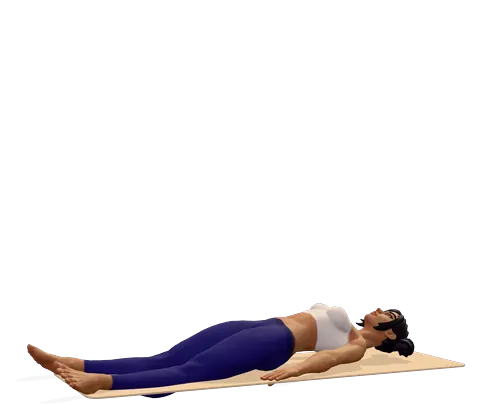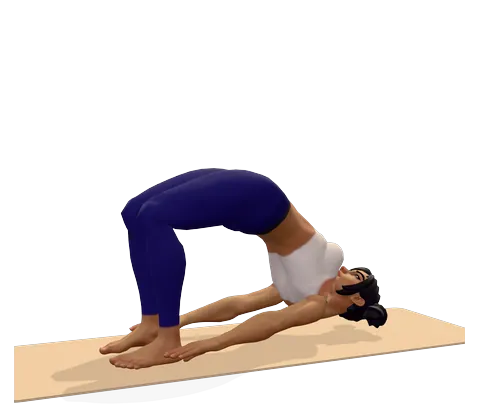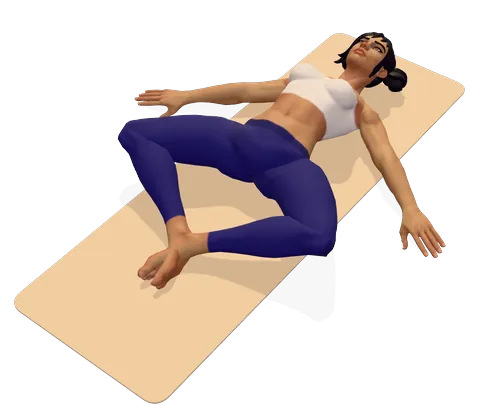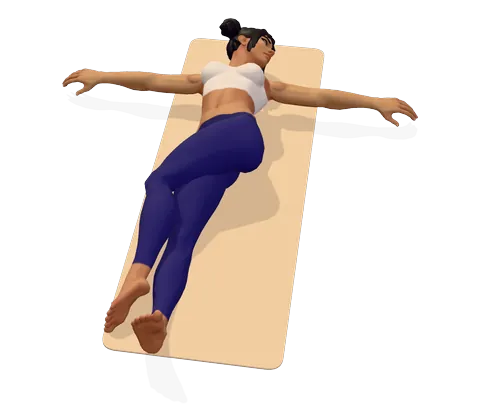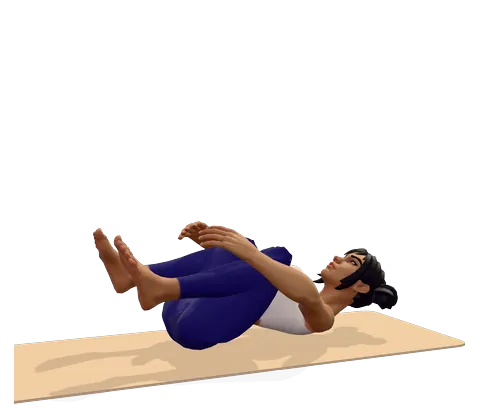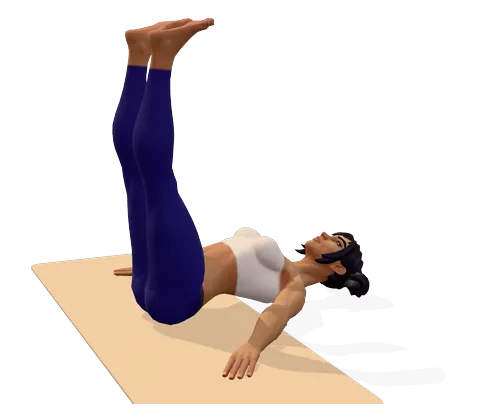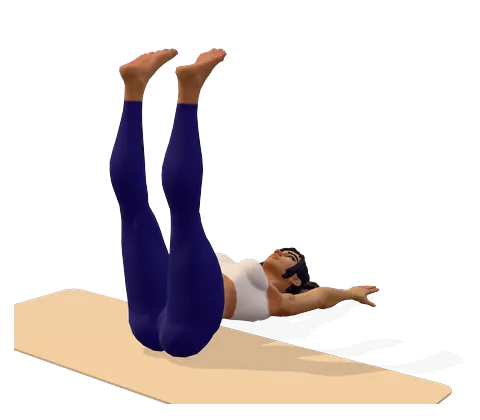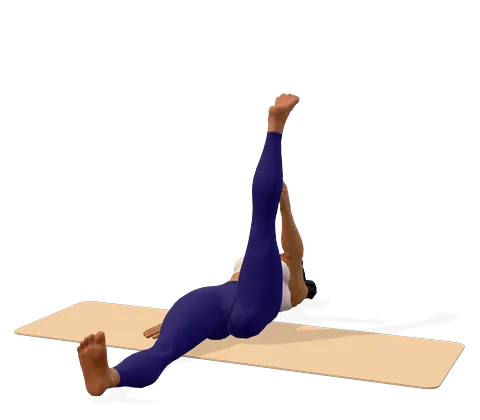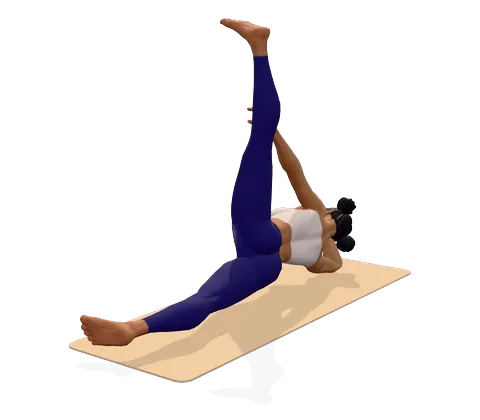
How to do Side-Reclining Leg Lift step by step
- Lie on your right side with your body in one straight line from head to heels. Flex both feet.
- Bend your right elbow, place it on the floor beyond your head and rest your head in your right hand. If your neck or shoulder complains, rest your head on your outstretched arm instead.
- Press the outer edge of your right foot and your right hip into the floor so you do not roll backward or forward.
- Bend your left knee toward your chest and hold your left big toe with the first two fingers and thumb of your left hand.
- Breathing in, straighten your left leg up toward the ceiling, keeping your hips stacked one above the other. Use a strap around the foot if the leg will not straighten.
- Hold for 3–5 breaths (about 20 seconds), gaze forward and chest open.
- Breathing out, bend the knee, release the toe and lower the leg. Roll onto your back, then lie on your left side and repeat.
Where you feel Side-Reclining Leg Lift: what it stretches and strengthens
Balance on your side and lift the top leg high. In the 3D guide, turn on Body guide: areas that stretch glow green and areas that work glow saffron.
Stretches
- Inner thighs
- Hamstrings
Strengthens
- Side waist
- Glutes
Benefits and precautions
Benefits
- Stretches the hamstrings and inner thigh of the lifted leg
- Strengthens the side of the hip (gluteus medius) and the side waist
- Trains balance and focus on a narrow base, with little risk of falling
- Opens the hips in preparation for side plank and standing big-toe poses
- Improves awareness of how the pelvis and spine line up
Avoid or modify if
- Neck or shoulder pain — rest your head on your lower arm or a cushion instead of your hand
- Hamstring or groin strain — keep the lifted knee bent or use a strap, and lift less
- Hip replacement — ask your surgeon before lifting the leg this far out to the side
- Pelvic girdle pain in pregnancy — skip the wide leg lift; small side-lying lifts are usually more comfortable
- Sudden weakness, numbness or trouble lifting a leg is a medical problem, not tightness — see a doctor
The side-reclining leg lift (Anantasana) is a floor pose in which you lie on your side, prop your head in your hand and raise your top leg toward the ceiling, holding the big toe. It looks relaxed, like someone lounging on a sofa, but it asks for balance, open hamstrings and a steady core. It is also called Vishnu's couch pose. This guide covers the story behind the name, how to do it, the muscles worked, easier versions, how it compares with the side-lying leg lift exercise, and when a leg that will not lift needs a doctor rather than a stretch.
What is Anantasana (Vishnu's couch pose)?
In Sanskrit, ananta means "endless" or "infinite", and asana means "pose". Ananta is also the name of the great serpent (Shesha) whose coils form the bed of the god Vishnu. How is Vishnu depicted in Indian art? Often reclining on those coils on the cosmic ocean, head propped on one hand — exactly the shape of this pose, which is why some teachers call it the sleeping Vishnu pose.
Anantasana is which type of asana? It is a reclining (side-lying) pose that combines three things: a balance, a hamstring and inner-thigh stretch, and a hip opener. On our site it sits with the supine poses and is rated intermediate, mainly because staying balanced on your side is harder than it looks.
How to do the side-reclining leg lift
The steps above take you into the pose. These points make the difference between wobbling and steadiness:
- Stay in one line. Imagine lying with your back against a wall: heels, hips, shoulders and the back of the head all touch it.
- Stack the hips. The top hip should sit directly above the bottom hip. As the leg lifts, the pelvis wants to roll back — resist it.
- Anchor the bottom leg. Flex the bottom foot and press its outer edge down; this leg is your foundation.
- Lift from the hip, not the hand. The hand only guides the leg. If you have to pull hard, bend the knee or use a strap.
How long to hold it
Hold for 15–30 seconds per side. If you wobble out, simply come back in; balance improves quickly with practice. One or two rounds per side is enough.
Anantasana benefits
The benefits of Anantasana come from stretching and strengthening at the same time. The lifted leg gets a long stretch through the hamstrings and inner thigh, while the side of the hip, the waist and the shoulder of the bottom arm work to keep you from rolling. For people with tight hips, it is a gentle way to open the hip out to the side with no weight on the joint. It also builds the hip strength and control you need for side plank and extended hand-to-big-toe pose.
Side-lying leg lifts: muscles worked
| Muscles | What they do in the pose |
|---|---|
| Hamstrings and adductors (inner thigh) of the top leg | Stretched as the leg rises toward the ceiling |
| Gluteus medius, gluteus minimus and tensor fasciae latae | Lift the top leg out to the side (hip abduction) |
| Obliques and quadratus lumborum | Keep the waist long and stop you rolling |
| Shoulder muscles of the bottom arm | Support the head and upper body |
So which muscles are used in side-lying leg lifts? Mainly the gluteus medius on the side of the hip — the same muscle that keeps your pelvis level when you walk. Because the waist also works to keep you steady, the pose doubles as a side abs leg lift.
Anantasana vs side leg lift exercises
What are side-lying leg lifts? In fitness and physiotherapy, side leg lifts are an exercise done lying on your side, repeatedly lifting the straight top leg to about 45 degrees without holding it. Do side-lying leg lifts work? Yes: physiotherapists use them to strengthen the gluteus medius, which supports the hips and knees. Anantasana goes further — the leg rises much higher and you hold it — so it adds a stretch and a balance challenge.
Standing and seated leg lifts
- Standing side leg lifts (standing lateral leg lift): hold a chair and lift one leg out to the side. The muscles used to lift the leg while standing are the same hip abductors, so standing side leg raises have the same muscles worked as the lying version. One of the benefits of standing side leg raises is better balance on the standing leg.
- Seated leg lifts: sit on a chair, straighten one knee and lift the thigh slightly (a seated straight leg lift). What are seated leg lifts good for? The muscles that help lift the leg forward — the hip flexors and quadriceps. Add an elastic band for seated leg lifts with resistance.
The benefits of leg raises like these include stronger hips, steadier walking and better balance, which is why side-lying and chair leg lifts for seniors appear in many gentle programmes. See yoga for seniors for a full routine.
Anantasana for beginners
- Head on the arm: stretch the bottom arm along the floor and rest your head on it. Less strain on the neck.
- Bent knee: hold the big toe with the knee bent and only straighten as far as the hamstrings allow.
- Strap: loop it around the ball of the foot and hold the ends.
- Back to a wall: lie with your back touching a wall to remove the balance part.
- Bottom knee bent: bending the lower leg gives a wider, steadier base.
Once it feels steady, try the side-reclining leg lift yoga pose with the head on the hand and the leg fully straight, or practise reclining hand-to-big-toe pose on your back to open the hamstrings first.
Lower back pain when lifting the leg
If you feel lower back pain when lifting the left leg (or the right), the pelvis has usually rolled back or the waist has collapsed toward the floor. Bend the bottom knee, lift the top leg less, and lengthen the lower side of your waist. Low back pain when lifting a leg that does not ease with these changes deserves a check-up. Anantasana is not one of the best asanas for back pain relief; our yoga for back pain plan lists gentler poses for lower back pain relief.
Tightness makes a leg stiff; it does not stop it lifting. If you suddenly can't lift your leg from a sitting position, are unable to lift the left or right leg when sitting or lying down, or feel new numbness or weakness, see a doctor promptly — it can come from a trapped nerve, a hip problem or, rarely, a stroke. If it comes with a drooping face, slurred speech or arm weakness, call emergency services.
Poses to do before and after
Warm up with reclining hand-to-big-toe pose and bound angle pose. Afterwards, lie on your back and unwind with a supine spinal twist. To practise Anantasana with voice guidance, add it to your own sequence in the sequence builder.
Frequently asked questions
What are the benefits of Anantasana?
It stretches the hamstrings and inner thighs, strengthens the side of the hip and waist, and trains balance and focus. It also prepares you for side plank and standing big-toe poses.
Why is Anantasana called Vishnu's couch pose?
Ananta is the endless serpent on whose coils Vishnu rests. The pose copies the way Vishnu is often shown reclining with his head propped on one hand.
What muscles do side-lying leg raises work?
Mainly the gluteus medius and minimus on the side of the hip, plus the tensor fasciae latae. In Anantasana the hamstrings and inner thigh of the lifted leg are also stretched.
Why do I keep rolling backward in Anantasana?
The top hip is falling back as the leg lifts. Press the outer edge of the bottom foot down, keep the hips stacked, or practise with your back against a wall.
Is Anantasana good for beginners?
Yes, with changes: rest your head on your arm, bend the lifted knee or use a strap. The full version comes with time.
Can I do Anantasana during pregnancy?
Side-lying is often comfortable in pregnancy, but the wide leg lift can strain the pelvis. Keep the lift small, skip it if you have pelvic girdle pain, and ask your midwife.
Should I worry if I can't lift my leg lying down?
If the problem is new or sudden, yes — see a doctor. Stiff hamstrings limit how high a leg goes, but they do not stop it lifting at all.
This page is for general education. Check with your doctor before starting yoga if you are pregnant, have a medical condition or an injury. Stop if you feel pain, dizziness or shortness of breath.