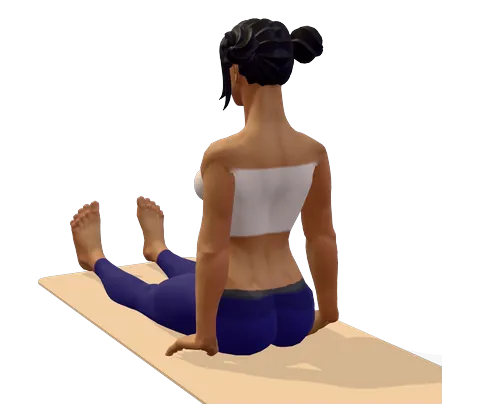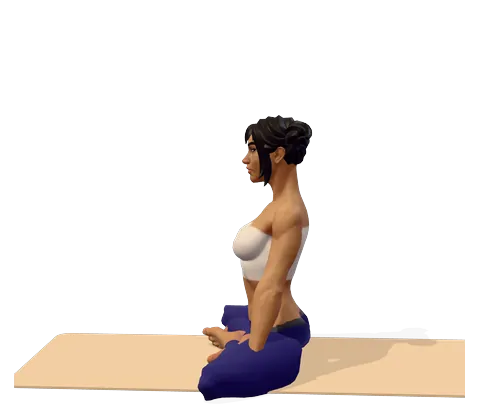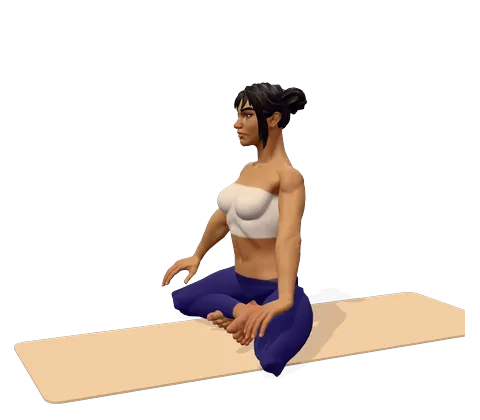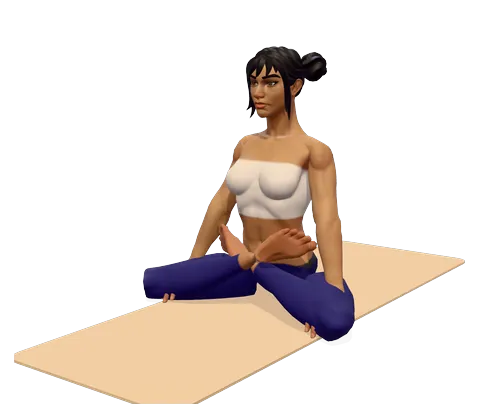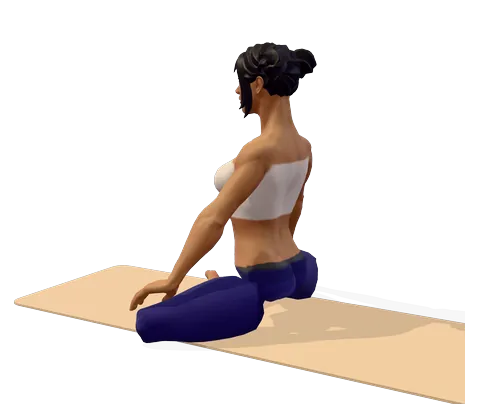
How to do Easy Pose step by step
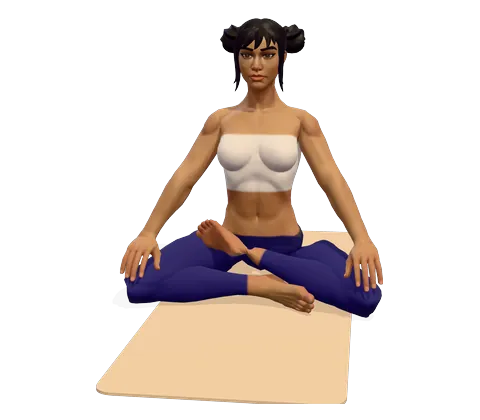
- Sit on the front edge of a folded blanket or cushion so your hips are higher than your knees.
- Cross your shins so that each foot rests under the opposite knee. Let the knees drop out to the sides without forcing them.
- Rock gently from side to side and settle your weight evenly on both sitting bones.
- Rest your hands on your knees or thighs, palms down to feel grounded or palms up to feel open.
- Lengthen your spine upward, draw your shoulders back and down, and keep your chin level.
- Close your eyes or soften your gaze and breathe naturally for 1–5 minutes.
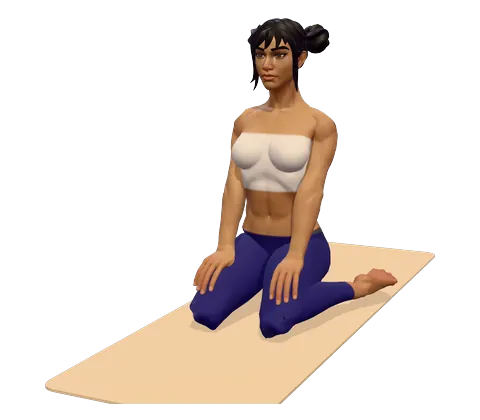
- Uncross the legs, stretch them out and shake them gently. Next time, cross the other shin in front.
Where you feel Easy Pose: what it stretches and strengthens
Sit tall and let your knees relax down. In the 3D guide, turn on Body guide: areas that stretch glow green and areas that work glow saffron.
Stretches
- Hip flexors
- Inner thighs
Strengthens
- Spine
Benefits and precautions
Benefits
- Gives a stable, upright seat for breathing practice and meditation
- Gently opens the hips, knees and ankles
- Strengthens the back muscles that hold good sitting posture
- Helps you slow down; used as a calm seat in yoga plans for blood pressure, anxiety and breathing problems
- Easy for almost everyone to learn, with simple props for stiff hips
- A comfortable resting pose between more active seated poses
Avoid or modify if
- Knee injury, knee replacement or knee pain when bending — sit on a higher cushion or on a chair instead
- Hip pain or a recent hip replacement — ask your surgeon before sitting cross-legged
- Acute sciatica or lower back pain that worsens when seated — sit against a wall or on a chair
- Numbness or pins and needles in the feet — change the leg crossing or stretch the legs out more often
Easy pose (Sukhasana) is the basic cross-legged seat of yoga, the way many people sat on the floor as children. The shins cross, each foot rests under the opposite knee, and the spine stays tall. It is the most common cross-legged meditation pose and the usual seat for breathing exercises. "Easy" does not mean effortless for everyone: tight hips can make the knees ride up and the back slump. Here is how to sit in Sukhasana comfortably, with props and variations.
What is Sukhasana in yoga?
The Sanskrit name for easy pose comes from sukha, meaning "ease", "comfort" or "happiness", and asana, meaning seat or pose. So what does Sukhasana mean? The Sukhasana meaning is simply a comfortable, pleasant seat. Sukhasana in English is usually called easy pose, easy seat or simply cross-legged pose. Sukhasana in Hindi is written सुखासन, and sitting cross-legged is called palathi maarkar baithna (पालथी मारकर बैठना).
In Sikhism, Sukhasan is something different: the evening ceremony in which the Guru Granth Sahib is respectfully closed and laid to rest. People searching how to do Sukhasan of Guru Granth Sahib should ask their gurdwara; it is not the yoga pose on this page.
How to sit in Sukhasana (Sukhasana kaise kare)
The Sukhasana steps above take you in and out of the pose. These details make easy pose truly easy:
- Raise the hips. This is the single biggest help. When the hips sit higher than the knees, the pelvis tilts forward and the spine lifts on its own. Use one or two folded blankets, a cushion or a block.
- Feet under knees, not under thighs. Sliding each foot forward under the opposite knee makes a wider, flatter base and takes pressure off the ankles.
- Support high knees. If your knees float far above your ankles, rest them on blocks or rolled towels so the hips can relax.
- Switch the crossing. Cross the other shin in front half of the time so the hips stay balanced.
- What you should feel: a light stretch in the outer hips and an upright, quiet spine. Not knee pain, not numb feet.
How long to sit in easy pose
In a pose sequence, 1–2 minutes is enough. For meditation, beginners can start with 5 minutes and build up to 15–20 with good support. Stretch the legs out whenever they go numb, then cross them the other way.
Easy pose benefits (Sukhasana ke fayde)
What is Sukhasana good for? Sitting upright without back support works the muscles along the spine, and the cross-legged position gently opens the hips, knees and ankles. Most of all, it gives you a steady seat for slow breathing such as Anulom Vilom and for meditation.
That is why easy pose appears in many of our condition plans, including yoga for high blood pressure and yoga for COPD. The pose itself does not treat these conditions; it supports the slow breathing and relaxation that studies suggest may help, alongside your prescribed medicine and your doctor's advice.
Is sitting cross-legged good for you and your knees?
For most healthy people, yes, in moderation and with props. The cross-legged sitting position benefits hip mobility, and in many cultures people sit this way every day. Is sitting cross-legged good for your knees? It is fine for healthy knees, but deep knee bending can hurt with knee osteoarthritis or after knee surgery. Then sit higher, keep the knees less bent, or use a chair. Our yoga for arthritis plan uses a supported version.
Is Sukhasana good for back pain?
It can be an easy yoga pose for back pain when you sit high enough that the lower back keeps its natural curve. Slumping on the floor usually makes back pain worse. Sit on a firm cushion, or with your back against a wall, and stand up if the pain increases.
Sukhasana muscles: what it stretches and works
| Stretches | Works |
|---|---|
| Outer hips and buttocks (hip rotators) | Erector spinae, the muscles along the spine |
| Inner thighs (adductors) | Deep core muscles that keep you upright |
| Front of the ankles | Neck muscles that hold the head level |
The easy pose muscles used for holding you upright tire quickly at first, which is why props help so much.
Easy pose variations and Sukhasana modifications for beginners
- Easy pose forward fold: walk your hands forward and let the chest move toward the floor. Rest the forehead on a block. Swap the leg crossing and repeat.
- Sukhasana twist: put your right hand on your left knee and your left fingertips behind you, then turn gently to the left. Repeat on the other side.
- Easy pose variation side bend: place one hand on the floor beside you and reach the other arm up and over.
- Neck side stretch and neck rotation: in easy pose, tilt one ear toward the shoulder, then slowly turn the head from side to side. Useful after screen work.
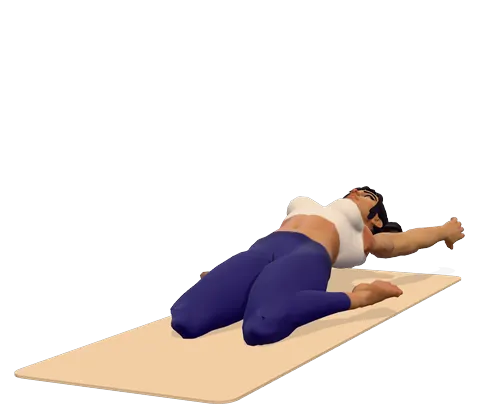
- Supta Sukhasana: what is Supta Sukhasana? The reclined version: lie on your back with the legs crossed and knees supported on cushions.
- Chair version: easy posture exercises for seniors can be done sitting tall on a chair with the feet flat, or with one ankle resting on the other shin.
- For kids: easy pose yoga for kids is often called "criss-cross apple sauce".
Sukhasana vs Padmasana, Siddhasana and other seats
Easy pose is one of several seated cross-legged yoga poses, each with its own Sanskrit name.
| Pose | Where the feet go | Difficulty |
|---|---|---|
| Sukhasana (easy pose) | Under the opposite knees, shins crossed | Easiest |
| Swastikasana | Tucked between the opposite thigh and calf | Easy to moderate |
| Siddhasana | One heel in front of the other, close to the body | Moderate |
| Padmasana (lotus) | Both feet on top of the opposite thighs | Advanced |
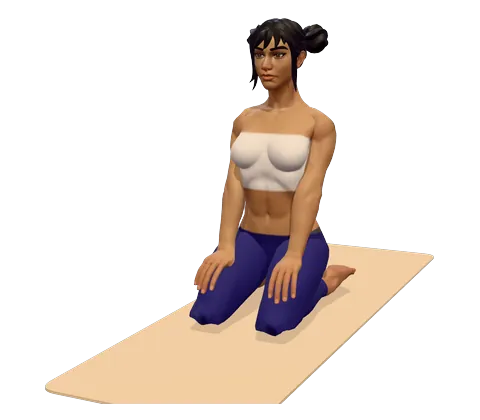
| Vajrasana | Kneeling, sitting on the heels | Easy, but hard on stiff knees |
The difference between Sukhasana and Padmasana is mainly the demand on the hips and knees: easy pose vs lotus pose is like a comfortable chair vs a narrow, very stable stool. Sukhasana vs Siddhasana: Siddhasana brings the heels closer to the body and is traditionally preferred for long meditation. Sukhasana vs Vajrasana: kneeling suits people with tight hips but not people with sore knees.
Sukhasana contraindications and precautions
Easy pose is safe for most people, and the list of Sukhasana contraindications is short next to its benefits and precautions. The points above are mostly about knees, hips and pressure on the nerves of the legs. If one foot keeps going numb, you are probably sitting too low or too long. Pregnant women can use easy pose throughout pregnancy with the hips raised on a cushion.
Easy pose for meditation and Kundalini yoga
In Kundalini yoga, easy pose is the standard seat for most meditations and breathing sets. Rest your hands in Gyan mudra, close your eyes and time your sitting with our meditation timer. Start with a few minutes and add time only as long as your back and legs stay comfortable.
सुखासन (Sukhasana) — हिंदी में: सुखासन कैसे करें: एक मुड़े हुए कंबल पर बैठें और पालथी मारकर दोनों पैरों को मोड़ें, हर पैर दूसरे घुटने के नीचे रहे। हाथ घुटनों पर रखें, रीढ़ सीधी और कंधे ढीले रखें। आँखें बंद करके 1 से 5 मिनट तक आराम से साँस लें। सुखासन के फायदे: बैठने की मुद्रा सुधरती है, कूल्हे खुलते हैं और मन शांत होता है, इसलिए यह प्राणायाम और ध्यान के लिए अच्छा आसन है। घुटने में दर्द हो तो ऊँचे तकिये या कुर्सी पर बैठें।
Health conditions this pose is used for
Yoga for arthritis · Yoga for spinal stenosis · Yoga for tennis elbow · Yoga for carpal tunnel syndrome · Yoga for fibromyalgia · Yoga for chronic pain · Yoga for lupus · Yoga for jaw pain (tmj) · Yoga for balance and fall prevention · Yoga for high blood pressure · Yoga for hyperthyroidism (overactive thyroid) · Yoga for uric acid and gout · Yoga for kidney health · Yoga for anemia (low hemoglobin) · Yoga for pregnancy (prenatal yoga) · Yoga for postpartum recovery · Yoga for male fertility · Yoga for grief and loss · Yoga for bipolar disorder (complementary care) · Yoga for eating disorder recovery · Yoga for exam stress · Yoga for parkinson’s disease · Yoga for epilepsy (complementary care) · Yoga for ptsd and trauma · Yoga for panic attacks · Yoga for vertigo and dizziness · Yoga for tinnitus · Yoga for memory in older adults · Yoga for stroke recovery · Yoga for multiple sclerosis · Yoga for chronic fatigue syndrome · Yoga for asthma · Yoga for copd · Yoga for bronchitis · Yoga for heart health · Yoga for long covid recovery · Yoga for snoring and sleep apnea · Yoga for cold and cough · Yoga for acidity and acid reflux · Yoga for gastritis · Yoga for hernia (safe movement) · Yoga for ulcerative colitis and ibd · Yoga for hair fall and hair growth · Yoga for premature grey hair · Yoga for dark circles · Yoga for psoriasis and eczema · Yoga for eye strain · Yoga for glaucoma (safe yoga) · Yoga for dry eyes · Yoga for motion sickness · Yoga for cancer recovery (supportive care) · Yoga for recovery after surgery
Where this practice is used
Chakras: Ajna (Third Eye Chakra) · Sahasrara (Crown Chakra)
Guided meditations in this posture: Breath Awareness Meditation · Loving-Kindness Meditation · So Hum Mantra Meditation · OM Chanting Meditation · Trataka Candle Meditation · Chakra Meditation (All 7 Chakras) · Mindfulness Meditation · Vipassana-Style Noting Meditation · Visualization Meditation · Gratitude Meditation · Five-Minute Meditation
Frequently asked questions
What is Sukhasana and its benefits?
Sukhasana (easy pose) is a simple cross-legged seat. It gives a steady, upright position for breathing and meditation, gently opens the hips and strengthens the back muscles that support good posture.
How do I make easy pose more comfortable?
Sit on a folded blanket or cushion so your hips are higher than your knees, slide each foot under the opposite knee and support high knees with blocks.
What is the difference between Sukhasana and Padmasana?
In Sukhasana the feet rest under the opposite knees. In Padmasana (lotus) both feet rest on top of the opposite thighs, which needs much more hip and knee flexibility.
Is sitting cross-legged bad for your knees?
Not for healthy knees. If you have knee pain, arthritis or a knee replacement, raise the hips, bend the knees less or sit on a chair, and ask your physiotherapist.
How long should I sit in Sukhasana?
One to two minutes in a pose sequence, and 5–20 minutes for meditation with good support. Switch the crossing of the legs halfway.
Why does my foot go numb in easy pose?
Pressure on the nerves and blood vessels of the legs. Sit higher, move your feet further forward, and stretch the legs out as soon as you feel pins and needles.
Can beginners and seniors do easy pose?
Yes. It is one of the first poses beginners learn. Seniors can use a higher cushion or do the chair version with the feet flat on the floor.
This page is for general education. Check with your doctor before starting yoga if you are pregnant, have a medical condition or an injury. Stop if you feel pain, dizziness or shortness of breath.