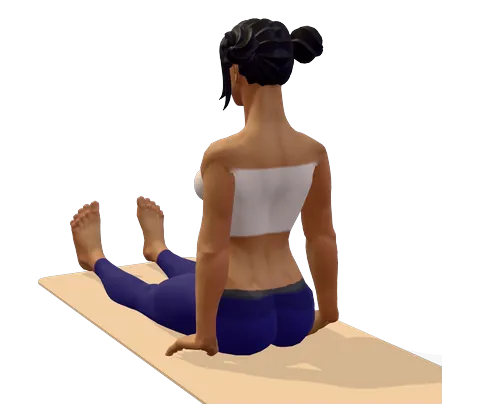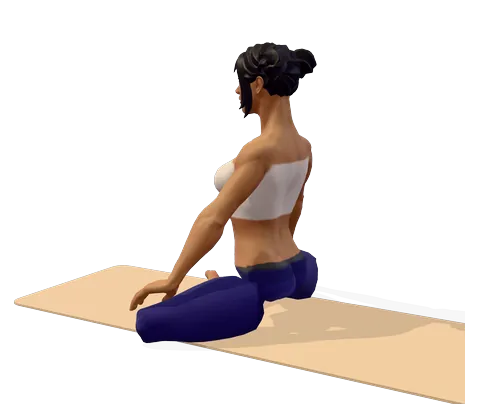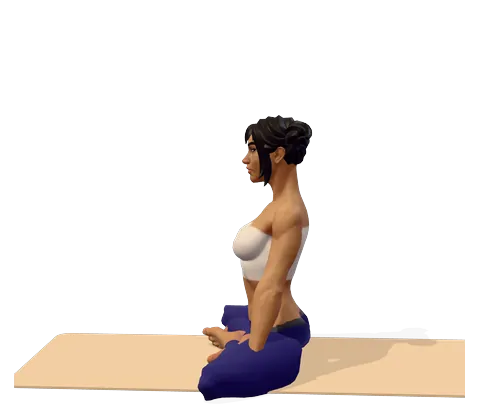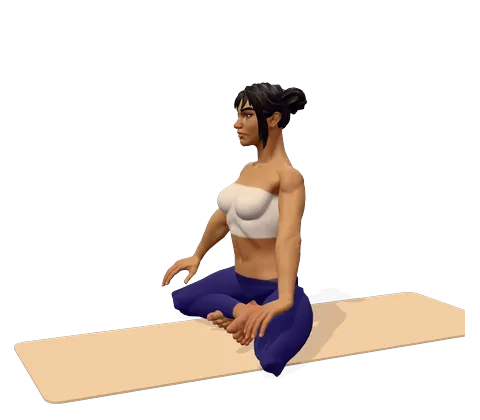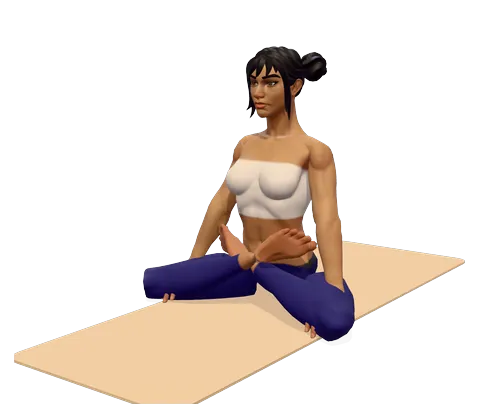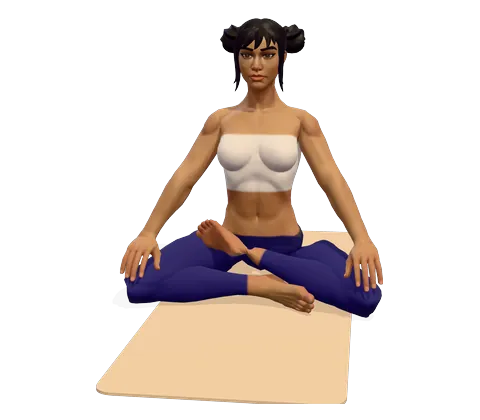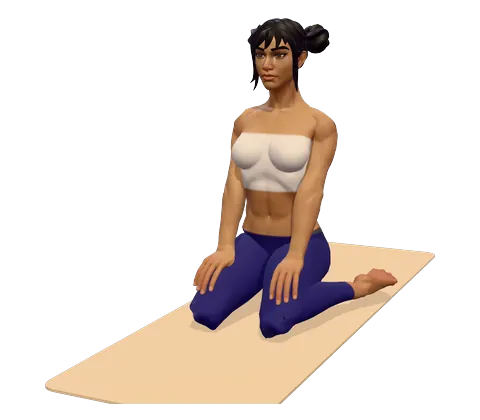
How to do Hero Pose step by step
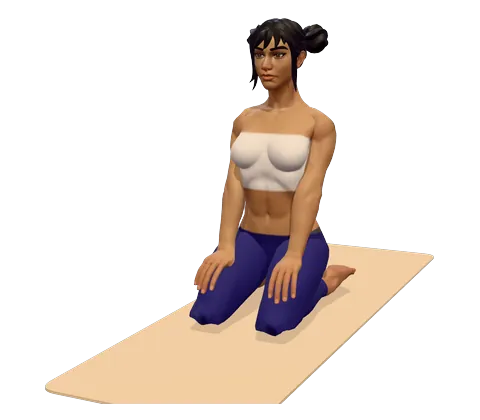
- Kneel on the mat with your knees together (or up to hip-width apart) and your thighs vertical. Separate your feet so they are a little wider than your hips.
- Point your feet straight back, tops of the feet flat on the mat, toes pointing behind you — not turned in or out.
- With your thumbs, gently roll the flesh of your calves outward and back, then slowly lower your hips to the floor between your heels.
- If your sit bones do not reach the floor comfortably, sit on a yoga block or a folded blanket placed between your feet instead.
- Rest your hands on your knees or thighs. Lengthen your spine, relax your shoulders and look straight ahead.
- Stay for 30 seconds to 1 minute at first, breathing slowly. With practice you can sit for several minutes.
- To come out, lean forward onto your hands, lift your hips, cross your ankles underneath you and sit back, or stretch your legs out in front of you and gently shake them.
Where you feel Hero Pose: what it stretches and strengthens
Sit between your heels and feel the front thighs stretch. In the 3D guide, turn on Body guide: areas that stretch glow green and areas that work glow saffron.
Stretches
- Front thighs
- Ankles
- Knees
Strengthens
- Spine
Benefits and precautions
Benefits
- Stretches the front of the thighs (quadriceps), the knees and the fronts of the ankles
- Gives a stable, upright seat for breathing practice and meditation
- Encourages a long spine and relaxed shoulders, which supports good posture
- Traditionally used to ease tired, heavy legs after standing or walking
- Like Vajrasana, it is a comfortable seat after meals for many people
- Prepares the body for reclining hero pose and deeper kneeling poses
Avoid or modify if
- Knee injury, meniscus tear, recent knee surgery or knee replacement — sit on a high block or choose a chair or cross-legged seat instead
- Ankle or foot injury, or a gout flare in the toes or ankle
- Sharp or pinching pain inside or around the knee — come out and raise the seat
- Knee osteoarthritis — deep knee bending may not suit you; ask your physiotherapist before practising
- Numbness or tingling in the feet — shorten the hold and add padding under the ankles
Hero pose (Virasana) is a kneeling seat in which you sit on the floor between your heels rather than on top of them. It gives a deep stretch to the thighs, knees and fronts of the ankles, and once it is comfortable it becomes one of the steadiest seats for breathing practice and meditation. Below: how to do hero pose step by step, its benefits, props that protect your knees, and how it differs from Vajrasana.
What is hero pose in yoga?
Hero pose is a classic seated posture used in Hatha and Iyengar yoga. The Sanskrit name has two parts: vira means "hero" or "warrior" and asana means "seat" or "pose". So the Virasana meaning in English is simply "hero's seat" — the heroic pose of someone sitting upright, alert and ready. In Hindi it is written वीरासन (veerasan).
The old Hatha Yoga Pradipika uses the name for a cross-legged seat with one foot on the opposite thigh. Modern classes, and the 3D guide on this site, use the kneeling version described here.
How to do hero pose step by step
The steps above take you in and out safely. These cues make the difference between a hero pose that feels strained and one you can breathe in:
- Feet straight back. The tops of the feet and all ten toenails rest on the mat. If your feet splay out, the inner knee is twisted.
- Clear the calves. Rolling the calf muscles out and back before you sit gives the knee joint more room.
- Knees close, not forced. Hip-width knees are fine. Squeezing them together is optional, and never worth knee pain.
- Height is your friend. Sitting on a block is not cheating; it is the version most bodies need at first.
How long to hold hero pose
Start with 30 seconds to a minute. As your ankles and thighs adapt over a few weeks, you can sit for 3–5 minutes for pranayama such as Anulom Vilom or a short meditation. If your feet go numb, come out and walk around.
Hero pose benefits (Virasana ke fayde)
What is hero pose good for? Its main effect is on the legs. Kneeling with the hips low lengthens the quadriceps and the fronts of the ankles, which stiffen from chair sitting, running and cycling. Many people also find it an easier meditation seat than cross-legged poses, because the pelvis tilts forward and the spine stacks upright.
Other hero pose health benefits are traditional rather than proven: teachers recommend it for tired legs and, like Vajrasana, as a seat after meals (see yoga for digestion). The benefits of Virasana are the same for men and women; what matters is whether your knees and ankles accept it.
Hero pose muscles stretched and worked
| Stretches | Works gently |
|---|---|
| Quadriceps, especially rectus femoris at the front of the thigh | Muscles along the spine that keep you upright |
| Fronts of the ankles and shins (tibialis anterior) | Deep abdominal muscles that support the lower back |
| Tops of the feet and the toes | Muscles between the shoulder blades |
Feel it in the thighs and ankles? Good. Feel it sharply inside the knee? Raise your seat.
Hero pose for beginners: props and modifications
Hero pose modifications are about height and padding. Try them in this order:
- Hero pose on a block: place a yoga block (flat or on its middle height) between your feet and sit on it. Lower the block over weeks, never in one session.
- Blanket under the ankles: if hero pose hurts your ankles or feet, roll a thin blanket and place it under the fronts of the ankles so the toes hang slightly off it.
- Hero pose with a bolster: sitting astride a bolster lengthwise gives the highest, softest seat.
Hero pose alternatives if kneeling is not possible: sit on your heels in Vajrasana with a cushion, sit cross-legged, or sit upright on a chair with your feet flat. All of them work for breathing practice.
Is hero pose bad for knees?
Not for healthy knees used with care, but it asks for deep knee bending, so it is not for everyone. Pain on the inside of the knee usually means the seat is too low or the feet are turned out. If you have knee pain or osteoarthritis, the yoga for knee pain plan suggests gentler strengthening poses first, and your physiotherapist can tell you how much bending is safe.
Hero pose variations
- Virasana with Gomukhasana arms: one arm reaches down the back from above, the other up from below — a strong shoulder stretch. See cow face pose.
- Hero pose with eagle arms: wrap the arms as in eagle pose to stretch between the shoulder blades.
- Arms overhead: interlace the fingers, turn the palms up and lift, keeping the lower ribs soft.
- Hero pose with toes tucked: tuck the toes under and sit back toward the heels for a strong stretch of the soles. Keep it short.
- Adho Mukha Virasana: from hero pose, widen the knees and fold forward, arms long. How to do Adho Mukha Virasana is much like child's pose; the difference from Balasana is that the knees are wide and the arms stretch forward.
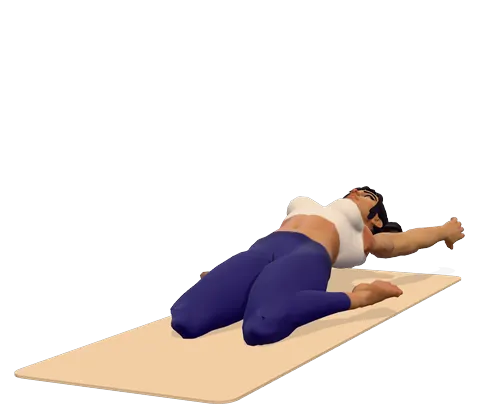
- Hero pose lying down: lean back onto your elbows and then your back for reclining hero pose. Only try this once the upright version is pain-free.
Virasana vs Vajrasana: what is the difference?
Both are kneeling seats. In Vajrasana (thunderbolt pose) you sit on your heels with the feet together under you. In Virasana you sit between your heels, so the hips are lower and the knee bends more deeply. The difference between Virasana and Vajrasana is therefore mainly how much the thighs, knees and ankles are stretched.
Vajrasana vs Virasana — which is better? For most beginners and for sitting after meals, Vajrasana is easier. Hero pose vs thunderbolt pose for flexibility: hero pose gives the stronger quadriceps and ankle stretch. The benefits overlap, so choose the one your knees accept.
Virasana contraindications and precautions
The caution box lists who should skip or modify it. Beyond that, three rules: never push the hips down with force, keep the feet pointing straight back, and stop at sharp pain. Ankle pain usually eases with padding; hero pose knee pain needs more height or a different seat.
A short hero pose sequence
For hero pose prep, warm the fronts of the thighs with low lunge and sit briefly in Vajrasana. Then hold Virasana, fold forward into Adho Mukha Virasana, and finish by sitting with straight legs and shaking out the knees. You can build this into your own routine with the sequence builder and let the voice guide time each pose.
वीरासन (Virasana in Hindi) — हिंदी में: घुटनों के बल बैठें और पैरों को कूल्हों से थोड़ा चौड़ा रखें, पंजे सीधे पीछे की ओर। धीरे-धीरे कूल्हों को दोनों एड़ियों के बीच ज़मीन पर या योगा ब्लॉक पर टिकाएँ, हाथ घुटनों पर रखें और रीढ़ सीधी रखें। शुरुआत में 30 सेकंड से 1 मिनट तक बैठें। वीरासन के फायदे: जाँघों और टखनों में खिंचाव आता है, थकी टाँगों को आराम मिलता है और ध्यान के लिए स्थिर आसन मिलता है। घुटने या टखने में चोट या दर्द हो तो यह आसन न करें।
Frequently asked questions
What is hero pose good for?
Hero pose stretches the quadriceps, knees and fronts of the ankles, and it gives an upright, steady seat for breathing and meditation. Many people also use it as a comfortable seat after meals.
Is hero pose bad for knees?
Not for healthy knees when you use enough height under the hips and keep the feet pointing straight back. If you feel sharp pain inside the knee, raise the seat or choose a chair or cross-legged seat instead. With a knee injury or osteoarthritis, ask your physiotherapist first.
What is the difference between Virasana and Vajrasana?
In Vajrasana you sit on your heels; in Virasana you sit between them, with the hips lower. Virasana gives a deeper stretch to the thighs and ankles, while Vajrasana is easier on the knees.
How long should I hold hero pose?
Start with 30 seconds to 1 minute. Once it is comfortable you can sit for 3–5 minutes for breathing practice. Come out if your feet go numb.
Why does hero pose hurt my ankles?
The fronts of the ankles are being stretched, which many people are not used to. Roll a thin blanket under the ankles, sit on a block and keep the hold short; the stretch usually becomes easier over a few weeks.
What does Virasana mean?
Vira means hero or warrior and asana means seat or pose, so Virasana means "hero's seat". In Hindi it is called वीरासन.
This page is for general education. Check with your doctor before starting yoga if you are pregnant, have a medical condition or an injury. Stop if you feel pain, dizziness or shortness of breath.