How to do mindfulness meditation
- Sit upright and comfortable, and close your eyes or lower your gaze.
- Anchor your attention in the breath for a few minutes.
- Widen your attention to include sounds, near and far, without naming or judging them.
- Notice sensations in the body as they arise and change.
- Notice thoughts and feelings as events that come and go, like weather.
- Rest in open awareness, returning to the breath whenever you feel lost.
Benefits
- Mindfulness programmes have good evidence for reducing stress, anxiety and depressive symptoms
- Mindfulness-based cognitive therapy helps prevent relapse in recurrent depression
- Can improve how people cope with long-term pain
- Builds the habit of pausing before reacting
Be careful
Mindfulness is usually safe, but a small number of people feel more anxious or unsettled. If this happens, shorten the practice, keep your eyes open, and talk to a qualified teacher or therapist, especially if you have a history of trauma.
Mindfulness meditation is the practice of paying attention to what is happening right now, in your body and mind, on purpose and without judging it. You start with the breath, then let your attention open to sounds, sensations, thoughts and feelings, noticing each one arrive and pass. It is simple to describe and suits complete beginners and long-time meditators alike.
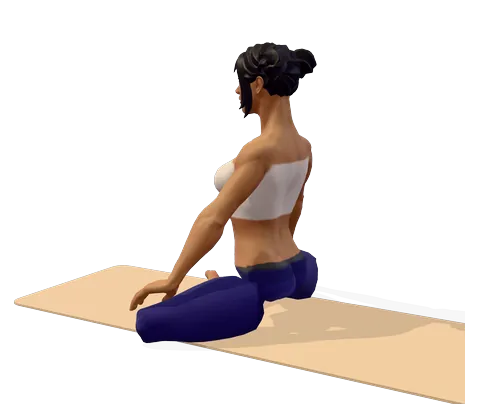
The guided player above takes you through a 12-minute session, and the 3D teacher sits in Easy Pose with you. This page explains what the practice really is, where it comes from, what the research shows, how to build a daily habit, and the mistakes almost every beginner makes.
Mindfulness meaning: what is mindfulness meditation?
The word mindfulness is the usual English translation of the Pali word sati (Sanskrit smriti), which literally means "remembering". In meditation it means remembering to be present: noticing that you are breathing, that a sound has appeared, that the mind has drifted into planning dinner. The mindfulness meaning in Hindi is often given as sajagta (alertness) or jagrukta (awareness).
A useful working mindfulness meditation definition has three parts: attention (you notice), the present moment (you notice what is here now, not a story about it) and acceptance (you let it be as it is, even if you do not like it). Many people expect meditation to mean an empty mind. It does not. The skill is noticing where the mind has gone and coming back, again and again, with patience.
What is an open awareness meditation?
Most sessions begin with focused attention: one anchor, usually the breath. Open awareness meditation is the second stage, where there is no single object. You rest as the one who notices, and whatever is strongest in the moment, a sound, an itch or a worry, becomes the object for a while. The guided mindfulness meditation script on this page moves from the first style to the second, widening gradually from breath to sounds, body, thoughts and finally everything at once.
Where mindfulness comes from: Buddhism, yoga and MBSR
The mindfulness meditation history goes back about 2,500 years to the Buddha's teaching on the four foundations of mindfulness (Satipatthana): mindfulness of the body, of feeling tones (pleasant, unpleasant, neutral), of the mind, and of mental events. Insight practices such as vipassana-style noting meditation grew from the same teaching, which is why people often search for "mindfulness meditation vipassana": they are close relatives.
Yoga has its own version. Patanjali's Yoga Sutras describe pratyahara (withdrawing from distraction), dharana (concentration) and dhyana (meditation). Focusing on the breath is dharana; the open, effortless noticing at the end of this practice is close to dhyana. You can read more in what is yoga and its eight limbs.
In 1979 Jon Kabat-Zinn created Mindfulness-Based Stress Reduction (MBSR) at the University of Massachusetts Medical School, an eight-week, non-religious course of sitting, a body scan and gentle yoga. Mindfulness-Based Cognitive Therapy (MBCT) later combined it with cognitive therapy. So is mindfulness meditation Christian, Buddhist or Hindu? Taught this way, it is none of these: it is a mental skill, and people of every faith and none practise it.
Mindfulness meditation benefits: what research says
Why is mindfulness meditation important to doctors and psychologists? It is one of the most studied forms of meditation, and the findings below are well established, though the size of the effect varies between people.
- Stress, anxiety and low mood. A large 2014 review in JAMA Internal Medicine found moderate evidence that mindfulness programmes improve anxiety, depression and pain, though not better than other active treatments such as exercise or medicine.
- Preventing relapse of depression. Trials of MBCT show it lowers the risk of relapse for people who have had several episodes of depression, and the UK's NICE guidelines recommend it for this purpose. This is why mindfulness meditation for depression is taken seriously by doctors, but as prevention alongside care, not as a replacement for treatment.
- Pain. Mindfulness meditation for pain relief does not remove the cause of pain, but studies suggest it can reduce how distressing pain feels and improve coping.
- Sleep. Studies of mindfulness meditation for sleep, including in older adults, have found better sleep quality compared with basic sleep advice.
The US National Center for Complementary and Integrative Health (NCCIH) gives the same picture: mindfulness meditation for mental health is helpful for many people, modest in size, and one part of looking after yourself.
How to practice mindfulness daily
How long and how often
For mindfulness meditation for beginners, 10 to 12 minutes once a day is plenty. Daily beats long: twelve minutes every morning builds the skill faster than an hour on Sunday. After four to six weeks you can add a second session or extend to 20 minutes. The meditation timer with singing-bowl bells is useful once you want to sit without the voice.
A simple morning and evening routine
- Morning: three rounds of belly breathing, then the 12-minute guided session before you check your phone. Rest your hands in Dhyana Mudra or on your knees.
- During the day: one-minute pauses. Before a meeting, feel three breaths and your feet on the floor. This is how to practice mindfulness at work without anyone noticing.
- Evening: a body scan meditation in bed, or Yoga Nidra if you want to fall asleep.
Informal mindfulness practices at home
Mindfulness exercises do not have to happen on a cushion. Wash one cup with full attention to the warm water. Eat the first three bites of a meal slowly. Walk to the bus feeling your feet, or try a full walking meditation. Some people keep a short mindfulness journal, writing one line each night about a moment they were fully present.
Mindfulness meditation techniques beginners can try
- Breath anchor: feel the breath at the nostrils, chest or belly, wherever it is clearest. The breath awareness meditation trains this alone; it is the simplest of all mindfulness breathing exercises.
- Counting: count out-breaths from one to ten, then start again. If you lose count, that is the practice: start at one.
- Leaves on a stream: used in the guided script and in therapy, you picture each thought as a leaf floating past on a river. You see it, you let it go.
- Soft labelling: silently say "thinking" or "hearing" when something pulls you away.
- Mindfulness meditation body scan: move attention slowly through the body from feet to head.
Common beginner mistakes
- Trying to stop thoughts. Thoughts are not a failure. Noticing a thought is a moment of mindfulness.
- Judging the session. There are no good or bad sits, only sits. A restless 12 minutes still trains the skill.
- Sitting in pain. Use a cushion, a chair or a wall. A comfortable, upright posture in Sukhasana or on a chair is enough; you do not need Lotus Pose.
- Controlling the breath. Let the breath breathe itself. You watch; you do not steer.
- Waiting for bliss. Calm often comes, but the real result shows up later, as a small pause before you react.
Mindfulness for kids, adults and seniors
- Adults: the guided session is built for you: 12 minutes, seated, eyes closed or lowered.
- Kids: mindfulness meditation for kids works best in two- or three-minute bursts with the eyes open and a playful anchor, such as a soft toy rising and falling on the belly.
- Seniors: do it entirely on a chair; the breath and sound stages suit limited hearing or mobility.
- Anxiety: for guided mindfulness meditation for anxiety, many people find it easier to keep the eyes half open and stay with sounds or the feet rather than the breath.
Is mindfulness meditation dangerous? Side effects and safety
For most people it is safe, but mindfulness meditation side effects are real for a minority: a rise in anxiety, old memories surfacing, feeling spaced out or detached. These are more likely with long, intense practice and in people with a history of trauma, psychosis or severe depression.
If you feel worse during practice, open your eyes, feel your feet and the chair, and shorten or stop the session. Talk to a trauma-informed teacher or a mental-health professional before continuing. Do not stop any prescribed medicine because you have started meditating.
Mindfulness meditation kaise kare, in Hindi: सजगता ध्यान माइंडफुलनेस का अर्थ है इस पल में जो हो रहा है, उसे बिना जज किए ध्यान से देखना। आराम से सीधे बैठें, आँखें बंद करें और कुछ मिनट अपनी साँस को महसूस करें। फिर आवाज़ों, शरीर की संवेदनाओं और विचारों को आते-जाते देखें। मन भटके तो प्यार से वापस साँस पर लौट आएँ। रोज़ 10–12 मिनट करने से तनाव कम होने और मन शांत होने में मदद मिल सकती है।
Where to go next
Once the basic practice feels familiar, try loving-kindness meditation to add warmth, or read the full meditation for beginners guide to compare every technique on the site. If you like to move before you sit, the Calm for Anxiety and Stress session prepares the body for a quieter mind.
Frequently asked questions
What is mindfulness meditation in simple words?
It is paying attention to the present moment on purpose and without judging it. You notice your breath, sounds, body sensations, thoughts and feelings as they come and go, and you gently return whenever the mind wanders.
How do I do mindfulness meditation for beginners?
Sit upright and comfortable, close your eyes and feel your breath for a few minutes. Then widen your attention to sounds, body sensations and thoughts. When you notice you are lost in thought, come back to the breath. Start with 10 to 12 minutes a day using the guided voice above.
How long does it take for mindfulness to work?
Many people feel calmer after a single session, but lasting changes, such as reacting less quickly to stress, usually appear after several weeks of daily practice. The well-known MBSR course runs for eight weeks for this reason.
Is mindfulness meditation good for anxiety?
Studies suggest mindfulness programmes can reduce anxiety for many people. If focusing on the breath makes you more anxious, keep your eyes open and anchor in sounds or the feeling of your feet instead. It supports, but does not replace, professional care for an anxiety disorder.
What is the difference between mindfulness and vipassana?
Both come from the same Buddhist teaching. Mindfulness is the broad skill of present-moment awareness; vipassana (insight meditation) uses that awareness to see closely how every experience changes and passes, often with a noting technique or longer silent courses.
Can mindfulness meditation have side effects?
Yes, for a small number of people. Some feel more anxious, emotional or detached. Shorten the practice, keep your eyes open, and talk to a qualified teacher or therapist, especially if you have a history of trauma or serious mental illness.
Mindfulness meditation kaise kare?
Seedhe aur aaram se baithein, aankhen band karein aur kuch minute saans ko mehsoos karein. Phir awaazon, sharir aur vicharon ko aate-jaate dekhein. Mann bhatke to dheere se saans par laut aayein. Roz 10–12 minute karein.
More guided meditations
 Breath Awareness MeditationRest your attention on the natural breath and gently return to it each time the mind wanders.
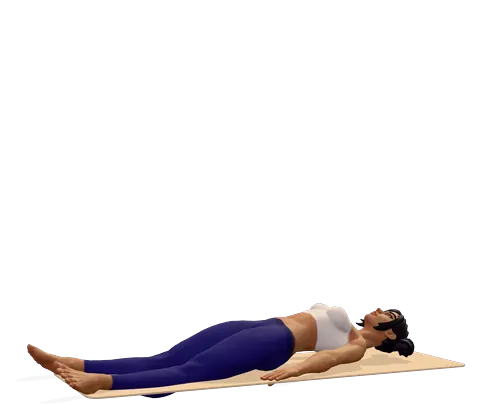 Body Scan MeditationMove your attention slowly through the body from the toes to the head, noticing sensations without trying to change them.Loving-Kindness MeditationSilently repeat warm wishes for yourself, then widen them step by step to others and to all beings.So Hum Mantra MeditationSilently hear the sound "So" as you breathe in and "Hum" as you breathe out, linking a mantra to the natural breath.OM Chanting MeditationChant OM aloud in slow, long breaths, then sit in the silence that follows the sound.Trataka Candle MeditationGaze steadily at a candle flame, then close your eyes and hold the after-image in your mind. See our full Trataka guide for more detail.
Meditation supports health; it does not replace medical or psychological care. If meditation brings up distressing memories or feelings, stop, open your eyes and ground yourself; talk to a professional if it keeps happening. Medical disclaimer.