Your hyperthyroidism (overactive thyroid) yoga plan
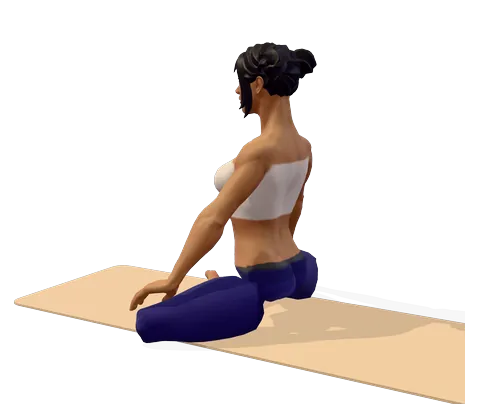 Easy PoseSukhasana
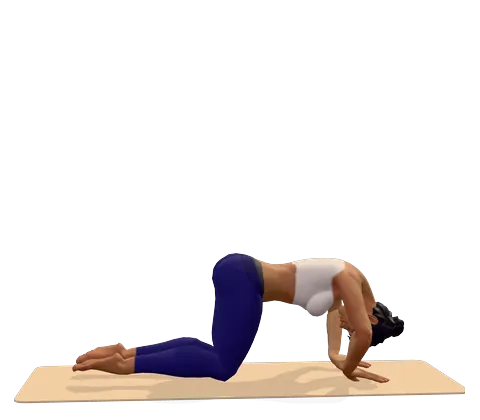 Cat PoseMarjaryasana
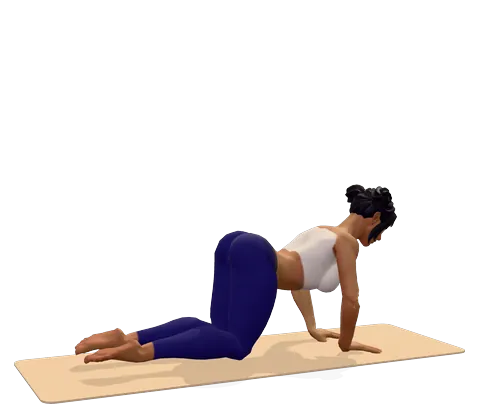 Cow PoseBitilasana
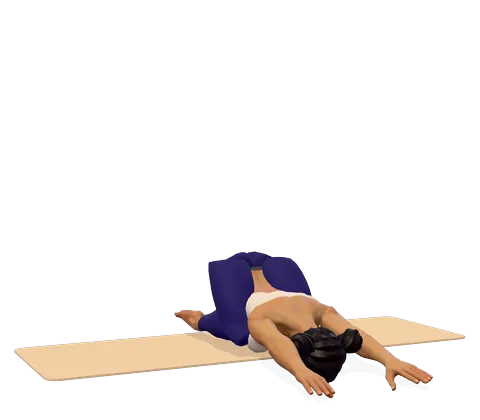 Child’s PoseBalasana
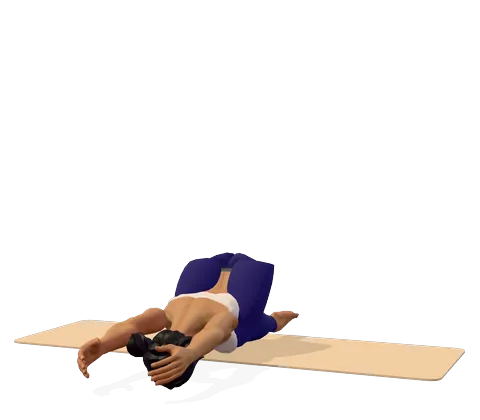 Hare PoseShashankasana
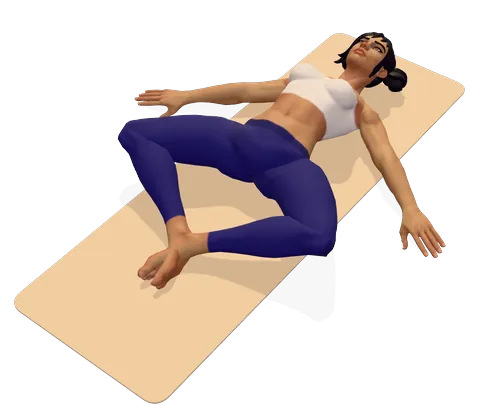 Reclining Bound Angle PoseSupta Baddha Konasana
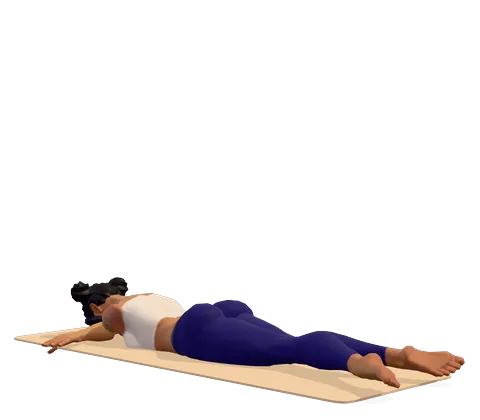 Crocodile PoseMakarasana
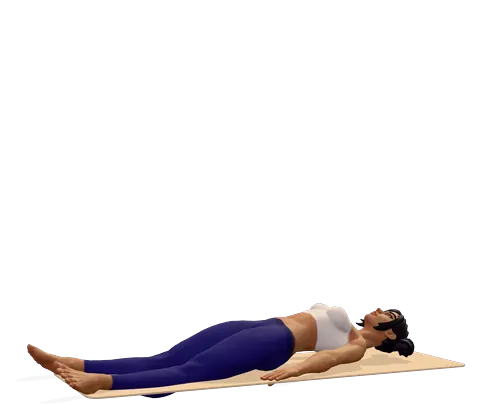 Corpse PoseSavasana
More poses that help with hyperthyroidism (overactive thyroid)
Add these once the session above feels easy, or swap one in when a pose does not suit you.
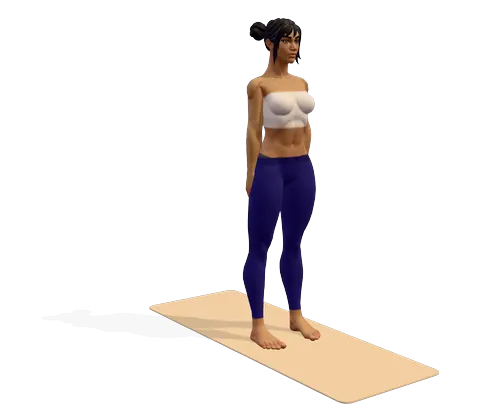 Mountain PoseTadasana
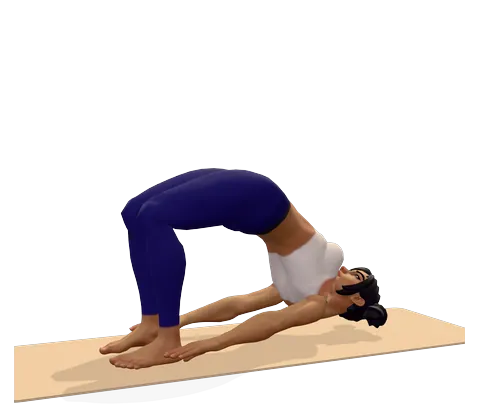 Bridge PoseSetu Bandhasana
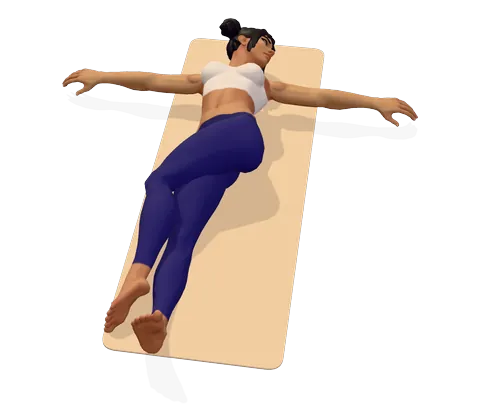 Supine Spinal TwistSupta Matsyendrasana
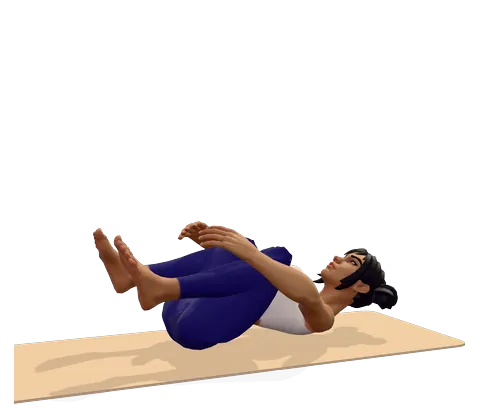 Wind-Relieving PosePavanamuktasana
Mudras for hyperthyroidism (overactive thyroid)
Hold a mudra while you sit for the breathing practice or a few minutes of quiet. Mudras are a traditional practice; research on them is limited.
Breathing practice
Avoid
Fast, heating breathing (Kapalbhati, Bhastrika, Surya Bhedana) and hard or hot classes while your pulse is high. Keep taking your medicine, exercise only as far as your doctor allows until levels are controlled, and stop for palpitations, chest pain or breathlessness.
Traditional practice: Used in classical yoga therapy; few clinical trials so far.
Yoga for hyperthyroidism should calm and cool you, not speed you up. With an overactive thyroid, the gland makes too much thyroid hormone, so the whole body runs fast: a racing heart, nervousness and irritability, trouble sleeping, feeling hot and sweaty, shaky hands, weak muscles and weight loss despite a good appetite. The most common cause is Graves' disease, an autoimmune condition. Gentle yoga cannot lower thyroid hormone levels, but slow poses, cooling breathing and deep rest may ease some of the anxiety, restlessness and poor sleep while your medical treatment does its work.
Hyperthyroidism needs medical treatment. Keep taking your prescribed medicine, and ask your doctor how much exercise is safe until your thyroid levels are under control. Stop any practice and get help for palpitations, chest pain, breathlessness or feeling faint.
Can yoga or exercise help hyperthyroidism?
The honest answer is: yoga may help you feel better, but it does not treat the thyroid itself. That is why this page carries a "traditional" evidence level. A 2025 review of 13 studies on yoga for thyroid problems found trends towards better hormone balance, less stress, anxiety and depression, and better quality of life, but 9 of the 13 studies were only in people with an underactive thyroid (hypothyroidism). Research on yoga for an overactive thyroid is very limited.
Research on exercise is a little more useful. In a small trial of people with hyperthyroidism who were already on medicine, resistance training twice a week sped up the recovery of muscle strength and helped them regain weight as muscle. In another study of people with Graves' disease whose thyroid levels were back to normal, a three-week programme of walking, strengthening and stretching improved fitness and reduced fatigue. So can exercise help hyperthyroidism? Yes, as part of recovery, once your doctor says it is safe.
How to treat and control hyperthyroidism
The NHS lists three main treatments: medicines called thionamides, which reduce hormone production; radioactive iodine; and surgery to remove all or part of the thyroid. A beta blocker is often added at first to calm a fast heartbeat and shaking. These medical interventions for Graves' disease are how to treat hyperthyroidism effectively and lower hormone levels. There is no proven way to treat an overactive thyroid naturally or to reverse Graves' disease with yoga, diet or herbs.
Many home remedies for hyperthyroidism and so-called holistic treatments for an overactive thyroid contain kelp or seaweed, which are very high in iodine and can make hyperthyroidism worse. Check any Ayurvedic, herbal or other alternative treatment for hyperthyroidism with your doctor before taking it.
Yoga poses for hyperthyroidism: why each one is in the plan
The poses in the session above are quiet, low-effort and mostly close to the floor. They are chosen to slow the heart and breath, not to raise them.
Easy pose: slow the breath first
Start in Easy pose on a cushion. Rest your hands in Gyan mudra, a gesture many people find settling, and let the out-breath become a little longer than the in-breath.
Cat and Cow: easy movement
Cat and Cow move the spine slowly with the breath. Keep the pace unhurried; the goal is to match movement to calm breathing.
Child's pose and Hare pose: turn inward
Child's pose and Hare pose (Shashankasana) fold the body forward with the forehead resting down. Forward folds like these are traditionally used to quiet the mind. Put a cushion under your forehead so your neck and eyes are relaxed.
Reclining Bound Angle: open and rest
Reclining Bound Angle pose lets you lie back with the knees open and supported. Place a folded blanket under your head and cushions under both knees so nothing strains.
Crocodile pose: belly breathing
In Crocodile pose you lie on your front with your head on your folded arms. You can feel the belly press into the floor as you breathe in, which makes slow, deep breathing easy to learn.
Savasana: deep rest
End in Savasana for at least five minutes. If you feel hot, skip the blanket and use a thin sheet; if your mind races, count ten slow out-breaths and start again.
Yoga and pranayama for an overactive thyroid
Breathing may be the most useful part of yoga for hyperthyroidism, because it works directly on the "fight or flight" feeling. Choose calming and cooling techniques:
- Chandra Bhedana (left nostril breathing) is traditionally described as calming and cooling.
- Bhramari, the humming bee breath, uses a soft hum on the out-breath that many people find soothing before sleep.
- Sheetali, the cooling breath, draws air in over a curled tongue. It suits people who feel hot all the time; skip it in cold weather or if you have a cold.
Avoid fast, heating breathing such as Kapalbhati, Bhastrika and Surya Bhedana while your thyroid is overactive. They can raise the heart rate further. Avoid long breath-holds too.
What about the "best yoga poses for thyroid" lists?
Many lists of yoga poses for thyroid problems include Shoulder Stand, Plow, Fish pose and Camel, often with the claim that they "stimulate" the thyroid. There is no good evidence that any pose changes thyroid hormone output, and for an overactive thyroid you certainly do not want more stimulation. Strong inversions and deep neck bends can also strain the neck and raise pressure in the head and eyes. If you have Graves' eye problems, such as bulging, gritty or swollen eyes, avoid long head-down poses. Most of those lists were written with hypothyroidism in mind; see yoga for thyroid for the underactive thyroid.
Graves' disease and exercise: a stage-by-stage plan
How much you can do depends on whether your thyroid levels are controlled. Your doctor's advice comes first.
| Stage | What to do | What to skip |
|---|---|---|
| Newly diagnosed, pulse still high | Breathing, Savasana, gentle floor poses, short easy walks if allowed | Hard or hot classes, fast breathing, sun salutations at speed |
| Improving on treatment | The full guided session on "shorter" holds, walking | Long holds that make your heart pound |
| Levels normal (euthyroid) | Add light strength work and standing poses such as Mountain and Bridge | Pushing through exhaustion |
If you take a beta blocker, your heart rate will stay lower during exercise, so it is not a good guide to effort. Use the talk test instead: you should be able to speak in full sentences throughout.
Graves' disease and strength training
An overactive thyroid breaks down muscle, especially in the thighs and upper arms, and many people notice weak legs on stairs. Once your levels are controlled, gentle strength work helps rebuild it: Bridge, Chair pose held briefly, and light weights or resistance bands. Hyperthyroidism can also thin the bones, so build strength gradually and avoid falls; the yoga for osteoporosis page shows bone-friendly poses.
What helps Graves' disease day to day
There is no way to treat Graves' disease holistically on its own, but daily habits help you manage an overactive thyroid and feel more in control while treatment works:
- Take your medicine at the same time every day and keep your blood test appointments.
- Cut down on caffeine. Coffee, strong tea and energy drinks can make a racing heart and shaky hands worse.
- Keep cool. Light clothes, a fan and cool water help with heat intolerance.
- Protect your sleep with a calm bedtime routine; see yoga for sleep.
- Look after your eyes. Tell your doctor about any eye redness, grittiness or bulging.
The best exercises for Graves' disease, once your levels are controlled, are walking, gentle yoga and light strength work. These habits do not control Graves' disease by themselves, but they make the months of treatment easier.
Hyperthyroidism vs hypothyroidism: which yoga for which?
Many pages about yoga for thyroid health mix up the two conditions, but they need opposite approaches:
| Overactive (hyperthyroidism) | Underactive (hypothyroidism) | |
|---|---|---|
| How you feel | Fast, hot, anxious, restless | Slow, cold, tired, heavy |
| Style of yoga | Slow, cooling, calming | More active once you are able: flows, standing poses |
| Breathing | Chandra Bhedana, Bhramari, Sheetali | Ujjayi, Anulom Vilom |
| Medical treatment | Thionamides, radioactive iodine or surgery | Daily thyroid hormone tablets |
For yoga for hypothyroidism patients, the best exercises for hypothyroidism are usually brisk walking, strength training and a more active yoga practice. In both cases, yoga is support, not an alternative thyroid medicine, and home remedies for hypothyroidism do not replace the tablet. If you are a beginner with either type, the gentle session on this page is a safe place to start, and the same simple exercises for thyroid problems can be done at home. Thyroid problems and type 2 diabetes often occur together; if you have both, see yoga for diabetes too.
Yoga for hyperthyroidism and weight loss or weight gain
With an overactive thyroid, weight usually goes down, not up, so this is not the time for a weight loss workout. After treatment, many people regain weight, sometimes more than they lost. Regular yoga, walking and strength work can help you regain muscle rather than only fat, and support a healthy weight in the months after treatment. The yoga for weight loss page has a plan for later, once your thyroid is stable.
Yoga for overactive thyroid in women
Graves' disease is much more common in women than in men, and how to treat hyperthyroidism in women is the same as in men except around pregnancy. An overactive thyroid can make periods lighter or irregular, and it needs careful management in pregnancy. If you are pregnant or planning a pregnancy, ask your doctor about both your medicine and your exercise, and see prenatal yoga for safe poses.
Yoga for hyperthyroidism: side effects and safety
Gentle yoga for hyperthyroidism rarely causes problems. The risks come from doing too much: a pounding heart, overheating, dizziness or exhaustion. Keep these rules:
- Practise in a cool, airy room and drink water.
- Stop and rest if your heart races or skips, and get medical help if it does not settle.
- Skip inversions, breath-holds and fast pranayama until your levels are normal.
- Do not smoke; smoking makes Graves' eye disease worse.
Practise with the 3D guide
This is gentle yoga for hyperthyroidism patients, so play the calming session at the top of this page in a cool room, on "shorter" holds at first. The saffron ring on the 3D teacher's mat grows as she breathes in and shrinks as she breathes out; follow it and let your breathing slow down. The voice guides you in 28 languages, so you can close your eyes. For breathing alone, the breathing timer helps you keep a steady, slow rhythm.
Research behind this plan
- Amrita 2025, International Journal of Yoga — review of 13 studies: yoga showed trends towards hormone balance and less stress, anxiety and depression in thyroid disease; 9 of 13 studies were in hypothyroidism only
- Bousquet-Santos 2006, Archives of Physical Medicine and Rehabilitation — small non-randomised trial: 16 weeks of resistance training sped up recovery of muscle function in medically treated hyperthyroidism
- Cutovic 2012, Disability and Rehabilitation — case-control study of 124 people with Graves' disease and normal thyroid levels: a 3-week walking, strengthening and stretching programme improved aerobic capacity and reduced fatigue
- NHS — Overactive thyroid (hyperthyroidism): symptoms and the three main treatments (medicine, radioactive iodine, surgery)
Frequently asked questions
Is yoga good for hyperthyroidism?
Gentle, calming yoga may help with anxiety, restlessness and sleep. It does not lower thyroid hormone levels, so keep taking your medicine and ask your doctor how much exercise is safe.
Which yoga poses are best for an overactive thyroid?
Quiet, low-effort poses: Easy pose with slow breathing, Cat and Cow, Child's pose, Hare pose, Reclining Bound Angle, Crocodile pose and Savasana.
Which pranayama should I avoid with hyperthyroidism?
Avoid fast, heating breathing such as Kapalbhati, Bhastrika and Surya Bhedana, and long breath-holds. Choose Chandra Bhedana, Bhramari or Sheetali instead.
Can I exercise with Graves' disease?
Usually gently at first. While your pulse is high, keep to breathing, rest and easy movement. Once your levels are controlled, walking, yoga and light strength training can help you rebuild muscle and fitness.
Is Shoulder Stand good for the thyroid?
There is no good evidence that it changes thyroid function. With an overactive thyroid, avoid strong inversions, especially if you have eye problems, high blood pressure or a racing heart.
Can yoga cure hyperthyroidism?
No. Hyperthyroidism is treated with medicine, radioactive iodine or surgery. Yoga can support how you feel during and after treatment.
Can hyperthyroidism be treated naturally?
Not reliably. Lifestyle habits support you, but the condition needs medical treatment. Avoid kelp or seaweed supplements, which are high in iodine and can make it worse.
Medical note: yoga supports treatment; it does not replace it. Keep taking prescribed medicine and talk to your doctor before you start, especially with heart disease, uncontrolled blood pressure, recent surgery, pregnancy, epilepsy or severe pain. Read our medical disclaimer.