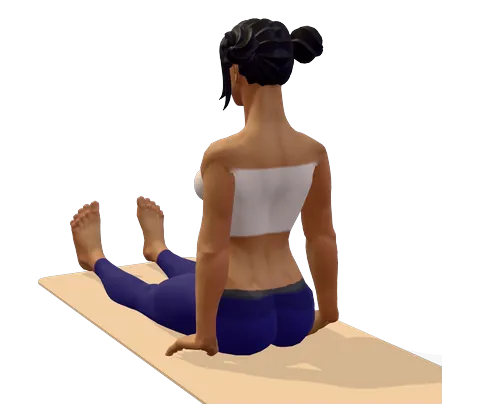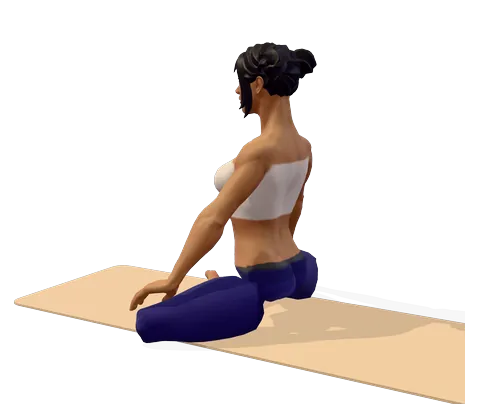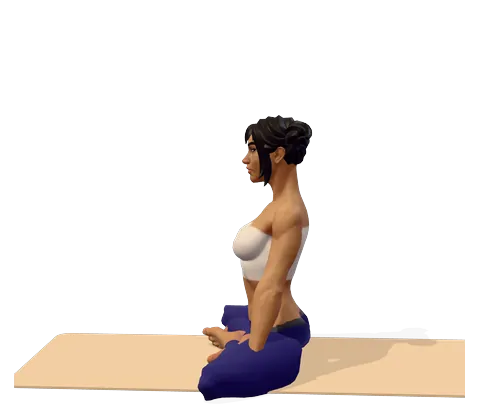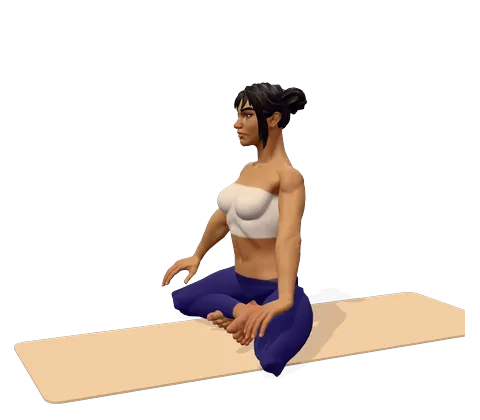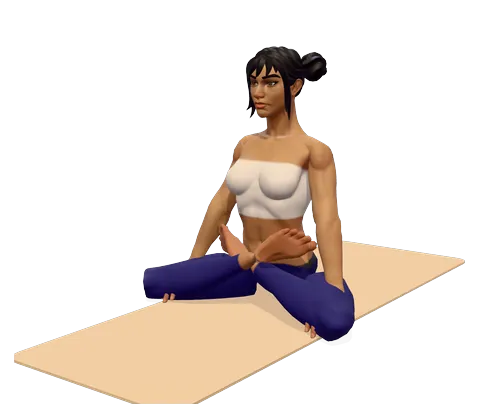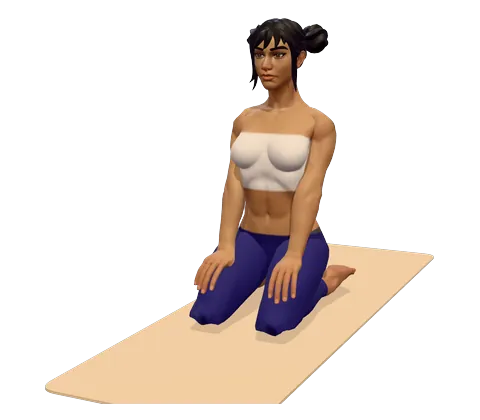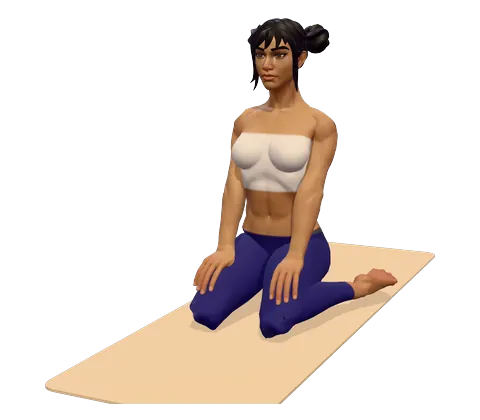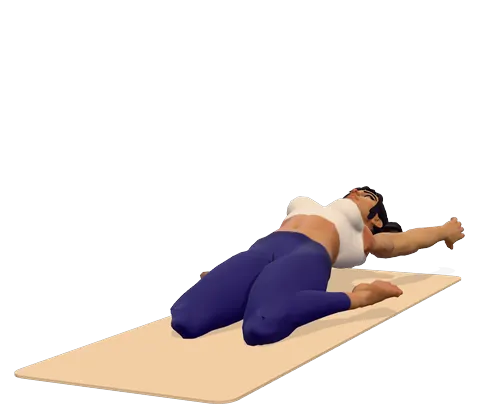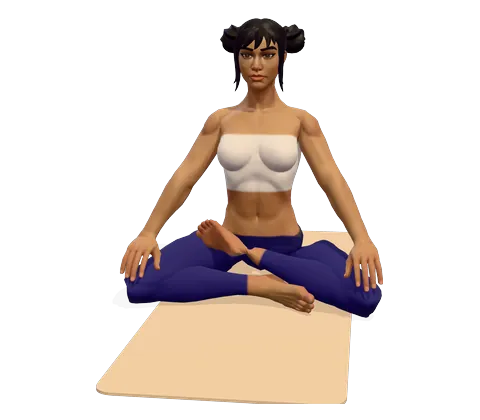
How to do Half Lotus Pose step by step
- Sit on a folded blanket with your legs straight out in front of you. Warm up the hips first with a few gentle hip circles.
- Bend your right knee and tuck the right foot on the floor under your left knee or thigh, as in easy pose.
- Bend your left knee out to the side. Hold the left foot and ankle with both hands and lift the whole shin, moving from the hip.
- Place the left foot high on your right thigh, close to the hip crease, sole facing up. Keep the ankle straight, not bent sideways.
- Let the left knee rest toward the floor. If it floats high or hurts, lower the foot back down or support the knee with a block.
- Rest your hands on your knees, lengthen your spine and breathe calmly for 30 seconds to 2 minutes.
- Lift the left foot down with your hands, stretch both legs and shake them out. Repeat with the right foot on the left thigh.
Where you feel Half Lotus Pose: what it stretches and strengthens
Let the top knee drop and keep your back straight. In the 3D guide, turn on Body guide: areas that stretch glow green and areas that work glow saffron.
Stretches
- Hip flexors
- Inner thighs
- Ankles
Strengthens
- Spine
Benefits and precautions
Benefits
- Opens the hips gently and prepares them for full lotus
- Gives a stable, upright seat for meditation and breathing practice
- Stretches the knees, ankles and the tops of the feet
- Much easier on the knees than full lotus, so it suits more people
- Lets you work on one side at a time and notice differences between the hips
Avoid or modify if
- Any knee injury, meniscus tear or knee replacement — use easy pose instead
- Ankle injury or pain on the outer ankle of the lifted foot
- Hip replacement, hip pain or sciatica in a flare — ask your physiotherapist first
- Pregnancy — the lifted foot presses on the lower belly; easy pose on a cushion is kinder
- Stop at any sharp pain inside the knee; the stretch belongs in the hip, not the knee
Half lotus pose (Ardha Padmasana) is a seated yoga pose in which one foot rests on top of the opposite thigh while the other foot stays on the floor under the knee. It gives you much of the stability of lotus with far less strain on the knees, which makes half lotus a popular meditation posture and sitting position, and the natural step before full lotus. This guide covers what it is, how to do it without hurting your knees, its benefits, variations and how it compares with other seated poses.
What is Ardha Padmasana?
The half lotus pose name in Sanskrit has three parts: ardha means half, padma means lotus and asana means pose. So the Ardha Padmasana meaning, and the half lotus pose meaning in English, is simply "half lotus seat". Ardha Padmasana in Hindi is written अर्ध पद्मासन. It is exactly what it sounds like: one leg in the lotus position and the other folded as in easy pose.
What is Padmasana, then? Full lotus: both feet rest on the opposite thighs. Lotus and half lotus pose share the same foot placement; the half version simply does it on one side at a time.
How to do Ardha Padmasana (Ardha Padmasana kaise kare)
The Ardha Padmasana steps above take you in and out safely. The 3D guide shows the left foot on the right thigh first. These points matter most:
- Half lotus foot position. The foot rests high in the hip crease, sole facing up. A foot sitting low on the thigh twists the knee.
- Move from the hip. Hold the shin and ankle and rotate the whole leg outward from the hip. Never lever the foot up by pulling on the knee.
- Straight ankle. If the ankle bends sideways (the sole turns toward the ceiling too much), the outer ankle takes the strain. Keep a line from the shin to the little toe.
- Sit high. A folded blanket lets the lotus knee drop. If it still floats, put a block under it.
- What to feel: a stretch deep in the outer hip and buttock. Any pinching inside the knee is a signal to come out.
How long to sit in half lotus
Start with 30 seconds to a minute on each side, always doing both sides. As a half lotus position for meditation, you can build up to 10–20 minutes over several weeks, switching legs halfway.
Half lotus pose benefits (Ardha Padmasana ke fayde)
The main benefits of Ardha Padmasana are practical. It gives a steady, upright seat for meditation and for breathing such as Anulom Vilom. It opens the hip rotators, which is the key to more advanced seated poses. Because you work one side at a time, you can see which hip is tighter.
The health benefits of Ardha Padmasana are the same kind as those of other seated poses: better sitting posture and a calm seat for slow breathing, which may help you relax. Traditional claims about digestion or energy channels have not been tested scientifically.
Half lotus vs full lotus pose
Half lotus pose vs full lotus: in full lotus both feet sit on the thighs, so both knees rotate at the same time and the pose locks firmly. Full lotus pose benefits include a slightly more stable and symmetrical base, but the knee demand is much higher. Ardha Padmasana vs Padmasana is therefore not "worse vs better" — it is the right choice for most bodies.
Is lotus pose bad for you? Only when it is forced. Can everyone do the lotus pose? No; hip shape varies, and some people will always sit best in half lotus or easy pose. How to do lotus pose for beginners: practise half lotus comfortably on both sides first, then try full lotus.
| Pose | Feet | Best for |
|---|---|---|
| Sukhasana | Both under the knees | Everyone, stiff hips |
| Ardha Padmasana | One on the opposite thigh | Moderately open hips |
| Siddhasana | Heels stacked near the body | Long meditation |
| Padmasana | Both on the opposite thighs | Very open hips, healthy knees |
Ardha Padmasana and Sukhasana differ only in one foot; Ardha Padmasana and Siddhasana differ in that Siddhasana keeps both feet at floor level. The difference between Siddhasana and Padmasana is covered on the Siddhasana page.
Half lotus pose variations
Seated and reclining variations
- Modified half lotus pose: rest the lifted foot on the calf or shin instead of the thigh. A good start for beginners.
- Half lotus twist pose: in half lotus, place one hand on the opposite knee and turn gently. Half lotus twist pose benefits are a mild spinal twist and a deeper outer-hip stretch.
- Half lotus forward bend pose: from Ardha Padmasana, fold forward over the crossed legs, forehead to a block.
- Ardha Padmasana Paschimottanasana: one leg straight, the other foot in half lotus, fold over the straight leg — a cousin of head-to-knee pose. In the bound version, Ardha Baddha Padma Paschimottanasana, the hand reaches behind to hold the lotus foot.
- Supine half lotus pose (reclining half lotus pose): lie on your back and place one foot on the opposite thigh — a gentle way to prepare with no body weight.
Standing half lotus pose in yoga
- Half lotus tree pose: in tree pose, place the lifted foot in half lotus on the standing thigh instead of against it. Half lotus tree pose benefits are balance plus a hip stretch; keep a wall near you.
- Ardha Baddha Padmasana (half bound lotus): reach the same-side arm behind the back to hold the lotus foot. The standing half bound lotus pose then folds forward. Benefits of Ardha Baddha Padmasana include a shoulder stretch and strong focus, but it is an advanced balance pose.
Ardha Padmasana contraindications and precautions
Ardha Padmasana benefits and contraindications both come from the hip and knee rotation. Avoid it with the conditions in the caution box, and prepare with bound angle pose and the supine version. If you are new to yoga, our yoga for beginners guide shows which seated poses to learn first.
Here are the Ardha Padmasana steps and benefits in Hindi.
अर्ध पद्मासन (Ardha Padmasana) — हिंदी में: अर्ध पद्मासन कैसे करें: पैर सामने फैलाकर बैठें। दायाँ पैर मोड़कर बाएँ घुटने के नीचे रखें, फिर बायाँ पैर उठाकर दाईं जाँघ के ऊपर, कूल्हे के पास रखें। हाथ घुटनों पर रखें, रीढ़ सीधी रखें और आराम से साँस लें। फिर पैर बदलकर दोहराएँ। अर्ध पद्मासन के फायदे: कूल्हे खुलते हैं, ध्यान के लिए स्थिर आसन मिलता है और यह पूर्ण पद्मासन की तैयारी है। घुटने में दर्द हो तो यह आसन न करें।
Where this practice is used
Chakras: Sahasrara (Crown Chakra)
Frequently asked questions
What is half lotus pose?
Half lotus (Ardha Padmasana) is a seated pose with one foot resting on top of the opposite thigh and the other foot on the floor under the knee. It is a common meditation seat and the preparation for full lotus.
What are the benefits of Ardha Padmasana?
It opens the hips, gives a steady upright seat for meditation and breathing, stretches the knees and ankles, and prepares you for full lotus.
Is half lotus easier than full lotus?
Yes. Only one knee rotates at a time, so the strain on the knees is much lower. Most people can learn half lotus long before full lotus, if ever.
How do I do half lotus without knee pain?
Warm up the hips, sit on a blanket, lift the foot by moving the whole leg from the hip, and place it high in the hip crease. Stop at any pain inside the knee.
How long should I sit in half lotus?
Start with 30 seconds to a minute per side and build up to 10–20 minutes for meditation, always switching legs.
Who should not do Ardha Padmasana?
People with knee, ankle or hip injuries, knee or hip replacements, sciatica in a flare, and pregnant women. Choose easy pose instead.
What is standing half lotus pose?
A balance pose in which you stand on one leg and place the other foot in half lotus on the standing thigh, as in half lotus tree pose. It needs good balance and open hips.
This page is for general education. Check with your doctor before starting yoga if you are pregnant, have a medical condition or an injury. Stop if you feel pain, dizziness or shortness of breath.