How to do visualization meditation
- Sit or lie down comfortably and close your eyes.
- Relax with a few slow breaths, making the out-breath longer.
- Imagine a peaceful place, real or imagined, where you feel completely safe.
- Explore it with each sense: what you see, hear, smell, feel on your skin.
- Rest there, letting the calm of the place soak into your body.
- Come back slowly by feeling your body and the room before opening your eyes.
Benefits
- Guided imagery is linked in studies with reduced stress and anxiety
- Can help with relaxation before sleep or a stressful event
- Useful for people who find it hard to focus on the breath
- Builds the ability to calm yourself with your own imagination
Be careful
If you cannot picture images, that is common; simply imagine the sounds, feelings or the idea of the place. If an image feels unpleasant, open your eyes or change the scene.
Visualization meditation uses your imagination as the object of attention. Instead of watching the breath, you picture a calm, safe place, a beach, a forest, a mountain lake, and explore it with every sense until your body begins to feel the calm of the scene. It is often the easiest way in for people whose thoughts race when they try to "just breathe".
You will also see it called guided visualization or guided imagery meditation; the British spelling is visualisation meditation. They all describe the same practice. This page explains how it works, how to make your images more vivid, how to write your own script, and what the research says.
What is visualization meditation?
A simple visualization meditation definition: a focused, relaxed state in which you deliberately build a mental scene and keep your attention inside it. The body responds to imagined experiences surprisingly well. Picture biting a lemon and your mouth waters; picture a quiet shore and your shoulders often drop. Guided imagery uses that link on purpose. People who ask "what is visual meditation?" usually mean this, though some mean open-eye gazing practices such as trataka.
In Hindi this is sometimes called kalpana dhyan, from the Sanskrit kalpana, imagination or mental creation. Yoga has used images for a long time. Yoga Nidra moves through a series of quick images near the end; meditating on the form of a deity or a flame is a traditional kind of dhyana; and trataka ends by holding the after-image of a candle with the eyes closed. A chakra visualization meditation, where you picture colored light at points along the spine, is another yoga visualization practice; you can try it in the guided chakra meditation.
Visualization meditation techniques and examples
| Technique | What you picture | Good for |
|---|---|---|
| Peaceful place | A safe space, real or imagined, explored with all senses | Everyday calm, anxiety, before sleep |
| Nature visualization | Beach, forest, mountain, rain, a river | Relaxation when you cannot get outside |
| Body light | Warm light slowly filling and softening each part of the body | Tension, winding down |
| Tree | Roots growing down from the base of the spine, a trunk rising up | Feeling grounded and steady |
| Rehearsal | Yourself doing a hard task calmly and well | Interviews, exams, sport, public speaking |
| Chakra colors | Seven colored lights along the spine, in yoga tradition | Focus and a sense of inner balance |
The guided session on this page uses the peaceful place method, the most widely taught of all guided imagery examples for relaxation. The "safe space" exercise used in therapy is the same idea. A nature visualization meditation, such as a guided imagery meditation on a mountain or beach, is the next best thing to a guided meditation in nature, and the tree visualization meditation is a favorite for feeling grounded.
Visualization meditation for beginners: how to do it well
Use all five senses, one at a time
Beginners often try to see everything at once and end up with a blurry picture. Instead, move through the senses slowly, as the voice does: first what you see (colors, light, shapes), then what you hear, then what you feel on your skin, then what you smell, then the ground beneath you. Spend about a minute on each. Detail matters more than beauty; the grain of a wooden bench is more calming than a vague "nice view".
If you cannot "see" anything
Many people do not form clear mental pictures, and a small number, people with aphantasia, form none at all. That is fine. Imagine the sounds, the temperature, the feeling of sand or grass, or simply know that you are there. Sound and touch are often more calming than sight anyway.
How to enhance your visualization
- Choose a place you have really been; memory makes images stronger.
- Relax the body first with a few long exhales, as in 4-7-8 breathing. Slow breathing and imagery work better together than either alone.
- Return to the same place every day. It becomes easier and more vivid each time, and faster to reach under stress.
- Add movement: walk along the shore, dip your hand in the stream.
Writing your own visualization meditation script
A good guided visualization script is slow, present tense and sensory, with long pauses. Here is a short guided visualization script set in a forest you can read to yourself or record:
You are standing at the edge of a quiet forest. Sunlight falls through the leaves in soft patches. (pause) You hear birds high above, and a stream somewhere to your left. (pause) The air is cool and smells of pine and damp earth. (pause) You walk slowly along a soft path, feeling it give a little under your feet. (pause) You find a flat, warm rock by the stream and sit. Here, you are completely safe. (long pause)
End every script the same way: let the image fade, feel your body and the room, move your fingers and toes, then open your eyes.
When and how often to practice
- Before sleep: lying down, visualization meditation for sleep works well because the images gently crowd out worries. A guided imagery meditation for sleep can simply be your peaceful place, visited in bed; pair it with the sleep meditation or Yoga Nidra.
- Before a stressful event: try a guided imagery meditation of 5 minutes. A guided visualization before an interview or exam works best as a short rehearsal: see yourself walking in, breathing slowly and answering calmly. See also yoga for exam stress.
- Daily reset: visualization meditation 10 minutes a day, sitting upright so you stay awake, builds the skill fastest.
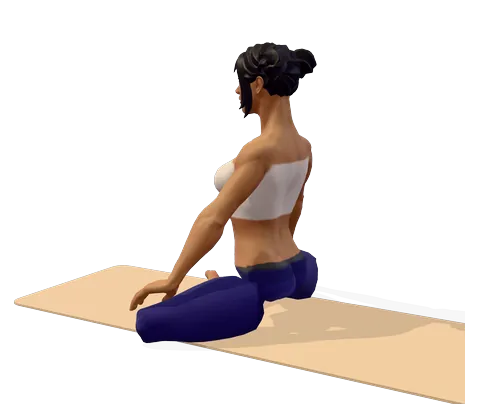
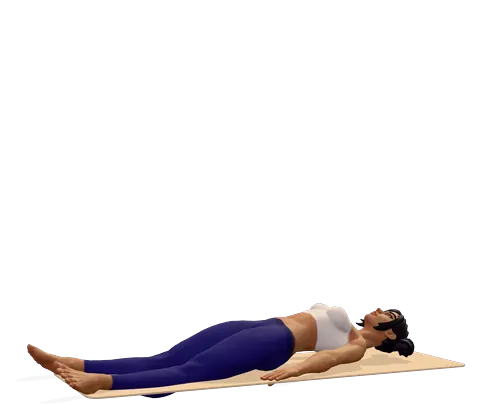
Sitting in Easy Pose keeps you alert; lying in Savasana is deeper but you may drift off, which is fine at night.
Visualization meditation benefits: what research says
The benefits of guided visualization are better studied than many people expect, although most studies are small and results vary.
- Anxiety and stress. Guided imagery is linked in many studies with lower stress and anxiety, including before medical procedures and surgery. This is why hospitals sometimes use guided visualization to decrease anxiety before treatment.
- Pain. Guided visualization for pain can help some people cope better with pain, as part of wider care, not instead of it.
- Performance. Sport psychologists have long used mental rehearsal; research suggests it improves skills when combined with real practice, not as a replacement for it.
- Supportive care. Relaxation and guided imagery are used alongside medical treatment in some cancer centers, and visualization meditation for cancer patients may ease anxiety and improve comfort. It does not treat the cancer itself.
A note on manifestation
Visualization meditation for manifestation is popular online. Research by psychologist Gabriele Oettingen found that simply fantasizing about a desired future can reduce the effort people put into reaching it. What helps more is "mental contrasting": picture the goal, then picture the obstacle, then plan what you will do. Use visualization meditation for goals that way, as preparation for action.
Common beginner mistakes
- Straining to see. Effort tightens the body. Let the scene be faint; it will grow.
- Changing places every time. Stay with one scene for a few weeks.
- Leaving too fast. Coming back slowly prevents that groggy, spaced-out feeling.
- Choosing a loaded place. Avoid somewhere linked with grief or conflict, even if it is beautiful.
Visualization meditation for kids and teens
Guided visualization for kids works best as a short story: 3 to 5 minutes, a friendly animal or a magic garden, and plenty of sounds and textures. Guided imagery meditation for teens can use a real place they love, such as a beach from a holiday.
If an image becomes unpleasant or frightening, open your eyes and look around the room, or change the scene. People with a history of trauma, psychosis or dissociation should use guided visualization therapy only with a qualified professional.
Visualization kaise kare, in Hindi: कल्पना ध्यान (kalpana dhyan) आराम से बैठें या लेटें, आँखें बंद करें और कुछ लंबी साँसें छोड़ें। किसी शांत और सुरक्षित जगह की कल्पना करें, जैसे समुद्र का किनारा या जंगल। एक-एक करके उस जगह के रंग, आवाज़ें, हवा का स्पर्श और खुशबू महसूस करें। उस शांति को अपने शरीर में उतरने दें। अंत में धीरे-धीरे शरीर और कमरे को महसूस करके आँखें खोलें।
For a gentler follow-up, try the body scan meditation, or browse every technique in the meditation guide.
Frequently asked questions
What is visualization meditation?
It is a form of meditation in which you deliberately imagine a calm scene, such as a beach or forest, using all your senses, and keep your attention inside it. The body tends to relax as if you were really there. It is also called guided imagery or guided visualization.
How do I do visualization meditation as a beginner?
Sit or lie down, close your eyes and take a few slow breaths with long exhales. Imagine a peaceful place and explore it one sense at a time: sights, sounds, touch, smell. Rest there for a few minutes, then come back slowly. The 12-minute guided voice above walks you through it.
What if I cannot picture images in my mind?
That is very common. Focus on sounds, temperature, textures or simply the idea of being in the place. Visualization meditation still works without clear pictures.
Is visualization meditation good for sleep and anxiety?
Many people find it helpful for both, and guided imagery is linked in studies with reduced stress and anxiety. For sleep, practice lying down in the evening. It supports, but does not replace, treatment for an anxiety disorder or insomnia.
What is the difference between guided imagery and visualization?
In everyday use they mean the same thing. Guided imagery usually means someone leads you with a script or voice; visualization can also be done silently on your own.
Does visualization meditation work for manifestation?
Imagining a goal can increase motivation, but research suggests that fantasizing alone can reduce effort. It works better when you also picture the obstacles and plan the steps you will take.
How long should a visualization meditation be?
Five minutes is enough for a quick reset; 10 to 15 minutes lets the body relax fully. Daily practice with the same scene makes it easier and more vivid over time.
More guided meditations
 Breath Awareness MeditationRest your attention on the natural breath and gently return to it each time the mind wanders.
 Body Scan MeditationMove your attention slowly through the body from the toes to the head, noticing sensations without trying to change them.Loving-Kindness MeditationSilently repeat warm wishes for yourself, then widen them step by step to others and to all beings.So Hum Mantra MeditationSilently hear the sound "So" as you breathe in and "Hum" as you breathe out, linking a mantra to the natural breath.OM Chanting MeditationChant OM aloud in slow, long breaths, then sit in the silence that follows the sound.Trataka Candle MeditationGaze steadily at a candle flame, then close your eyes and hold the after-image in your mind. See our full Trataka guide for more detail.
Meditation supports health; it does not replace medical or psychological care. If meditation brings up distressing memories or feelings, stop, open your eyes and ground yourself; talk to a professional if it keeps happening. Medical disclaimer.