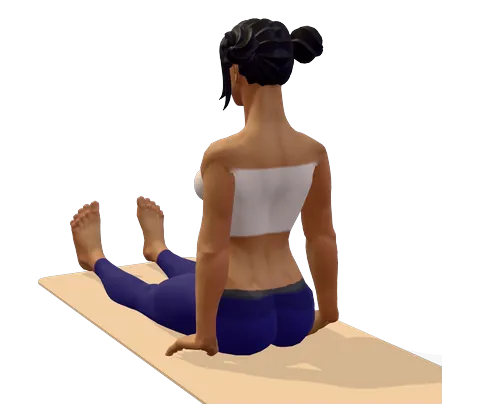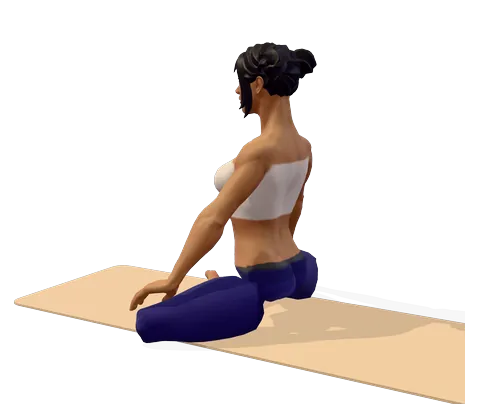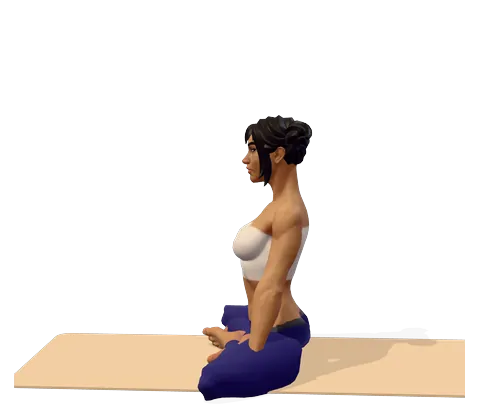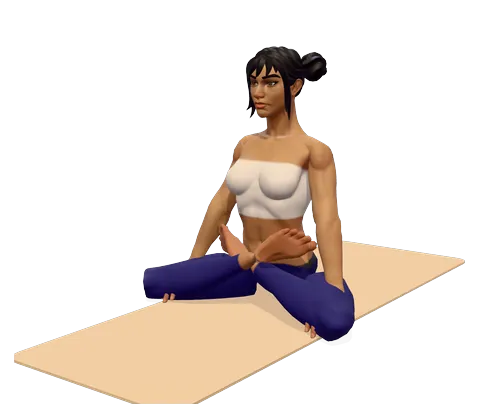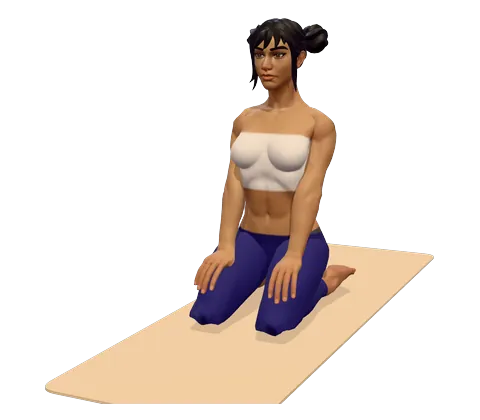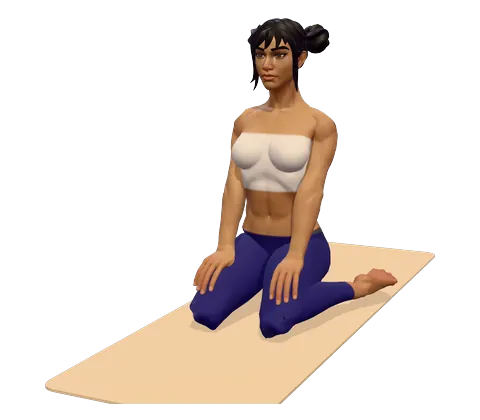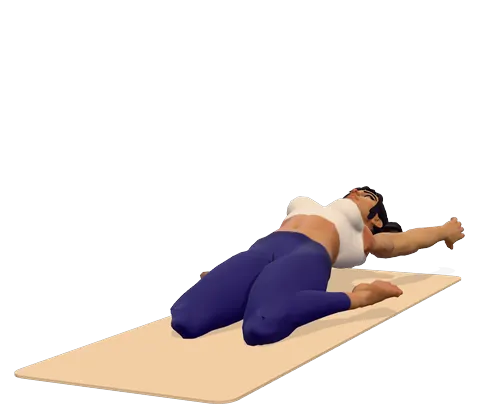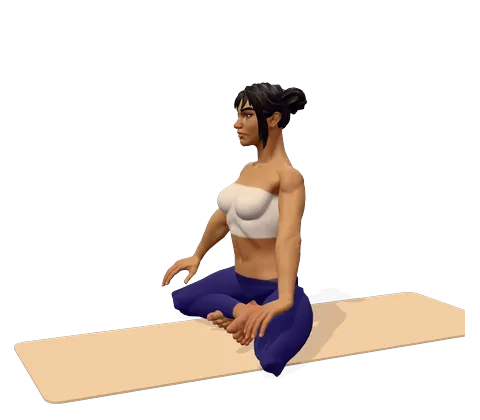
How to do Accomplished Pose step by step
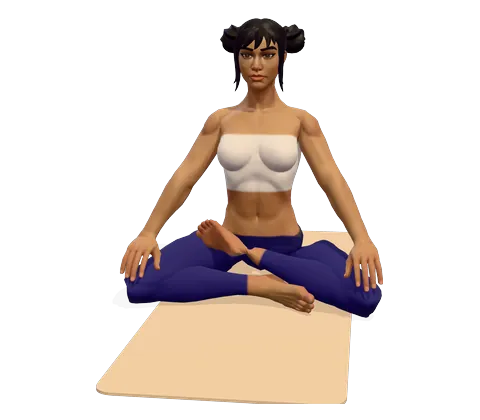
- Sit on the front edge of a folded blanket with your legs straight out in front of you.
- Bend your left knee and draw the left heel in close to your body, so it rests near the perineum (the area between the sitting bones). The sole lies against the right inner thigh.
- Bend your right knee and place the right heel just in front of and slightly above the left heel, close to the pubic bone. The two ankles line up one above the other.
- Tuck the toes of your right foot into the fold between your left thigh and calf. Let both knees rest toward the floor.
- Rest your hands on your knees, palms up or down, and lengthen your spine. Keep the chin level and the shoulders soft.
- Breathe naturally and sit for 1–5 minutes to begin with, longer for meditation when your legs are comfortable.
- Release the top foot first, stretch both legs out and shake them gently. Next time, place the right heel underneath.
Where you feel Accomplished Pose: what it stretches and strengthens
Stack your heels, sit on your sitting bones, lengthen up. In the 3D guide, turn on Body guide: areas that stretch glow green and areas that work glow saffron.
Stretches
- Inner thighs
- Hip flexors
- Ankles
Strengthens
- Spine
Benefits and precautions
Benefits
- A firm, upright seat that is traditionally preferred for long meditation and pranayama
- Keeps the spine straight with less effort than easy pose, once the hips are open enough
- Gently stretches the hips, inner thighs, knees and ankles
- The locked legs reduce fidgeting and help you stay still
- Prepares the hips for harder seats such as half lotus and lotus
Avoid or modify if
- Knee injury, meniscus tear or knee replacement — use easy pose on a cushion or sit on a chair
- Ankle injury or stiff ankles — do not force the top foot into place
- Sciatica, hip pain or recent hip surgery — ask your physiotherapist first
- Haemorrhoids, recent pelvic or perineal surgery — keep the lower heel away from the body instead of pressing it in
- Numbness or tingling in the legs, feet or groin — ease off, change sides or stretch out
- Later pregnancy — the heels press into the pelvic area; easy pose on a cushion is more comfortable
Accomplished pose (Siddhasana) is one of the oldest and most respected meditation seats in yoga. Instead of crossing the shins, you stack the heels one in front of the other, close to the body, and tuck the top foot between the opposite thigh and calf. The legs lock into a compact, stable base and the spine rises easily. This guide explains what Siddhasana is, how to sit in it correctly, the half version for beginners, what it does and does not do, and how it differs from Padmasana and Swastikasana.
What is Siddhasana in yoga?
The name comes from two Sanskrit words: siddha, meaning "perfected", "accomplished" or "an adept", and asana, meaning seat or pose. So the Siddhasana meaning in English is accomplished pose, adept's pose or perfect pose; the perfect pose meaning is "the seat of the perfected ones". In Hindi it is सिद्धासन, and the Siddhasana meaning in Hindi is the same: the seat of a siddha, a person who has mastered yoga.
The Hatha Yoga Pradipika praises Siddhasana above all other seats and links it with long meditation and with Mula Bandha, the gentle lift of the pelvic floor. These are spiritual teachings from the text, not medical claims.
How to do Siddhasana step by step (Siddhasana kaise kare)
The steps above are the full Siddhasana vidhi. The 3D guide shows the left heel underneath and the right heel on top. To do Siddhasana correctly, check these points:
- Heels in line. Look down: the top heel should sit roughly above the lower heel, both on the centre line of the body. If they are side by side, you are in easy pose or Swastikasana instead.
- Close, not crushing. The lower heel rests near the perineum; the pressure should be light. You should never feel numbness, burning or tingling.
- Hips higher than knees. Sit on a folded blanket. If the knees still float high, rest them on blocks.
- Upright spine. Lift through the crown of the head and let the shoulders drop. Hands can rest in Chin mudra on the knees.
How long can you sit in Siddhasana?
Begin with 1–3 minutes on each side and build up by a minute or two per week. Many people can meditate for 15–20 minutes in the pose after a few months of regular practice. Always change which heel is underneath from one session to the next.
Siddhasana for beginners and variations: Ardha Siddhasana
What is Ardha Siddhasana? The half accomplished pose: the lower heel is drawn in as in the full pose, but the top foot rests on the floor in front of it instead of on top. The Ardha Siddhasana meaning is simply "half Siddhasana". Siddhasana vs Ardha Siddhasana: the half version puts less twist into the knee and ankle of the top leg.
How to do Ardha Siddhasana: sit on a blanket, draw the left heel in, then place the right foot on the floor directly in front of the left shin, heel in line with the left heel. How to sit in Ardha Siddhasana for a long time? Use enough height under the hips, support both knees with blocks or cushions, keep a wall behind you for the first weeks and switch sides halfway through. The benefits of Ardha Siddhasana are much the same as the full pose — a stable seat and gentle hip opening — with less strain.
Siddhasana benefits (Siddhasana ke fayde)
What does Siddhasana do? In practical terms it gives you one of the steadiest seats for breathing practice such as Nadi Shodhana and for meditation. The heels are close together and the knees drop low, so the base is wide and the pelvis sits upright. It also stretches the hips, inner thighs and ankles.
Traditional texts go much further, describing Siddhasana as purifying the energy channels and helping to control sexual energy. These are spiritual claims. No research shows specific health effects of this pose on its own, so treat lists of "10 benefits" with care.
Siddhasana: accomplished pose for men and women
Old texts describe the accomplished pose for men, with the upper heel above the genitals, and a version for women called Siddha Yoni Asana, where the heels rest against the pelvic area in the female body. In modern classes the pose is taught to everyone: just rest the heels close to the body without uncomfortable pressure. Siddhasana benefits for male and female practitioners are the same — posture, stillness and hip mobility.
Siddhasana vs Padmasana, Swastikasana and Sukhasana
| Pose | Feet | Knee and hip demand |
|---|---|---|
| Sukhasana | Under the opposite knees | Low |
| Swastikasana | Tucked between thigh and calf, heels apart | Low to moderate |
| Siddhasana | Heels stacked on the centre line, close to the body | Moderate |
| Ardha Padmasana | One foot on the opposite thigh | Moderate to high |
| Padmasana | Both feet on the opposite thighs | High |
What is the difference between Siddhasana and Padmasana? In lotus both feet lie on top of the thighs and the knees rotate strongly; in Siddhasana the feet stay at the level of the floor, so it is kinder to the knees. Siddhasana vs half lotus is similar: half lotus lifts one foot onto the thigh. What is the difference between Siddhasana and Swastikasana? In Swastikasana the heels stay apart; in Siddhasana they line up in the centre. Siddhasana vs Sukhasana: easy pose simply crosses the shins. Siddhasana vs Vajrasana: Vajrasana is a kneeling seat that needs flexible knees rather than open hips.
Siddhasana contraindications and side effects
Siddhasana ke fayde aur nuksan — the benefits and possible side effects — both come from the same place: a compact seat with deep knee bending and heel pressure. The common side effects are sore knees, stiff ankles and numb legs after long sitting. More rarely, too much heel pressure causes tingling in the groin. Ease off at once if that happens. As for Siddhasana indication and contraindications: it suits healthy knees and fairly open hips, and anyone with the conditions in the caution box should choose an easier seat. Time your sitting with the meditation timer so you do not stay longer than your legs are ready for.
सिद्धासन (Siddhasana) — हिंदी में: सिद्धासन कैसे करें: पैर सामने फैलाकर बैठें। बायाँ घुटना मोड़कर एड़ी को शरीर के पास, गुदा और जननांग के बीच के हिस्से के पास रखें। फिर दाईं एड़ी को बाईं एड़ी के ठीक आगे और ऊपर रखें और दाएँ पैर की उँगलियाँ बाईं जाँघ और पिंडली के बीच फँसा दें। हाथ घुटनों पर रखें, रीढ़ सीधी रखें और 1 से 5 मिनट बैठें। सिद्धासन के फायदे: ध्यान और प्राणायाम के लिए स्थिर आसन, सीधी रीढ़ और कूल्हों में लचीलापन। घुटने, टखने या कमर में दर्द हो, या पैर सुन्न हों तो इसे न करें।
Where this practice is used
Chakras: Sahasrara (Crown Chakra)
Frequently asked questions
What is Siddhasana and its benefits?
Siddhasana (accomplished pose) is a classical meditation seat with one heel placed in front of the other, close to the body. It gives a stable, upright seat for breathing and meditation and gently opens the hips, knees and ankles.
How do I do Siddhasana for beginners?
Start with Ardha Siddhasana: draw one heel in and place the other foot on the floor in front of it. Sit on a folded blanket and support your knees with blocks.
What is the difference between Siddhasana and Padmasana?
In Padmasana both feet rest on top of the thighs. In Siddhasana the heels are stacked near the body at floor level, which is easier on the knees.
Is Siddhasana only for men?
No. Traditional texts describe a male and a female version, but today everyone practises it with the heels resting close to the body without uncomfortable pressure.
What are the side effects of Siddhasana?
Sore knees or ankles and numb legs if you sit too long or force the pose. Tingling in the groin means the heel pressure is too strong — ease off or change position.
How long should I sit in Siddhasana?
Start with 1–3 minutes on each side and build up slowly. With regular practice many people can sit for 15–20 minutes.
Why is it called the perfect pose?
Siddha means perfected or accomplished, and old texts praise this seat as the best for meditation — hence "perfect pose", "accomplished pose" or "adept's pose".
This page is for general education. Check with your doctor before starting yoga if you are pregnant, have a medical condition or an injury. Stop if you feel pain, dizziness or shortness of breath.