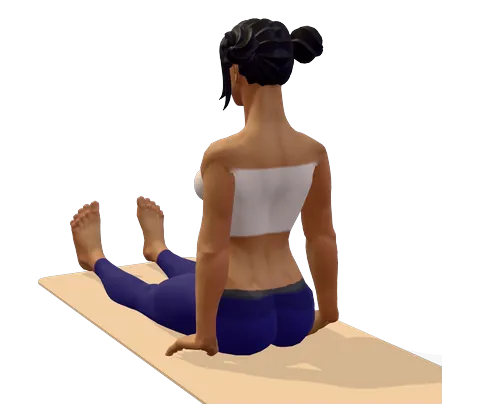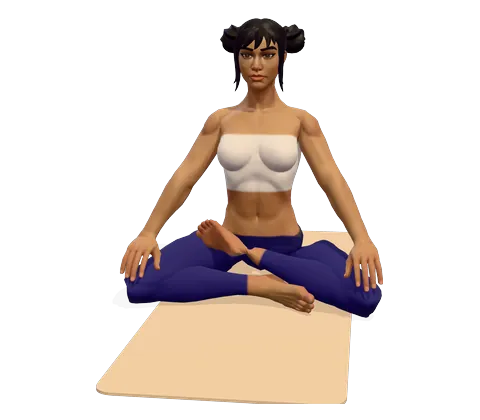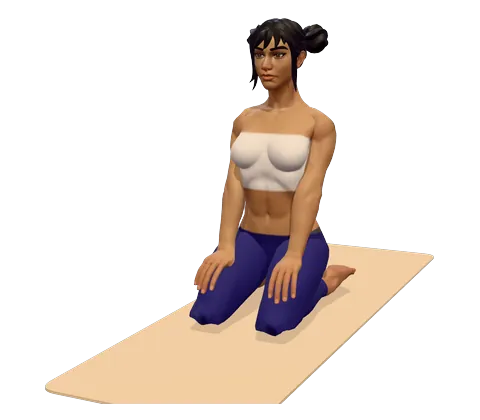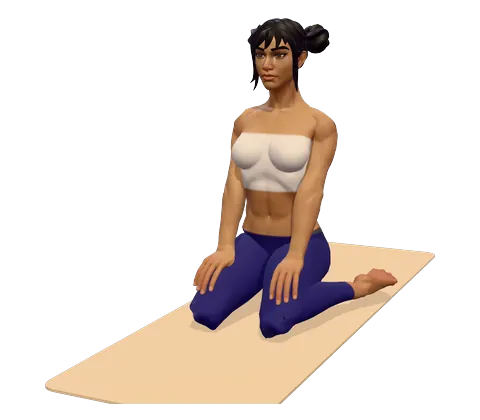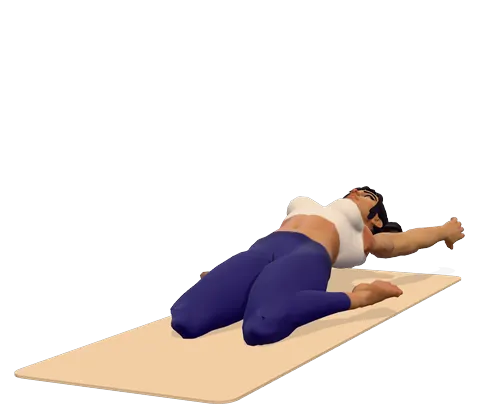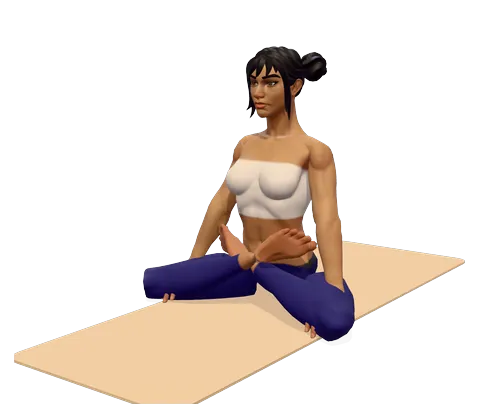
How to do Lotus Pose step by step
- Warm up the hips first. Sit on a folded blanket with your legs straight out in front of you.
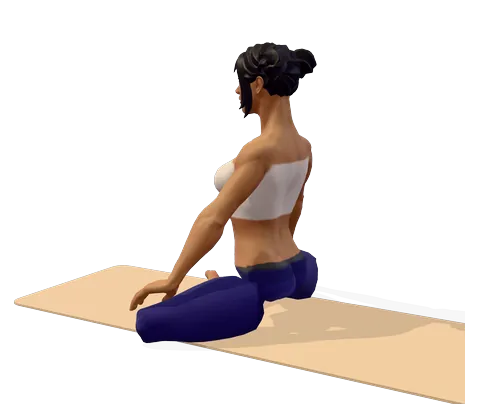
- Bend your left knee and let it fall out to the side. Holding the foot and ankle with both hands, lift the left foot and place it high on your right thigh, heel close to the belly and sole facing up.
- Check the left knee: it should rest toward the floor without pain. If it lifts or hurts, stay in half lotus.
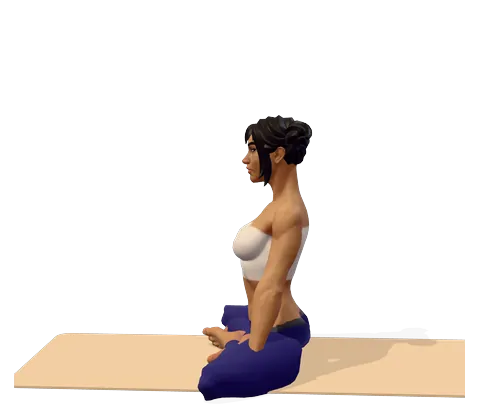
- Bend your right knee and carefully lift the right foot over the left shin onto the top of your left thigh, heel close to the belly.
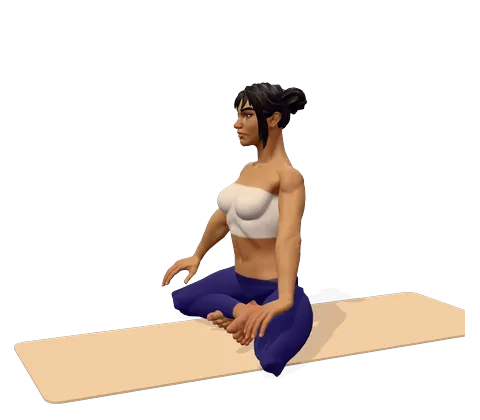
- Bring the knees as close together as is comfortable. Rest your hands on your knees, sit tall and relax your shoulders.
- Breathe calmly for 30 seconds to 1 minute at first. Build up slowly over weeks.
- To come out, lift the top foot down with your hands, then the other foot. Stretch the legs and shake them out. Next time, place the right foot first.
Where you feel Lotus Pose: what it stretches and strengthens
Open from the hips, never force the knees, and sit tall. In the 3D guide, turn on Body guide: areas that stretch glow green and areas that work glow saffron.
Stretches
- Hip flexors
- Knees
- Ankles
Strengthens
- Spine
Benefits and precautions
Benefits
- A very stable, upright seat for long meditation and pranayama
- Keeps the spine straight with little effort once the hips are open
- Deep stretch for the hip rotators, knees and ankles
- Encourages stillness; used as a calm seat in our yoga plans for focus
- Base pose for advanced variations such as bound lotus and lifted lotus
Avoid or modify if
- Any knee injury, meniscus tear, knee surgery or knee replacement — do not practise lotus
- Ankle injury or pain on the outer ankle — the ankles bend strongly in lotus
- Hip replacement, hip pain or sciatica — choose easy pose or a chair
- Pregnancy — the crossed legs press on the belly; sit in easy pose with the hips raised
- Never pull the foot into place with your hands while the knee hurts; pain inside the knee means stop
Lotus pose (Padmasana) is the best-known seated pose in yoga: each foot rests on top of the opposite thigh, the knees rest toward the floor and the spine rises straight. It is the seat of countless statues of the Buddha and of yogis in meditation. It is also a pose that should never be forced. This guide explains what lotus pose is, how to prepare for it, how to do it step by step, its benefits, easier versions, and who should not do Padmasana.
What is lotus pose in yoga?
What is Padmasana called in English? Lotus pose or lotus position. The Sanskrit padma means lotus and asana means seat or pose; another name, Kamalasana, uses kamala, a second word for lotus. So Kamalasana vs Padmasana is the same pose with two names. Padmasana in Hindi is पद्मासन, also कमलासन.
The lotus pose meaning is symbolic: the lotus flower grows from mud yet opens clean and upright above the water. In Hinduism and Buddhism this spiritual meaning stands for a calm, clear mind rising above daily troubles. That is why lotus pose in Buddhism is the classic posture of meditation.
How to prepare for lotus pose safely
Is lotus pose difficult? For most adults, yes. Lotus needs a lot of outward rotation at the hip. The knee is a hinge, and it barely rotates. When the hips are tight, the twist ends up in the knee instead — which is how forcing lotus causes knee injuries, including meniscus tears. So lotus pose prep is about the hips, not the knees.
Padmasana preparatory poses for beginners
- Bound angle pose and hip circles as a lotus pose warm up.
- Figure-four stretch lying on your back, one ankle over the opposite knee.
- Cow face pose for the outer hips; Padmasana and Gomukhasana make a good pair in a hip sequence.
- Cradle the leg: sitting, hold one shin like a baby in your arms and rock it gently side to side.
- Half lotus: what is half lotus pose? One foot on the opposite thigh, the other foot on the floor. Half lotus pose for beginners is the real starting point.
Lotus pose progression is slow: easy pose, then half lotus on both sides, then full lotus, often over months. You can't do lotus pose yet? That is normal. Many experienced teachers never sit in full lotus, and their practice is complete without it.
How to do lotus pose step by step (Padmasana kaise kare)
The steps above give the full procedure. These details help you do lotus pose properly:
- Which leg first? Traditional texts start with the right foot on the left thigh; the 3D guide shows the left foot first. Either is fine — simply alternate, so both hips open evenly.
- Lift the foot, don't pull the knee. Move the whole shin as one unit from the hip, holding the ankle and foot.
- Feet high, in the hip crease. A foot resting low on the thigh twists the knee. Keep the soles facing up, not the ankles bending sideways — this protects against lotus pose ankle pain.
- Sit high. A folded blanket under the hips makes lotus much easier.
- Lotus pose hands: rest them on the knees, or in Dhyana mudra in your lap, as in many Buddha statues.
How long can you sit in Padmasana?
Start with 30 seconds to 1 minute on each side. Add time only while both knees feel completely comfortable. Experienced practitioners may sit for 20–30 minutes; there is no need to hurry toward that.
Lotus pose benefits (Padmasana ke fayde)
What is lotus pose good for? Mainly as a meditation seat. With both feet locked on the thighs, the base is wide and symmetrical, the pelvis tilts forward and the spine stays upright with very little muscular work. That lets you sit still for long periods of meditation or breathing such as Bhramari.
Lotus pose also gives a deep stretch to the hips, knees and ankles. Our yoga for concentration plan includes it as a steady seat for focus practice. Traditional texts claim much more, such as awakening energy or curing disease; those claims have not been tested. The full lotus pose benefits for male and female practitioners are the same, and there is no evidence that the pose itself improves fertility or hormones.
Is lotus pose good for you, or bad for you?
Is lotus pose bad for you? Not if your hips are ready and you never force it. It becomes harmful when people pull their feet into place with a knee that hurts. Can everyone do the lotus pose? No — hip bone shape differs from person to person, and some bodies will never sit comfortably in lotus. That is anatomy, not failure.
Is Padmasana good for back pain or sciatica?
Lotus pose is not a treatment for back pain. The upright seat can feel good for some people with lower back pain, but tight hips pull the pelvis back and round the lower back. Is Padmasana good for sciatica? Usually not in a flare, because the deep hip rotation can irritate the nerve. Choose supported easy pose instead and ask your physiotherapist.
Lotus pose muscles stretched
| Area | What happens |
|---|---|
| Deep hip rotators and buttocks | Strong stretch (the main limit for most people) |
| Inner thighs and groin | Moderate stretch as the knees drop |
| Front of the ankles and tops of the feet | Stretched as the feet rest on the thighs |
| Back muscles | Light work to keep the spine upright |
Lotus pose variations and Padmasana modifications
- Lotus pose modifications: half lotus, or easy pose on a cushion.
- Baddha Padmasana (bound lotus): how to do it — reach the arms behind the back and hold the toes. It has the same contraindications as lotus plus shoulder injuries.
- Lotus pose forward bend (Yoga Mudra): fold forward from lotus, forehead toward the floor.
- Utthita Padmasana (lifted lotus): how to do it — press the hands down beside the hips and lift the whole body off the floor.
- Lotus pose lying down: Matsyasana in lotus, a reclined variation for advanced students.
- Lotus pose upside down: lotus legs in shoulder stand or headstand; only for experienced students under supervision.
Lotus pose vs easy pose, Siddhasana and Vajrasana
Lotus position vs cross-legged: in Sukhasana the feet rest under the knees, which suits almost everyone. Lotus pose vs Siddhasana: in Siddhasana the heels stack near the body at floor level, which needs open hips but less knee rotation. Padmasana vs Vajrasana: kneeling needs flexible knees and ankles but no hip rotation.
Padmasana contraindications and precautions: who should not do it
The disadvantages of Padmasana are the risks to knees and ankles when it is forced. Anyone with the conditions in the caution box should not do it. How to do Padmasana without pain? Only by opening the hips first and stopping the moment the knee complains. Lotus pose for kids is fine for naturally flexible children, as long as they are never pushed into it.
पद्मासन (Padmasana) — हिंदी में: पद्मासन कैसे करें: पैर सामने फैलाकर बैठें। बायाँ पैर उठाकर दाईं जाँघ पर रखें, फिर दायाँ पैर बाईं जाँघ पर रखें, एड़ियाँ पेट के पास रहें। हाथ घुटनों पर रखें, रीढ़ सीधी रखें और आराम से साँस लें। पद्मासन के फायदे: ध्यान और प्राणायाम के लिए बहुत स्थिर आसन, सीधी रीढ़ और कूल्हों में लचीलापन। घुटने या टखने में दर्द हो तो ज़बरदस्ती न करें; पहले अर्ध पद्मासन का अभ्यास करें।
Health conditions this pose is used for
Yoga for fertility · Yoga for memory and concentration
Frequently asked questions
What is Padmasana and its benefits?
Padmasana (lotus pose) is a seated pose with each foot on the opposite thigh. It gives a very stable, upright seat for meditation and breathing, and stretches the hips, knees and ankles.
How do I do lotus pose for beginners?
Start with easy pose and half lotus on both sides, and open the hips with bound angle, cow face and figure-four stretches. Try full lotus only when half lotus is comfortable.
Is lotus pose bad for your knees?
It can be if you force it. When the hips are tight, the twist goes into the knee and can injure the meniscus. Open the hips first and stop at any knee pain.
Which leg goes first in lotus pose?
Either. Traditional texts start with the right foot on the left thigh; many teachers suggest alternating so both hips open evenly.
How long should I sit in Padmasana?
Start with 30 seconds to 1 minute per side and build up slowly. Some practitioners sit for 20–30 minutes after months of practice.
Who should not do Padmasana?
People with knee, ankle or hip injuries, knee or hip replacements, sciatica in a flare, and pregnant women. Use easy pose on a cushion instead.
What is the difference between Padmasana and Sukhasana?
In Padmasana both feet rest on the thighs; in Sukhasana the feet rest on the floor under the knees. Sukhasana is much easier and suits almost everyone.
This page is for general education. Check with your doctor before starting yoga if you are pregnant, have a medical condition or an injury. Stop if you feel pain, dizziness or shortness of breath.