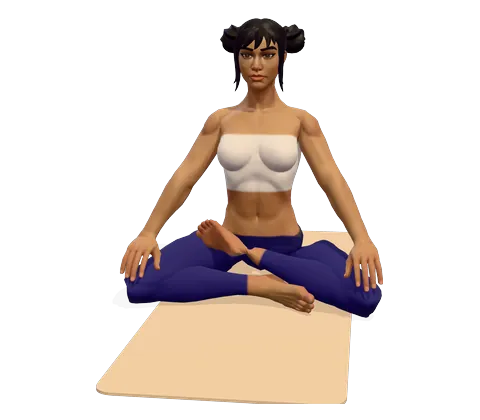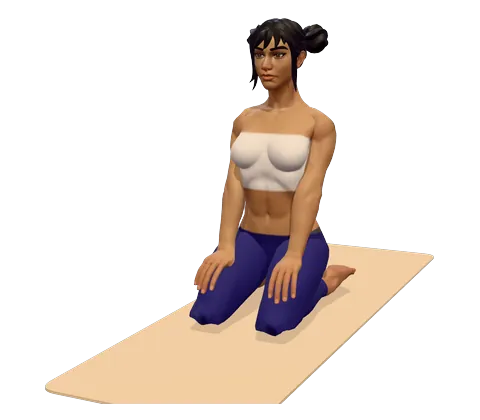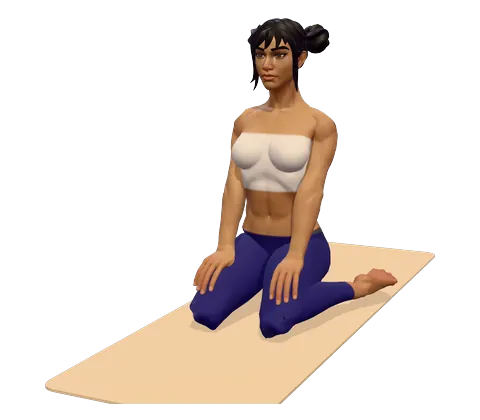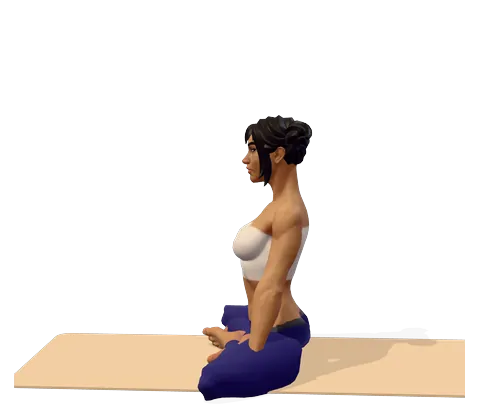
How to do Auspicious Pose step by step
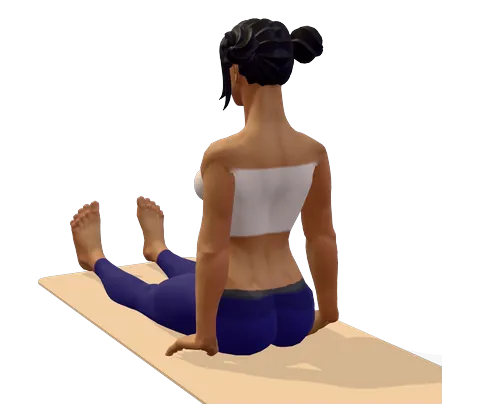
- Sit on a folded blanket with your legs straight out in front of you (staff pose).
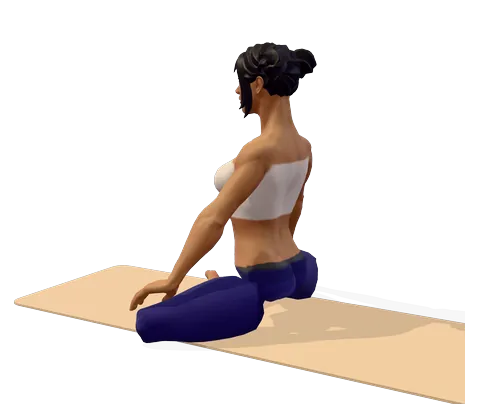
- Bend your left knee and place the sole of your left foot against the inside of your right thigh, heel close to the groin.
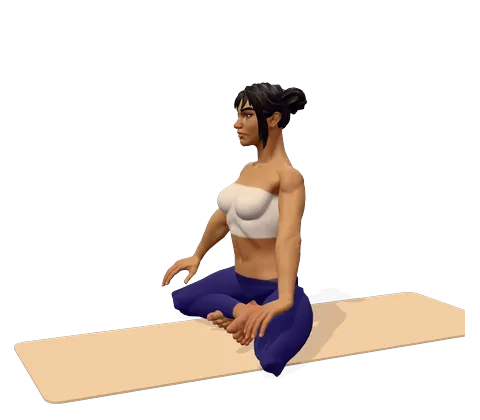
- Bend your right knee and bring your right foot over the left shin. Slide the right toes and outer edge of the foot into the gap between your left thigh and calf.
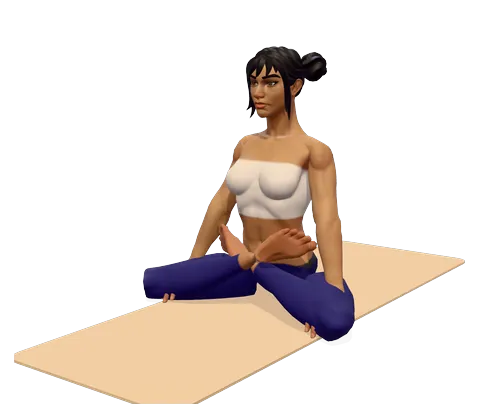
- If you can, gently draw the toes of the left foot up between the right thigh and calf, so both feet are tucked in.
- Let both knees rest toward the floor. Rest your hands on your knees, in Chin or Gyan mudra, with the palms up or down.
- Sit tall, relax your shoulders and breathe naturally for 1–5 minutes, or longer for meditation.
- Release the feet with your hands, stretch the legs out and shake them gently. Next time, start with the right leg.
Where you feel Auspicious Pose: what it stretches and strengthens
Rest your hands on your knees and lengthen your spine. In the 3D guide, turn on Body guide: areas that stretch glow green and areas that work glow saffron.
Stretches
- Hip flexors
- Inner thighs
- Ankles
Strengthens
- Spine
Benefits and precautions
Benefits
- Gives a steady, symmetrical seat for pranayama and meditation
- Opens the hips, knees and ankles more than easy pose, but far less than lotus
- The tucked feet lock the legs in place, so you fidget less in long sittings
- Builds upright posture by working the back muscles
- A good step between easy pose and the harder Siddhasana and lotus
Avoid or modify if
- Knee injury, meniscus problems or knee replacement — use easy pose on a high cushion or a chair instead
- Ankle injury or stiff ankles — do not force the foot between thigh and calf
- Sciatica or lower back pain that worsens when seated — raise the hips and limit the time
- Numb or tingling feet — change sides or stretch the legs out; do not stand up quickly on numb legs
The auspicious pose (Swastikasana or Svastikasana) is a classical yoga meditation seat. You sit cross-legged, but instead of resting the feet under the knees, you tuck each foot into the fold between the opposite thigh and calf. The result is firmer and more symmetrical than easy pose, yet far kinder to the knees than lotus. This page explains the name, how to do the pose, its benefits, props and how it compares with Sukhasana, Siddhasana and Padmasana.
Svastikasana meaning: why "auspicious"?
The name joins svastika and asana (pose). In Sanskrit, svastika (often written swastika) comes from su ("good") and asti ("it is"), so it means "well-being" or "it is well". The svastika is an ancient Indian mark of good fortune, still drawn in Hindu, Buddhist and Jain homes and temples; it has nothing to do with its 20th-century misuse in Europe. In the pose, the crossed shins and tucked feet are said to echo that lucky mark, hence the English name the auspicious pose.
What's auspicious, and what does the word mean? Auspicious means "favourable" or "showing signs of future success". The meaning of an auspicious sign is a good omen, and an auspicious day is a lucky one for starting something. In yoga, the meaning of an auspicious position is a seat that favours steady, calm practice. So is auspicious good or bad? Always good. For example: "The sun came out on an auspicious morning for the wedding." The Swastikasana meaning in Hindi is स्वस्तिकासन, "the seat of well-being".
Swastikasana in the Hatha Yoga Pradipika and Iyengar yoga
Swastikasana is one of the oldest named poses. The Hatha Yoga Pradipika, a 15th-century text, lists it first among the seated asanas and describes it simply: place both soles between the thighs and knees and sit with the body straight. It was valued as a seat you could hold for long periods of breathing and meditation.
In Iyengar yoga the name Swastikasana is often used for the basic cross-legged seat itself, together with two common variations: Adho Mukha Swastikasana, a forward bend in crossed legs, and Supta Swastikasana, the reclined auspicious pose. Both are covered in the variations section below.
How to do Swastikasana (Swastikasana kaise kare)
The steps above give the full Swastikasana procedure. The 3D guide shows the left leg bent first and the right foot tucked on top. These points help:
- Use height. Sit on the edge of a folded blanket so the hips are a little higher than the knees. Without it, most people's knees lift and the back rounds.
- Tuck toes, not the whole foot. Only the toes and the outer edge of the top foot need to slip into the thigh–calf fold. Pushing the whole foot in twists the ankle.
- Keep the heels apart. Unlike Siddhasana, the heels do not stack in front of the pelvis. They sit roughly one in front of each groin, which makes the pose more comfortable.
- Balance the pelvis. Feel both sitting bones equally. If one knee floats high, put a folded towel under it.
Swastikasana steps and benefits both depend on comfort: if you feel sharp pain in the knee or ankle, go back to easy pose. A gentle stretch in the outer hips and inner thighs is normal.
How long to sit
Start with 1–2 minutes on each side and build up slowly. For meditation, 10–20 minutes with good props is a realistic goal. Always change the leg that is on top from one sitting to the next.
Swastikasana benefits (Swastikasana ke fayde)
The benefits of this yoga sitting pose are practical rather than dramatic; Svastikasana benefits come from stability. Because both feet are tucked, the legs stay put and the base is wide and even, so your spine can rise without effort. That makes it a good seat for Nadi Shodhana and other slow breathing, and for meditation. Over time it gently opens the hips, knees and ankles, preparing them for harder seats.
Old yoga texts describe many seated poses as calming the mind. Modern research has not studied this pose on its own; what is known is that sitting upright and breathing slowly can help you relax, and a stable seat makes that easier.
Swastikasana vs Siddhasana, Sukhasana and Padmasana
These yoga auspicious poses and classical seats look similar, which is why the difference is often asked about:
| Pose | Foot position | Knee demand |
|---|---|---|
| Sukhasana (easy pose) | Under the opposite knees | Low |
| Swastikasana (auspicious pose) | Toes tucked between opposite thigh and calf, heels apart | Low to moderate |
| Siddhasana | Heels stacked in front of the pelvis, one heel pressing the perineum | Moderate |
| Padmasana (lotus) | Both feet on top of the opposite thighs | High |
Swastikasana and Siddhasana difference: in Siddhasana the lower heel presses the perineum and the upper heel sits just above the pubic bone, so the heels line up in the centre. Some sources even call Siddhasana an auspicious pose, but in Swastikasana the heels stay apart and there is no pressure on the perineum. Swastikasana vs Sukhasana: in easy pose the feet rest on the floor; here they are tucked in. Swastikasana and Padmasana difference: lotus places the feet on the thighs, twisting the knees much more, so Swastikasana vs. lotus is the safer choice for most people.
Swastikasana variations
- Adho Mukha Swastikasana: from the pose, walk your hands forward and rest your forehead on a block or bolster. Adho Mukha Swastikasana benefits include a gentle stretch of the back and outer hips and a quieting, inward feeling. Switch the crossing and repeat.
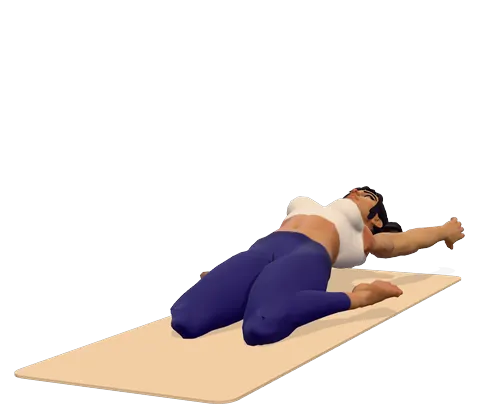
- Supta Swastikasana: the reclined auspicious pose. Lie back over a bolster, keeping the legs crossed, in this auspicious reclining position. Supta Swastikasana benefits include an open chest and a restful hip stretch. Skip it if you have knee or lower back pain.
- Easier version: tuck only the top foot and let the lower foot rest on the floor.
- On a chair: sit tall with the feet flat and practise the same upright spine.
Swastikasana contraindications and precautions
Looking at Swastikasana benefits and contraindications together, the pose is gentle, but knees and ankles need respect. Avoid or modify it with the conditions in the caution box. Prepare with bound angle pose and hip circles, and use our meditation timer so you do not sit longer than your legs are ready for. If you are new to seated poses, start with our yoga for beginners guide.
Here is a short summary of Swastikasana yoga and its benefits in Hindi.
स्वस्तिकासन (Swastikasana) — हिंदी में: स्वस्तिकासन कैसे करें: पैर सामने फैलाकर बैठें। बायाँ घुटना मोड़कर तलवा दाईं जाँघ के अंदर लगाएँ, फिर दायाँ पैर मोड़कर उसके पंजे बाईं जाँघ और पिंडली के बीच फँसा दें। हाथ घुटनों पर रखें, रीढ़ सीधी रखें और 1 से 5 मिनट आराम से साँस लें। स्वस्तिकासन के फायदे: ध्यान और प्राणायाम के लिए स्थिर आसन मिलता है, कूल्हे और टखने धीरे-धीरे खुलते हैं और बैठने की मुद्रा सुधरती है। घुटने या टखने में दर्द हो तो यह आसन न करें।
Frequently asked questions
What is Swastikasana?
Swastikasana, the auspicious pose, is a classical cross-legged meditation seat in which each foot is tucked between the opposite thigh and calf, with the heels apart.
What are the benefits of Swastikasana?
It gives a steady, symmetrical seat for breathing and meditation, opens the hips, knees and ankles gently and supports upright posture.
What is the difference between Swastikasana and Siddhasana?
In Siddhasana the heels stack in the centre, the lower heel pressing the perineum. In Swastikasana the heels stay apart and the feet are simply tucked between the thighs and calves.
Is Swastikasana easier than lotus pose?
Yes. Lotus places both feet on the thighs and twists the knees strongly. Swastikasana keeps the feet lower and is suitable for many more people.
Who should not do Swastikasana?
People with knee injuries, knee replacements, ankle injuries or sciatica that worsens when seated. Use easy pose on a cushion or a chair instead.
How long can I sit in the auspicious pose?
Start with 1–2 minutes on each side and build up to 10–20 minutes for meditation, changing the top leg each time.
Why is it called the auspicious pose?
Svastika means "well-being" or "it is well" in Sanskrit and is an ancient Indian sign of good fortune. The crossed legs are said to resemble that mark.
This page is for general education. Check with your doctor before starting yoga if you are pregnant, have a medical condition or an injury. Stop if you feel pain, dizziness or shortness of breath.