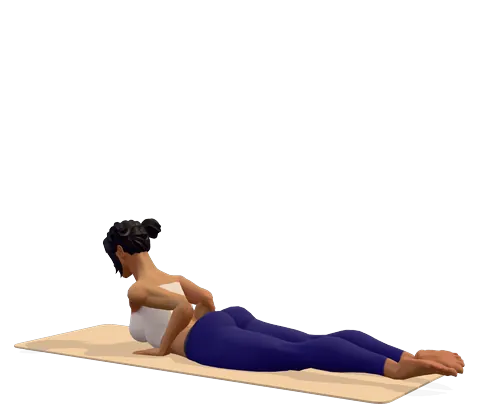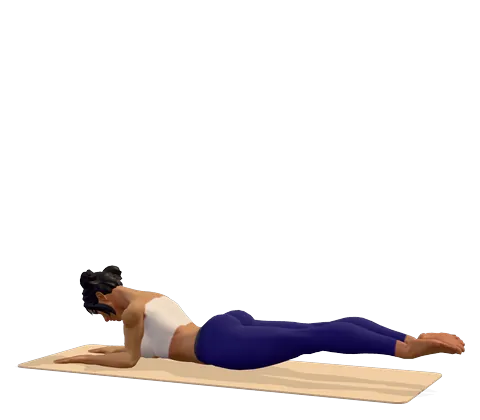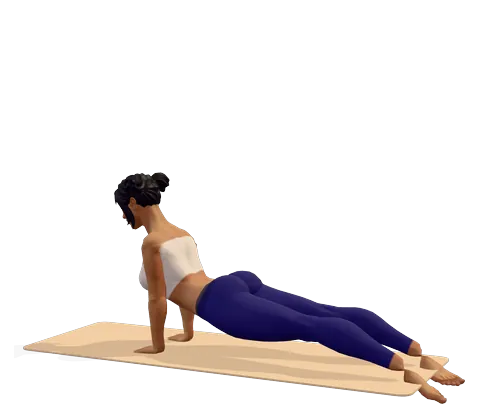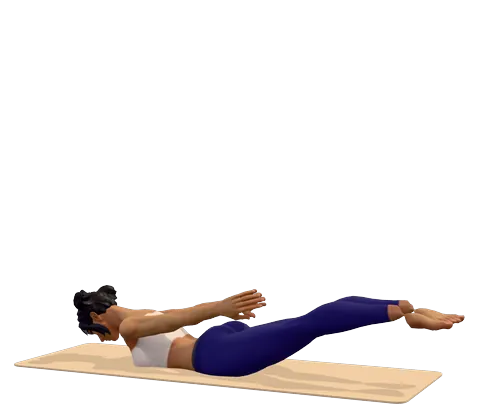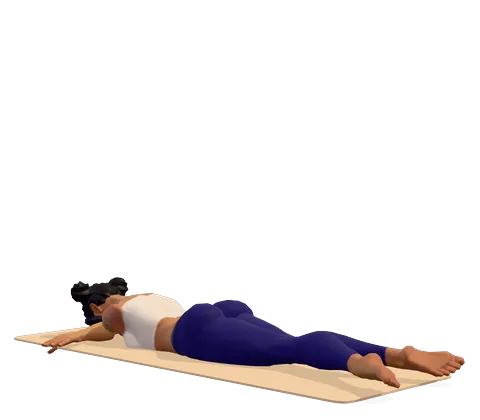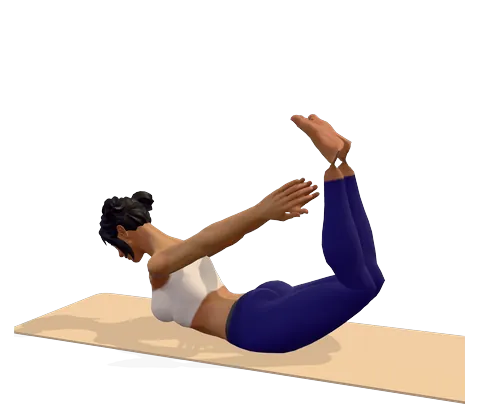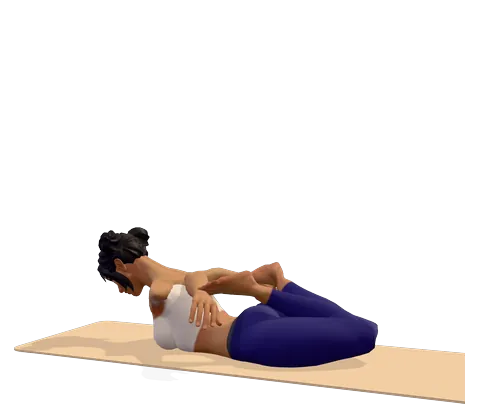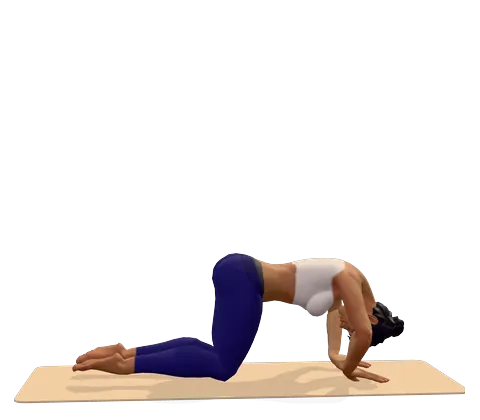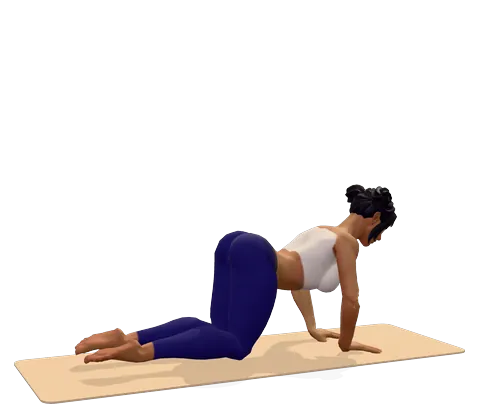
How to do Cow Pose step by step
- Come onto your hands and knees in a tabletop position. Place your wrists under your shoulders and your knees under your hips, hip-width apart.
- Spread your fingers wide and press evenly through the whole hand. Rest the tops of your feet on the mat, or tuck your toes if that feels better for your knees.
- Start with a flat back and your gaze down, so the back of your neck is long.
- Breathe in and let your belly sink toward the mat while your tailbone tilts up and your chest moves forward.
- Draw your shoulders away from your ears, broaden across the collarbones and lift your gaze slightly, without squeezing the back of your neck.
- Stay for 2–3 slow breaths, or move straight into cat pose on the next breath out to make the cat-cow flow.
- To come out, return to a flat back, then sit back into child's pose to rest your wrists.
Where you feel Cow Pose: what it stretches and strengthens
Let your belly drop and lift your chest and tailbone. In the 3D guide, turn on Body guide: areas that stretch glow green and areas that work glow saffron.
Stretches
- Abs
- Chest
Strengthens
- Lower back
Benefits and precautions
Benefits
- Moves the whole spine gently into extension, easing stiffness after sleep or sitting
- Stretches the front of the torso, chest and front of the neck
- Paired with cat pose, it warms up the back safely before other poses
- Teaches you to link movement with breath, which calms the mind
- Gentle enough for most beginners, seniors and early pregnancy
- Used in yoga programmes for back pain, neck stiffness and period discomfort
Avoid or modify if
- Knee pain — put a folded blanket under your knees or try the seated version on a chair
- Wrist pain or carpal tunnel — make fists or come onto your forearms
- Neck injury — keep your head in line with your spine instead of lifting your gaze
- Lower back pain that sharpens when you arch — make the belly drop smaller, or skip the pose
- Pregnancy — keep the movement small and do not let the belly sag heavily
Cow pose (Bitilasana) is a gentle backbend done on your hands and knees: the belly drops, the chest moves forward and the tailbone tilts up, like the relaxed sway of a cow's back. On its own it is a small movement. Paired with cat pose it becomes the cat-cow stretch, one of the most useful warm-ups in yoga. This page explains how to do cow pose well, how to flow into cat-cow, what it helps with and how to change it for your body.
What is cow pose in yoga?
Cow pose is a spinal extension (arching) from a tabletop position. The whole spine takes part, from the tailbone to the base of the skull, so it is a mobility exercise more than a strength or flexibility test. Because your hands and knees share your weight, it is easier to control than a backbend lying on your front.
Bitilasana meaning and pronunciation
The cow pose Sanskrit name is Bitilasana: bitila is usually translated as "cow" and asana means "pose" or "seat". It is a fairly modern name and does not appear in the old hatha yoga texts. A simple cow pose Sanskrit pronunciation is "bih-tih-LAH-sah-nah". You will also see it written as Bitilasana Marjaryasana when the two halves are taught together, since marjari means cat.
Cow pose vs cow face pose
The names confuse many people. Cow face pose yoga (Gomukhasana) is a seated pose with the knees stacked and the hands clasped behind the back. Cow pose is the arching movement on hands and knees. They share an animal, not a shape.
The cat-cow flow: how to do cat cow pose correctly
What is another name for cat cow pose? Teachers call it cat-cow, the cat-cow stretch, Marjaryasana-Bitilasana or, in Hindi-speaking classes, Marjariasana. It is simply cow pose and cat pose linked with the breath:
- Breathe in: cow. Belly sinks, chest glides forward, sitting bones and gaze lift a little.
- Breathe out: cat. Press the floor away, round your back up toward the ceiling, tuck the tailbone and let your head hang.
- Repeat 5–10 rounds, moving slowly enough that each movement fills the whole breath.
Good cat cow pose breathing is slow and through the nose. Let the breath lead: start moving when the breath starts, and finish when it finishes. If you lose the rhythm, pause in a flat tabletop and begin again.
Cow pose cues that fix common mistakes
- Move from the pelvis first. Tilt the tailbone up, then let the wave travel up the spine. Starting with the head cranks the neck.
- Push the floor away. Even in cow, keep a little press through the hands so your shoulders do not sink toward your ears. This keeps the cow pose arms strong and the shoulder blades wide.
- Chest forward, not just belly down. Think of the breastbone moving toward the front of the mat. This spreads the bend across the upper back instead of dumping it into the lower back.
- Gaze, not neck. Look slightly forward and up with your eyes; the back of the neck stays long.
Cow pose benefits
The main cow pose benefits are mobility and a sense of ease in the back. Arching the spine gently after hours of sitting or looking down at a phone reverses the usual rounded shape. The front of the body gets a mild stretch, and the breathing rhythm has a steadying effect on the mind.
Cat cow exercise for back pain
Cat-cow is a common yoga pose for back pain because it moves every part of the spine without load. It appears in our yoga for back pain plan and in yoga for neck pain, where slow movement often feels better than holding still. As a yoga pose for lower back pain, keep the arch small at first. If cow pose hurts your lower back, reduce the belly drop and move more from the upper back. With sciatica, some people find gentle extension eases leg symptoms and others do not; stop if pain spreads down the leg.
Benefits for women, men and kids
Cow pose benefits for female practitioners often include easier period discomfort: the rocking movement of the pelvis is part of our yoga for period pain session. For men who sit at a desk all day, the cat-cow benefits are the same as for anyone: a looser back and chest.
For children the value is mostly body awareness. Kids enjoy saying "moo" in cow and "meow" in cat, which makes cow pose yoga for kids an easy first flow.
Weight loss: cat-cow is a gentle mobility exercise and burns very few calories. Cat cow pose benefits for weight loss are indirect — it warms you up for stronger practice such as Surya Namaskar.
Cat cow pose for beginners and variations
- Knee padding: fold the mat or a blanket under your knees. This is the first of the modifications for cat cow pose most people need.
- Cow pose sitting on a chair: sit tall, hands on your knees. Breathing in, lift the chest and draw the shoulders back; breathing out, round the back. It is a good cat cow pose alternative for seniors and office breaks, and it is part of chair yoga.
- Cow pose standing: stand with knees bent and hands on your thighs, then arch and round the back.
- Circles: once the basic cow pose exercise feels easy, move the hips and chest in slow circles on hands and knees.
- Cat cow puppy pose: after a few rounds, walk your hands forward and melt the chest down into extended puppy pose. Cow pose and extended puppy pose work well together because both open the chest.
Cow pose vs cat pose
| Cow (Bitilasana) | Cat (Marjaryasana) | |
|---|---|---|
| Spine | Arches (extension) | Rounds (flexion) |
| Breath | Breathing in | Breathing out |
| Stretches | Chest, abdomen, front of neck | Upper back, back of neck, between the shoulder blades |
| Gaze | Slightly up and forward | Toward the navel |
Cow pose or downward dog? Cow is far gentler: no weight moves into the shoulders and the hamstrings are not stretched. Many sequences use a few rounds of cat-cow before downward dog.
Safety, pregnancy and osteoporosis
Cow pose yoga during pregnancy is usually comfortable because the belly hangs freely. Keep the arch small so the lower back and abdominal muscles are not overstretched, and follow our prenatal yoga guidance. Is cat cow pose good for osteoporosis? Gentle arching is generally considered safer than rounding under load, so keep the cat half small and slow and ask your doctor or physiotherapist first. Anyone with arthritis in the hands can use fists or forearms.
Finish with child's pose (Balasana yoga's classic rest) to release the wrists. You can play cat-cow with voice guidance in several of our guided sessions.
बिटिलासन (Cow Pose) — हिंदी में: हाथों और घुटनों के बल आएँ, कलाइयाँ कंधों के नीचे और घुटने कूल्हों के नीचे रखें। साँस लेते हुए पेट को नीचे जाने दें, छाती आगे और नज़र थोड़ी ऊपर करें। साँस छोड़ते हुए पीठ को ऊपर गोल करें — यह मार्जरी आसन (cat pose) है। 5–10 बार धीरे-धीरे दोहराएँ। इसके फायदे: रीढ़ लचीली होती है, पीठ और गर्दन की अकड़न कम होती है और साँस शांत होती है।
Health conditions this pose is used for
Yoga for back pain · Yoga for neck pain and cervical spondylosis · Yoga for desk workers and sitting all day · Yoga for arthritis · Yoga for slip disc (herniated disc) · Yoga for degenerative disc disease · Yoga for scoliosis · Yoga for shoulder pain · Yoga for fibromyalgia · Yoga for chronic pain · Yoga for ankylosing spondylitis · Yoga for lupus · Yoga for jaw pain (tmj) · Yoga for height and posture · Yoga for hyperthyroidism (overactive thyroid) · Yoga for uric acid and gout · Yoga for kidney health · Yoga for kidney stones · Yoga for hormonal balance · Yoga for anemia (low hemoglobin) · Yoga for period pain and menstrual cramps · Yoga for irregular periods · Yoga for endometriosis · Yoga for pms (premenstrual syndrome) · Yoga for pregnancy (prenatal yoga) · Yoga for postpartum recovery · Yoga for pelvic floor and urinary incontinence · Yoga for erectile dysfunction · Yoga for grief and loss · Yoga for bipolar disorder (complementary care) · Yoga for eating disorder recovery · Yoga for jet lag and travel fatigue · Yoga for exam stress · Yoga for adhd and attention · Yoga for autism (children) · Yoga for ptsd and trauma · Yoga for panic attacks · Yoga for social anxiety · Yoga for anger management · Yoga for burnout and exhaustion · Yoga for addiction and quitting smoking · Yoga for vertigo and dizziness · Yoga for tinnitus · Yoga for memory in older adults · Yoga for multiple sclerosis · Yoga for chronic fatigue syndrome · Yoga for bronchitis · Yoga for long covid recovery · Yoga for snoring and sleep apnea · Yoga for gastritis · Yoga for gallstones · Yoga for gas and bloating · Yoga for piles (hemorrhoids) · Yoga for ulcerative colitis and ibd · Yoga for premature grey hair · Yoga for dark circles · Yoga for psoriasis and eczema · Yoga for glaucoma (safe yoga) · Yoga for dry eyes · Yoga for motion sickness · Yoga for cold hands and feet (circulation) · Yoga for cancer recovery (supportive care)
Where this practice is used
Chakras: Anahata (Heart Chakra)
Frequently asked questions
What is cow pose in yoga?
Cow pose (Bitilasana) is a gentle backbend on hands and knees: the belly drops, the chest moves forward and the gaze lifts slightly. It is usually paired with cat pose as the cat-cow stretch.
How do you do cat cow pose step by step?
Start on hands and knees with a flat back. Breathe in into cow (belly down, chest forward), breathe out into cat (back rounded, head down). Repeat 5–10 slow rounds.
What are the benefits of cow pose?
It mobilises the spine, stretches the chest and front of the body, eases stiffness after sitting and prepares the back for other poses. It is used in yoga plans for back pain and neck stiffness.
Why does cow pose hurt my lower back?
Usually the arch is too deep and all of it happens in the lower back. Make the belly drop smaller, press the floor away and send the chest forward so the upper back takes more of the bend.
Can I do cow pose during pregnancy?
Most people can, with a small, controlled arch. Stop if you feel pain or pulling in the abdomen and follow the advice of your midwife or doctor.
What is the difference between cow pose and cow face pose?
Cow pose is an arching movement on hands and knees. Cow face pose (Gomukhasana) is a seated pose with the knees stacked and the hands clasped behind the back.
What is cow pose called in Hindi?
It is called बिटिलासन (Bitilasana). Cat-cow together is often taught as मार्जरी आसन (Marjariasana).
This page is for general education. Check with your doctor before starting yoga if you are pregnant, have a medical condition or an injury. Stop if you feel pain, dizziness or shortness of breath.