Your anger management yoga plan
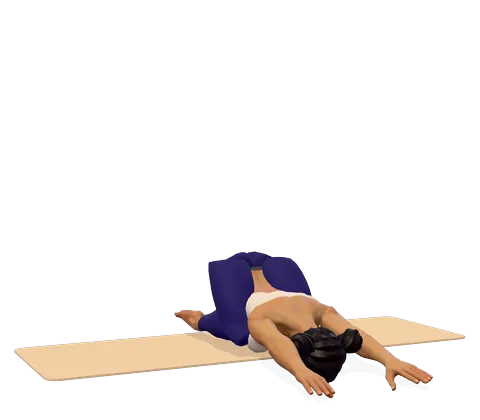 Child’s PoseBalasana
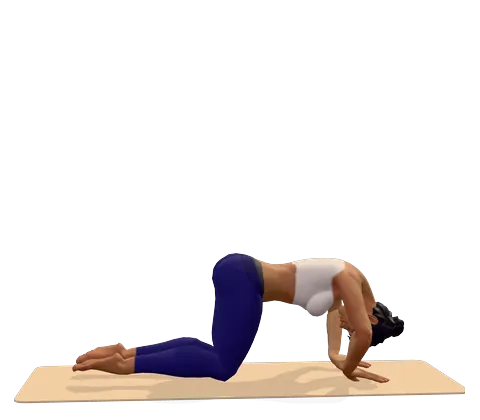 Cat PoseMarjaryasana
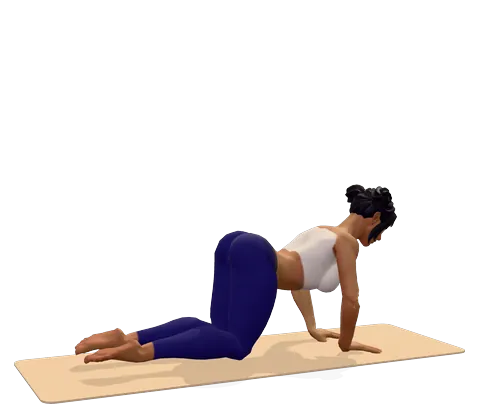 Cow PoseBitilasana
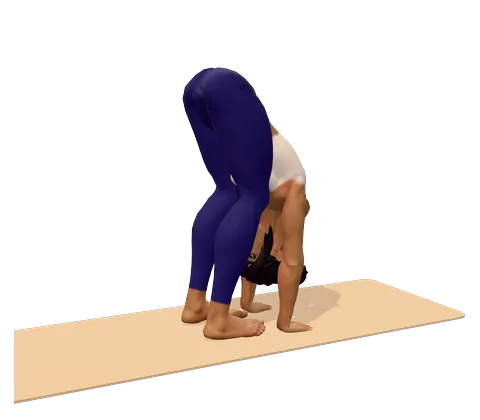 Standing Forward BendUttanasana
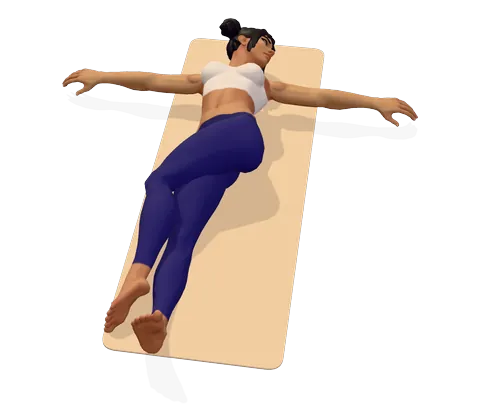 Supine Spinal TwistSupta Matsyendrasana
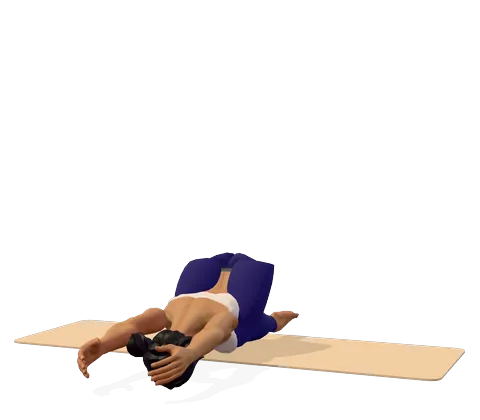 Hare PoseShashankasana
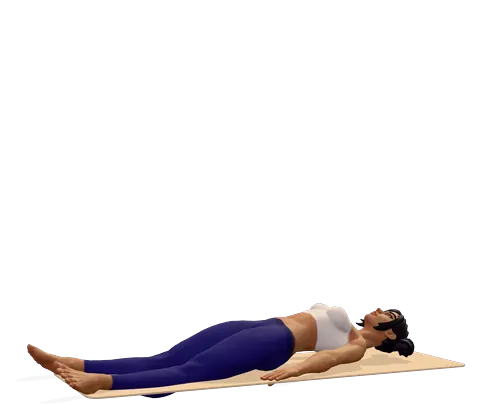 Corpse PoseSavasana
More poses that help with anger management
Add these once the session above feels easy, or swap one in when a pose does not suit you.
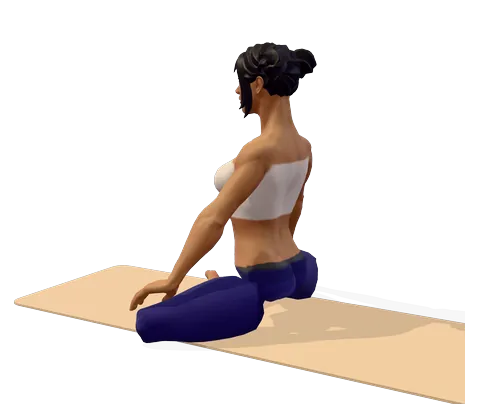 Easy PoseSukhasana
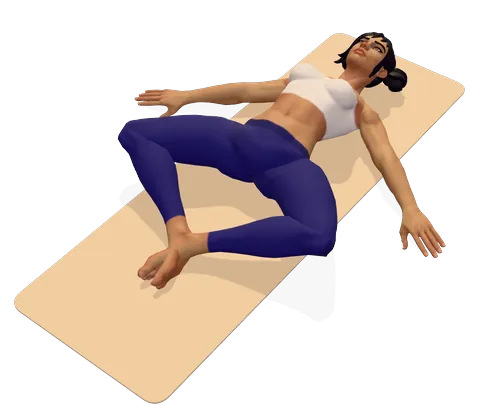 Reclining Bound Angle PoseSupta Baddha Konasana
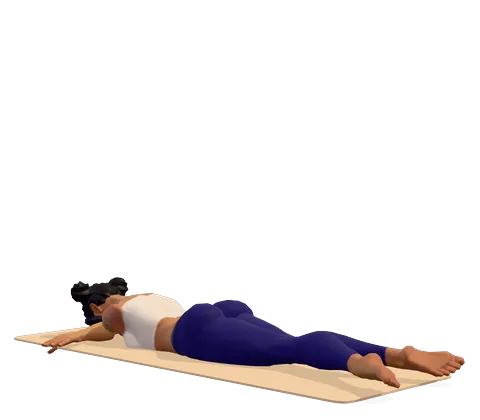 Crocodile PoseMakarasana
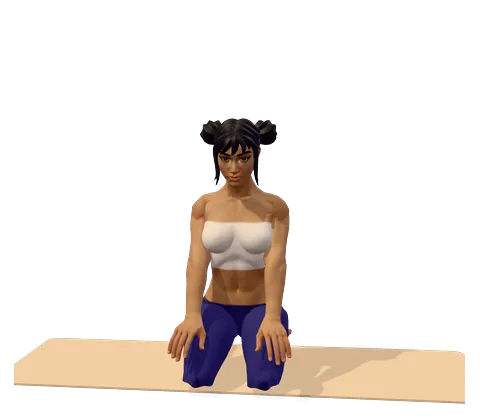 Lion PoseSimhasana
Mudras for anger management
Hold a mudra while you sit for the breathing practice or a few minutes of quiet. Mudras are a traditional practice; research on them is limited.
Breathing practice
Avoid
Fast, heating breath when already worked up; cool down first.
Traditional practice: Used in classical yoga therapy; few clinical trials so far.
Guided meditation for anger management
Loving-Kindness Meditation (12 min, voice in 28 languages) · Breath Awareness Meditation (10 min, voice in 28 languages)
Yoga for anger works in two stages: first you cool the body down, then you release the tension that anger leaves behind. When you are angry your heart speeds up, your jaw and shoulders tighten and your breath gets short and hot. Slow breathing and steady poses reverse those signals, giving you a pause between the feeling and what you do next. Here is how to use yoga for anger management, in the moment and over weeks.
Why is anger good — and when does it need managing?
Anger is not the enemy. It tells you that something feels unfair or that a limit has been crossed, and it gives you energy to act. How is anger helpful? It can protect you, push you to fix a problem and help you say "no". So how to use anger for good is mostly about timing: notice it, cool down, then act with a clear head.
Anger needs help when it comes too often, lasts too long, or leads to shouting, hurting people or things, or harming yourself. Yoga for anger issues does not remove the reason you are angry. It gives your body a way to come down, so you can respond instead of react.
How to control anger immediately: a 3-minute reset
When anger rises, the thinking brain goes quiet. Simple body steps work better than reasoning. Here is how to calm down anger in the moment:
- Step away. Leave the room or turn from the screen if you can. Say "I need a few minutes".
- Drop your shoulders and unclench your jaw. Let your tongue rest on the floor of your mouth.
- Breathe out long. In through the nose for about 4, out through the mouth for about 6–8. Repeat ten times.
- Press your feet into the floor and feel your weight. This somatic step brings attention out of the story and into the body.
- Decide later. Only after the heat has passed, choose what to say or do.
Avoid fast, heating breath such as Kapalbhati or Bhastrika when you are already worked up — they add fuel. Cool down first.
Breathing exercises for anger: cool, then calm
These breathing exercises for anger are all slow and cooling. Practise them on calm days first so they are ready when you need them. The breathing timer can pace you.
Sheetali (cooling breath)
Sheetali is the classic yoga breath for heat of any kind. Curl your tongue into a tube, breathe in through it so the air feels cool, then close your mouth and breathe out slowly through the nose. If you cannot curl your tongue, breathe in through lightly closed teeth instead. Skip it in very cold air or with a cold or asthma.
Bhramari (humming bee breath)
Bhramari is a hum on a long out-breath. It is hard to stay furious while humming; the sound slows the exhale and softens the face.
Chandra Bhedana (left-nostril breath)
Chandra Bhedana means breathing in through the left nostril and out through the right. Yoga tradition calls it "cooling" and quieting. There is little modern research on this, so treat it as a slow, focused breath that many people find settling. Leave out any breath holds.
These three are the deep breathing exercises for anger that suit most people. Keep every breath soft — "deep" means slow and full, not forced.
Yoga poses for anger management and release
The guided session on this page moves from releasing to resting. Here is what each pose does and how to adjust it.
Child's pose (Balasana)
Child's pose turns you inward and lowers your head, which often takes the edge off quickly. Widen your knees and let your arms rest by your sides. A cushion under your hips helps stiff knees.
Cat and cow (Marjaryasana–Bitilasana)
Flowing between cat and cow moves the spine that anger stiffens. Round on the out-breath and let it be slow and long; arch gently on the in-breath.
Standing forward bend (Uttanasana)
In standing forward bend, bend your knees, hold your elbows and let your head hang heavy. Shake your head "no" a little to release the neck. Roll up slowly.
Hare pose (Shashankasana)
Hare pose is like a child's pose with arms stretched forward and the forehead down. The front body softens and the breath moves into the back.
Supine spinal twist (Supta Matsyendrasana)
The supine spinal twist wrings out tension in the back and chest while you lie down. Keep both shoulders heavy and place a cushion under your knees.
Corpse pose (Savasana)
Corpse pose ends the session. Notice where heat is left in your body — jaw, hands, belly — and breathe out through it.
Lion's breath: among the extra poses, lion pose (Simhasana) — a wide-open mouth, tongue out and a strong "haaa" — is a playful way of releasing anger in a healthy way. Use it when you feel stuck and flat, not in the middle of rage.
Does yoga help anger? What the evidence says
Yoga for anger is based mostly on traditional practice and experience, with only early research. The best-known trial followed 152 people in Swedish prisons: those who did one yoga class a week for ten weeks showed less aggressive and antisocial behaviour than a control group. A 2025 pilot trial of 40 people in US prisons with high anger found that a ten-week hatha yoga programme lowered scores on two of three anger scales.
These are small or specific groups, so we cannot yet say how well yoga works for everyone. The best therapy for anger is usually cognitive behavioural therapy (CBT) or an anger management course; how to treat anger in therapy often includes exactly the skills yoga practises — noticing early body signs and slowing down. Mindfulness exercises for anger and meditation for anger management follow the same idea.
How to manage anger at home: a weekly plan
Steps to managing anger work best when practised when you are calm. This week-long plan takes 10–15 minutes a day.
| Day | Practice | Time |
|---|---|---|
| Monday | Guided session + 2 minutes of Sheetali | 15 min |
| Tuesday | Cat–cow and hare pose, then Bhramari | 10 min |
| Wednesday | Brisk walk, then the 3-minute reset above | 20 min |
| Thursday | Guided Yoga Nidra | 10–20 min |
| Friday | Guided session with longer holds in the twist | 15 min |
| Saturday | Silent sitting with the meditation timer + Chandra Bhedana | 10 min |
| Sunday | Rest; write down what made you angry this week and what helped | 5 min |
Yoga Nidra for anger and yin yoga for anger both use long, still rest — useful when anger has left you drained and tense. Kundalini yoga for anger often includes fast breathing; choose its slow meditations instead.
Anger management for men, women and kids
Men are often taught to show anger but hide other feelings under it. Physical practice can be an easier door in: strong breathing out, a twist, a long rest. The yoga for men guide has a starting plan.
Women are often taught to hide anger, so it turns into tension, headaches or low mood. Anger management for women is less about "stopping" anger and more about noticing it and expressing anger in a healthy way.
Kids: yoga for anger kids enjoy includes lion's breath, "blow out the birthday candles" breathing and child's pose as a "calm-down cave". These anger exercises for kids work best when practised in calm moments. See yoga for kids for more.
Techniques to control anger that pair well with yoga
Yoga works best as one of several strategies to control anger. These tips on how to control your anger fit easily around the mat:
- Relaxation techniques for anger: tense your fists for five seconds, then let go and breathe out. Repeat through the shoulders, face and legs. This is one of the simplest anger management exercises for adults.
- Exercise to help with anger: a brisk walk, a run or a few rounds of Surya Namaskar uses up the energy anger creates. Follow it with calming exercises for anger such as the long exhale.
- Calming strategies for anger in the body: cold water on your face and wrists, or holding something cool, can take the heat out quickly.
- Somatic exercises for anger: slowly shake out your hands and arms for a minute, then stand still and notice your heartbeat settle.
- Meditations to decrease anger: sit for five minutes and label each thought "angry thought", then return to the breath. Naming the feeling weakens its grip.
What are the benefits of controlling anger? Better sleep, calmer relationships and fewer regrets. And what can anger teach you? Usually, which needs or limits matter most to you. Therapy techniques for anger — and how to work with anger in therapy — build on the same skills, so tell your therapist you practise yoga.
When to get help
Yoga for anger and frustration is a tool, not a treatment. Talk to a doctor or counsellor if anger harms your relationships or work, if you break things or hurt anyone, or if anger comes with low mood, heavy drinking or thoughts of harming yourself. If you feel you might hurt someone, leave the situation and contact a local emergency service. If anger comes with worry, see yoga for anxiety; for daily pressure, yoga for stress.
गुस्सा कम करने का योग (gussa kam karne ka yoga): गुस्सा आने पर पहले रुकें, कंधे ढीले करें और साँस छोड़ने का समय लंबा रखें। शीतली प्राणायाम (जीभ से ठंडी साँस लेना) और भ्रामरी प्राणायाम मन को ठंडा करते हैं। बालासन, शशांकासन और शवासन रोज़ करें। गुस्से में कपालभाति जैसी तेज़ साँस न करें। गुस्सा बार-बार नुकसान करे तो डॉक्टर या काउंसलर से बात करें।
Try it now: start the guided 3D session on this page. Let the saffron ring set your pace and make each out-breath a little longer than the last.
Research behind this plan
- Kerekes 2017, Frontiers in Psychiatry — randomised trial of 152 prison inmates: 10 weeks of weekly yoga reduced antisocial behaviour and improved well-being compared with control
- Uebelacker 2025, Journal of Integrative and Complementary Medicine — pilot randomised trial in 40 incarcerated adults with high anger: yoga lowered scores on two of three anger measures
Frequently asked questions
Which yoga is best for anger?
Slow, cooling practice: child's pose, hare pose, cat–cow, a gentle supine twist and corpse pose, with Sheetali or Bhramari breathing. Avoid hot, fast styles when you are already worked up.
How can I control anger immediately?
Step away, drop your shoulders, unclench your jaw and breathe out slowly for longer than you breathe in, about ten times. Press your feet into the floor. Decide what to do only after the heat passes.
Is there a yoga pose to control anger?
Child's pose is the quickest for most people because it lowers the head and turns attention inward. Standing forward bend with bent knees also helps release tension in the neck and back.
Can yoga cure anger issues?
No. Yoga can help you notice anger earlier and calm your body faster, and early studies are encouraging, but anger that causes harm needs a counsellor, CBT or an anger management programme.
What is the best breathing exercise for anger?
Sheetali (cooling breath) or a simple long exhale — in for 4, out for 6–8. Humming bee breath is another good choice. Skip fast breathing like Kapalbhati when angry.
Is yoga good for kids with anger?
Yes, when it is playful. Lion's breath, "birthday candle" breathing and child's pose help many children calm down. Practise in calm moments so they remember it when upset.
How do you let go of anger that has built up over time?
Regular practice helps: slow breathing, gentle movement and rest several times a week, plus talking it through with someone you trust or a therapist. Writing down what triggered you and what helped can also show patterns.
Medical note: yoga supports treatment; it does not replace it. Keep taking prescribed medicine and talk to your doctor before you start, especially with heart disease, uncontrolled blood pressure, recent surgery, pregnancy, epilepsy or severe pain. Read our medical disclaimer.