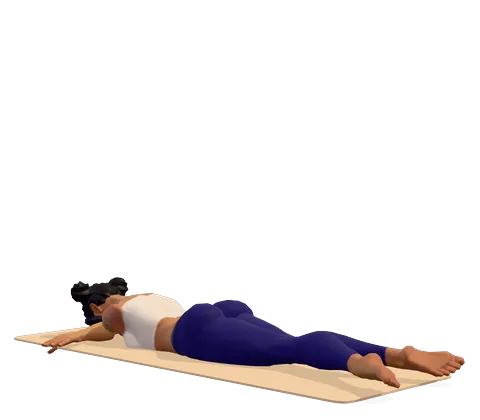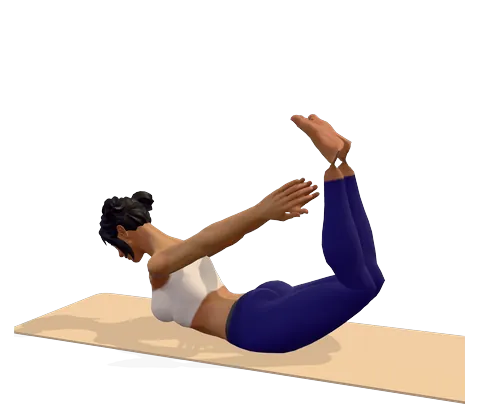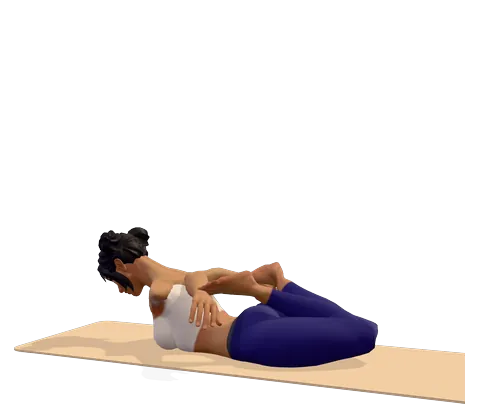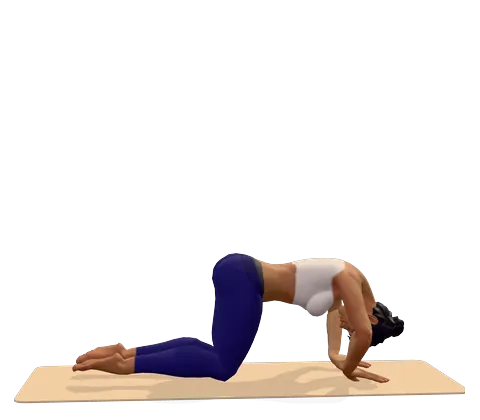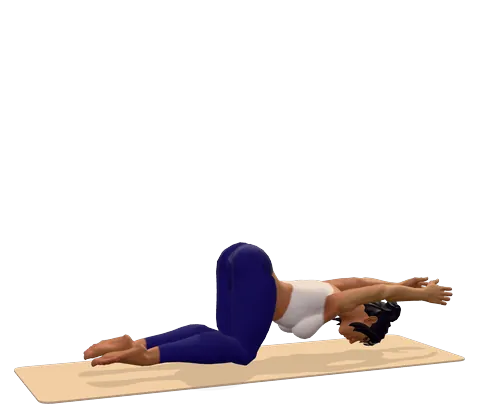
How to do Extended Puppy Pose step by step
- Come onto your hands and knees with your knees under your hips and the tops of your feet on the mat.
- Walk your hands forward a hand-length or two, keeping your hips directly above your knees.
- Breathe out and let your chest sink toward the floor. Rest your forehead (or your chin, for a deeper version) on the mat.
- Keep your arms straight and shoulder-width apart, palms pressing down and elbows lifted off the floor.
- Reach your hips gently back toward the ceiling and your hands forward, so the spine lengthens in two directions.
- Hold for 30 seconds to 1 minute, breathing slowly into the back of the chest. In Yin yoga you can stay 2–3 minutes.
- To come out, walk your hands back to tabletop, or lower your hips to your heels in child's pose.
Where you feel Extended Puppy Pose: what it stretches and strengthens
Keep hips over knees and melt your chest down. In the 3D guide, turn on Body guide: areas that stretch glow green and areas that work glow saffron.
Stretches
- Shoulders
- Chest
- Upper back
Benefits and precautions
Benefits
- Stretches the shoulders, armpits and the long muscles of the upper back
- Opens the chest and eases the rounded shape of desk and phone posture
- Lengthens the spine without putting weight on the wrists
- A gentle alternative to downward dog when hamstrings are tight
- Calms the mind, with the forehead resting and the breath slow
Avoid or modify if
- Shoulder injury or frozen shoulder in a painful phase — keep the arms wider and the stretch small
- Knee pain — put a folded blanket under your knees
- Neck pain — rest your forehead on a block rather than pressing the chin down
- Pregnancy — keep your knees wide so the belly has space, and skip it if you feel pressure
- After heart or chest surgery — wait until your surgeon clears you for arm and chest stretches
Extended puppy pose (Anahatasana) is a kneeling forward stretch in which the hips stay high over the knees while the arms reach forward and the chest sinks toward the floor. It feels like a mix of child's pose and downward-facing dog: restful like the first, but with the long shoulder stretch of the second. It is one of the kindest ways to open stiff shoulders and a tight upper back.
What is puppy pose in yoga?
Puppy pose is the shape a puppy makes when it stretches with its front paws forward and its tail up. In most classes "puppy pose" and "extended puppy pose" mean the same thing, so extended puppy pose vs puppy pose is a question of name, not shape. Some teachers use "puppy" for a shorter version with the elbows on the floor.
Extended puppy pose Sanskrit names
You will see two Sanskrit names:
- Uttana Shishosana: uttana means "intense stretch" and shishu means "young one" or "puppy". Extended puppy pose (Uttana Shishosana) is the usual name in Hatha and Vinyasa classes.
- Anahatasana: named after anahata, the heart chakra, which means "unstruck". In Yin yoga the same shape is called melting heart pose, or heart melting pose. Extended puppy pose in Hindi is written अनाहतासन.
So Anahatasana vs puppy pose, or melting heart pose vs puppy pose, is again the same shape; the difference is the style. In Yin yoga you relax the muscles and stay for minutes. In a Hatha class you keep the arms active and stay for about a minute.
How to do extended puppy pose well
For extended puppy pose, the hips should be directly above the knees, with the thighs vertical. That is the one alignment point that makes it work: if the hips drift back toward the heels, you are in child's pose, and if they drift forward, the chest cannot sink. These cues help:
- Elbows off the floor. Press the palms down and lift the forearms a little. This turns on the shoulder muscles and protects the joint.
- Melt, don't force. Let the chest sink with each breath out. Pushing it down usually jams the lower back.
- Keep a little tone in the belly. This stops the lower back from sagging, so the stretch stays in the upper back and shoulders.
- Breathe into your back. Feel the ribs widen behind you on each breath in.
How to cue melting heart pose
If you teach, keep the language simple: "Hips over knees. Walk your hands forward. Let your heart melt toward the floor. Rest your forehead down. Soften your shoulders on every breath out." Our voice guide uses very similar lines while the 3D figure moves into the pose.
Extended puppy pose yoga benefits
What is puppy pose good for? Mainly the shoulders and upper back. The long arms stretch the latissimus dorsi (the broad back muscles), the armpits and the shoulder joints, while the sinking chest gently extends the upper spine. For anyone who sits curled over a keyboard, that is the opposite of the usual posture, which is why it appears in our yoga for posture and frozen shoulder plans.
It is also useful as a yoga pose for back pain in the upper and middle back, and a gentle way to release the spine after cow pose and cat pose. Cow pose and extended puppy pose follow each other naturally: the first opens the chest while moving, the second holds that opening.
Heart-opening poses and heart health
Melting heart pose benefits are often described in terms of the heart chakra and a feeling of openness. In plain terms, heart opening yoga poses stretch the chest; they are not a treatment for heart disease. Gentle, regular practice is part of many yoga poses for heart health programmes, but those plans rely on steady movement and breathing, and on your doctor's advice.
Puppy pose vs child pose and downward dog
| Hips | Main stretch | Effort | |
|---|---|---|---|
| Child's pose | On the heels | Lower back, hips | Resting |
| Extended puppy pose | Over the knees | Shoulders, upper back, chest | Low |
| Downward dog | High, legs straight | Shoulders, hamstrings, calves | Moderate |
Child's pose for back pain eases the lower back; puppy reaches higher up the spine. Many people find the extended dog pose in yoga (down dog) too strong for tight hamstrings or sore wrists. Downward facing dog pose benefits include strong arms and long hamstrings, but puppy gives much of the same shoulder stretch without the load. Do not confuse either with the yoga upward-facing dog pose, which is a backbend.
Extended puppy pose variations and props
- Extended puppy pose with blocks: rest your forehead on one block, or place your elbows on two blocks with palms together behind your head for a deeper shoulder and armpit stretch.
- Puppy pose with a bolster: slide a bolster or two pillows lengthwise under your chest. This is the restful Yin version.
- Standing extended puppy pose: stand facing a wall or table, place your hands on it at hip height and walk back until your arms and back form one long line. Good for knee problems and for seniors.
- One arm at a time: bend one elbow and rest your cheek on the forearm while the other arm reaches.
- Cat-cow puppy pose flow: a few rounds of cat-cow, then walk your hands forward into puppy, and finish in child's pose.
Extended puppy pose in pregnancy can feel good in the first months if the knees are wide and the belly is not squeezed. Later on, the standing wall version is usually more comfortable. Follow our prenatal yoga guidance and your midwife's advice.
अनाहतासन (Extended Puppy Pose) — हिंदी में: हाथों और घुटनों के बल आएँ। कूल्हे घुटनों के ठीक ऊपर रखें और हाथों को आगे की ओर बढ़ाएँ। साँस छोड़ते हुए छाती को ज़मीन की ओर ढीला छोड़ें और माथा नीचे टिकाएँ। 30 सेकंड से 1 मिनट रुकें। इसके फायदे: कंधे और ऊपरी पीठ में खिंचाव आता है, छाती खुलती है और बैठने से आई अकड़न कम होती है।
Health conditions this pose is used for
Yoga for frozen shoulder · Yoga for posture and tech neck · Yoga for shoulder pain · Yoga for tennis elbow
Where this practice is used
Chakras: Anahata (Heart Chakra)
Frequently asked questions
What is puppy pose good for?
Puppy pose stretches the shoulders, armpits and upper back and gently opens the chest. It helps counter a rounded desk posture and is a softer alternative to downward dog.
Where should the hips be in extended puppy pose?
Directly above the knees, with the thighs vertical. If the hips move back toward the heels you are in child's pose.
What is the difference between puppy pose and child's pose?
In child's pose the hips rest on the heels and the lower back stretches. In puppy pose the hips stay high over the knees, so the stretch moves to the shoulders and upper back.
Is melting heart pose the same as extended puppy pose?
Yes. Melting heart pose (Anahatasana) is the Yin yoga name for the same shape. In Yin you relax and stay 2–3 minutes; in other styles you keep the arms active and stay about a minute.
How long should I hold extended puppy pose?
Hold for 30 seconds to 1 minute in a normal class, or 2–3 minutes in Yin yoga with a bolster under the chest.
Can I do extended puppy pose when pregnant?
Early in pregnancy many people can, with the knees wide so the belly has room. Later, the standing version with hands on a wall is usually more comfortable. Ask your midwife or doctor if unsure.
What is the Sanskrit name for puppy pose?
Uttana Shishosana ("intense stretch of the young one") or Anahatasana ("heart pose").
This page is for general education. Check with your doctor before starting yoga if you are pregnant, have a medical condition or an injury. Stop if you feel pain, dizziness or shortness of breath.