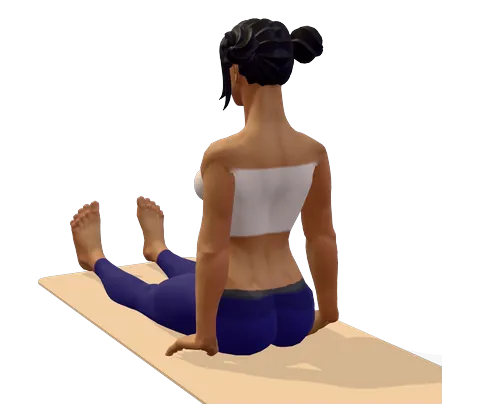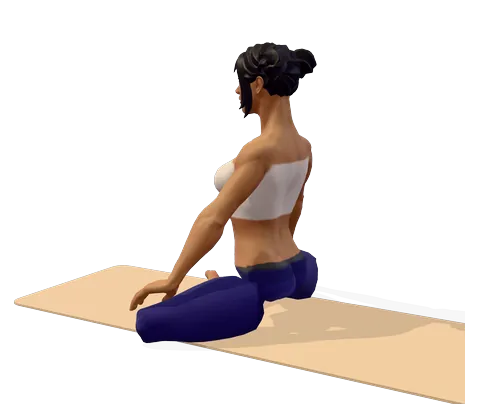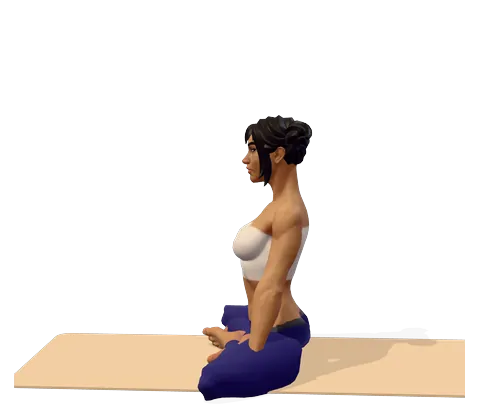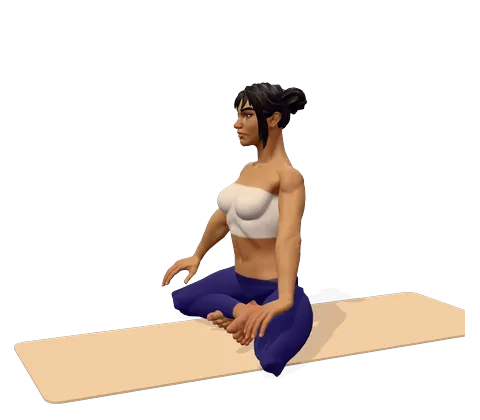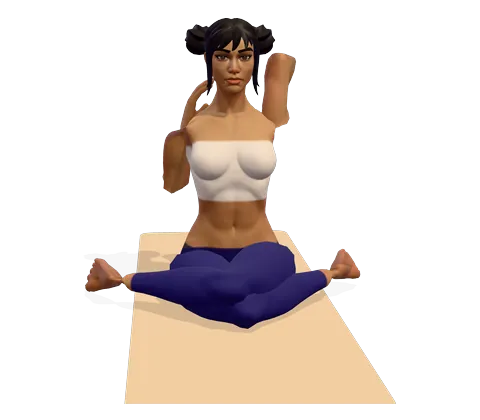
How to do Cow Face Pose step by step
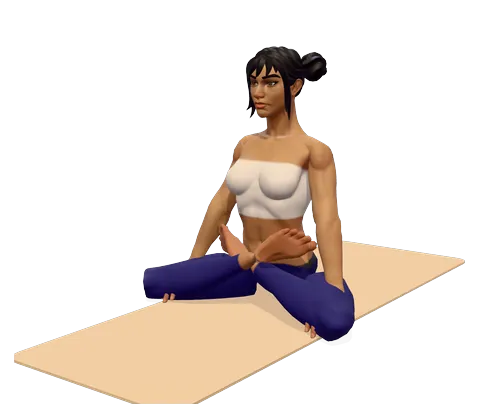
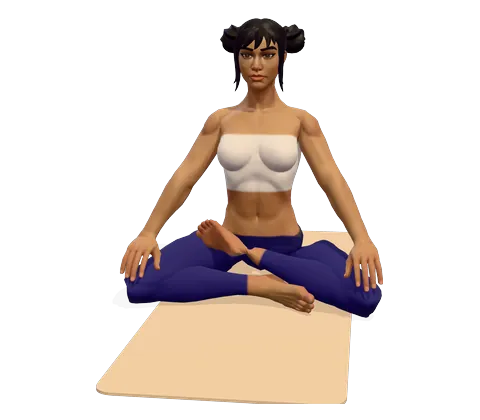
- Sit on the mat with your legs straight in front of you. Bend your right knee and slide your right foot under your left leg to the outside of your left hip.
- Cross your left leg over the top so your left knee stacks above your right knee and your left foot rests beside your right hip.
- Sit evenly on both sit bones. If one hip lifts or your knees will not stack, sit on a folded blanket or a block.
- Raise your left arm, bend the elbow and let your left hand slide down between your shoulder blades.
- Take your right arm out to the side, bend it behind your back and slide the back of your right hand up your spine. Clasp the fingers, or hold a strap between your hands.
- Lift your chest, keep the top elbow pointing up and your head in line with your spine. Breathe slowly for 20–30 seconds.
- Release the arms, uncross the legs and shake them out. Repeat on the other side with the right knee on top and the right arm up.
Where you feel Cow Face Pose: what it stretches and strengthens
Reach for your hands behind and feel the upper arm stretch. In the 3D guide, turn on Body guide: areas that stretch glow green and areas that work glow saffron.
Stretches
- Shoulders
- Glutes
- Arms
Strengthens
- Upper back
Benefits and precautions
Benefits
- Stretches the shoulders, triceps and chest in two directions at once
- Stretches the outer hips, glutes and thighs
- Encourages an upright spine and open chest, which supports better posture
- Shows up differences between your left and right sides so you can work on them evenly
- Used in gentle yoga plans for stiff shoulders and neck tension
- Prepares the hips and shoulders for seated twists and forward bends
Avoid or modify if
- Shoulder injury, dislocation, rotator cuff tear or acute shoulder pain — use a strap and a small range, or skip the arms
- Hip replacement — crossing the legs past the midline is often restricted; ask your surgeon or physiotherapist
- Knee injury or pain when the knees are stacked — keep the bottom leg straight or sit cross-legged
- Sciatica or piriformis pain that gets worse with the hip stretch
- Late pregnancy — sit higher, keep the chest upright and skip the forward fold
Cow face pose (Gomukhasana) is a seated posture that stretches two areas most of us hold tension in: the hips and the shoulders. The knees stack one on top of the other, and one hand reaches down the back to meet the other hand coming up. It looks complicated, but with a strap and a folded blanket almost anyone can practise a version of it. This guide covers how to do Gomukhasana step by step, the arm and leg positions separately, its benefits, modifications and who should be careful.
What is cow face pose in yoga?
The Sanskrit name has three parts: go means "cow", mukha means "face" and asana means "pose". Gomukhasana is called cow face pose in English and गोमुखासन in Hindi. It is one of the older seated postures and is already described in the Hatha Yoga Pradipika, where the ankles are placed beside the opposite hips.
Why is it called cow face pose?
Seen from above, the stacked knees look like a cow's mouth and the feet out to the sides look like its ears. Some teachers also compare the elbows — one pointing up, one down — to a cow's head and ears. Either way, it is a picture name, not a symbolic one.
How to do Gomukhasana (Gomukhasana kaise kare)
The steps above show the full pose on one side. It helps to learn the legs and the arms separately first.
Cow face pose legs
Aim to stack the top knee directly over the bottom knee and bring the feet the same distance from the hips. Flex the feet slightly to protect the knees. The most common mistake is sitting with one hip high; put a blanket under both sit bones so the pelvis is level and the spine can rise. If you can't do the cow face pose legs at all, keep the bottom leg straight — this half version is a useful cow face pose leg modification.
Cow face pose arms
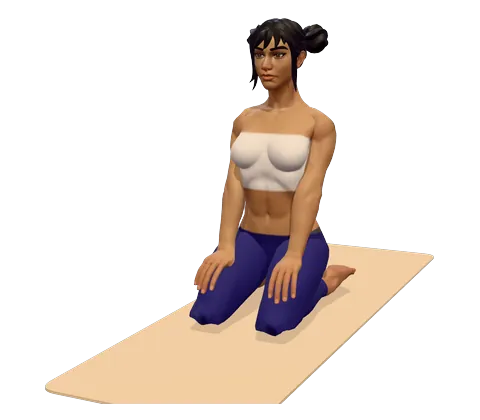
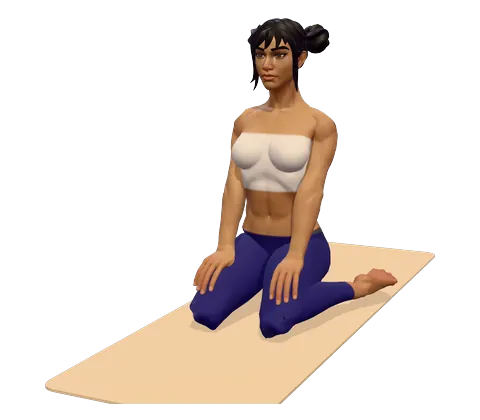
Gomukhasana arms stretch each shoulder in a different direction: the top arm lifts and bends, the bottom arm turns inward and climbs the back. Keep the top elbow pointing to the ceiling rather than pushing your head forward, and move the bottom elbow in toward your spine. If the fingers do not meet, hold a strap and walk the hands closer over weeks. You can do cow face pose arms only while sitting in easy pose, kneeling in hero pose or standing.
How long to hold it
Hold for 20–30 seconds on each side, and repeat the harder side a second time. Most people find one side clearly tighter; that is normal and a good reason to practise both.
Cow face pose benefits (Gomukhasana ke fayde)
What is cow face pose good for? First, the shoulders. The arm position stretches the triceps, the front and back of the shoulder, and the chest, which helps counter the rounded shoulders of desk and phone work. That is why a gentle, strap-supported version appears in our plans for frozen shoulder and neck pain — always within a pain-free range.
Second, the hips. Stacked knees stretch the outer hip and gluteal muscles, including the piriformis, areas that stiffen from long sitting. People with tight hips often feel it strongly here.
Is Gomukhasana good for back pain? Loosening tight hips and sitting tall can make the lower back feel easier for some people, but it is not a treatment for back pain; stop if it causes pain. Gomukhasana benefits for digestion and weight loss are mostly traditional claims — the pose opens the chest and encourages fuller breathing, but it does not burn much energy.
What muscles does cow face pose stretch?
| Area | Muscles stretched |
|---|---|
| Top arm | Triceps, latissimus dorsi, back of the shoulder |
| Bottom arm | Front of the shoulder, chest (pectorals), rotator cuff |
| Hips and legs | Gluteus maximus and medius, piriformis, outer thigh near the IT band |
The back muscles work gently to keep you upright, so the pose also trains posture.
Cow face pose for beginners: props and modifications
- Cow face pose with a strap: hang a strap from the top hand and catch it with the bottom hand.
- Cow face pose with blocks: sit on a block or blanket so the knees can stack without strain.
- Easy cow face pose: keep the bottom leg straight, or sit cross-legged and do the arms only.
- Chair yoga version: sit on a chair, cross one thigh over the other, and add the arms. See chair yoga.
Is cow face pose hard? The full version is moderately hard because it needs open hips and shoulders together. Why can't I do cow face pose? Usually tight outer hips stop the knees stacking, or stiff shoulders stop the hands meeting. Props solve both, and regular practice slowly does the rest.
Cow face pose variations
- Forward fold: with the legs stacked, hinge forward over the knees for a deeper hip stretch.
- Cow face pose twist: turn the chest toward the top knee, one hand behind you.
- Reclined cow face pose (Supta Gomukhasana): lie on your back, cross one thigh over the other and hold your feet. Gentle on the knees and good for tired evenings.
- Cow face pose with eagle arms: swap the arm clasp for the wrapped arms of eagle pose if your shoulders prefer it.
Cow face pose vs shoelace and other hip openers
Shoelace is the yin yoga name for the same leg shape, held for 3–5 minutes with a relaxed forward fold and no arm clasp. Compared with pigeon pose, cow face stretches the outer hips of both legs at once while you sit upright. Garudasana vs Gomukhasana: both stretch the shoulders, but eagle pose is a standing balance and wraps the limbs around each other.
Gomukhasana contraindications and precautions
Check the caution box before you start. The main risks are forcing the hands together behind the back and grinding the knees into a stack they are not ready for. Sharp pain in the shoulder, knee or hip means come out and use a prop. After a hip replacement, many surgeons restrict crossing the legs, so ask first.
A short cow face pose sequence
Warm up with shoulder rolls and eagle arms, then sit in easy pose. Practise cow face pose on both sides, then release with a seated twist and sit in staff pose with the legs straight. The guided sessions include shoulder and hip routines you can follow with the voice guide.
गोमुखासन (Gomukhasana in Hindi) — हिंदी में: पैरों को सामने फैलाकर बैठें। दायाँ पैर मोड़कर बाएँ कूल्हे के पास रखें और बायाँ पैर उसके ऊपर से लाएँ ताकि दोनों घुटने एक के ऊपर एक हों। बायाँ हाथ ऊपर से पीठ पर और दायाँ हाथ नीचे से ऊपर लाकर उंगलियाँ पकड़ें; न पहुँचें तो पट्टा (स्ट्रैप) लें। 20–30 सेकंड रुकें, फिर दूसरी ओर करें। गोमुखासन के फायदे: कंधे, छाती और कूल्हों में खिंचाव आता है और बैठने की मुद्रा सुधरती है। कंधे, घुटने या कूल्हे में चोट हो तो इसे न करें।
Health conditions this pose is used for
Yoga for neck pain and cervical spondylosis · Yoga for frozen shoulder · Yoga for desk workers and sitting all day · Yoga for shoulder pain · Yoga for tennis elbow · Yoga for carpal tunnel syndrome
Where this practice is used
Chakras: Anahata (Heart Chakra)
Frequently asked questions
What is Gomukhasana and its benefits?
Gomukhasana (cow face pose) is a seated pose with stacked knees and the hands clasped behind the back. It stretches the shoulders, triceps, chest, outer hips and glutes, and encourages an upright posture.
What does cow face pose stretch?
The top arm stretches the triceps and the back of the shoulder; the bottom arm stretches the front of the shoulder and chest. The legs stretch the outer hips, glutes and piriformis.
What if my hands do not meet behind my back?
That is very common. Hold a strap between your hands and move them a little closer each week. Never pull the arms together by force.
Is cow face pose good for frozen shoulder?
A gentle, strap-supported version is often used to keep the shoulder moving, but only within a pain-free range. Ask your physiotherapist which movements suit the stage of your frozen shoulder.
Why is one side of cow face pose harder?
Almost everyone has one tighter hip or shoulder. Practise both sides and repeat the harder side a second time.
Can I do cow face pose during pregnancy?
Many people can sit in a supported version, on a block with the chest upright. Skip the forward fold and ask your prenatal teacher or doctor if you are unsure.
What is the difference between Garudasana and Gomukhasana?
Both stretch the shoulders, but eagle pose (Garudasana) is a standing balance with wrapped arms and legs, while cow face pose (Gomukhasana) is seated with stacked knees and the hands clasped behind the back.
This page is for general education. Check with your doctor before starting yoga if you are pregnant, have a medical condition or an injury. Stop if you feel pain, dizziness or shortness of breath.