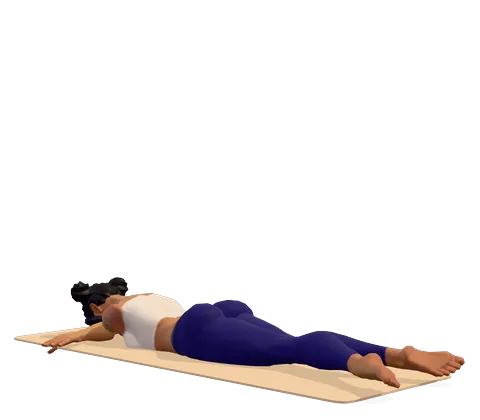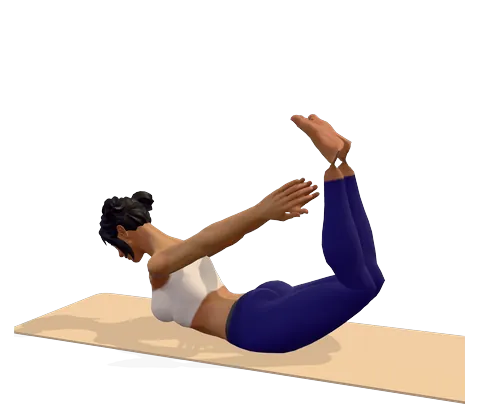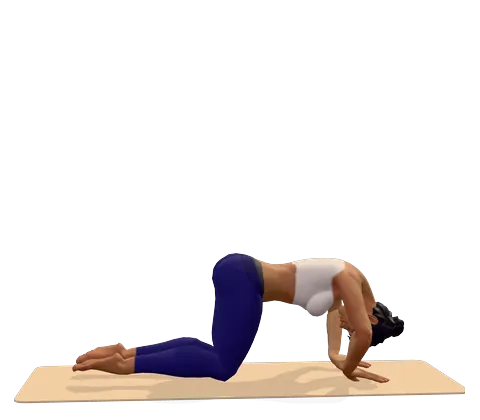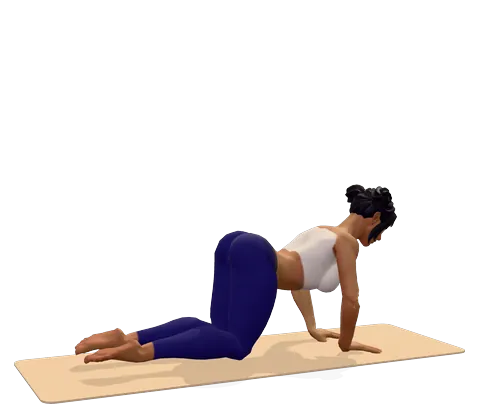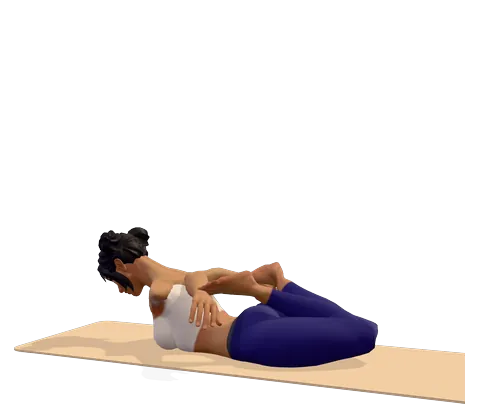
How to do Frog Pose step by step
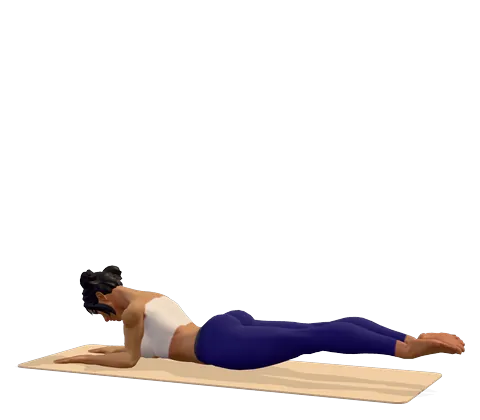
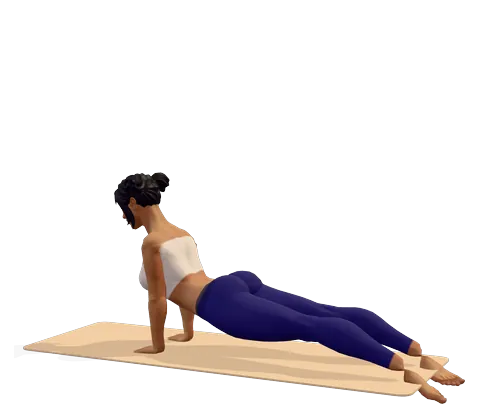
- Lie on your front and come up onto your forearms, elbows under your shoulders, so your chest is lifted.
- Bend both knees and bring your heels toward the outsides of your hips.
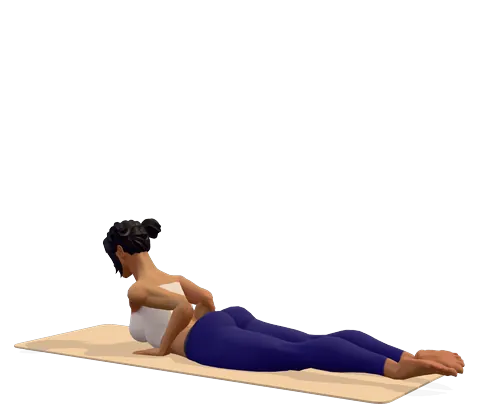
- Reach back one hand at a time and place your palms on the tops of your feet, fingers pointing the same way as your toes.
- Turn your elbows up toward the ceiling and lift your chest, letting go of the forearm support.
- Press your feet down beside your hips, not onto your buttocks, and keep your knees hip-width apart.
- Hold for 3–5 breaths (20–30 seconds), shoulders broad and neck long.
- Release the feet slowly one at a time, straighten your legs and rest in child's pose.
Where you feel Frog Pose: what it stretches and strengthens
Press your feet down beside your hips and lift your chest. In the 3D guide, turn on Body guide: areas that stretch glow green and areas that work glow saffron.
Stretches
- Front thighs
- Ankles
- Hip flexors
Strengthens
- Lower back
- Arms
Benefits and precautions
Benefits
- Deeply stretches the fronts of the thighs (quadriceps), hip flexors and ankles
- Opens the chest, shoulders and abdomen
- Strengthens the back muscles that hold the lift
- Relieves tight thighs from running, cycling and long sitting
- Prepares the body for deeper backbends such as bow and king pigeon
Avoid or modify if
- Knee injury, meniscus tear or knee replacement: avoid the full pose; the deep, loaded knee bend can strain the joint
- Pregnancy: avoid the belly-down Bhekasana; ask your midwife before any wide-knee frog
- Lower back pain, spondylolisthesis or pain when you arch
- Shoulder or wrist injury: stay with half frog on a forearm or use a strap
- Hip replacement or groin strain: avoid the wide-knee frog unless your surgeon or physiotherapist agrees
Frog pose (Bhekasana) in classical Hatha yoga is a backbend done lying on your front: you bend your knees, place your hands on the tops of your feet and press them down beside your hips, like a frog folding its back legs. It is an intermediate to advanced pose and a deep stretch for the thighs. In many modern classes, though, "frog pose" means something else: a wide-knee hip opener. This page covers both, so you can pick the one you actually need.
What is frog pose in yoga? Names and meanings
The frog pose Sanskrit name Bhekasana comes from bheka, "frog", and asana, "pose". Say it bay-KAHS-uh-nuh. Another Sanskrit word for frog, manduka, gives Mandukasana. The frog pose Hindi name is भेकासन or मण्डूकासन. Here is how the different versions compare:
| Name you may hear | What you do | Main stretch |
|---|---|---|
| Bhekasana (shown in our 3D guide) | Lie on your front, knees bent, hands press the feet down | Thighs, ankles, chest; back strength |
| Wide-knee frog (a Mandukasana variation) | Knees wide on the mat, on your forearms | Inner thighs and groin |
| Mandukasana (Indian protocol) | Kneel, fists at the navel, fold forward | Gentle belly compression |
| Frog stand (calisthenics) | Squat, knees on the upper arms, balance on hands | Arm and wrist strength |
How to do frog pose (Bhekasana) correctly
The frog pose instructions above build the full pose from forearm support. The hardest part is turning the hands: fingers must point forward, the same way as your toes, with elbows pointing up. That rotation lets you press down instead of just holding on.
Frog pose cues, tips and alignment
- Heels beside the hips, not on them. Pressing the feet straight down onto the buttocks loads the knee joint. Guide them slightly outward.
- Knees hip-width. Letting them splay makes the stretch easier but twists the knees.
- Chest forward. Broaden the collarbones and lift from the upper back, as in cobra.
- Stop at a stretch, not a pain. A strong pull in the fronts of the thighs is expected; any sharp feeling inside the knee means back off at once.
Half frog pose: the beginner progression
Beginners start with one side. Stay on your right forearm, bend your left knee and place your left palm on the top of your left foot, then gently press it down beside the hip. Switch sides after 20–30 seconds. Half frog pose benefits are the same thigh and ankle stretch with far less strain, and it shows you how your knees react. If you cannot reach your foot, loop a strap around it. This is the natural progression: half frog, then both feet with forearm support, then the full pose.
Frog pose benefits
Bhekasana stretches almost the whole front of the body. People with tight thighs from running, cycling or sitting often feel it most in the quadriceps and hip flexors. Frog pose yoga benefits also include a stronger back, because the back muscles hold the chest up, and a broad stretch across the chest and shoulders. B.K.S. Iyengar recommended it for the knees and the arches of the feet; that is traditional advice, not something research has tested, so do not use it to treat a knee problem without advice.
What muscles does frog pose stretch?
| Bhekasana stretches | Wide-knee frog stretches |
|---|---|
| Quadriceps and hip flexors | Adductors (inner thighs) |
| Ankles and tops of the feet | Groin and pelvic floor area |
| Chest, shoulders and abdomen | Hips, in rotation |
So the answer to what frog pose stretches depends on which frog you do.
Wide-knee frog pose for hips (Mandukasana variation)
This is the frog pose many people use as an adductor stretch to open the hips. Come onto hands and knees and slide your knees apart, keeping each ankle in line with its knee so the shins are parallel. Flex the feet, lower onto your forearms and let your hips sink back until they line up with your knees. Keep a gentle tuck of the tailbone so the lower back does not sag.
- How to do frog pose with tight hips: keep the knees closer together and the hips higher. Folded blankets under the knees protect them on a hard floor.
- Frog pose with bolster: rest your chest on a bolster for a longer, softer hold.
- Frog pose yin: in yin yoga the wide-knee frog is held for 3–5 minutes. Come out slowly by walking your knees back together.
- Frog pose rocking and circles: rock the hips gently forward and back or draw small circles to warm up before the hold.
Is frog pose bad for you? Not if you respect your range. Forcing the knees wide can strain the inner thigh or the groin, and after a hip replacement you should ask your surgeon before trying frog pose. The wide-knee frog is part of many routines for tight hips; for the same inner-thigh stretch sitting up, try bound angle pose.
Frog pose benefits for female and male practitioners are the same, and claims that it boosts male or female fertility are not supported by research; it simply stretches the hips. In pregnancy, a supported wide-knee frog with the chest on a bolster is sometimes used in prenatal classes, but avoid over-stretching and ask your midwife first.
Frog pose vs crow pose
In calisthenics, the frog stand is a squat in which you place your hands on the floor, rest your knees on the backs of your upper arms and tip forward until your feet float. The frog pose builds wrist and shoulder strength and is the usual stepping stone toward crow and, later, handstand. Bakasana (crow pose) looks similar, but the knees press higher, near the armpits, and the arms are straighter. In yoga, the meaning of Bakasana is "crane pose" (baka = crane); many people call it crow. You can move from frog pose to a deep squat by lowering the feet into garland pose (Malasana).
A frog pose sequence
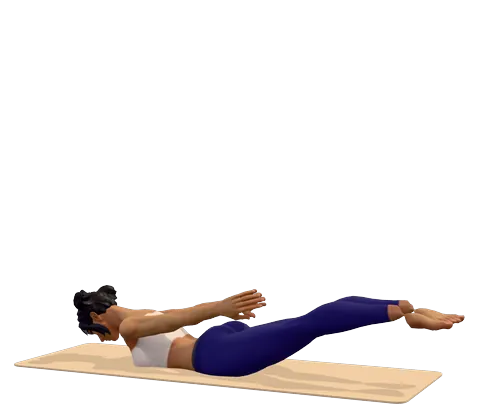
Before Bhekasana, warm the thighs in a low lunge and hero pose, and the back in cobra and locust. After it, try bow pose, which uses the same leg action, and rest in child's pose.
भेकासन — frog pose yoga steps and benefits in Hindi: पेट के बल लेटें और दोनों घुटने मोड़ें। हथेलियों को पैरों के ऊपर रखें, उँगलियाँ आगे की ओर, और पैरों को कूल्हों के पास ज़मीन की ओर दबाएँ। छाती ऊपर उठाएँ और 20 से 30 सेकंड धीरे साँस लें। इससे जाँघों, टखनों और छाती में गहरा खिंचाव आता है और पीठ मज़बूत होती है। घुटने की चोट, कमर दर्द या गर्भावस्था में यह आसन न करें; शुरुआत एक पैर से करें।
Frequently asked questions
What is frog pose good for?
Classical frog pose (Bhekasana) stretches the thighs, hip flexors, ankles and chest and strengthens the back. The wide-knee frog stretches the inner thighs and groin and is used to loosen tight hips.
Is frog pose a good yoga pose for beginners?
The full frog pose (Bhekasana) is an intermediate to advanced pose. Beginners should start with half frog, one leg at a time on a forearm, and use a strap if the foot is out of reach.
Why does frog pose hurt my knees?
Usually the heels are pressing straight onto the buttocks or the knees are splaying. Guide the feet beside the hips, keep the knees hip-width and back off. If pain is inside the knee, stop and choose a gentler thigh stretch such as low lunge.
How long should I hold frog pose?
Hold Bhekasana for 20–30 seconds. The wide-knee frog can be held for 1–2 minutes in an active class or 3–5 minutes in yin yoga.
Is frog pose good for back pain or sciatica?
Neither frog is a back pain treatment. Bhekasana is a strong backbend, and the wide-knee frog can make the lower back sag. With back pain or sciatica, start with gentler poses and ask a physiotherapist.
What is the difference between frog pose and crow pose?
In the calisthenics frog stand the knees rest on the backs of the upper arms and the arms are bent; in crow pose (Bakasana) the knees are higher and the arms straighter. Frog stand is the usual step before crow.
Can kids do frog pose?
Yes, kids love frog shapes. For children, a squatting "frog" with hands on the floor and little hops is safer and more fun than the full lying Bhekasana.
This page is for general education. Check with your doctor before starting yoga if you are pregnant, have a medical condition or an injury. Stop if you feel pain, dizziness or shortness of breath.