Prenatal yoga is yoga adapted for pregnancy: gentle standing poses, hip openers, supported stretches, calm breathing and relaxation, with anything that squeezes, strains or overheats the belly taken out. It aims to keep you comfortable and strong while your body changes, and to give you breathing and positions you can use in labor. Before you start, ask your doctor or midwife whether exercise is safe for your pregnancy.
Get your doctor’s OK first. Do not practice without medical advice if you have bleeding, placenta previa after 26 weeks, a weak cervix or cerclage, risk of premature labor, pre-eclampsia, severe anemia, or heart or lung disease. Stop at once and call your maternity team if you feel dizzy, short of breath before starting, chest pain, painful contractions, leaking fluid, calf pain or swelling, or your baby moves less than usual.
What is prenatal yoga?
The prenatal yoga meaning is simply "yoga before birth". A prenatal yoga class is usually slower than a regular class, uses props such as blocks, bolsters and a chair, and spends more time on breathing, the pelvic floor and rest. It is not a separate tradition; it borrows from Hatha yoga and restorative yoga. Many teachers teach pre and post natal yoga together, because the same body awareness helps after the birth; for yoga for postnatal care, see postnatal yoga.
Prenatal yoga benefits
Why is prenatal yoga good for you and why is yoga good for pregnant women? Reviews of pregnancy yoga benefits research suggest it may:
- ease pregnancy back pain and pelvic discomfort;
- reduce anxiety and low mood, and improve sleep;
- help you feel more confident and in control during labor;
- keep you moving safely, which supports healthy weight gain and circulation.
Does prenatal yoga help with labor? Some trials suggest yoga groups report less labor pain and, in a few studies, slightly shorter labor, but the studies are small and results vary. Prenatal yoga benefits for the baby are indirect: a calmer, more active mother. Prenatal classes also bring benefits of their own, such as meeting other parents-to-be. Prenatal pilates has similar benefits, with more focus on the core and pelvic floor; either is fine if your teacher is trained for pregnancy.
Prenatal yoga by trimester
First trimester (weeks 1–13)
Nausea and tiredness are common, so keep sessions short. Yoga for the first trimester is mostly gentle movement and breathing. If you already practice, you can continue with care; if you are new, early pregnancy yoga for beginners should be very gentle, and many teachers suggest joining a prenatal class after week 12. Avoid overheating, deep twists, strong core work and breath holding. Lying on your back is usually fine in this trimester.
Second trimester (weeks 14–27)
Most women feel best during the 2nd trimester, so prenatal yoga for beginners in the second trimester is a good way to start. From now on, avoid long periods flat on your back; lie on your left side or sit propped up instead. Skip lying on your belly and closed twists; twist gently from the upper back with the belly free. Relaxin, a pregnancy hormone, loosens ligaments, so do not push stretches to the limit.
Third trimester (weeks 28–40)
Can you start prenatal yoga in the third trimester? Yes, with your doctor’s OK, if you keep it gentle. Practice in these final weeks uses a wall or chair for balance, wide-knee kneeling, supported squats, side-lying rest and slow breathing; this is where prenatal yoga to prepare for labor matters most. Shorten or skip downward dog if you feel dizzy or have heartburn.
Prenatal yoga guidelines and tips: what to avoid
- Hot yoga and overheating, and exercise to exhaustion. You should be able to talk while you move.
- Lying on your belly, deep backbends and deep or closed twists.
- Inversions such as headstand, and jumping.
- Breath holding and forceful breathing such as Kapalbhati. Choose calm breathing like Bhramari.
- Crunches and poses that make the belly bulge or dome.
Prenatal yoga at home: a sample flow
This sample of prenatal yoga takes about 10 minutes and matches our free Gentle Prenatal Flow session, where a 3D figure shows each pose and a calm voice guides you. Unlike a prenatal yoga video, you can rotate the figure to see the pose from any side:
- Easy pose on a cushion: breathe slowly for a minute.
- Cat and cow: move the spine with the breath, without letting the belly sag deeply.
- Bound angle pose: sit on a folded blanket, knees resting on blocks.
- Garland squat: sit on a block or low stool. Skip it if your baby is breech after about 34 weeks, or if your midwife advises against squatting.
- Warrior II with a short stance, near a wall for balance.
- Wide-knee child’s pose with the belly between the knees, then rest on your left side.
How to do a prenatal yoga session safely: move slowly, keep the breath easy and stop anything that hurts. You can also build your own sequence in the session builder.
Prenatal yoga for back pain, sciatica and pelvic pain
Cat-cow and pelvic tilts on hands and knees are often the most helpful prenatal yoga exercises for back pain. For sciatica, gentle hip stretches may help; see yoga for sciatica, but avoid deep forward folds. With pelvic girdle pain, keep your knees closer together and avoid wide stances and deep lunges. For round ligament pain, move slowly when changing position. For constipation, gentle walking and relaxed breathing help more than twists.
Prenatal yoga meaning in Hindi (yoga during pregnancy in Hindi) — प्रसवपूर्व योग: प्रेग्नेंसी में किया जाने वाला हल्का योग प्रसवपूर्व योग कहलाता है। शुरू करने से पहले डॉक्टर से पूछें। तितली आसन, बिल्ली-गाय आसन, दीवार के सहारे वीरभद्रासन और धीमी साँस वाले अभ्यास सुरक्षित माने जाते हैं। पेट के बल लेटना, गहरे मोड़, कपालभाति और साँस रोकना न करें। चक्कर, दर्द या खून आए तो तुरंत रुकें।
Other types of yoga
Poses you will meet in Prenatal Yoga
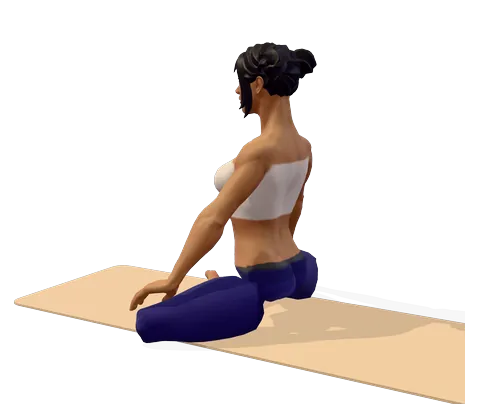 Easy PoseSukhasana
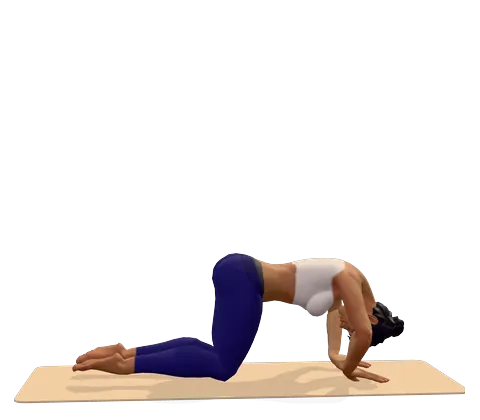 Cat PoseMarjaryasana
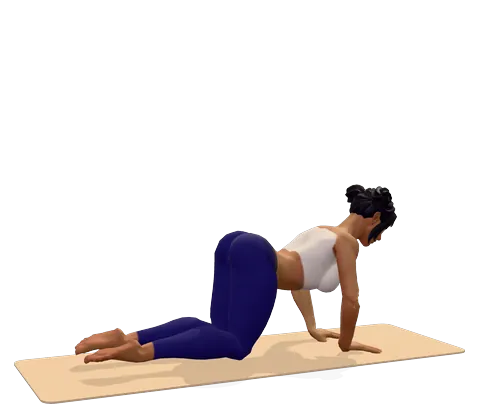 Cow PoseBitilasana
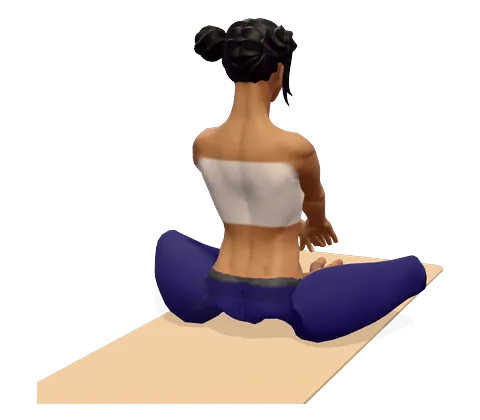 Bound Angle PoseBaddha Konasana
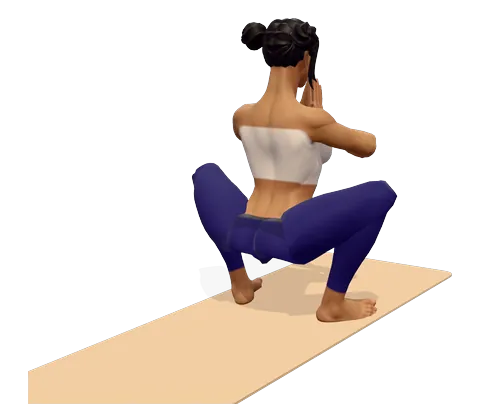 Garland PoseMalasana
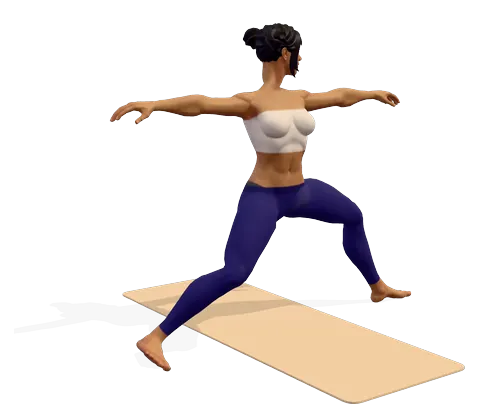 Warrior II PoseVirabhadrasana II
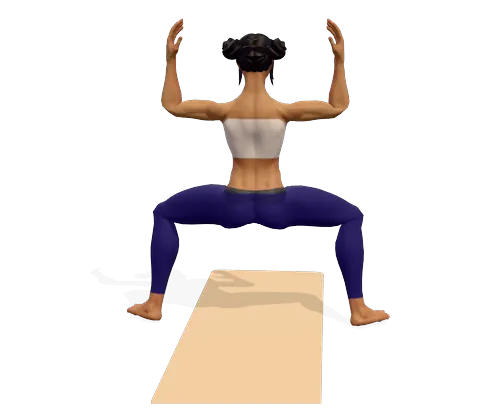 Goddess PoseUtkata Konasana
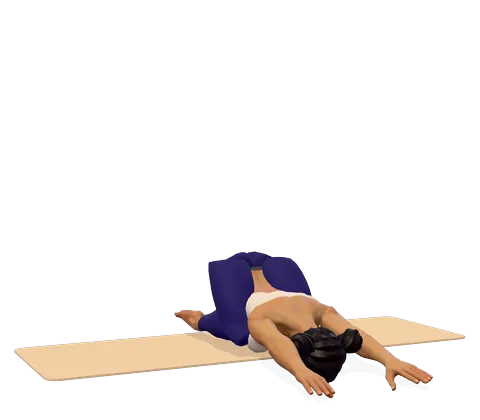 Child’s PoseBalasana
Frequently asked questions
What is prenatal yoga?
Prenatal yoga is gentle yoga adapted for pregnancy, with modified poses, props, calm breathing and relaxation, and without belly-down poses, deep twists, inversions or overheating.
When can I start prenatal yoga?
With your doctor’s OK, you can start at any stage. Many beginners start in the second trimester, when nausea and tiredness usually ease.
Is downward dog safe in pregnancy?
For most women a short down dog is fine in the first and second trimester. Skip it if you feel dizzy, have heartburn or high blood pressure, or late in pregnancy.
Is bridge pose safe during pregnancy?
A short bridge is usually fine in the first trimester. Later, avoid long holds on your back; do pelvic tilts on hands and knees instead.
Can I do prenatal yoga before bed?
Yes. A few gentle stretches, side-lying rest and slow breathing can help you sleep. A side-lying Yoga Nidra is also a good choice.
How often should I do prenatal yoga?
Two to three short sessions a week is a good start, alongside walking. Guidelines suggest about 150 minutes of moderate activity a week in pregnancy if your doctor agrees.
Do I need special props?
No. A firm cushion, a folded blanket, two books as blocks and a sturdy chair or wall are enough for home practice.