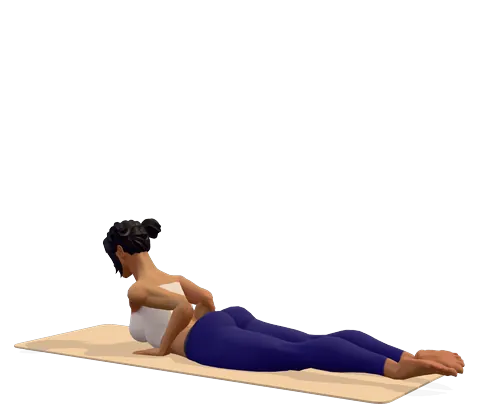
How to do Cobra Pose step by step
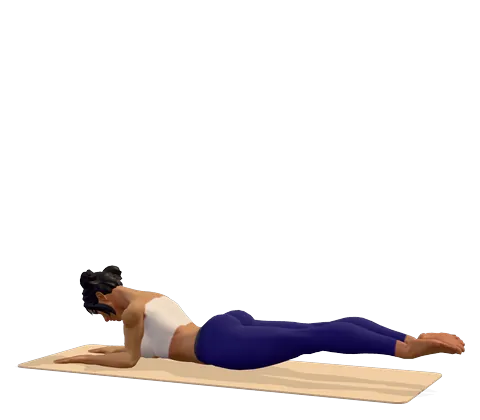
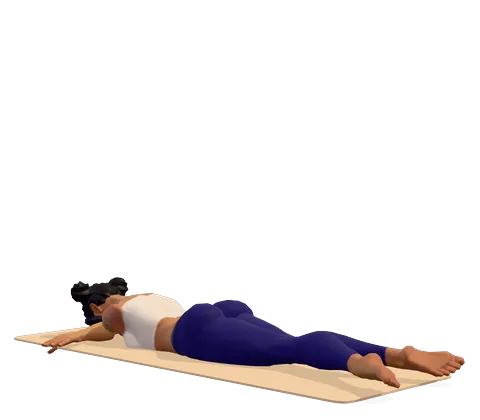
- Lie on your front with your legs straight and hip-width apart. Rest the tops of your feet on the mat and your forehead on the floor.
- Place your palms flat under your shoulders, fingers pointing forward, elbows tucked in close to your ribs.
- Press the tops of your feet and your pubic bone gently into the mat. Lengthen your tailbone toward your heels.
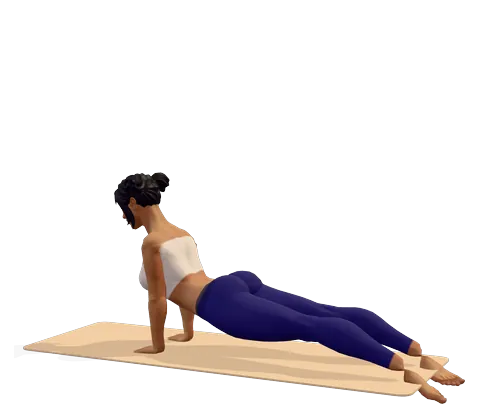
- Breathe in and slowly peel your forehead, chin and chest off the floor, using your back muscles first and your hands only as support.
- Keep your elbows slightly bent, shoulders rolling back and down, and your gaze forward or slightly up. Your lower ribs can stay close to the mat.
- Hold for 3–5 slow breaths (15–30 seconds). Keep the neck long — do not throw the head back.
- Breathe out and lower your chest, then your forehead, to the mat. Rest your cheek on your hands and relax for a few breaths.
Where you feel Cobra Pose: what it stretches and strengthens
Lift with your back muscles, using your hands only lightly. In the 3D guide, turn on Body guide: areas that stretch glow green and areas that work glow saffron.
Stretches
- Chest
- Abs
Strengthens
- Lower back
- Upper back
Benefits and precautions
Benefits
- Strengthens the muscles along the spine and the back of the shoulders
- Stretches the chest, shoulders and abdomen, which helps counter slouching
- Gently mobilises the lower and middle back; used in yoga programmes for back pain
- Opens the front of the body so breathing feels fuller
- A good counter-pose after sitting at a desk or looking down at a phone
- Warms the body in Surya Namaskar and prepares you for deeper backbends
Avoid or modify if
- Pregnancy (after the first trimester) — do not lie on your belly
- Recent abdominal surgery, hernia or a peptic ulcer
- Acute back injury, spondylolisthesis or spinal stenosis that worsens when you arch — ask your physiotherapist
- Carpal tunnel or wrist pain — try Sphinx pose on your forearms instead
- Stop if you feel sharp or pinching pain in the lower back or pain spreading down a leg
Cobra pose (Bhujangasana) is one of the first backbends most people learn: you lie on your front and lift your chest like a cobra raising its hood. It is simple, needs no props and takes less than a minute, yet it strengthens the back, opens the chest and is part of every round of Surya Namaskar. This guide covers how to do cobra pose correctly, what it is good for, the muscles it works, easier and harder versions, and who should not do it.
What is cobra pose in yoga?
Cobra pose is a prone (face-down) backbend. The name comes from Sanskrit: bhujanga means "serpent" or "cobra" and asana means "seat" or "pose", so Bhujangasana meaning is simply "serpent pose". In Hindi it is called भुजंगासन. The shape is the same in almost every style of yoga, from classical Hatha to Vinyasa, although some teachers lift higher and others keep it low.
Unlike upward-facing dog, your legs, hips and lower belly stay on the mat. That makes the cobra pose stretch gentler and easier to control, which is why it suits beginners and people returning after back pain.
How to do cobra pose correctly (Bhujangasana kaise kare)
The steps above take you in and out of the pose. These cobra pose cues fix the most common problems:
- Lift with your back, not your arms. Try hovering your hands off the mat for a moment at the top. If you can still stay up, your back muscles are doing the work — that is the point of the exercise.
- Keep the elbows bent and hugging in. Straight, locked arms push you into your lower back.
- Anchor the legs. Pressing the tops of the feet down and firming the thighs spreads the bend along the whole spine instead of one spot.
- Chest forward before up. Imagine your breastbone sliding forward through a doorway, then rising.
- Long neck. Gaze forward or slightly up; dropping the head back squeezes the neck.
How long to hold cobra pose
For most people 15–30 seconds (3–5 breaths) is enough. Beginners can repeat a short cobra 3–5 times, lowering between each, rather than holding one long one. In a flowing class you hold it for a single inhale.
Cobra pose benefits
What is cobra pose good for? Mainly for the back and posture. By working the spinal extensor muscles while stretching the front of the body, it counters the rounded shape we hold at desks and on phones.
Cobra pose for back pain and sciatica
Gentle backbends like cobra and sphinx are part of many yoga programmes for chronic lower back pain, where studies have found yoga reduces pain and disability compared with usual care. Some people with a disc bulge feel better with gentle extension; others with stenosis feel worse. Is cobra pose good for sciatica? It can be, if arching eases your leg symptoms — but if pain moves further down the leg, stop and see our yoga for sciatica plan or a physiotherapist.
Breathing, digestion and mood
Opening the chest can make breathing feel easier, which is why cobra appears in yoga for asthma routines. Lying on the belly also presses gently on the abdomen; traditional texts link Bhujangasana benefits for digestion to this. Chest-opening poses are also used in yoga programmes for low mood.
Does cobra pose reduce belly fat?
No single pose burns fat from one area. Cobra pose strengthens the back and core, and it is part of Surya Namaskar, which raises your heart rate when done in rounds. Is Bhujangasana good for obesity? Only as part of a regular practice with diet and movement — see our yoga for weight loss plan.
Cobra pose muscles worked
| Strengthens | Stretches |
|---|---|
| Erector spinae (muscles along the spine) | Chest (pectorals) and front of the shoulders |
| Gluteal muscles and hamstrings (mildly) | Abdominal muscles and hip flexors |
| Rhomboids and lower trapezius (between the shoulder blades) | Front of the neck and throat |
So, what does the cobra pose stretch? Mainly the chest and belly; what does it strengthen? The back.
Cobra pose for beginners and variations
- Baby cobra: lift only a few centimetres, hands light. Baby cobra pose vs cobra: same shape, less height — the best place to start.
- Cobra pose on elbows (Sphinx): forearms on the mat. Compare cobra pose vs sphinx pose: sphinx is lower and gentler on the wrists and lower back. See Sphinx pose.
- Cobra pose on the wall or chair: stand facing a wall, hands at chest height, and gently lift the chest — a useful cobra pose alternative for seniors and in chair yoga.
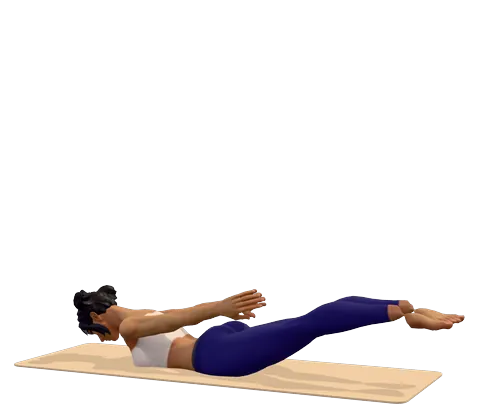
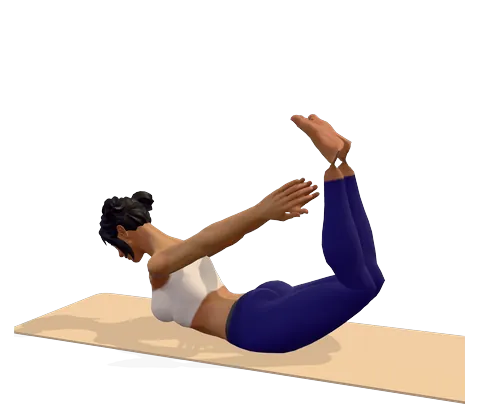
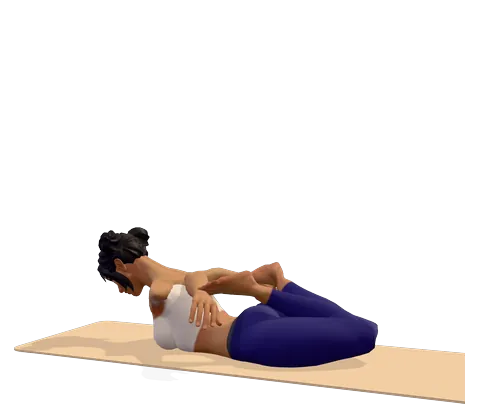
- King cobra: an advanced version where the knees bend and the feet reach toward the head. Only after a deep, pain-free backbend practice.
Cobra pose vs upward dog
In cobra the thighs and pelvis rest on the floor and the elbows are usually bent. In upward-facing dog the arms are straight and the legs lift off the mat, so it is stronger and needs more shoulder and wrist strength. Many flows move from cobra pose to downward dog and rest in cobra to child's pose afterwards.
Bhujangasana contraindications and precautions
Who should not do Bhujangasana? Anyone with the conditions in the caution box above, and anyone whose lower back hurts during the pose. If cobra pose hurts your lower back, lower your chest, move your hands a little forward, bend your elbows more and press your pubic bone down. For a herniated disc or spinal stenosis, get advice from a physiotherapist before practising.
Poses to do before and after cobra
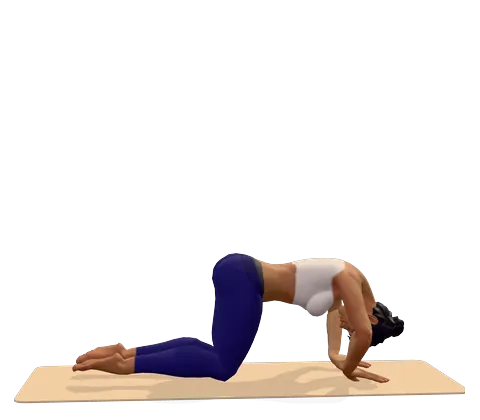
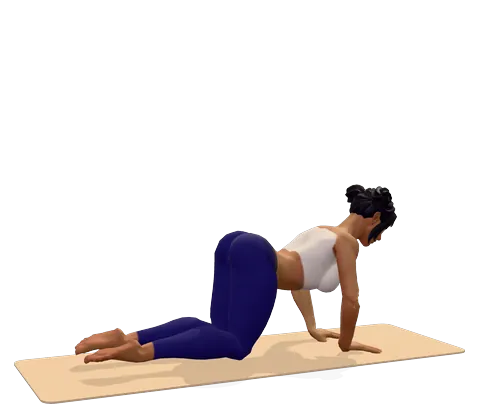
Warm up with cat and cow, and sphinx. Afterwards, rest in child's pose or crocodile pose. You can play all of these with the voice guide in the guided sessions.
भुजंगासन (Bhujangasana) — हिंदी में: पेट के बल लेट जाएँ, हथेलियाँ कंधों के नीचे रखें। साँस लेते हुए धीरे-धीरे सिर और छाती ऊपर उठाएँ, कोहनियाँ थोड़ी मुड़ी रहें। 15–30 सेकंड रुकें और साँस छोड़ते हुए नीचे आएँ। भुजंगासन के फायदे: कमर और पीठ मज़बूत होती है, छाती खुलती है और लंबे समय तक बैठने से होने वाली अकड़न कम होती है। गर्भावस्था, हर्निया या पेट के ऑपरेशन के बाद यह आसन न करें।
Health conditions this pose is used for
Yoga for posture and tech neck · Yoga for slip disc (herniated disc) · Yoga for ankylosing spondylitis · Yoga for height and posture · Yoga for diabetes · Yoga for belly fat · Yoga for thyroid · Yoga for high cholesterol · Yoga for fatty liver · Yoga for kidney health · Yoga for kidney stones · Yoga for hormonal balance · Yoga for healthy weight gain · Yoga for pcos and pcod · Yoga for irregular periods · Yoga for prostate health · Yoga for male fertility · Yoga for erectile dysfunction · Yoga for depression · Yoga for autism (children) · Yoga for self-confidence · Yoga for addiction and quitting smoking · Yoga for asthma · Yoga for bronchitis · Yoga for snoring and sleep apnea · Yoga for cold and cough · Yoga for sinusitis and allergies · Yoga for immunity · Yoga for constipation · Yoga for gallstones · Yoga for hair fall and hair growth · Yoga for glowing skin and acne · Yoga for cold hands and feet (circulation)
Where this practice is used
Chakras: Manipura (Solar Plexus Chakra) · Anahata (Heart Chakra) · Vishuddha (Throat Chakra)
Frequently asked questions
What is Bhujangasana and its benefits?
Bhujangasana (cobra pose) is a gentle backbend done lying on your front. It strengthens the back muscles, stretches the chest and abdomen, improves posture and is used in yoga programmes for back pain.
How long should I hold cobra pose?
Hold for 15–30 seconds (3–5 slow breaths). Beginners can repeat a short cobra 3–5 times rather than holding one long one.
Is cobra pose good for lower back pain?
Often yes, when done low and slow — gentle back extension is part of many yoga programmes for chronic low back pain. Stop if the pain gets sharper or spreads down the leg, and ask a physiotherapist if you have a disc problem.
What is the difference between cobra pose and upward dog?
In cobra your legs and pelvis stay on the floor and the elbows are bent. In upward dog the arms are straight and the thighs lift, so it is stronger and harder on the wrists.
Who should not do cobra pose?
Avoid it in pregnancy, after abdominal surgery, with a hernia or peptic ulcer, and during an acute back injury. With spinal stenosis or wrist pain, try sphinx pose instead.
Can kids do cobra pose?
Yes. Cobra pose for kids is usually taught as a playful "snake" with a gentle hiss on the breath out. Keep it low and short.
What does "Bhujangasana" mean in Hindi?
भुजंगासन — "bhujang" means snake or cobra and "asana" means pose. Cobra pose se kya hota hai? It strengthens the back and opens the chest.
This page is for general education. Check with your doctor before starting yoga if you are pregnant, have a medical condition or an injury. Stop if you feel pain, dizziness or shortness of breath.