How to work with Svadhisthana: step by step
- Warm the hips with slow Cat and Cow and a few circles of the pelvis while seated.
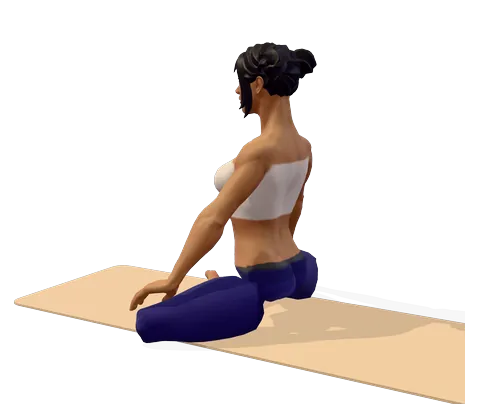
- Hold Bound Angle, Goddess and a low lunge for five to eight breaths each.
- Sit tall with your hands in Varun mudra and breathe softly into the lower belly for two minutes.
- Rest your attention just below the navel and picture a clear orange glow, like sunlight on water.
- Chant VAM aloud slowly, one sound per out-breath, for about nine to twelve rounds.
- Continue silently, imagining the breath moving in gentle waves through the pelvis.
- Close with Reclined Bound Angle for two to three minutes of rest.
When Svadhisthana feels balanced
- Feeling emotions without being swept away by them
- Enjoying simple pleasures without guilt
- Creative ideas that flow easily
- Comfortable, respectful closeness with others
Signs of imbalance (traditional view)
- Feeling emotionally numb or flat
- Mood swings or being ruled by cravings
- Creative block and loss of playfulness
- Tight hips and lower back held for long periods
What Svadhisthana is about
Creativity · Pleasure · Emotional flow · Relationships · Adaptability · Sensuality
Traditional powers of Svadhisthana
- Traditional texts describe the meditator on Svadhisthana being freed from inner enemies such as pride, anger and greed
- Traditional texts describe the gift of graceful speech, poetry and a mind as clear as the rising sun
- The text calls this center "one's own abode", said to be the seat of the personal self
These are descriptions from yogic and tantric texts, not proven effects. Use them as themes for reflection, not as promises.
The Svadhisthana chakra, known in English as the sacral chakra, is the second of the seven chakras in yoga tradition. It is described in the lower belly, below the navel, and is linked with the water element, the colour orange and the seed sound VAM. Its themes are feeling, pleasure, creativity and the ability to go with the flow of life.
If the root chakra is about standing firm, the sacral chakra is about moving. On this page you will learn what the name means, how this center fits into the seven chakras, a day-to-day routine, the mistakes beginners make, and what research can and cannot tell you.
Svadhisthana chakra meaning: "one's own seat"
First, what does chakra mean in Sanskrit? Chakra means "wheel" or "disc", a turning center of energy in the subtle body. Svadhisthana is usually read as sva, "self", plus adhisthana, "seat" or "dwelling place". So the svadhisthana chakra meaning in English is "one's own abode", the place where the personal self is said to live. Some teachers read the first part as svad, "to taste" or "to enjoy", which fits its link with the sense of taste and with pleasure.
The spelling varies: Svadhisthana, Swadhisthana chakra and Swadhishthan are all the same center. For svadhisthana chakra pronunciation, say svaa-DHISH-taa-na. The sacral chakra's Sanskrit name is Svadhisthana; the English name "sacral" comes from the sacrum, the triangle-shaped bone at the back of the pelvis.
What does the sacral chakra do and represent?
In the chakra map, each center "governs" a layer of experience. Muladhara holds survival and safety. Svadhisthana is responsible for what comes next once you feel safe: emotions, desire, relationships, play and the urge to create. It is also where many traditions place sexual energy and fertility, seen as one expression of a wider creative force.
The sacral chakra organs often listed in modern books are the reproductive organs, the bladder and the kidneys, and the gland associated with it is the ovaries or testes. These links are modern additions that try to match the old map to Western anatomy. They are a useful way to picture the area, not a medical description.
The sacral chakra symbol
The traditional sacral chakra symbol is a lotus with six vermilion petals. Inside is a white crescent moon, the sign of water, and a makara, a crocodile-like sea creature that stands for the pull of desire and the depths of the unconscious. The sacral chakra color used today is orange, the colour of warmth and sunset light on water.
Svadhisthana chakra location
Tradition places the sacral chakra location (also called the Swadhisthana chakra location) at the root of the genitals, and in everyday terms about two fingers below the navel, deep in the lower belly. Some schools locate it lower on the spine, at the level of the tailbone. For practice, rest your attention in the lower belly and the sacrum together, as if the whole bowl of the pelvis were filled with slow-moving water.
VAM mantra: the seed sound of the sacral chakra
The sacral chakra mantra is VAM, the bija of the water element. Pronounce it "vum", rhyming with "drum", with the lips lightly touching at the end so the hum vibrates. As the beej mantra for Swadhisthana chakra, it is chanted one sound per out-breath: nine to twelve rounds aloud, then several minutes silently.
Many people like to pair VAM with a hand gesture. The most common sacral chakra mudra, and the usual Swadhisthana chakra mudra in Indian teaching, is Varun mudra, the water gesture, where the tips of the little finger and thumb touch. Shakti mudra is traditionally used for the pelvic area and for calm, restful energy.
How to balance the sacral chakra day to day
How to open the sacral chakra, or how to activate the Swadhisthana chakra, is a common question. In practice, "opening" means giving the hips, the lower belly and your feelings some regular, gentle attention. The guided steps above take about fifteen minutes; here is how to fit the ideas into ordinary days.
| When | Practice | Time |
|---|---|---|
| Morning | Pelvic circles, Cat and Cow, then a short sacral chakra yoga flow: Goddess pose and low lunge | 8–10 min |
| During the day | Drink water slowly and mindfully; stand up and sway the hips after long sitting | 1–2 min |
| Evening | VAM chanting with Varun mudra, then a sacral chakra meditation | 10–15 min |
| Before sleep | Reclining Bound Angle with cushions under the knees | 3–5 min |
Try this five or six days a week for a month. Traditional teachers say this is also how to cleanse the Svadhishthana chakra: not with one dramatic ritual, but with steady, repeated practice. Evening suits this chakra well, because the practice is soft and cooling. Left-nostril breathing, Chandra Bhedana, is the traditional "moon" breath and pairs naturally with the water element.
Sacral chakra yoga poses and yin holds
The most useful sacral chakra healing yoga poses, the ones that open up the hips, are simple asanas you already know. Bound Angle pose opens the inner thighs; Pigeon pose releases the outer hip and buttock. For sacral chakra yin yoga poses, hold Bound Angle folded forward or Happy Baby for three to five minutes with props, breathing into the lower belly. If your knees complain, sit higher on a folded blanket and put blocks under the thighs.
Sacral chakra affirmations
Svadhisthana chakra affirmations follow the mantra. Repeat one short sentence silently: "I allow myself to feel." "I enjoy the good things in my life." "I can change and still be myself." Sacral chakra affirmations work best when they are kind and believable, not grand.
Beginner mistakes and how to avoid them
- Forcing the hips. Pushing the knees down in Bound Angle or sinking hard into Pigeon strains the knee, not the hip. Use props and stay at a comfortable stretch.
- Expecting only pleasant feelings. Deep hip work and stillness sometimes bring up sadness or old memories. That is common. Slow down, open your eyes, and return to the breath. If practice brings up trauma, work with a qualified therapist.
- Treating "blockage" as a diagnosis. Sacral chakra blockage symptoms listed online, such as low libido, pelvic pain or irregular periods, have real medical causes. See a doctor about them first.
- Relying on extras. Sacral chakra crystals, "417 Hz" music and orange-coloured sacral chakra food are modern ideas. Enjoy them if you like, but they are not in the classic texts and are not proven to do anything to a chakra.
What research says
Science has not found chakras as physical structures, so no study can show a sacral chakra being out of balance or "cleansed". The sacral chakra frequency in Hz and similar claims have no clinical backing.
Some of the practices, though, are well studied in their own right. Mindfulness and meditation programmes have been shown in many trials to help people notice and manage emotions with less reactivity. Reviews of yoga for period pain suggest gentle poses and relaxation may ease cramps for some women (see yoga for periods), and hip mobility work is widely used for stiffness from long sitting. That is a reasonable, honest way to think about the Swadhisthana chakra benefits and about sacral chakra healing in general: better awareness of feelings and a looser, more comfortable pelvis.
Safety: during pregnancy, avoid deep hip openers held at the end of your range and any pressure on the belly; follow a prenatal yoga plan instead. With knee or sacroiliac joint pain, keep hip openers mild and supported.
स्वाधिष्ठान चक्र (Swadhisthana chakra) — हिंदी में स्वाधिष्ठान चक्र नाभि से थोड़ा नीचे, पेट के निचले हिस्से में माना जाता है। इसका तत्व जल, रंग नारंगी और बीज मंत्र "वं" है। स्वाधिष्ठान चक्र कैसे जागृत करें: बद्ध कोणासन और कपोतासन जैसे कूल्हे खोलने वाले आसन करें, फिर वरुण मुद्रा में बैठकर धीरे-धीरे "वं" का जाप करें। परंपरा के अनुसार इससे भावनाओं में संतुलन और रचनात्मकता आती है; यह चिकित्सा का विकल्प नहीं है।
Where the sacral chakra fits in
Tradition teaches that each center builds on the one below. Without the steadiness of Muladhara, strong feelings can feel overwhelming; with it, they can flow. Above Svadhisthana sits the Manipura (solar plexus) chakra, where feeling turns into willpower and action. People described as "Svadhisthana chakra dominant" are said to be warm, sensual and imaginative; treat this as a playful personality sketch. The guided sacral chakra meditation script in the player above works as a short sacral chakra healing meditation. For a picture-based practice, try the visualization meditation, or simply sit with the meditation timer and repeat VAM silently.
Yoga poses for the sacral chakra
 Bound Angle PoseBaddha Konasana
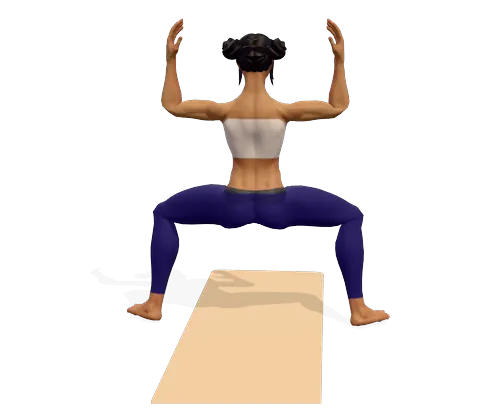 Goddess PoseUtkata Konasana
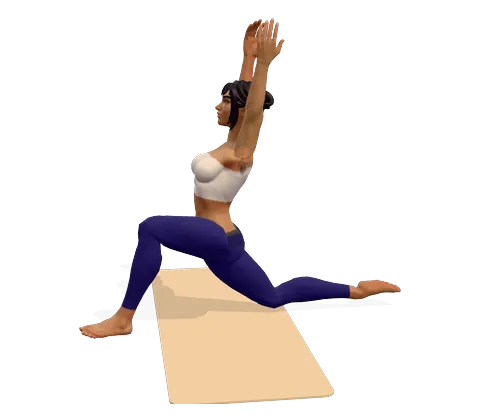 Low Lunge PoseAnjaneyasana
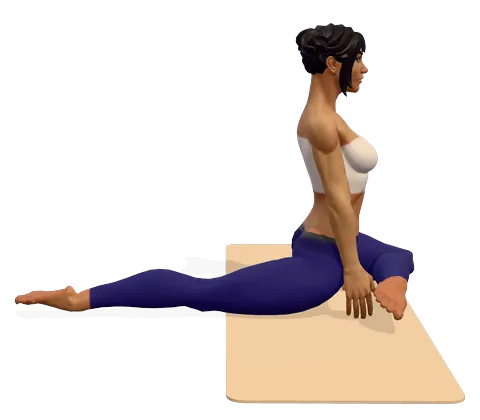 Pigeon PoseEka Pada Rajakapotasana
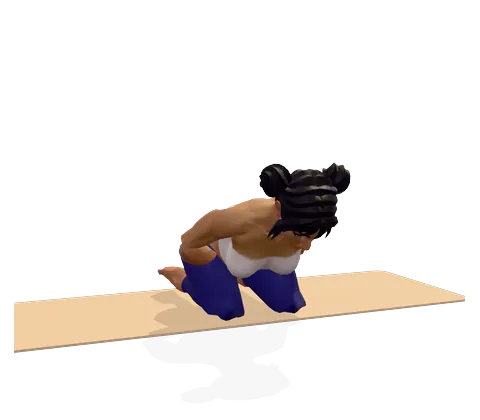 Seated Frog PoseMandukasana
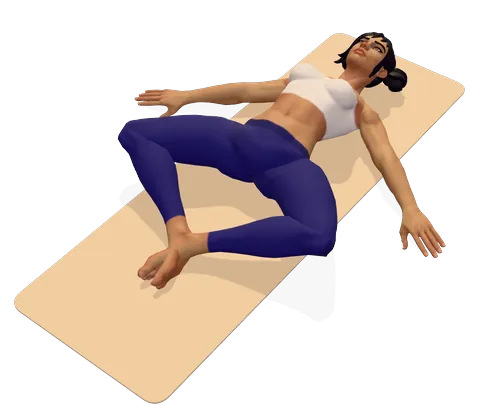 Reclining Bound Angle PoseSupta Baddha Konasana
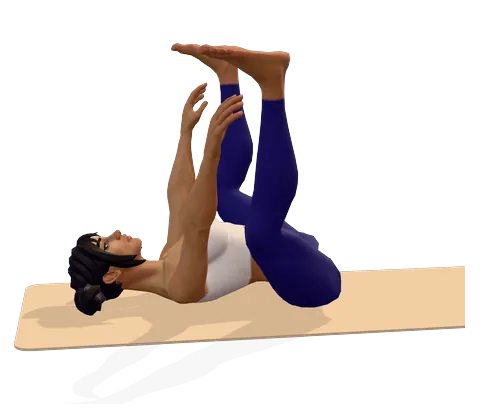 Happy Baby PoseAnanda Balasana
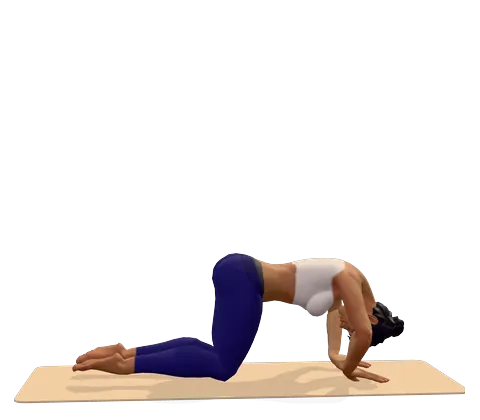 Cat PoseMarjaryasana
Frequently asked questions
What is the sacral chakra responsible for?
In yoga tradition, the sacral chakra (Svadhisthana) is linked with emotions, pleasure, creativity, relationships and adaptability. It sits in the lower belly and is connected with the water element, the colour orange and the mantra VAM.
Where is the Svadhisthana chakra located?
About two fingers below the navel, deep in the lower belly, near the sacrum. Classic texts place it at the root of the genitals, and some schools place it at the level of the tailbone.
How do I heal or balance my sacral chakra?
Practise gentle hip openers such as Bound Angle, Goddess and Pigeon, breathe softly into the lower belly, and chant VAM with Varun mudra for ten to fifteen minutes most days. Allow your feelings without judging them. Tradition calls this balancing; practically, it builds awareness and ease.
What are the signs of a blocked sacral chakra?
In the traditional view, feeling emotionally numb, having mood swings or strong cravings, losing creativity and holding stiff hips are described as signs of imbalance. Low libido, pelvic pain and irregular periods need a medical check first, because they often have physical causes.
What is the mantra for the sacral chakra?
VAM, pronounced "vum". It is the seed (bija) mantra of the water element. Chant it slowly, one sound per out-breath, then continue silently.
Which yoga poses open the sacral chakra?
Hip openers are the classic choice: Bound Angle, Reclining Bound Angle, Goddess, low lunge, Pigeon, Frog and Happy Baby, plus Cat and Cow to move the pelvis. Hold them gently and use props.
Do sacral chakra crystals or frequencies work?
There is no reliable evidence that crystals or particular sound frequencies affect the sacral chakra. They are modern additions. If they help you focus, they are harmless, but the traditional tools are breath, posture and mantra.
Swadhisthana chakra kaise jagrit kare?
Rozana hip opening asanas jaise Baddha Konasana, Utkata Konasana aur Kapotasana karein. Phir Varun mudra mein baith kar naabhi ke neeche dhyan rakhein aur dheere dheere VAM mantra ka jaap karein. Pandrah minute rozana kaafi hain.
Chakras, kundalini and the traditional powers linked to them come from yogic and tantric tradition. They are not anatomical structures and these descriptions are not medical claims. Meditation and gentle yoga are generally safe, but intense breathing, long breath holds or very long sittings can cause dizziness, anxiety or distress, and may not suit people with heart disease, high blood pressure, epilepsy, pregnancy or a history of psychosis, bipolar disorder or trauma. Keep any prescribed treatment, practise gently and stop if you feel unwell. See our medical disclaimer.