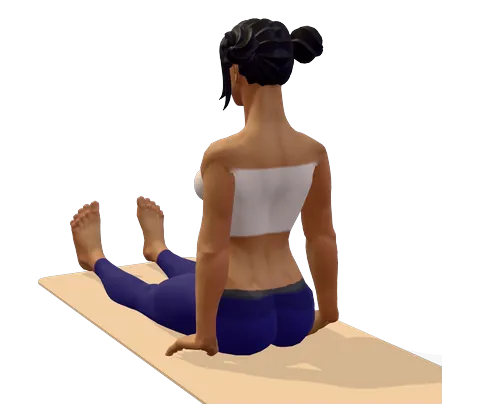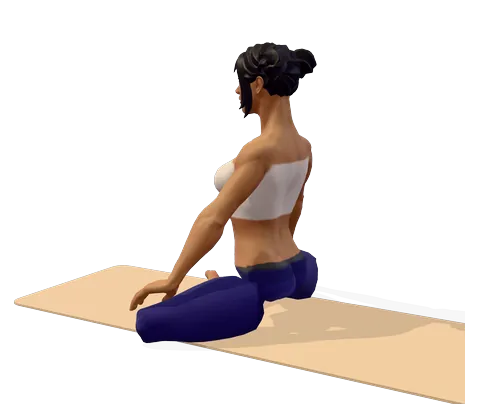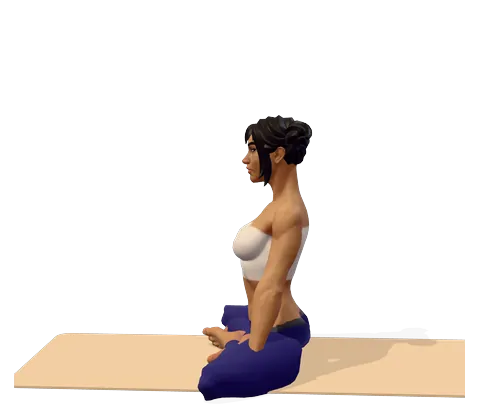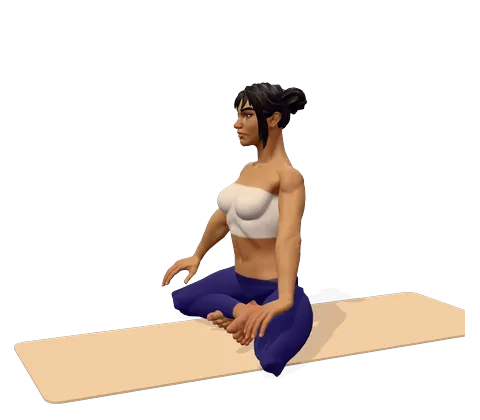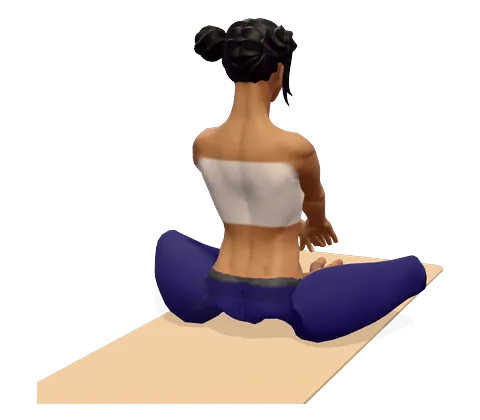
How to do Bound Angle Pose step by step
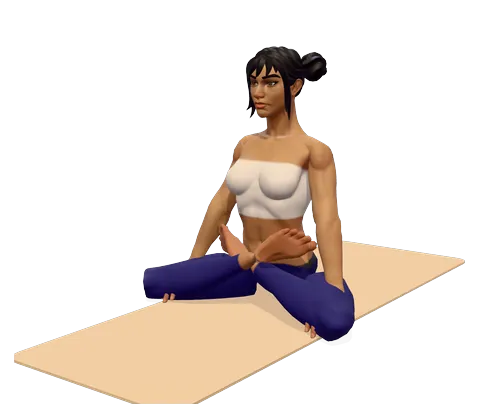
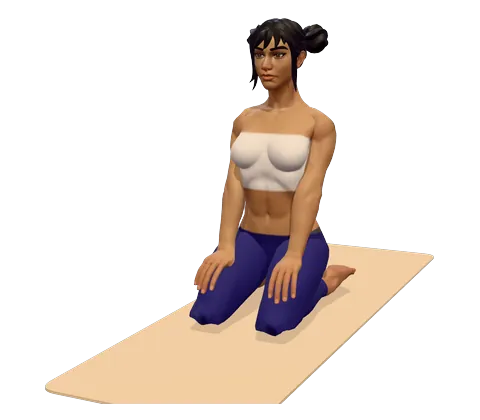
- Sit on the mat, or on a folded blanket if your lower back rounds, with your legs straight in front of you.
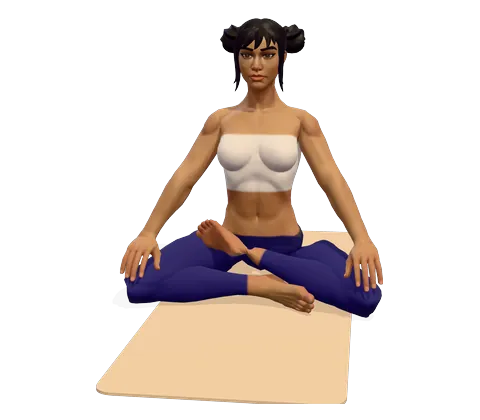
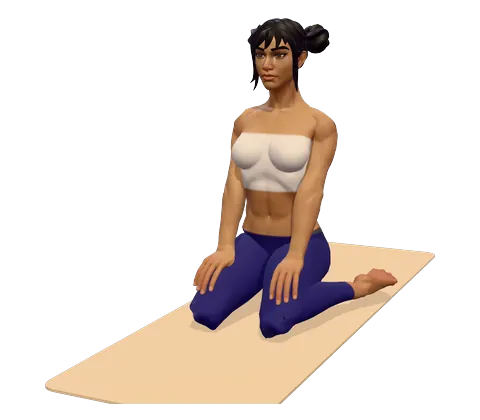
- Bend your knees and bring the soles of your feet together. Slide your heels toward you to a distance that feels comfortable — closer for a stronger stretch, farther for a gentler one.
- Let your knees fall open to the sides. Do not push them down; gravity and time do the work.
- Hold your feet or ankles with both hands. You can open the soles gently with your thumbs, like opening a book.
- Press your sit bones down, lift your chest and relax your shoulders away from your ears. Look straight ahead.
- Breathe slowly and stay for 30 seconds to 2 minutes.
- To come out, bring your knees together with your hands under the thighs, then straighten your legs and gently shake them.
Where you feel Bound Angle Pose: what it stretches and strengthens
Let your knees fall wide and lift your chest. In the 3D guide, turn on Body guide: areas that stretch glow green and areas that work glow saffron.
Stretches
- Inner thighs
- Hip flexors
Strengthens
- Spine
Benefits and precautions
Benefits
- Stretches the inner thighs, groin and the fronts of the hips
- Gently improves hip mobility, which can ease stiffness from long sitting
- Encourages an upright spine and a steady, calming breath
- Part of many yoga programmes for period pain, PCOS and pregnancy
- A comfortable seated pose for people with high blood pressure, as it has no inversion or strain
- Prepares the hips for wide-leg forward bends and lotus-type seats
Avoid or modify if
- Groin strain, inner-thigh injury or knee injury — keep the feet far away and support the knees with blocks
- Pelvic girdle pain or symphysis pubis dysfunction in pregnancy — the wide knee position may make it worse
- Hip replacement — ask your surgeon or physiotherapist which hip positions are allowed
- Sacroiliac joint or lower back pain — sit on a blanket and skip the forward fold
- Never press the knees down with your hands or elbows
Bound angle pose (Baddha Konasana) is a seated hip opener in which the soles of the feet press together and the knees open out to the sides. Most people know it as butterfly pose, and in India it is often called titli asana (तितली आसन). It is simple enough for children and gentle enough for pregnancy, yet it still gives a real stretch to the inner thighs and groin. This page shows how to do Baddha Konasana step by step, its benefits, the muscles it stretches, props and variations, and who should take care.
What is bound angle pose?
The Baddha Konasana meaning is in its Sanskrit words: baddha means "bound", kona means "angle" and asana means "pose". The legs form an angle that is held, or bound, by the hands around the feet. The name is pronounced roughly BAH-dah koh-NAH-sah-nah.
Bound angle pose is also known as butterfly pose, because many people gently flap the knees like wings, and cobbler pose, because traditional Indian cobblers sat this way while they worked. In school and Indian yoga syllabi you may see a close cousin called Bhadrasana. All of these names describe essentially the same seated position.
How to do Baddha Konasana (butterfly pose kaise kare)
The steps above take you in and out. What is the right position for Baddha Konasana? These details matter most:
- Tall spine first, low knees second. If your back rounds, sit on a folded blanket. A tall spine with high knees is better than low knees with a slumped back.
- Choose the heel distance. Heels close to the body stretch the groin more; heels farther away are easier on the knees and hips.
- Open the feet like a book. Turning the soles up slightly with the thumbs, sometimes called the reverse grip, helps the thighs roll outward.
- Relax the inner thighs. Let the knees drop with each breath out. Forcing them down strains the knees and groin.
The butterfly movement
For a warm-up, hold your feet and gently bounce the knees up and down for 20–30 seconds. This butterfly movement is popular in yoga for kids and in Indian school routines. Keep it light and small; then sit still in the pose.
When and how long to practise
Hold for 30 seconds to 2 minutes, or longer when supported. Titli asana kab karna chahiye (when should you do it)? Any time your stomach is not full: in the morning, as part of an evening wind-down, or after sitting at a desk.
Bound angle pose benefits (Baddha Konasana ke fayde)
What is Baddha Konasana good for? Mainly the hips. The pose stretches the adductors (inner thighs) and groin and moves the hip joints through outward rotation, which most of us rarely do while sitting on chairs. People with tight hips usually notice it within a few weeks.
Butterfly pose benefits for female health
Because it opens the pelvis gently without strain, butterfly pose is part of yoga plans for period pain and PCOS. Small studies of yoga programmes suggest they may ease menstrual cramps and support PCOS care, but no single pose treats these conditions — keep any treatment your doctor has prescribed. It is also a staple of prenatal yoga, used to keep the hips comfortable during pregnancy.
Butterfly pose benefits for men
Butterfly pose benefits for male practitioners are much the same: better hip and groin mobility, which helps in squats, running and sitting cross-legged. If your inner thighs are stiff, a blanket and blocks are especially useful.
Two honest notes. Butterfly pose benefits for weight loss are small — it burns very little energy. And is butterfly pose good for lower back pain? Sitting tall on a blanket can feel good, but folding forward with a rounded back can make back pain worse.
What does bound angle pose stretch?
| Stretches | Works gently |
|---|---|
| Adductors (inner thighs) and gracilis | Back muscles that keep the spine upright |
| Groin and hip joint capsule | Muscles between the shoulder blades, as you lift the chest |
| Lower back and hamstrings (in the forward fold) | Deep abdominal muscles |
Bound angle pose for beginners: props and modifications
These Baddha Konasana modifications make the pose comfortable for beginners and stiff hips:
- Blanket under the hips: tilts the pelvis forward so the spine can lift.
- Blocks under the knees: if your knees are high or ache, rest them on blocks or cushions.
- Back against a wall: useful for longer holds and for people with a weak lower back.
- Feet farther away: the easiest way to soften the stretch.
Baddha Konasana variations
- Forward fold: hinge from the hips with a long spine, elbows pressing lightly on the shins. Stop before the back rounds.
- Arms behind: place your hands behind your hips, fingers pointing back, and lift the chest.
- Bound angle pose with a twist: one hand on the opposite knee, the other behind you.
- Half butterfly pose: one leg straight, the other foot against the inner thigh, as in head-to-knee pose.
- Bound angle pose lying down: the reclined version, Supta Baddha Konasana, is a restful pose with its own guide.
- Butterfly pose in yin yoga: feet farther away, spine softly rounded, held for 3–5 minutes.
Baddha Konasana vs butterfly, cobbler and Bhadrasana
Bound angle pose vs butterfly: the same pose, with "butterfly" often meaning the moving version. Butterfly pose vs cobbler pose: again the same. Baddha Konasana vs Bhadrasana: many Indian texts describe Bhadrasana with the soles together and the heels drawn in close under the body, so it is a slightly deeper variant of the same shape. Butterfly pose vs frog pose: the yin frog pose is done on all fours with the knees wide, a much stronger inner-thigh stretch.
Is butterfly pose safe during pregnancy?
For most healthy pregnancies, yes, with a blanket under the hips and no pushing on the knees. Skip it if you have pelvic girdle pain, and ask your doctor or midwife if you are unsure.
Baddha Konasana contraindications and precautions
The caution box lists the main bound angle pose contraindications. The rule behind all Baddha Konasana precautions is simple: the knees open by relaxing, never by force. If you feel pain inside the knee or a pull in the groin that feels sharp, move your feet away and support the knees.
A short Baddha Konasana sequence
Warm up with the butterfly movement, then hold bound angle pose. Follow it with wide-angle seated forward bend and rest in the reclined version. The Hip Opener session in our guided sessions includes it with voice guidance.
बद्ध कोणासन / तितली आसन (Baddha Konasana in Hindi): पैरों को सामने फैलाकर बैठें, घुटने मोड़ें और दोनों तलवों को आपस में मिलाएँ। दोनों हाथों से पंजों को पकड़ें, रीढ़ सीधी रखें और घुटनों को धीरे-धीरे नीचे की ओर ढीला छोड़ें। 30 सेकंड से 2 मिनट तक रुकें; शुरुआत में घुटनों को हल्के से ऊपर-नीचे (तितली की तरह) हिला सकते हैं। बद्ध कोणासन के फायदे: जाँघों के अंदरूनी हिस्से और कूल्हों में खिंचाव आता है और यह मासिक धर्म के दर्द में आराम दे सकता है। घुटने या कमर में चोट हो तो घुटनों के नीचे सहारा रखें।
Health conditions this pose is used for
Yoga for hip pain and tight hips · Yoga for high blood pressure · Yoga for hormonal balance · Yoga for pcos and pcod · Yoga for period pain and menstrual cramps · Yoga for fertility · Yoga for irregular periods · Yoga for pms (premenstrual syndrome) · Yoga for pregnancy (prenatal yoga) · Yoga for pelvic floor and urinary incontinence · Yoga for prostate health · Yoga for male fertility · Yoga for erectile dysfunction
Where this practice is used
Chakras: Svadhisthana (Sacral Chakra)
Frequently asked questions
What is Baddha Konasana good for?
Titli asana benefits start with the hips: it stretches the inner thighs and groin, improves hip mobility, and gives an upright, calming seat. It is part of many yoga plans for period pain, PCOS and pregnancy.
Is bound angle pose the same as butterfly pose?
Yes. Bound angle pose, butterfly pose, cobbler pose and titli asana are names for the same seated position with the soles of the feet together. "Butterfly" often refers to the version where the knees move up and down.
How long should I hold butterfly pose?
Hold for 30 seconds to 2 minutes. With a blanket and blocks under the knees you can stay 3–5 minutes, as in yin yoga.
Why do my knees stay high in bound angle pose?
Tight inner thighs and hips keep the knees up. Sit on a blanket, move your feet farther away and rest the knees on blocks. Never push them down.
Is butterfly pose safe during pregnancy?
For most healthy pregnancies, yes, with support under the hips and no pressure on the knees. Skip it if you have pelvic girdle pain and check with your doctor or midwife.
Does butterfly pose help period cramps?
Many people find gentle hip openers like butterfly pose comfortable during their period, and yoga programmes may ease cramps. See a doctor for severe or unusual pain.
How do you pronounce Baddha Konasana?
Roughly BAH-dah koh-NAH-sah-nah. Baddha means bound, kona means angle and asana means pose.
This page is for general education. Check with your doctor before starting yoga if you are pregnant, have a medical condition or an injury. Stop if you feel pain, dizziness or shortness of breath.