Restorative yoga is a slow, gentle practice in which every pose is fully supported by props — bolsters, blankets, blocks and sometimes a wall or chair — so that you can stay for 5 to 20 minutes without effort. The goal is not to stretch or strengthen but to rest deeply while awake. A class may include only five or six poses.
Restorative yoga meaning and history
The meaning is in the name: yoga that restores. A simple restorative yoga definition is "passive, supported poses held for a long time to let the body and mind recover". Some studios call it gentle, relaxation or "supported" yoga.
Its roots lie in the work of B.K.S. Iyengar, who used props so that ill, injured or tired students could still practise. The American teacher and physical therapist Judith Hanson Lasater, one of his students, shaped restorative yoga into its own style and made it widely known through her 1995 book Relax and Renew. See Iyengar yoga for the parent method.
What a restorative yoga class is like
A class usually lasts 60–90 minutes in a warm, dim, quiet room. Each student builds a "nest" of props, and the teacher walks around adjusting them until you are completely comfortable. Then you simply breathe. Some teachers add gentle breathwork, a guided relaxation similar to yoga nidra, or soft music or singing bowls (sometimes sold as a restorative yoga and sound bath class). You are asked to come out slowly and rest between poses.
Is restorative yoga exercise? Not in the usual sense: your heart rate stays low and you burn few calories. Think of it as active recovery for the nervous system rather than a workout.
Restorative yoga benefits: what it is good for
Restorative yoga techniques — total support, warmth and slow breathing — aim to shift the nervous system from "fight or flight" toward "rest and digest". Research is limited to small studies, but it suggests these restorative yoga benefits:
- Less stress and better sleep: small trials report lower stress and fatigue and better sleep, including in people living with long-term illness. It pairs well with our yoga for stress plan.
- Relief for chronic pain: resting positions that take load off the spine can ease tension; restorative yoga for back pain and neck and shoulders focuses on supported forward bends, gentle twists and chest openers.
- Recovery: useful after illness, surgery (with your doctor's approval), hard training or a hectic week.
- Calmer mood: slow breathing and stillness help many people feel less anxious. The therapeutic benefits of restorative yoga support medical treatment; they do not replace it.
Is restorative yoga for beginners?
Yes — restorative yoga is for all ages and every level, including complete beginners, seniors, people with limited mobility and anyone who is exhausted. No flexibility is needed. The only "skill" is setting up your props well.
Restorative yoga tips for beginners: make yourself warmer than you think you need (you cool down as you rest); support every joint so nothing hangs; keep your eyes open or covered, whichever feels safer; and if a pose is uncomfortable after a minute, change the props instead of putting up with it.
Restorative yoga for pregnancy is popular, but take care: after about 20 weeks, rest on an inclined bolster or on your left side rather than flat on your back, and never lie on your belly. With glaucoma, uncontrolled high blood pressure or a heart condition, ask your doctor before poses with the legs raised above the head. With spinal stenosis or sciatica, restorative yoga forward bends usually feel better than backbends. Long stillness can feel unsettling for some people with trauma; keep your eyes open and stay in control.
Best restorative yoga poses and props
You do not need to buy restorative yoga equipment. Sofa cushions or a rolled duvet work as a bolster, thick books as blocks, and a bath towel as a blanket. With no props at all, use your bed, a sofa and a wall.
- Supported Child's Pose — chest and head resting on a bolster between the knees; calming for the back.
- Supported Reclining Bound Angle Pose — the restorative version of Baddha Konasana: a bolster along the spine, a cushion under each knee.
- Supported Bridge — a block or firm cushion under the sacrum; a gentle restorative backbend. Supported Fish, with a bolster under the shoulder blades, opens the chest the same way.
- Supported twist — lying over a bolster with the knees to one side; restorative twists release the lower back.
- Legs-up-the-wall — hips on a folded blanket; restorative yoga using the wall eases tired legs.
- Supported Savasana — a cushion under the knees and head, a blanket over the body.
Restorative yoga for 30 minutes: a home sequence
This restorative yoga routine for beginners at home works well in the evening or before bed. Set a gentle timer and breathe slowly through your nose.
- Supported Child's Pose — 4 minutes.
- Supported Reclining Bound Angle Pose — 6 minutes.
- Supported twist — 3 minutes each side.
- Legs-up-the-wall — 6 minutes.
- Supported Savasana — 8 minutes.
For guidance, open the Bedtime Yoga for Sleep session on the guided practice page and choose longer holds, or build this list in the session builder. To go deeper, follow the final rest with a guided Yoga Nidra.
Restorative yoga vs yin, vinyasa and somatic yoga
Is restorative yoga the same as yin yoga? No. Both are slow and use long holds, but yin yoga places a gentle stretch on the tissues, while restorative supports you so fully that you feel almost no stretch.
Restorative vs vinyasa flow: vinyasa is active, warm and fast; restorative is still. They balance each other well. Restorative vs somatic: somatic yoga uses slow, mindful movement to release tension, while restorative asks you to stay still. "Hatha restorative" classes mix a few gentle active poses with long supported ones.
रेस्टोरेटिव योग (Restorative Yoga) — हिंदी में: इसका अर्थ है "शरीर और मन को फिर से ताज़ा करने वाला योग"। इसमें तकिए, कंबल और दीवार की मदद से हर आसन में पूरी तरह सहारा लेकर 5 से 20 मिनट तक आराम किया जाता है। इसके फायदे: तनाव कम होता है, नींद बेहतर हो सकती है और थकान दूर होती है। यह शुरुआती, बुज़ुर्ग और कमज़ोर लोगों के लिए भी सुरक्षित है।
Other types of yoga
Poses you will meet in Restorative Yoga
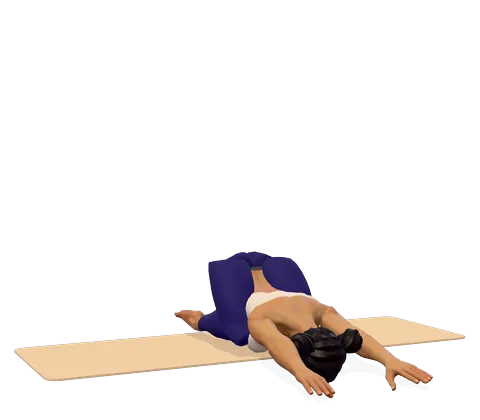 Child’s PoseBalasana
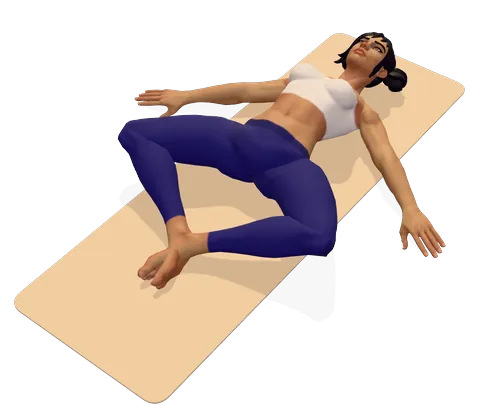 Reclining Bound Angle PoseSupta Baddha Konasana
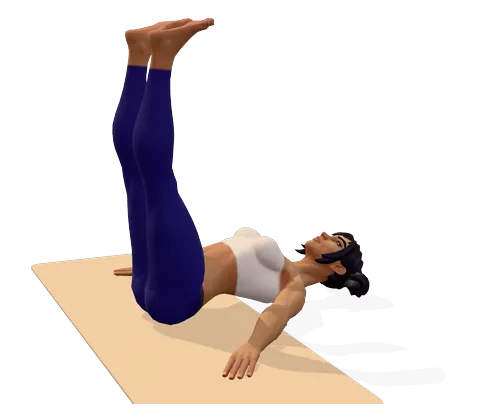 Legs-Up-the-Wall PoseViparita Karani
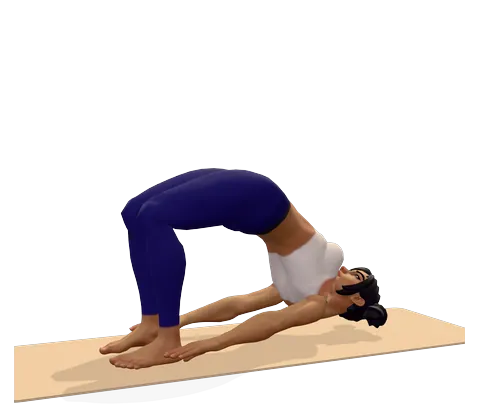 Bridge PoseSetu Bandhasana
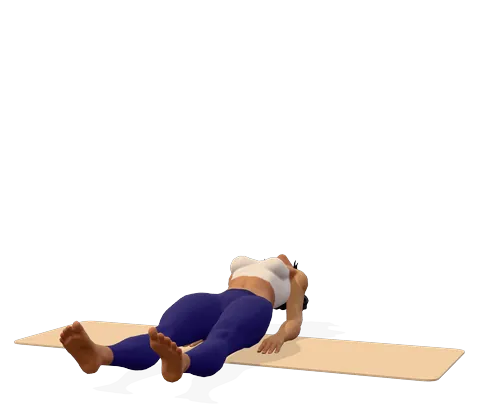 Fish PoseMatsyasana
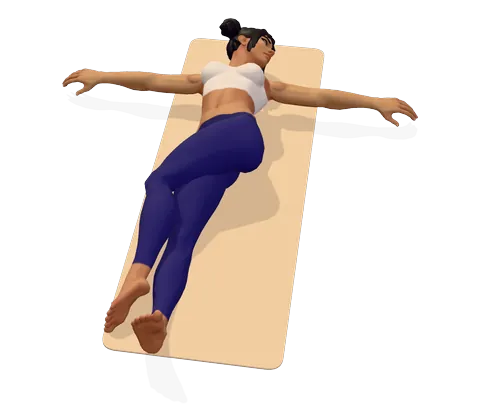 Supine Spinal TwistSupta Matsyendrasana
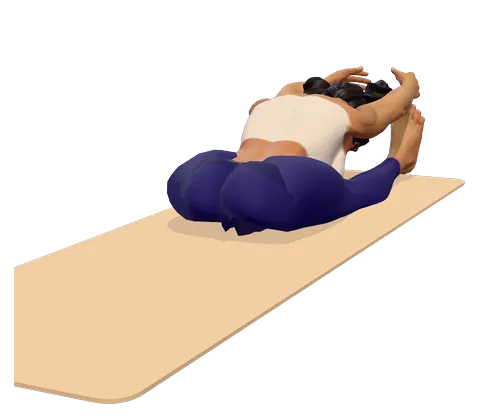 Seated Forward BendPaschimottanasana
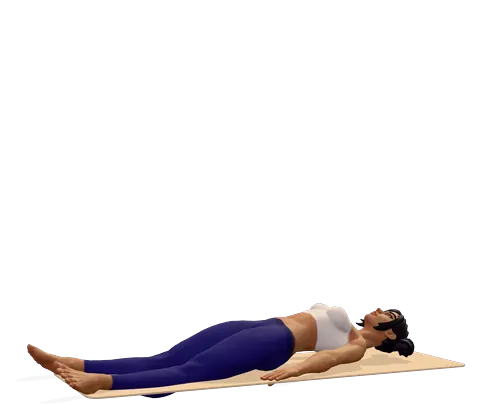 Corpse PoseSavasana
Frequently asked questions
What is restorative yoga good for?
Mainly stress, sleep, fatigue and recovery. Fully supported poses let your body relax while your breathing slows, which many people find calming.
How long do you hold restorative yoga poses?
Usually 5 to 20 minutes each. At home, 3 to 8 minutes per pose is plenty for a 30-minute session.
Is restorative yoga good for beginners?
Yes. It needs no strength or flexibility, only props arranged so you are completely comfortable.
What is the difference between restorative and yin yoga?
Yin puts a gentle stretch on connective tissue. Restorative supports the body so fully that it simply rests without stretching.
Can I do restorative yoga without props?
Yes. Use sofa cushions, pillows, folded blankets, books and a wall, or practise on your bed.
Is restorative yoga good for seniors?
Very. It is gentle on the joints, needs little getting up and down if you plan the order, and helps with sleep and stress.
What does restorative yoga mean in Hindi?
रेस्टोरेटिव योग यानी सहारे के साथ किया जाने वाला आराम देने वाला योग, जो तनाव और थकान कम करता है।