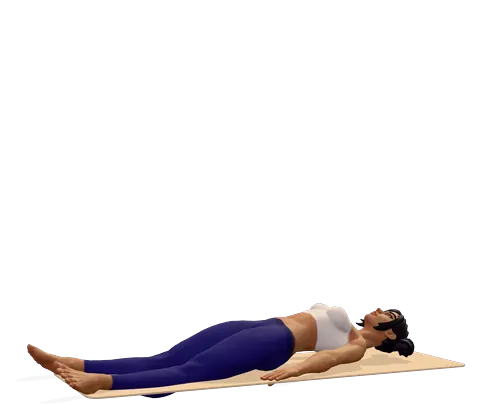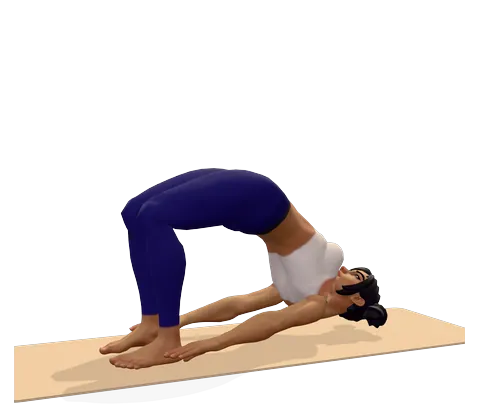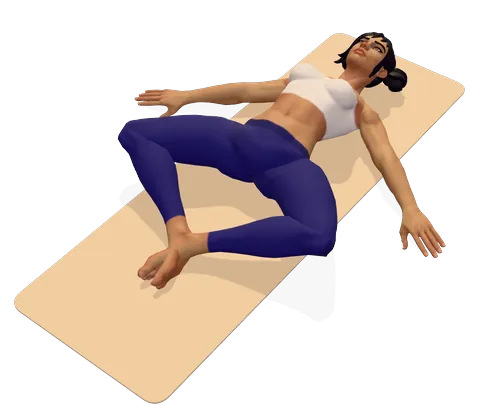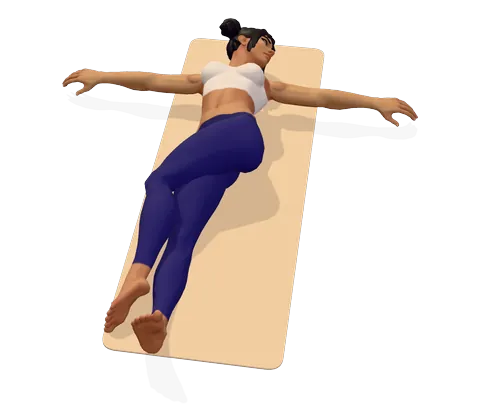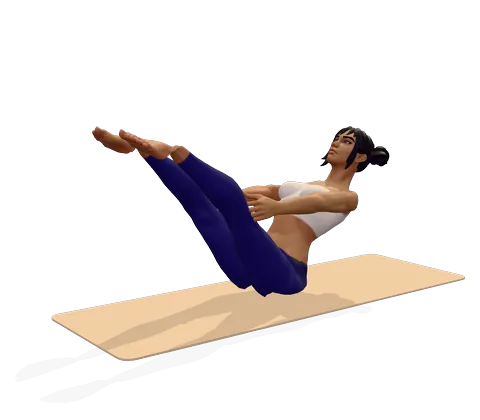
How to do Boat Pose step by step
- Sit on your mat with your knees bent and your feet flat on the floor. Hold the backs of your thighs lightly.
- Lengthen your spine and lift your chest. Lean back a little until you balance on your sitting bones, not your tailbone.
- Lift your feet off the floor, knees still bent, shins parallel to the floor. This is half boat.
- If your back stays long, slowly straighten your legs so your body forms a V shape. Keep the knees bent if your back starts to round.
- Let go of your legs and reach your arms forward at shoulder height, palms facing each other.
- Hold for 3–5 steady breaths (15–30 seconds), keeping the chest lifted and the breath smooth.
- Breathe out, bend your knees, lower your feet to the floor and sit upright to rest.
Where you feel Boat Pose: what it stretches and strengthens
Balance on your sitting bones and keep your chest lifted. In the 3D guide, turn on Body guide: areas that stretch glow green and areas that work glow saffron.
Stretches
- Hamstrings
Strengthens
- Abs
- Hip flexors
- Spine
Benefits and precautions
Benefits
- Strengthens the abdominal muscles, deep core and hip flexors
- Builds the back and trunk strength that supports good sitting posture
- Improves balance and body awareness on a small base of support
- Works the thighs and the muscles along the spine at the same time
- Part of many yoga routines for fitness, weight management and blood sugar control
Avoid or modify if
- Pregnancy — skip it and choose gentle core work approved by your doctor or midwife
- Lower back pain, a disc problem or a tailbone injury — stay in half boat with hands holding the thighs, or skip it
- Hernia, recent abdominal surgery, a C-section or abdominal separation (diastasis recti)
- High blood pressure or heart disease — keep the hold short and never hold your breath
- Neck strain — keep your chin level and your gaze forward
Boat pose (Navasana, also called Naukasana) is a core-strength balance: you sit, lean back and lift your legs so your body forms a V, like the hull of a small boat. It works the belly, hip flexors and back muscles together, and even a few breaths make your belly shake. This guide explains how to do boat pose correctly, how to protect your back, the muscles worked, easier and harder versions, and who should avoid it.
What is boat pose in yoga?
In Sanskrit, nava and nauka both mean "boat" and asana means "pose", so Navasana and Naukasana are two names for the same idea. The full version is called Paripurna Navasana, "complete boat pose". In Hindi the boat pose name is नौकासन (Naukasana).
Navasana and Naukasana: is there a difference?
In most modern classes the two names describe the seated V shape the 3D guide shows. In many Indian schools, however, Naukasana is taught from lying on the back: you lift the head, chest, arms and legs together and balance on the buttocks. The final shape is almost the same, so the benefits are similar. Choose the start that suits you.
How to do boat pose correctly
The steps above give you the full Navasana steps. These boat pose cues fix the most common mistakes:
- Spine long, chest proud. A long back matters more than straight legs. If your back rounds, bend your knees.
- Sit on the front of your sitting bones. Rolling onto the tailbone makes the lower back collapse and can bruise the coccyx. A folded blanket under the hips helps.
- Arms reach, shoulders soft. Reach forward through the fingers but keep the shoulders down away from the ears.
- Smooth breathing. If you are holding your breath, the pose is too hard for now.
- Legs together, toes spread. Squeeze the inner thighs lightly; it steadies the balance.
How long to hold boat pose
Beginners can hold boat pose for 3–5 breaths (about 15–30 seconds) and repeat it 3–5 times, resting between rounds. As you get stronger, work up to 45–60 seconds. Some shaking in the belly or thighs is normal. Stop if the shaking turns into strain in the back or neck.
How to do boat pose without hurting your back
Back pain in boat pose usually has two causes: a rounded lower back, or hip flexors doing all the work while the belly switches off. Fix it like this:
- Keep your knees bent (half boat) until you can hold a long spine for five breaths.
- Hold the backs of your thighs so your arms share the load.
- Draw the lower belly gently in and up before you lift your feet.
- If your back still aches, practise raised leg pose with bent knees first to build the core.
Boat pose benefits
The main boat pose yoga benefits are strength and control through the middle of the body:
- Core and abs. In boat pose your abs, the deep abdominal wall and the obliques all work to hold the trunk still, which makes it an efficient core exercise.
- Hip flexor strength. Useful for running, climbing stairs and lifting the legs in other poses.
- Posture. The back muscles work to keep your chest lifted, which carries over to sitting at a desk.
- Balance and focus. Balancing on a small base trains concentration.
Naukasana for weight loss and belly fat
Naukasana pose for weight loss works only as part of a regular routine. No exercise burns fat from the belly alone, but strong core poses help you build muscle and stay active. Boat pose appears in our yoga for weight loss and yoga for belly fat plans. It is also part of many yoga for diabetes routines. Studies suggest regular yoga may help blood sugar control, but keep taking your medicine and check your sugar if you practise on an empty stomach.
Boat pose benefits for female and male bodies
The benefits are the same for everyone: a stronger core and better balance. After pregnancy, however, wait for your doctor's or physiotherapist's approval before strong core work, especially if the belly muscles have separated.
Boat pose muscles worked
| Muscles used in boat pose | Their job |
|---|---|
| Rectus abdominis and transverse abdominis | Hold the trunk at an angle and protect the lower back |
| Iliopsoas and rectus femoris (hip flexors) | Lift and hold the legs |
| Erector spinae (back muscles) | Keep the spine long and the chest lifted |
| Quadriceps and inner thighs | Straighten the knees and keep the legs together |
Boat pose variations and modifications
- Half boat pose for beginners: knees bent, shins parallel to the floor, hands behind the thighs. Bend your knees in boat pose like this until your back stays long; it is where everyone should start.
- Low boat pose: from full boat, breathe out and lower your back and legs a few centimetres closer to the floor, hovering. Lift back up on the inhale. Very strong.
- Boat pose with straight legs (full Paripurna Navasana): legs straight, toes at eye level.
- Revolved boat pose: a slow twist with the hands together, turning the chest side to side. Skip this boat pose twist if you have a disc problem.
- Boat pose on a chair: sit near the front of a chair, hold the sides and lift one foot, then both. A gentle boat pose alternative in chair yoga.
- Reverse boat pose (Viparita Naukasana): the opposite of boat pose, lying on your front and lifting arms, chest and legs. It works the back instead of the belly.
Boat pose vs teaser and crunches
The Pilates teaser looks similar but is a moving exercise: you roll up from lying into the V and roll down again. Boat pose is held still. Compared with crunches and sit-ups, boat pose trains the core to hold steady rather than to curl, which many people find kinder to the neck.
Boat pose prep, sequence and counter pose
Good prep includes staff pose to find a long spine, and a few rounds of raised leg pose. A simple boat pose sequence: Dandasana, half boat, full boat 3–5 times, then a counter pose.
The best boat pose counter pose is a gentle backbend such as bridge pose, or lying flat and hugging your knees.
In kids yoga, boat pose is great fun: children like to "row the boat" with their arms and rock gently. Keep the holds short. You can find boat pose with voice guidance in the Core Strength session on our guided sessions page.
Boat pose contraindications and precautions
Naukasana pose precautions are listed in the caution box above. In short, skip boat pose during pregnancy, with a hernia, after abdominal surgery and during acute back pain. If you have scoliosis, work with a teacher or physiotherapist who can adjust the pose for your curve. Stop at once if you feel sharp pain in the back, tailbone or neck.
नौकासन (Naukasana) — हिंदी में: ज़मीन पर बैठें, घुटने मोड़ें और थोड़ा पीछे झुककर कूल्हों पर संतुलन बनाएँ। पैर ज़मीन से उठाएँ, हो सके तो सीधे करें, और हाथ ज़मीन के समानांतर आगे फैलाएँ, जिससे शरीर "V" आकार में आ जाए। 15–30 सेकंड रुकें, साँस चलती रहे। नौकासन के फायदे: पेट, कमर और जाँघों की मांसपेशियाँ मज़बूत होती हैं और संतुलन बेहतर होता है। गर्भावस्था, हर्निया या कमर दर्द में यह आसन न करें।
Health conditions this pose is used for
Yoga for diabetes · Yoga for weight loss · Yoga for belly fat · Yoga for fatty liver
Where this practice is used
Chakras: Manipura (Solar Plexus Chakra)
Frequently asked questions
What are the benefits of boat pose?
Boat pose strengthens the abdominal muscles, hip flexors and back, improves balance and supports good posture. It is a common core exercise in yoga routines for fitness and weight management.
How long should I hold boat pose?
Start with 3–5 breaths (15–30 seconds) and repeat 3–5 times. Work up to 45–60 seconds as your core gets stronger.
Why does boat pose hurt my back?
Usually because the lower back is rounding or the legs are too straight for your strength. Bend your knees, hold your thighs and keep the spine long. Stop if the pain continues.
What is the difference between Navasana and Naukasana?
Both names mean boat pose. Navasana is usually taught from sitting; in many Indian schools Naukasana starts from lying on the back. The final V shape is almost the same.
Does boat pose reduce belly fat?
It strengthens the belly muscles, but no single exercise burns fat from one spot. Regular activity, good sleep and a healthy diet reduce belly fat.
Can I do boat pose during pregnancy?
No. Skip boat pose and other strong core poses in pregnancy, and ask your doctor or midwife which gentle exercises suit you.
What is boat pose called in Hindi?
It is called नौकासन (Naukasana): "nauka" means boat and "asana" means pose. The Hindi box on this page sums up the steps and the main boat pose benefits in Hindi.
This page is for general education. Check with your doctor before starting yoga if you are pregnant, have a medical condition or an injury. Stop if you feel pain, dizziness or shortness of breath.