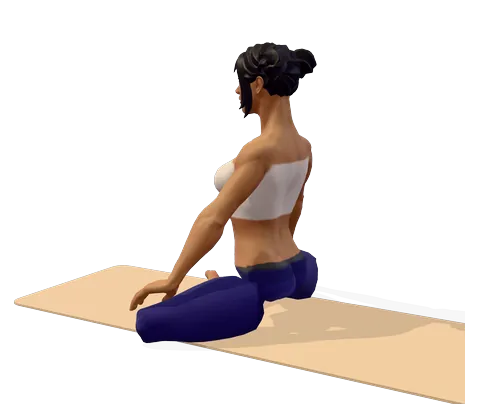
How to work with Muladhara: step by step
- Stand in Mountain pose for a minute and feel your weight spread through both feet.
- Move through Tree, Warrior II and a Garland squat, holding each for five slow breaths.
- Sit on a cushion with your spine tall, hands in Prithvi mudra, and breathe into the belly for two minutes.
- Bring your attention to the base of the spine and the pelvic floor, and picture a warm red light there.
- Chant LAM aloud slowly, one sound per out-breath, for about nine to twelve rounds.
- Chant it silently for a few more minutes while you feel the ground holding you.
- Finish with two minutes of stillness. Ten to fifteen minutes in total is enough.
When Muladhara feels balanced
- Feeling steady and at home in your body
- Patience and a sense of being supported
- Healthy routines around food, sleep and money
- Calm when plans change
Signs of imbalance (traditional view)
- Feeling ungrounded, restless or scattered
- Constant worry about security
- Holding on too tightly to routine or possessions
- Feeling heavy, stuck or slow to start
What Muladhara is about
Safety · Grounding · Stability · Belonging · Trust · The body and its basic needs
Traditional powers of Muladhara
- Traditional texts describe the meditator on Muladhara becoming learned and eloquent, a "lord of speech"
- Traditional texts describe freedom from disease and a joyful, steady heart
- In tantric teaching this is where kundalini is said to rest, so steadiness here is described as the foundation of all higher practice
These are descriptions from yogic and tantric texts, not proven effects. Use them as themes for reflection, not as promises.
The Muladhara chakra, better known in English as the root chakra, is the first of the seven chakras described in yoga and Tantra. It sits at the very base of the spine and is linked with the earth element, the colour red and the seed sound LAM. In practice, working with it is about feeling steady: in your body, in your daily routine and on the ground under your feet.
Below you will find the meaning of the name, how the root chakra fits into the wider chakra system, a realistic daily routine, beginner mistakes and what research does and does not say.
Muladhara chakra meaning: "root support"
What does Muladhara mean? The Sanskrit word joins mula, "root", and adhara, "support" or "base". So the muladhara chakra meaning in English is "the root support", the foundation on which the rest of the body and mind stand. You will also see it spelled Mooladhara chakra or Muladhar chakra; they are the same center.
To pronounce Muladhara, say moo-laa-DHAA-ra, with a soft, breathy "dh". If you are unsure, the guided voice player on this page says it for you.
In the classic tantric descriptions, the root chakra is one of the main points on sushumna, the central channel said to run along the spine. Everything the later chakras stand for is described as resting on this first center, which is why many teachers begin chakra work here.
Root chakra symbol and what each part means
The traditional root chakra symbol is a four-petalled lotus. Inside it is a yellow square, the sign of the earth element, and a downward-pointing triangle. The texts say that within this triangle kundalini lies coiled three and a half times around a self-born linga, "asleep" until awakened. Some images add an elephant with seven trunks, a symbol of strength, patience and steady weight.
- Four petals: each carries a Sanskrit syllable (va, sha, ssha, sa). They are often read as four basic directions of life energy.
- Square: stability, the four corners of the earth, a shape that does not roll away.
- Red colour: the modern muladhara chakra color, connected with warmth, blood and vitality. Older texts also describe the petals as crimson.
- Coiled serpent: potential that is resting, not missing. You can read more on our kundalini page.
Muladhara chakra location in the human body
Where is the Muladhara chakra located? Tradition places it at the base of the spine, at the perineum, the soft area of the pelvic floor between the anus and the genitals. Some schools give a slightly different muladhara chakra location in the female body: near the cervix, at the back of the pelvic floor. In the male body it is described at the perineum itself.
These are places for attention, not organs. No scan will show a chakra. What you can feel is the pelvic floor, the tailbone and the contact of your sitting bones with the floor. Resting your attention there is the practical way in. A gentle lift of the pelvic floor, called Mula Bandha, is also traditionally used to focus on this area; see our guide to bandhas before you try it.
LAM mantra: the root chakra beej mantra
The root chakra mantra is LAM, the bija or seed sound of the earth element. Say it like "lum", rhyming with "drum", and let the "mm" hum at the end. The LAM mantra meaning is not a word you translate; it is a sound used to hold attention on one place in the body.
How to chant LAM
- Sit tall on a cushion so your knees are a little lower than your hips.
- Breathe in through the nose into the belly.
- On the out-breath, chant LAM once, slowly, letting the hum fill the lower body.
- Repeat for nine, twelve or twenty-one rounds, then continue silently.
The lam mantra benefits people describe are practical ones: the long out-breath slows you down, the steady sound gives the mind something simple to hold, and many people report feeling calmer and more settled afterwards. You can pair the chant with Prithvi mudra, the earth gesture, which is the most common root chakra mudra. Bhumisparsha mudra, the earth-touching gesture of the Buddha, is another fitting choice.
How to balance the root chakra day to day
How to activate the Muladhara chakra is a common question, but in practice "activation" simply means regular, patient attention. Short daily practice works better than one long session a week.
| When | What to do | Time |
|---|---|---|
| Morning | Stand in Mountain pose, then a short root chakra yoga flow: Warrior II, Chair, Garland squat | 8–10 min |
| Midday | Take off your shoes and walk slowly, feeling each step; or one minute of belly breathing at your desk | 2–5 min |
| Evening | LAM chanting with Prithvi mudra, then a short root chakra meditation | 10–15 min |
| Bedtime | Child's pose and a body scan, or a root chakra sleep meditation lying down | 5–20 min |
Five or six days a week for three to four weeks is a fair trial. Keep a line in a notebook about sleep, mood and how steady you feel. For the bedtime part, the body scan meditation or Yoga Nidra fits well.
Grounding yoga poses for the root chakra
The best root chakra yoga poses are those that press the feet or sitting bones into the ground and ask for patience. Warrior II builds strong legs and a wide base. Garland squat brings attention right down to the pelvic floor. For a slower, root chakra yin yoga or restorative practice, hold Child's pose for three to five minutes with a cushion under the chest, and let the forehead rest heavily.
Root chakra affirmations
Affirmations are short sentences you repeat silently after the mantra, when the mind is quiet. Keep them simple and true for you: "I am safe in this moment." "My feet are on the ground." "I have what I need for today." Repeating one on each out-breath is a gentle, everyday way to heal the root chakra, rather than hoping for a sudden change.
Beginner mistakes to avoid
- Chasing sensations. Heat, tingling or pulsing may come and go. They are not proof of progress, and their absence is not failure.
- Skipping the body. A root chakra meditation for beginners works best after a few minutes of standing poses, not straight from a busy screen.
- Straining the pelvic floor. A light, easy awareness is enough. Clenching hard for long periods can create tension, not steadiness.
- Buying before practising. Root chakra crystals, oils and "396 Hz" tracks are modern additions. Enjoy them if they help you focus, but they are not required and none has been shown to change a chakra.
- Using the practice instead of help. If insecurity comes from real problems, such as debt, housing or ongoing anxiety, practical and professional support comes first. Yoga can sit beside it; see yoga for anxiety.
What research says (and does not say)
There is no scientific evidence that chakras exist as physical structures, and no study measures a "blocked" or "open" root chakra. The root chakra frequency of 396 Hz, root chakra healing foods such as red and root vegetables, and colour-matched crystals are recent ideas, not part of the original texts, and they have not been tested in any meaningful way.
What the practices themselves do is better understood. Slow belly breathing, like diaphragmatic breathing, is widely used to help the body shift toward a calmer state. Reviews of yoga and meditation programmes suggest they can reduce stress and anxiety symptoms for many people, and chanting with a long out-breath naturally slows breathing. So the Muladhara chakra benefits you notice, such as calmer evenings and steadier sleep, are real, even though the chakra is best understood as a map for attention rather than an anatomical fact.
Muladhara chakra activation symptoms described online, such as heat in the legs or strong emotion, are part of tradition and personal reports. Pelvic pain, numbness or bladder and bowel changes are medical symptoms, not chakra signs: please see a doctor.
मूलाधार चक्र (Muladhara chakra) — हिंदी में मूलाधार चक्र रीढ़ के सबसे निचले हिस्से में माना जाता है। इसका तत्व पृथ्वी, रंग लाल और बीज मंत्र "लं" है। मूलाधार चक्र कैसे जागृत करें: रोज़ ताड़ासन, वीरभद्रासन और मालासन करें, फिर पृथ्वी मुद्रा में बैठकर धीरे-धीरे "लं" का जाप करें। इससे मन को स्थिरता और सुरक्षा का अनुभव हो सकता है। यह परंपरागत मान्यता है, चिकित्सा उपचार नहीं।
How the root chakra connects to the other chakras
Tradition describes the chakras as a ladder. Muladhara gives stability; the next center, the Svadhisthana (sacral) chakra, adds movement, feeling and creativity. Some people link Muladhara with sexual energy, but most texts give that theme to Svadhisthana and treat the root as the store of raw vitality. A person described as "Muladhara chakra dominant" is someone practical, loyal and security-minded, which is a character sketch, not a diagnosis. For a full sequence through all seven centers, use the chakra meditation, or sit with the meditation timer for silent LAM practice.
Yoga poses for the root chakra
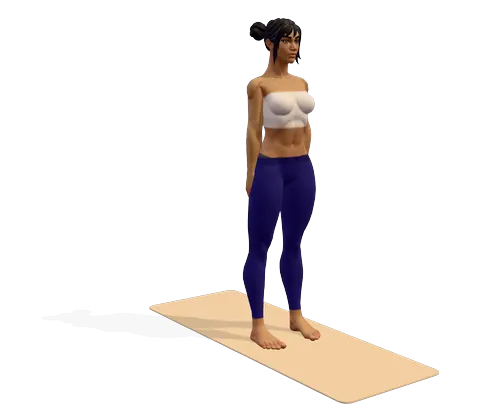 Mountain PoseTadasana
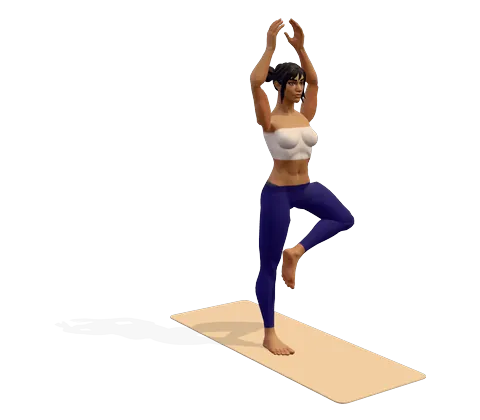 Tree PoseVrikshasana
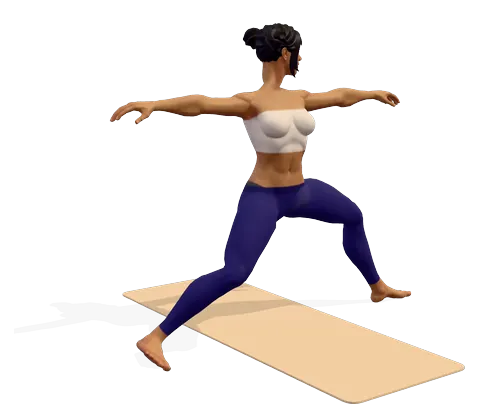 Warrior II PoseVirabhadrasana II
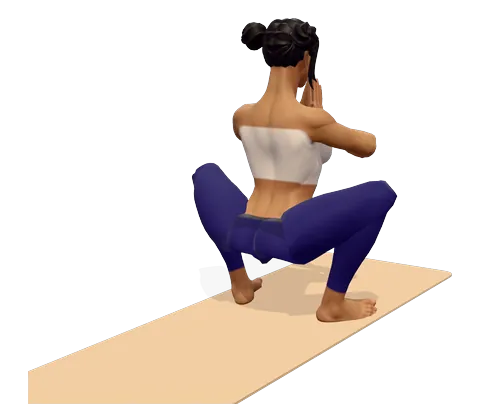 Garland PoseMalasana
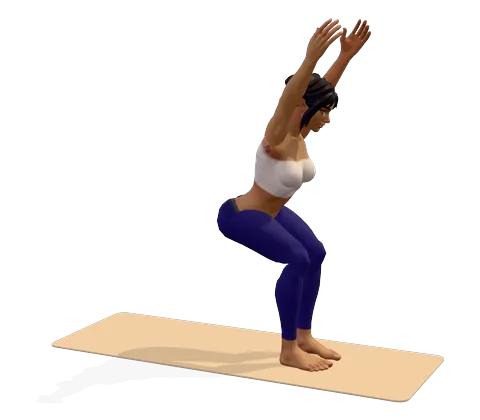 Chair PoseUtkatasana
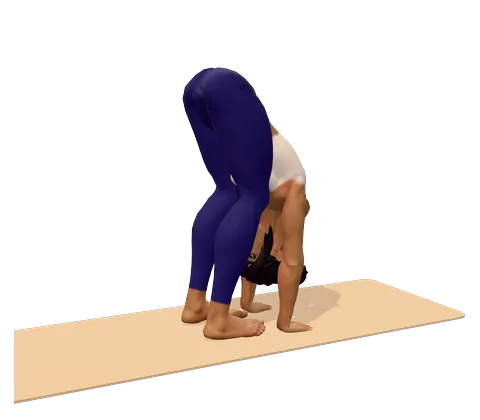 Standing Forward BendUttanasana
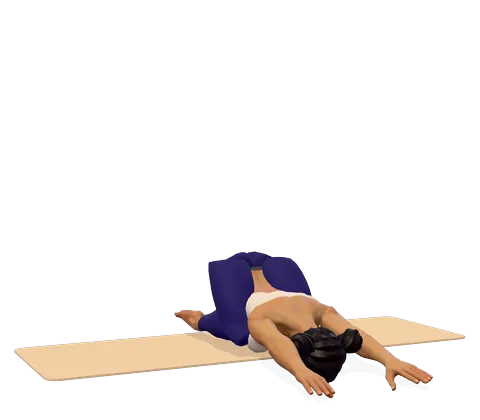 Child’s PoseBalasana
Frequently asked questions
What is the Muladhara chakra in simple words?
The Muladhara chakra, or root chakra, is the first of the seven chakras in yoga tradition. It is described at the base of the spine and is linked with the earth element, the colour red and the mantra LAM. Its themes are safety, grounding and stability.
Where is the Muladhara chakra located?
At the base of the spine, at the perineum or pelvic floor. Some schools place it near the cervix in the female body and at the perineum in the male body. It is a point of attention in tradition, not an organ you can see on a scan.
How do I activate or open the Muladhara chakra?
Practise little and often: grounding standing poses, slow belly breathing, Prithvi mudra and slow LAM chanting for ten to fifteen minutes most days. Tradition speaks of activation; in everyday terms, you are building steadiness through regular attention to the lower body.
Which mantra is used for the root chakra?
LAM is the root chakra beej mantra. Chant it slowly, one sound per out-breath, pronounced like "lum" with a long hum at the end. After several rounds aloud, continue repeating it silently.
What are the signs of a blocked root chakra?
In the traditional view, feeling restless, scattered, constantly worried about security or heavy and stuck are described as signs of imbalance. These are also common human feelings with many causes, so if they are strong or lasting, talk to a doctor or counsellor as well.
Do root chakra crystals and 396 Hz music work?
There is no good evidence that crystals or particular sound frequencies change the root chakra. Some people find them a pleasant focus for meditation. The core practices, breath, posture and mantra, are free and are what the tradition actually teaches.
How long does root chakra healing take?
There is no fixed timeline. Many people notice feeling calmer and more settled within a few weeks of short daily practice. Treat it as an ongoing habit, like exercise, rather than a one-time fix.
Muladhara chakra kaise jagrit kare?
Rozana subah grounding yoga poses (Tadasana, Warrior II, Malasana) karein, phir Prithvi mudra mein baith kar dheere dheere LAM mantra ka jaap karein aur dhyan reedh ki haddi ke neeche ke hisse par rakhein. Dus se pandrah minute kaafi hain.
Chakras, kundalini and the traditional powers linked to them come from yogic and tantric tradition. They are not anatomical structures and these descriptions are not medical claims. Meditation and gentle yoga are generally safe, but intense breathing, long breath holds or very long sittings can cause dizziness, anxiety or distress, and may not suit people with heart disease, high blood pressure, epilepsy, pregnancy or a history of psychosis, bipolar disorder or trauma. Keep any prescribed treatment, practise gently and stop if you feel unwell. See our medical disclaimer.