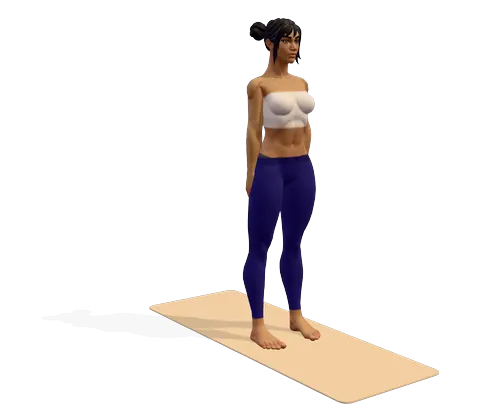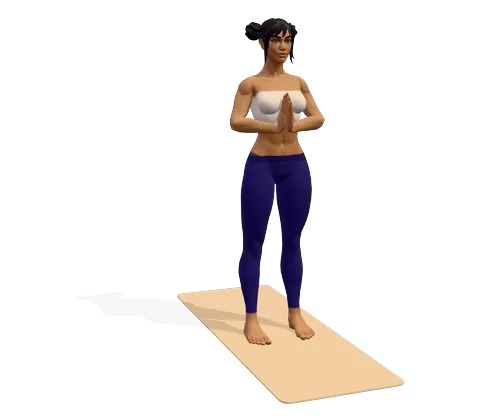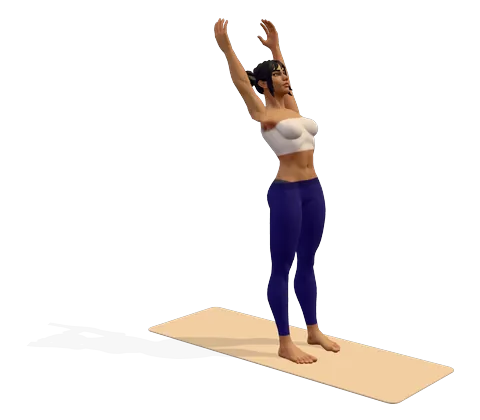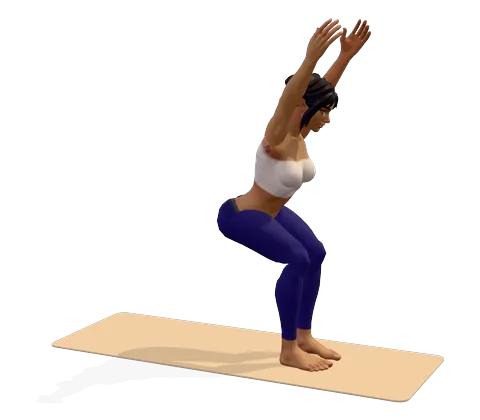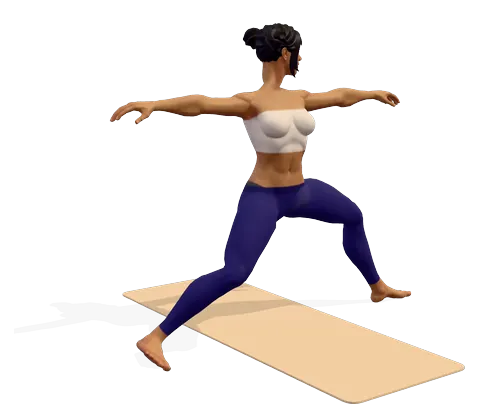
How to do Warrior II Pose step by step
- Stand facing the long side of your mat. Step your feet wide apart, about one leg-length, with your arms stretched out to the sides.
- Turn your left foot out 90 degrees so the toes point to the front of the mat. Turn your right toes in slightly. Line up your left heel with the arch of your right foot.
- Breathe out and bend your left knee until it is over your left ankle, knee pointing toward your little-toe side. Keep the right leg straight and strong.
- Keep your hips and chest open to the long side of the mat, your spine upright and your shoulders directly over your hips.
- Stretch your arms out at shoulder height, palms down, and turn your head to look past your left middle finger.
- Hold for 5 breaths (about 30 seconds), pressing the outer edge of the back foot into the mat.
- To come out, breathe in, straighten your left leg, turn your feet to face forward and repeat on the other side.
Where you feel Warrior II Pose: what it stretches and strengthens
Sink into the front knee and reach strongly through both arms. In the 3D guide, turn on Body guide: areas that stretch glow green and areas that work glow saffron.
Stretches
- Inner thighs
- Chest
Strengthens
- Front thighs
- Shoulders
- Glutes
Benefits and precautions
Benefits
- Strengthens the thighs, buttocks and the muscles around the knees and ankles
- Stretches the inner thighs, groin and the front of the chest
- Builds endurance in the shoulders and arms
- Trains a stable, upright posture on a wide base
- Improves steadiness and focus through a fixed gaze
- Warms the body and raises the heart rate gently, especially in flowing practice
Avoid or modify if
- Knee pain or knee osteoarthritis — bend the front knee less and keep it over the ankle; stop if pain increases
- Hip or groin injury — shorten the stance and keep the bend shallow
- Neck pain — look straight ahead instead of over the front hand
- Shoulder injury — rest your hands on your hips
- Balance problems, Parkinson’s or dizziness — practise with a chair or wall within reach
Warrior II pose (Virabhadrasana II) is a wide standing lunge with the hips and chest open to the side, the arms stretched out in one long line and the gaze fixed over the front hand. It looks simple, and it is one of the first poses beginners learn, yet holding it well builds real strength and stamina in the legs. This guide explains what Warrior 2 is, how to set it up step by step, the alignment details teachers look for, its benefits and muscles, easier versions and who should be careful.
What is Warrior 2 pose in yoga?
What is a warrior pose? The warrior poses are a family of standing lunges named after Virabhadra, a fierce warrior in Hindu mythology created by Shiva. The warrior II pose Sanskrit name, Virabhadrasana II, joins vira ("hero"), bhadra ("auspicious") and asana ("pose"). What does Warrior 2 pose look like? From the front: a wide stance, one knee bent, arms parallel to the floor and the head turned toward the front hand — like an archer who has spotted the target.
Virabhadrasana II meaning and the Warrior 2 spiritual meaning
In modern retellings, Warrior I shows Virabhadra rising from the earth and Warrior II shows him fixing his eyes on his opponent. That is why the Warrior 2 pose spiritual meaning is often described as calm, focused strength: steady legs, open heart and a clear, unwavering gaze (drishti) over the middle finger.
How to do Warrior 2 pose step by step
The steps above show how to get into Warrior 2 pose. These Virabhadrasana II alignment tips and Warrior 2 muscle action cues refine it, especially for beginners:
Warrior 2 feet position
Line up the front heel with the arch of the back foot (heel-to-heel is fine for beginners). The front toes point straight ahead; the back toes turn in about 5–15 degrees. Press the outer edge of the back foot down — this lifts the back arch and protects the back knee.
Warrior 2 pose knee and hip alignment
- Front knee over the ankle. Aim it toward the little-toe side of the foot. The most common mistake is the knee falling in toward the big toe, which strains the inside of the knee.
- Deep enough, not too deep. Ideally the front thigh moves toward parallel with the floor. If the knee travels past the ankle, widen your stance.
- Warrior 2 hip position. Keep both hips level and facing the long side of the mat. The back hip tends to swing forward; draw it back without forcing.
- Stack the torso. Shoulders over hips. Many people lean toward the front leg — move your chest back toward the centre.
Arms, gaze and breathing
Reach out through both fingertips as if someone were gently pulling your hands apart, while your shoulders stay soft and away from your ears. For Virabhadrasana II breathing techniques, keep a slow, even breath through the nose; some practitioners use Ujjayi breath to stay steady in longer holds.
Warrior 2 pose benefits
What is Warrior 2 pose good for? The main benefits of Virabhadrasana 2 are leg strength, hip mobility and endurance. The front leg works against gravity, the back leg holds the base and the arms hold their own weight, so Warrior II warms the whole body in under a minute.
- Knees: strengthening the thigh and hip muscles is a core part of exercise for knee osteoarthritis, and Warrior II is included in our yoga for knee pain plan with a shallower bend. Keep to a pain-free range and follow your physiotherapist's advice.
- Balance and steadiness: standing poses like this one are part of yoga programmes studied for balance, including yoga for Parkinson's; use a chair for support.
- Energy and mood: strong, open standing poses feature in our low blood pressure and yoga for depression plans. Yoga can support treatment for low mood but does not replace it.
Warrior 2 muscles worked: what muscles does warrior pose work?
| Muscles used (strengthened) | Muscles stretched |
|---|---|
| Quadriceps and glutes of the front leg | Inner thighs (adductors) and groin |
| Hamstrings and calves of the back leg | Hip flexors of the back leg |
| Deltoids and upper back, holding the arms | Chest and front of the shoulders |
Warrior 2 pose for beginners: modifications and variations
- Shorter stance and less bend: the simplest way to protect the knees.
- Warrior 2 pose with chair: sit on the edge of a chair with the front thigh supported and the back leg stretched out — useful for seniors and anyone with balance problems.
- Warrior 2 knee down: rest the back knee on a blanket to learn the arm and chest position without leg fatigue.
- Warrior 2 arm variations: hands on hips, hands at heart, or arms in "cactus" (elbows bent) to rest the shoulders.
Warrior 2 pose in pregnancy is usually comfortable with a shorter stance and a wall nearby for balance, and it is part of our Gentle Prenatal Flow — follow your midwife or doctor's advice. Warrior 2 pose for kids works well as a "surfer" or "archer" game, and a Warrior 2 partner pose — two people back to back or palm to palm — adds fun and balance.
Warrior 1 vs Warrior 2 pose, and Warrior 2 vs 3
In Warrior 1 the hips and chest face the front of the mat and the arms go overhead; in Warrior 2 they open to the side and the arms stretch out at shoulder height. Warrior 1 stretches the back hip flexors more, while Warrior 2 opens the inner thighs. Warrior II vs III: Warrior III is a one-legged balance with the body horizontal, so it demands far more balance and core strength.
Warrior 2 sequence, transitions and counter pose
Warrior 2 prep poses include mountain pose, a wide-legged stance with arms out, and gentle hip openers. It links naturally to other side-facing poses on the same leg:
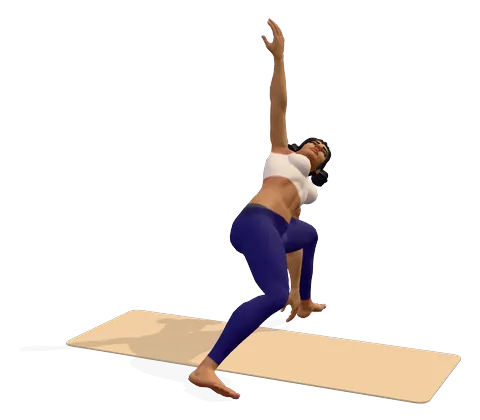
- Reverse Warrior II pose: keep the legs, flip the front palm up and lean back.
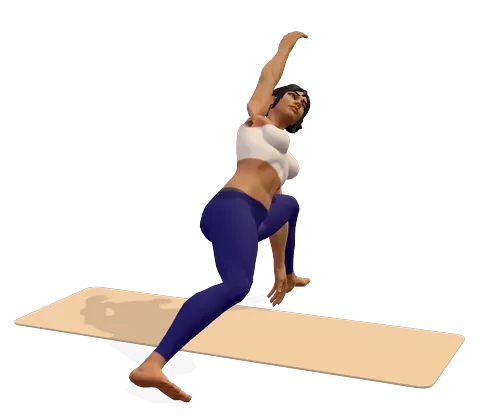
- Extended side angle: lower the front forearm to the thigh.
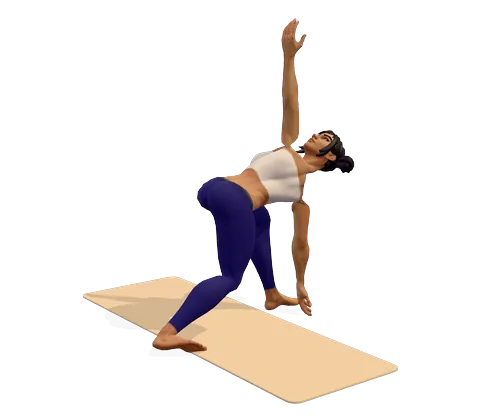
- Warrior 2 to triangle pose: straighten the front leg and reach forward and down into triangle pose. Warrior II and triangle pose share the same foot position.
- Warrior 2 to downward dog: windmill both hands to the floor, step back and lift the hips.
A simple Warrior 2 flow sequence: Warrior II, reverse warrior, extended side angle, then switch sides. A good Warrior 2 counter pose is a wide-legged forward fold or standing forward bend to release the legs.
Is Warrior II a peak pose? Not usually — it is a foundational pose that builds heat for harder poses. In a beginners' class, though, a Warrior 2 peak pose sequence can build up to holding it for a full minute with good alignment.
वीरभद्रासन 2 (Warrior II) — हिंदी में: पैरों को लगभग एक पैर की लंबाई जितना फैलाएँ। बायाँ पंजा बाहर की ओर घुमाएँ और बायाँ घुटना टखने के ऊपर मोड़ें, दायाँ पैर सीधा रखें। दोनों हाथ कंधों की ऊँचाई पर फैलाएँ और बाएँ हाथ की ओर देखें। 30 सेकंड रुकें, फिर दूसरी तरफ़ करें। वीरभद्रासन 2 के फायदे: पैरों और कूल्हों में ताकत, जाँघों के अंदर की मांसपेशियों में खिंचाव, बेहतर संतुलन और ध्यान। घुटने में दर्द हो तो कम मोड़ें।
Health conditions this pose is used for
Yoga for knee pain and osteoarthritis · Yoga for hip replacement recovery · Yoga for osteoporosis and bone health · Yoga for flat feet · Yoga for balance and fall prevention · Yoga for weight loss · Yoga for low blood pressure · Yoga for high cholesterol · Yoga for healthy weight gain · Yoga for pregnancy (prenatal yoga) · Yoga for depression · Yoga for parkinson’s disease · Yoga for adhd and attention · Yoga for ptsd and trauma · Yoga for social anxiety · Yoga for self-confidence · Yoga for hernia (safe movement) · Yoga for glaucoma (safe yoga) · Yoga for cold hands and feet (circulation)
Where this practice is used
Chakras: Muladhara (Root Chakra)
Frequently asked questions
What are the benefits of Warrior 2 pose?
Warrior 2 strengthens the legs, buttocks and shoulders, stretches the inner thighs and chest, and builds stamina, balance and focus.
Where should my front knee be in Warrior 2?
Directly over your front ankle, pointing toward the little-toe side of your foot. If it moves past the ankle, lengthen your stance; if it drops inward, press the knee gently outward.
How long should I hold Warrior 2?
Beginners can hold it for 3–5 breaths (20–30 seconds) per side and build up to a minute as their legs get stronger.
What does Warrior 2 pose stretch?
It stretches the inner thighs, the groin, the hip flexors of the back leg and the chest and front shoulders.
What are the Virabhadrasana 2 contraindications?
Virabhadrasana 2 precautions: take care with knee, hip or groin injuries, and look forward instead of to the side if you have neck pain. With shoulder problems keep your hands on your hips; with balance problems keep a chair nearby.
Why do my legs shake in Warrior 2?
Shaking is normal when the thigh muscles are working hard. Shorten the stance or hold for fewer breaths, and it will settle as you get stronger.
What is Virabhadrasana 2 in Hindi?
It is वीरभद्रासन 2. The Hindi box above explains the steps and the Warrior 2 pose benefits in Hindi.
This page is for general education. Check with your doctor before starting yoga if you are pregnant, have a medical condition or an injury. Stop if you feel pain, dizziness or shortness of breath.