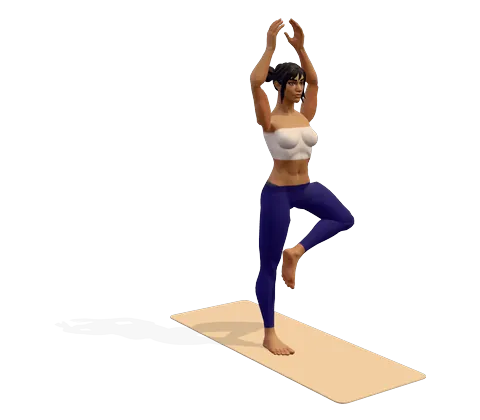
How to do Tree Pose step by step
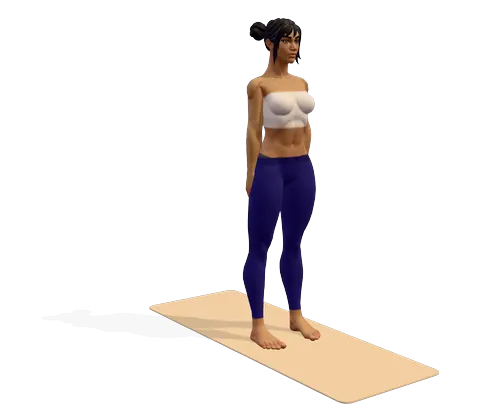
- Stand in Mountain Pose with your feet together. Pick a still point on the floor or wall about two metres ahead and keep your eyes on it.
- Shift your weight onto your right foot. Spread the toes and feel the whole sole press into the floor.
- Bend your left knee and turn it out to the side. Use your hand to place the left sole on your inner right thigh, or on the inner calf — never on the knee.
- Press the foot and the standing leg into each other. Level your hips and let your tailbone point down.
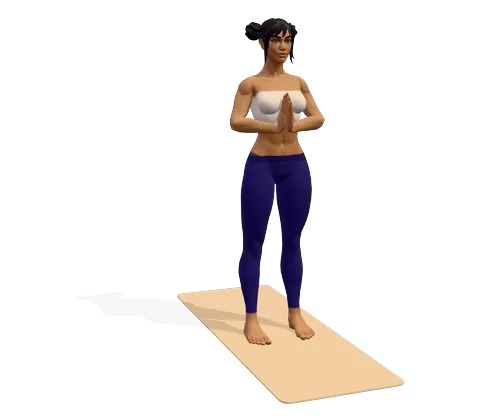
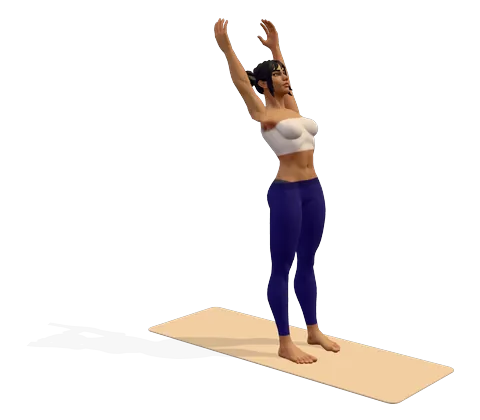
- Bring your palms together at your chest. When you feel steady, raise the joined hands overhead with the arms beside your ears.
- Breathe slowly and hold for 20–30 seconds (3–6 breaths). A small sway is normal; keep correcting through the standing foot.
- Lower your arms, release the left foot to the floor and stand in Mountain Pose for a breath. Repeat on the other side.
Where you feel Tree Pose: what it stretches and strengthens
Press foot and thigh into each other and stand tall on one leg. In the 3D guide, turn on Body guide: areas that stretch glow green and areas that work glow saffron.
Stretches
- Inner thighs
Strengthens
- Ankles
- Calves
- Glutes
Benefits and precautions
Benefits
- Improves standing balance and steadiness on one leg
- Strengthens the feet, ankles, calves and thigh of the standing leg
- Opens the hip and stretches the inner thigh of the bent leg
- Trains concentration, because the pose wobbles when attention drifts
- Encourages an upright posture with a long spine
- A useful balance exercise for older adults, practised near a wall
- Calm and playful enough for kids and students
Avoid or modify if
- Vertigo, poor balance, low blood pressure or a history of falls — practise with a hand on a wall or chair
- Knee injury — never press the foot into the side of the knee; keep it on the calf or ankle
- Ankle sprain or foot pain on the standing side — wait until you can stand on that foot comfortably
- High blood pressure or heart disease — keep the hands at the chest rather than overhead
- Hip replacement or groin pain — turn the bent knee out only as far as is comfortable
- Pregnancy — practise next to a wall, as your balance changes as the baby grows
Tree pose (Vrikshasana) is a standing balance in which you stand on one leg, rest the other foot on the inner thigh and reach the joined palms up like the branches of a tree. It is one of the first balancing poses most people learn, and one of the most useful: it strengthens the standing leg, opens the hip and shows you, very honestly, how steady your mind is that day. This page explains what Vrikshasana is, how to do it step by step, its benefits, easier and harder versions, and the few precautions to know.
What is Vrikshasana?
Vriksha means "tree" and asana means "pose", so the Vrikshasana meaning is simply "tree pose". You will also see it spelled Vrksasana or Vriksasana; they are the same pose, just different ways of writing the Sanskrit. Vrikshasana in Hindi is वृक्षासन. The standing leg is the trunk and roots, the arms are the branches, and like a real tree you are allowed to sway a little in the wind.
It is described in classical Hatha texts and is taught in almost every yoga style today, from school programmes in India to Vinyasa classes worldwide.
How to do Vrikshasana step by step (Vrikshasana kaise kare)
The steps above show the left side first, as the 3D guide does. These tree pose cues make it steadier:
- Look at one still point. Your eyes do a lot of balancing work. A point on the floor a couple of metres ahead is easier than one at eye level.
- Root the standing foot. Press through the big-toe mound, the little-toe mound and the heel. Keep the toes long rather than gripping.
- Foot above or below the knee. The foot can rest high on the inner thigh or low on the inner calf, but not on the knee joint, which is not built to be pushed sideways.
- Press both ways. Push the foot into the leg and the leg back into the foot. This squeeze stops the foot from sliding down.
- Level hips. Do not let the standing hip jut out to the side; draw it in under you.
- Arms last. Keep the hands at the chest until the legs are steady. Raise them only if you can do so without losing balance.
How long to do Vrikshasana? Start with 3 breaths per side and build to 30–60 seconds. Doing each side two or three times is more useful than one long, shaky hold.
Tree pose benefits
What is tree pose good for? Above all, balance. Standing on one leg makes the small muscles of the foot, ankle and hip work constantly, and practising that regularly helps you feel steadier when walking on uneven ground. Vrikshasana benefits for balance are why it is part of our yoga for Parkinson’s plan, always with a wall or chair for support.
It also demands attention. You cannot plan dinner and stay balanced at the same time, so tree pose works as a short concentration exercise. That is why it appears in our plan for memory and concentration and why teachers like it for students before study.
Tree pose is part of the wider yoga routines studied for type 2 diabetes and heart health. The benefit there comes from regular practice as a whole, alongside medicine, diet and activity, not from this one pose.
Flexibility and posture
The bent leg gets a gentle stretch of the inner thigh and groin, and turning the knee out opens the hip. Reaching the arms up lengthens the sides of the body and encourages an upright spine, much like Mountain Pose, where tree pose begins.
Tree pose muscles used
| Standing leg (strengthens) | Bent leg and upper body |
|---|---|
| Small muscles of the foot and ankle | Inner thigh and groin (stretch) |
| Calf muscles | Outer hip rotators, which turn the knee out |
| Quadriceps and hamstrings | Shoulders and upper back, holding the arms up |
| Gluteus medius, which keeps the hips level | Deep core, which keeps the trunk steady |
Tree pose for beginners: easy variations
- Kickstand tree: heel on the inner ankle, toes on the floor. This is the easiest version and still trains balance.
- Foot on the calf: the middle step between kickstand and full tree.
- Tree pose at the wall: stand side-on with one hand on the wall. Take the hand away for a few seconds at a time.
- Tree pose lying down: lie on your back and place the foot on the inner thigh. You get the hip opening without the balance, which suits anyone who cannot stand safely.
- Hands at the chest: keep the palms joined in front of the heart instead of overhead.
Harder tree pose variations
Once you are steady for 30 seconds, try tree pose with arms spread wide like branches, or close your eyes for a few breaths, which removes the visual help and is much harder. Another option is to slowly look up at your hands. Try each only near a wall.
Tree pose for kids
Children love tree pose. Let them choose what kind of tree they are, sway their "branches" in the wind and then grow still. The benefits of tree pose for kids are balance, body awareness and a moment of quiet focus. It is a favourite in our yoga for kids guide.
Tree pose vs mountain pose (Vrikshasana vs Tadasana)
Mountain pose is standing on two feet; tree pose is the same alignment on one. Master a steady Tadasana first, then add Vrikshasana. The next step up is Warrior III, a harder one-legged balance. A simple sequence: mountain, tree on each side, a standing forward bend, then rest. You can follow this with the voice guide in the Balance and Focus session on our guided sessions page.
Vrikshasana precautions and tree pose contraindications
Is tree pose difficult? It is easy to learn and hard to perfect, and safe for most people with the right support. The main risk is falling, so anyone with vertigo, poor balance or low blood pressure should practise beside a wall or chair. With a knee problem, keep the foot on the calf or ankle. If you have high blood pressure, keep the hands at the chest. Good tree pose prep poses and warm up: Mountain Pose, ankle circles and a few calf raises.
वृक्षासन (Vrikshasana) — हिंदी में: सीधे खड़े हों और वज़न दाएँ पैर पर ले जाएँ। बाएँ पैर का तलवा दाईं जाँघ के अंदर की ओर रखें (घुटने पर नहीं) और सामने किसी एक बिंदु पर नज़र टिकाएँ। हथेलियाँ जोड़कर हाथ ऊपर उठाएँ और 20–30 सेकंड रुकें, फिर दूसरी तरफ़ करें। वृक्षासन के फायदे (Vrikshasana ke fayde): संतुलन और एकाग्रता बढ़ती है, पैर और टखने मज़बूत होते हैं और कूल्हे खुलते हैं। चक्कर आते हों तो दीवार का सहारा लें।
Health conditions this pose is used for
Yoga for scoliosis · Yoga for osteoporosis and bone health · Yoga for flat feet · Yoga for height and posture · Yoga for balance and fall prevention · Yoga for diabetes · Yoga for memory and concentration · Yoga for exam stress · Yoga for parkinson’s disease · Yoga for adhd and attention · Yoga for autism (children) · Yoga for social anxiety · Yoga for self-confidence · Yoga for memory in older adults · Yoga for heart health · Yoga for hernia (safe movement) · Yoga for glaucoma (safe yoga) · Yoga for motion sickness · Yoga for recovery after surgery
Where this practice is used
Chakras: Muladhara (Root Chakra)
Frequently asked questions
What is Vrikshasana and its benefits?
Vrikshasana (tree pose) is a standing balance on one leg with the other foot on the inner thigh. It improves balance and concentration, strengthens the standing leg and ankle, opens the hip and encourages good posture.
How long should I hold tree pose?
Start with 3 breaths on each side and build up to 30–60 seconds. Two or three shorter holds per side are better than one long, shaky one.
Can I put my foot on my knee in tree pose?
No. Place the foot above the knee on the inner thigh or below it on the calf. Pressing into the side of the knee can strain the joint.
Why do I wobble so much in tree pose?
Some wobble is normal; it is your balance system working. Fix your gaze on a still point, press the foot and thigh together, and keep the hands at your chest until you feel steadier.
Is tree pose good for seniors?
Yes, with support. Stand next to a wall or a sturdy chair, start with the kickstand version and keep holds short. Balance practice like this is often recommended for older adults.
What is the difference between Vrikshasana and Vrksasana?
None. They are two spellings of the same Sanskrit word for tree pose.
Is tree pose safe in pregnancy?
Many people practise it through pregnancy, but balance changes as the bump grows, so always stand next to a wall. Ask your midwife or doctor if you have any pregnancy complications.
This page is for general education. Check with your doctor before starting yoga if you are pregnant, have a medical condition or an injury. Stop if you feel pain, dizziness or shortness of breath.