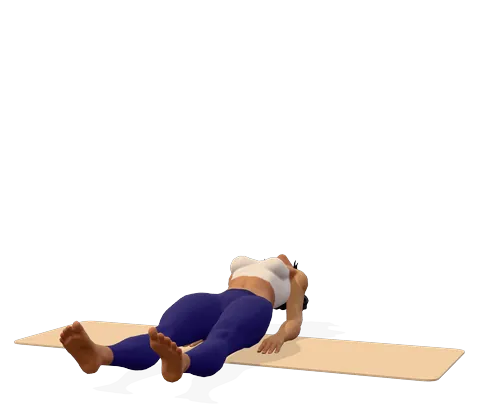
How to do Fish Pose step by step
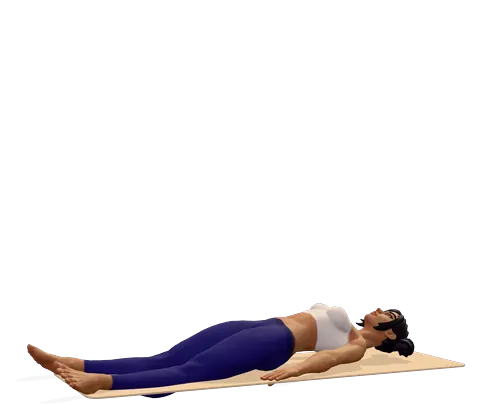
- Lie on your back with your legs straight and together, arms by your sides, palms down.
- Lift your hips slightly and slide your hands, palms down, under your buttocks. Bring your elbows in close to your body.
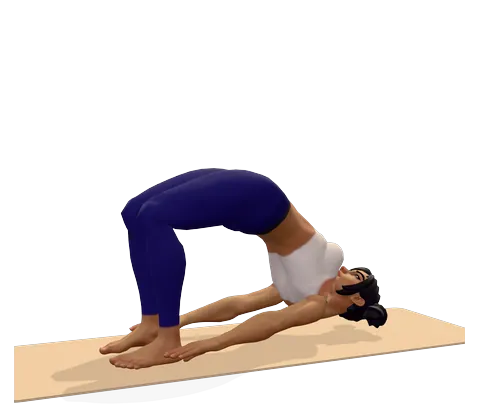
- Press your forearms and elbows firmly into the mat. Breathe in and lift your chest toward the ceiling, arching your upper back.
- Let your head tilt back slowly until the crown rests lightly on the mat. Keep most of your weight in your forearms, not your head.
- Keep your legs active and your toes pointing up. Breathe slowly into your chest.
- Hold for 3–5 breaths (15–30 seconds). If your neck feels any strain, lift your head back up or use a block under it.
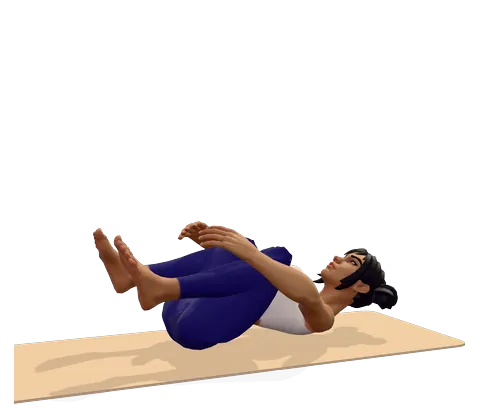
- To come out, press into your elbows, lift your head, tuck your chin and lower your back to the mat. Hug your knees to your chest for a few breaths.
Where you feel Fish Pose: what it stretches and strengthens
Press your forearms down and lift your chest high. In the 3D guide, turn on Body guide: areas that stretch glow green and areas that work glow saffron.
Stretches
- Chest
- Neck
- Abs
Strengthens
- Upper back
Benefits and precautions
Benefits
- Stretches the chest, the front of the shoulders and the front of the neck
- Strengthens the muscles of the upper back and the back of the neck
- Counters rounded shoulders from desk and phone use
- Opens the rib cage, so deep breathing feels easier
- The supported version is a restful, calming chest opener
- Traditionally practised after shoulder stand to balance the neck
Avoid or modify if
- Neck injury, cervical spondylosis or dizziness when you tilt your head back — keep the head lifted or use a block
- High or low blood pressure and migraine — do the supported version with the head raised, or skip it
- Recent back, neck or abdominal surgery
- Pregnancy — ask your doctor or midwife; skip the full arch and do not lie flat on your back for long after the first trimester
- Stop if you feel pinching in the lower back or tingling in the arms
Fish pose (Matsyasana) is a backbend you do lying on your back: you prop yourself on your forearms, lift your chest high and let your head rest lightly on the floor. It opens the whole front of the body, from the throat to the belly, and is the classic follow-up to shoulder stand. Below: how to do fish pose safely, what it is good for, the muscles involved, the supported version and who should choose an easier option.
What is fish pose in yoga?
Fish pose is a supine (face-up) chest opener. The Sanskrit word matsya means "fish" and asana means "pose", so the fish pose Sanskrit name simply describes the shape. In Hindi it is मत्स्यासन. What is the meaning of matsya in Matsyasana beyond the literal fish? In Indian mythology Matsya is the fish form of the god Vishnu, who saved the world from a great flood. Old Hatha texts also say that in the lotus-leg version you could float in water like a fish.
Is fish pose a backbend? Yes. Most of the bend happens in the upper and middle back, not the lower back, which is why it feels so different from cobra or bow. The version shown by the 3D guide, with straight legs, is often taught in Indian schools as saral matsyasana (simple fish), the usual starting point for beginners.
How to do fish pose step by step
The steps above give you the full Matsyasana procedure. These alignment points make the difference between a pose that opens your chest and one that squeezes your neck:
- Arms do the lifting. Your forearms and elbows are the base. Press them down as if you wanted to slide your chest forward and up.
- The head is a guest, not a pillar. Only the crown touches the mat, with almost no weight. You should be able to lift your head at any moment.
- Arch the upper back. Think "shoulder blades into the back ribs". If the arch is mainly in your lower back, lower your chest a little.
- Active legs. Firm thighs and flexed or pointed toes stop you sliding and spread the effort.
- Breathe into the chest. Let the ribs expand sideways. Slow Ujjayi breathing works well here.
How long to do fish pose
Hold the active pose for 3–5 breaths, about 15–30 seconds, then rest. A supported fish pose can be held much longer, from 2 to 5 minutes, because the props carry your weight. In yin yoga, fish pose with a bolster is often held for 3–5 minutes with eyes closed.
Fish pose benefits
The main benefits of Matsyasana come from reversing the forward hunch many of us live in. By lifting the breastbone and drawing the shoulder blades together, it stretches the chest and front shoulders and works the upper back muscles that hold good posture.
Breathing and chest opening
Because the rib cage opens wide, fish pose often appears in yoga programmes for asthma and in routines that focus on deeper breathing. It does not replace your inhaler or medicine, but many people find breathing feels fuller after a chest opener.
Thyroid, throat and the fish pose chakra
Traditional teachers say Matsyasana stimulates the thyroid because it stretches the front of the neck. There is no good research showing that one pose changes thyroid hormone levels, so treat it as a gentle stretch that fits into a yoga for thyroid routine alongside your prescribed treatment. In yoga philosophy, the fish pose spiritual meaning is linked to the throat and heart chakras.
Fish pose benefits for face and skin
Claims that fish pose improves the skin or tones the face have not been shown in any study. Enjoy the stretch along the throat and jaw, but treat it as a posture exercise, not a beauty treatment.
Fish pose anatomy: muscles stretched and strengthened
| Stretches | Strengthens |
|---|---|
| Chest (pectorals) and front of the shoulders | Upper back muscles (erector spinae, rhomboids) |
| Front of the neck and throat | Back of the neck (when the head is held up) |
| Muscles between the ribs and the abdomen | Triceps and shoulders, which press the forearms down |
| Hip flexors (more in the lotus-leg version) | Thighs, which stay firm to anchor the legs |
Supported fish pose with blocks, a bolster or a blanket
A yoga supported fish pose is the best version for beginners and for anyone with a sensitive neck. You lie back over props so the chest opens without effort.
- Fish pose with blocks: place one block on its middle height under your shoulder blades, and a second block one level higher under the back of your head, so the head is supported, not hanging. Lie back slowly and let your arms rest open.
- Fish pose with a bolster: lay a bolster lengthwise along your spine, from the lower back to the head. This is the common restorative supported fish pose.
- Matsyasana with a blanket: roll a blanket firmly and place it across your back just below the shoulder blades. At home, a firm pillow on the bed can do the same job, though a firm surface gives better support than a soft mattress.
The benefits of supported fish pose are mostly calming: slower breathing, a soft chest opening and rest for tired shoulders, which suits the end of the day or a guided bedtime session.
Fish pose variations and modifications
- Head lifted: keep the chest up but hold the head in line with the spine. Some teachers call this half fish pose. It is the safest fish pose alternative when your neck is stiff.
- Bent knees: feet flat on the floor takes pressure off the lower back.
- Lotus fish (fish pose advanced): the classic version with the legs in lotus, hands holding the feet. Only if lotus is comfortable for your knees.
- Kneeling version: Matsyasana and supta vajrasana are often confused. Supta vajrasana starts from kneeling and lies back over the heels, much like reclining hero pose. It stretches the thighs far more.
Flapping fish pose (Matsya Kridasana) is a different posture: a side-lying relaxation pose used for rest and sleep, not a backbend.
Fish pose and shoulder stand: a classic sequence
In most Hatha classes, Matsyasana comes straight after shoulder stand and plow. Those poses bend the neck strongly forward; the fish bends it gently back and opens the folded chest.
A simple fish pose sequence at home: bridge pose to warm the back, then the fish, then a counter pose. The best counter pose to fish pose is hugging both knees to the chest, as in wind-relieving pose.
Fish pose benefits and precautions: who should avoid it
Matsyasana contraindications centre on the neck and blood pressure. If you have neck pain, a neck injury or cervical spondylosis, do not put weight on your head; use the supported version with the head on a block. People with uncontrolled high or low blood pressure or migraine should keep the head higher than the heart. If you feel dizzy, sick or a pinching pain, come out slowly and rest. When in doubt, ask your doctor or physiotherapist.
Children enjoy fish pose in kids yoga games; keep the head light and the hold short.
मत्स्यासन (Matsyasana) — हिंदी में: पीठ के बल लेटें, हथेलियाँ कूल्हों के नीचे रखें। कोहनियों पर ज़ोर देकर छाती ऊपर उठाएँ और सिर का ऊपरी हिस्सा हल्के से ज़मीन पर टिकाएँ — वज़न कोहनियों पर रहे, सिर पर नहीं। 15–30 सेकंड रुकें और धीरे से वापस आएँ। मत्स्यासन के फायदे: छाती और कंधे खुलते हैं, पीठ का ऊपरी हिस्सा मज़बूत होता है और साँस गहरी लगती है। गर्दन में दर्द या चोट हो तो सिर के नीचे ब्लॉक रखें या यह आसन न करें।
Health conditions this pose is used for
Yoga for thyroid · Yoga for hormonal balance · Yoga for asthma · Yoga for snoring and sleep apnea · Yoga for cold and cough · Yoga for sinusitis and allergies · Yoga for immunity · Yoga for glowing skin and acne
Where this practice is used
Chakras: Anahata (Heart Chakra) · Vishuddha (Throat Chakra)
Frequently asked questions
What is fish pose good for?
Fish pose stretches the chest, front shoulders and neck, strengthens the upper back and helps counter rounded shoulders. Many people also find that breathing feels deeper afterwards.
How do you do supported fish pose for beginners?
Place a block on its middle height under your shoulder blades and another, one level higher, under your head. Lie back, let your arms rest open and breathe slowly for 2–5 minutes.
How long should I hold fish pose?
Hold the active version for 15–30 seconds (3–5 breaths). The supported version can be held for 2–5 minutes.
Is fish pose safe for the neck?
Only if almost no weight rests on your head. Keep the weight in your forearms, and if you have neck pain or an injury, keep the head lifted or supported on a block.
Why is fish pose done after shoulder stand?
Shoulder stand bends the neck forward and folds the chest. Fish pose bends the neck gently back and opens the chest, so it balances the effect.
Fish pose se kya hota hai?
Fish pose (मत्स्यासन) chhati aur kandhon ko kholta hai, peeth ke upar ke hisse ko mazboot karta hai aur saans gehri karne mein madad karta hai.
This page is for general education. Check with your doctor before starting yoga if you are pregnant, have a medical condition or an injury. Stop if you feel pain, dizziness or shortness of breath.