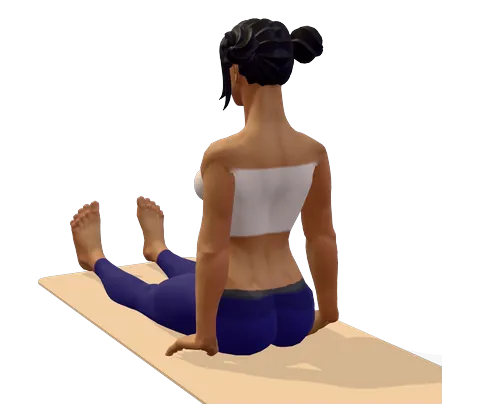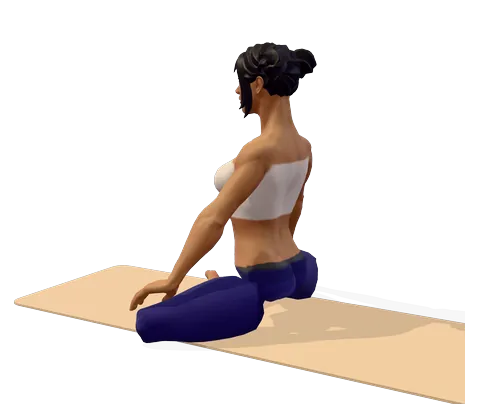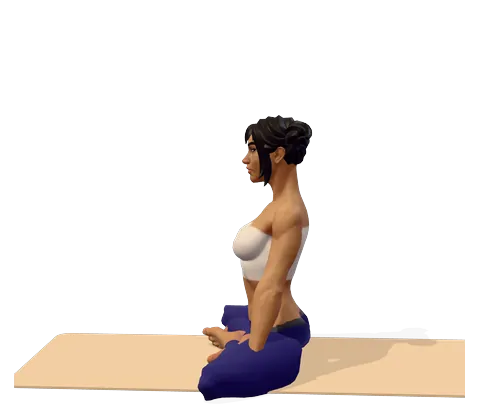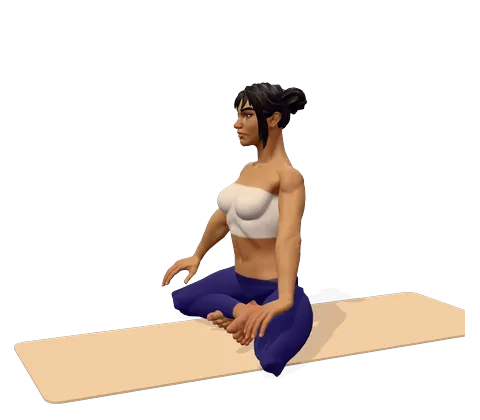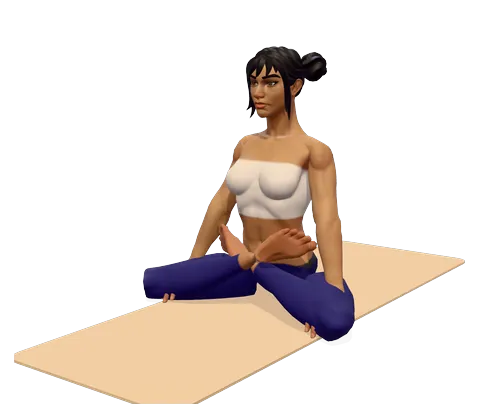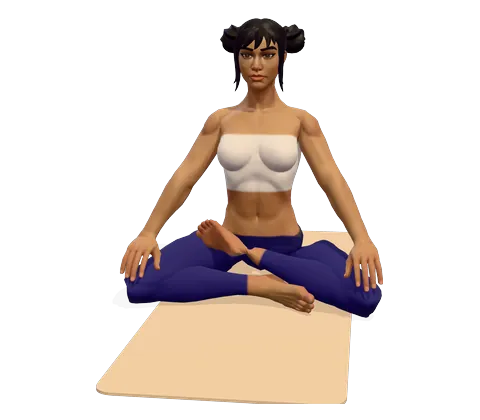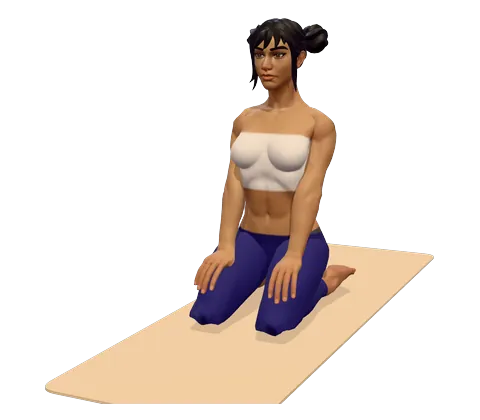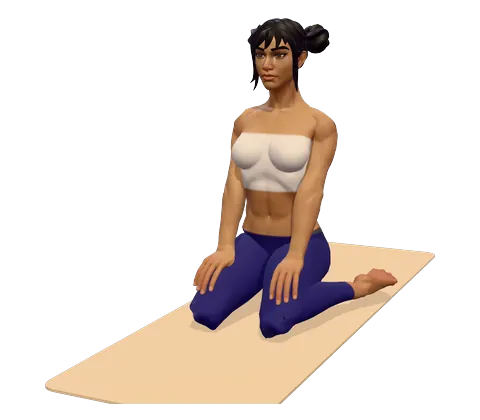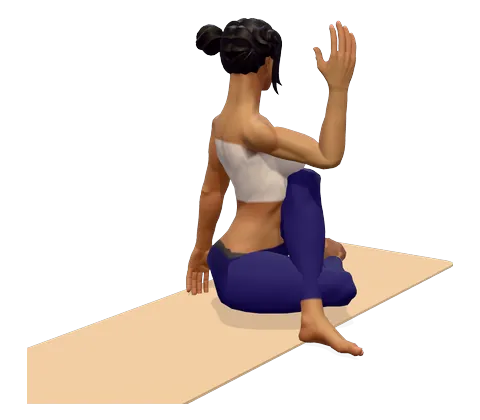
How to do Half Lord of the Fishes Pose step by step
- Sit with both legs straight in front of you. If your lower back rounds, sit on a folded blanket.
- Bend your right knee and fold the right leg on the floor so the right heel rests near your left hip. Beginners can keep the right leg straight instead.
- Bend your left knee, cross the left foot over the right thigh and place it flat on the floor outside your right knee.
- Place your left hand on the floor behind you, close to your back. Breathe in and sit tall.
- Breathe out and turn to the left, starting from the belly, then the ribs, then the shoulders. Hook your right elbow outside your left knee with the forearm pointing up, or simply hug the knee.
- Look over your left shoulder only as far as your neck is comfortable. Hold for 3–6 breaths (about 30 seconds): lengthen as you breathe in, turn a little more as you breathe out.
- Breathe in, unwind slowly to face forward, straighten the legs and repeat on the other side.
Where you feel Half Lord of the Fishes Pose: what it stretches and strengthens
Sit tall and twist from your belly, not your neck. In the 3D guide, turn on Body guide: areas that stretch glow green and areas that work glow saffron.
Stretches
- Side waist
- Glutes
- Upper back
Strengthens
- Spine
Benefits and precautions
Benefits
- Rotates the whole spine and keeps the small muscles of the back mobile
- Stretches the outer hip and buttock of the top leg (gluteus medius and piriformis)
- Opens the chest and shoulders as you sit tall and turn
- Gently squeezes and releases the abdomen; traditionally used to support digestion and in yoga routines for constipation
- Included in classical yoga programmes for diabetes and for breathing, alongside other poses and lifestyle changes
- Counters the stiffness of sitting for hours in one position
Avoid or modify if
- Pregnancy — no deep closed twists; use a gentle open twist that turns away from the raised knee, or skip it
- Disc herniation, sciatica or acute back pain — twist very little with a tall spine, and ask your physiotherapist first
- Osteoporosis — avoid forceful or deep twisting, especially with a rounded back
- Recent abdominal, hernia or spinal surgery — avoid until your doctor says it is safe
- Knee or hip problems — keep the bottom leg straight and sit on a blanket
- Stop if you feel sharp or pinching back pain, or pain spreading down a leg
Half lord of the fishes pose (Ardha Matsyendrasana) is the best-known seated spinal twist in yoga. You sit with one leg folded, cross the other foot over it, and turn your trunk toward the raised knee. It takes the spine through a movement we rarely make in daily life, stretches the outer hip and is a staple of Hatha yoga classes and of yoga programmes in India. Here is how to do it well, what it may help with, and when to be careful.
Ardha Matsyendrasana meaning and story
The name breaks into four parts: ardha means half, matsya fish, indra lord or king, and asana pose. Matsyendra, "lord of the fishes", was Matsyendranath, a yogi of the Nath tradition often regarded as one of the founders of Hatha yoga and the teacher of Gorakshanath (remembered in Gorakshasana). One legend says he was a fish who overheard Shiva teaching yoga to Parvati and was transformed into a man.
The full Matsyendrasana places the bottom foot in half lotus against the belly — an advanced pose. The "half" version is the one most people practise, so the Ardha Matsyendrasana English name is half lord of the fishes pose, also called half spinal twist or simply seated spinal twist. Ardha Matsyendrasana in Hindi is अर्ध मत्स्येन्द्रासन, with the same meaning; the pronunciation is roughly "AR-dha mat-syen-DRAH-sah-nah".
How to do seated spinal twist step by step (Ardha Matsyendrasana kaise kare)
The Ardha Matsyendrasana steps above show the procedure. These points make the twist safe and effective:
- Length first, turn second. Every inhale lifts the spine; every exhale turns it. A slumped twist squeezes the discs and achieves little.
- Turn from the belly. The rotation starts low and travels up. The head turns last and least.
- Do not crank with the arm. The elbow against the knee is a guide, not a lever. Forcing it can strain the lower back or the sacroiliac joint.
- Keep both sitting bones down. If one lifts, sit on a blanket or straighten the bottom leg.
- Soft face, easy breath. If the breath gets short, you have turned too far.
How long to hold the twist
Hold for 20–40 seconds (3–6 breaths) on each side. Twist on an empty or light stomach — unlike Vajrasana, which is traditionally the one pose to sit in after a meal.
Half lord of the fishes pose benefits
The clearest seated spinal twist benefits are mechanical: rotation for the whole spine, a stretch for the outer hip of the top leg, and an open chest as you sit tall. Many people simply feel their back is less stiff afterwards.
Digestion, constipation and diabetes
Yoga tradition says twisting "wrings out" the abdominal organs. There is no good evidence for that image, but the gentle squeeze and release of the belly, together with slow breathing, can feel helpful, and the pose is part of our yoga for digestion and yoga for constipation plans. You will often read about Ardha Matsyendrasana benefits for diabetes. The pose is included in yoga programmes that studies have linked with better blood sugar control, but no study shows this one pose does it alone. Treat it as one part of a regular practice in our yoga for diabetes plan, and keep taking your prescribed medicine.
Is Ardha Matsyendrasana good for back pain?
For general stiffness, gentle twisting often feels good. Our yoga for back pain plan uses softer twists first, such as the lying-down version. With a disc herniation, sciatica or a flare-up, twist very little or skip it, and follow your physiotherapist's advice.
Seated spinal twist muscles worked
The Ardha Matsyendrasana muscles used most are the obliques, which create the turn, and the back muscles, which hold you upright.
| Stretches | Works |
|---|---|
| Obliques and the small rotator muscles of the spine | Obliques on the opposite side, which create the turn |
| Gluteus medius, piriformis and outer thigh of the top leg | Erector spinae, which keep the spine upright |
| Chest and front of the shoulders | Muscles between the shoulder blades |
Half lord of the fishes pose for beginners: modifications and variations
These Ardha Matsyendrasana modifications and variations suit beginners, stiff hips and sore knees:
- Bottom leg straight: half lord of the fishes pose with the leg outstretched is the easiest version, kind to knees and hips.
- Hug the knee: wrap the arm around the raised knee instead of hooking the elbow outside it.
- Sit higher: a folded blanket keeps the lower back from rounding.
- Seated spinal twist in a chair: sit sideways or facing forward on a chair, feet flat, hold the back or side of the chair and turn. It is a good option in chair yoga and at a desk.
- With a bind (advanced): thread the front arm under the raised knee and clasp the back hand behind you.
Ardha Matsyendrasana vs Vakrasana, Marichyasana and other twists
- Vakrasana (twisted pose) is the simpler seated spinal twist used as preparation: the bottom leg stays straight and the hands support you. Ardha Matsyendrasana and Vakrasana are not the same, but they are often taught one after the other.
- Marichyasana C also keeps the bottom leg straight, with the bent-knee foot beside the same-side sitting bone.
- Supine spinal twist is done lying on your back; supine spinal twist benefits are similar, but it is gentler because the floor supports you.
- Fish pose (Matsyasana) is not a twist at all but a backbend; only the "fish" in the name is shared.
Ardha Matsyendrasana precautions and contraindications
Read the caution box above before you start. In short: no deep twists in pregnancy, after recent surgery, or during an acute disc or back problem; be gentle with osteoporosis; and never force the turn with your arm. If the knee of the folded leg complains, straighten that leg.
Ardha Matsyendrasana preparatory poses and sequence
Warm up with cat–cow and a lying twist, then open the hips with cow face pose. After the seated twist on both sides, a forward fold or child's pose settles the back. The same procedure appears in Indian school physical-education courses, including Class 12, and you can practise it with the voice guide in our guided sessions.
अर्ध मत्स्येन्द्रासन कैसे करें (Ardha Matsyendrasana in Hindi): दोनों पैर सामने फैलाकर बैठें। दायाँ पैर मोड़कर एड़ी बाएँ कूल्हे के पास रखें, फिर बायाँ पैर दाएँ घुटने के बाहर ज़मीन पर रखें। बायाँ हाथ पीछे रखें, दाईं कोहनी बाएँ घुटने के बाहर लगाएँ और साँस छोड़ते हुए बाईं ओर मुड़ें। 20–40 सेकंड रुकें, फिर दूसरी तरफ़ करें। अर्ध मत्स्येन्द्रासन के फायदे (Ardha Matsyendrasana ke fayde): रीढ़ लचीली रहती है, कूल्हे खुलते हैं और पाचन में मदद मिल सकती है। गर्भावस्था, हर्निया या स्लिप डिस्क में यह आसन न करें।
Health conditions this pose is used for
Yoga for diabetes · Yoga for high cholesterol · Yoga for fatty liver · Yoga for asthma · Yoga for digestion · Yoga for constipation
Where this practice is used
Chakras: Manipura (Solar Plexus Chakra)
Frequently asked questions
What are the benefits of Ardha Matsyendrasana?
It rotates and mobilises the spine, stretches the outer hips and opens the chest. It is traditionally used to support digestion and is part of yoga routines for constipation and diabetes, alongside other poses, diet and any prescribed treatment.
How long should I hold half lord of the fishes pose?
About 20–40 seconds, or 3–6 slow breaths, on each side. Always do both sides.
Is the seated spinal twist good for lower back pain?
For everyday stiffness a gentle twist often helps. With a disc problem, sciatica or a flare-up, twist very little or skip it and ask a physiotherapist.
What is the difference between Matsyendrasana and Ardha Matsyendrasana?
In the full Matsyendrasana the bottom foot sits in half lotus against the belly, which needs very open hips and knees. Ardha (half) Matsyendrasana folds the bottom leg on the floor instead.
Are Ardha Matsyendrasana and Vakrasana the same?
No. Vakrasana is an easier twist with the bottom leg straight and the hands supporting you. It is a good preparation for Ardha Matsyendrasana.
Who should not do Ardha Matsyendrasana?
Avoid it in pregnancy, after abdominal or spinal surgery, with a hernia, and during an acute disc or back problem. With osteoporosis, twist gently and ask your doctor.
Can I do a seated spinal twist in a chair?
Yes. Sit tall with your feet flat, hold the side or back of the chair and turn from the belly. It is a good option at a desk or if sitting on the floor is hard.
This page is for general education. Check with your doctor before starting yoga if you are pregnant, have a medical condition or an injury. Stop if you feel pain, dizziness or shortness of breath.