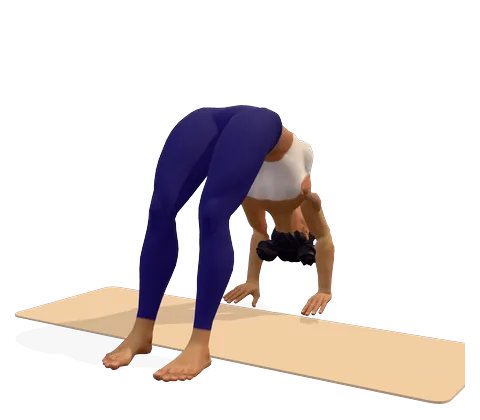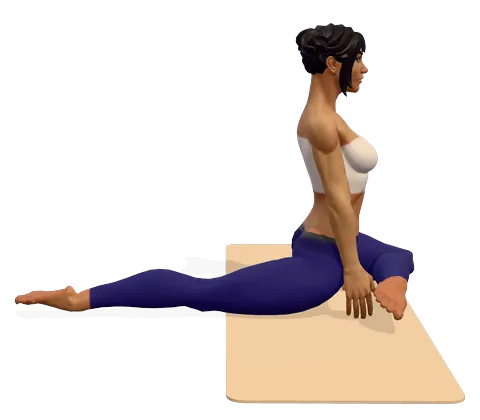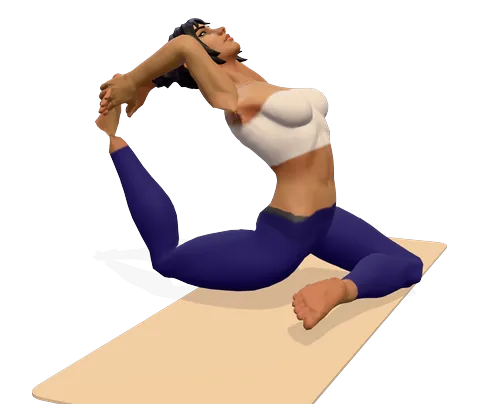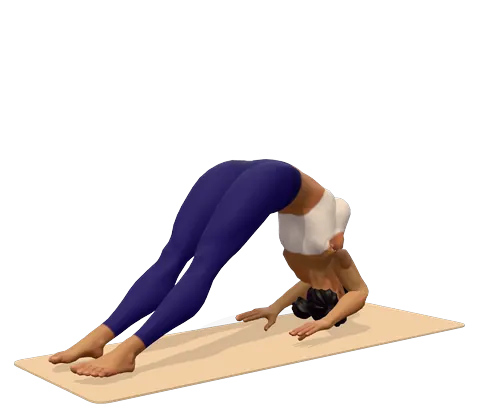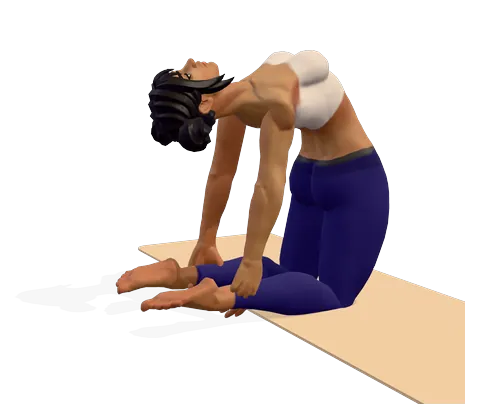
How to do Camel Pose step by step
- Kneel on your mat with your knees hip-width apart and your thighs vertical. Rest the tops of your feet on the floor, or tuck your toes to lift your heels.
- Place your hands on your lower back, fingers pointing down, and gently press your hips forward.
- Breathe in and lift your chest up toward the ceiling, drawing your shoulder blades together and your elbows toward each other.
- If your back feels good, lean back further and reach one hand, then the other, to your heels. Keep your hips over your knees.
- Lift through the breastbone. Let your head move back gently only if your neck feels comfortable; otherwise keep your chin slightly tucked.
- Hold for 3–5 breaths (15–30 seconds), breathing into the front of your chest.
- To come up, bring your hands back to your lower back, tuck your chin, and lift your chest back to kneeling, leading with your heart and not your head. Rest in child's pose.
Where you feel Camel Pose: what it stretches and strengthens
Push your hips forward and lift your chest up. In the 3D guide, turn on Body guide: areas that stretch glow green and areas that work glow saffron.
Stretches
- Hip flexors
- Chest
- Abs
Strengthens
- Glutes
- Lower back
Benefits and precautions
Benefits
- Stretches the chest, shoulders, abdomen, hip flexors and the front of the thighs
- Strengthens the back muscles and the buttocks
- Counters slouching and a forward head posture from sitting at screens
- Opens the rib cage so deep breathing feels easier
- Many people find chest-opening poses energising and mood-lifting
- Prepares the body for deeper backbends such as bow and wheel
Avoid or modify if
- Back injury, disc problems, spondylolisthesis or spinal stenosis — do not practise the full pose
- Neck injury or dizziness when you tilt your head back — keep the chin tucked
- High or low blood pressure, heart disease or migraine — use the hands-on-hips version or skip it
- Pregnancy — skip deep backbends; ask your doctor or midwife about gentle alternatives
- Knee pain — put a folded blanket under your knees, and skip it if kneeling hurts
- Recent abdominal or back surgery
Camel pose (Ustrasana) is a kneeling backbend: you kneel upright, lift your chest and lean back until your hands reach your heels. The camel pose stretch covers the whole front of the body, from the thighs to the throat, while the back muscles work. It is an intermediate pose, so it needs a warm-up and some care with the lower back and neck. Here you will learn how to do it step by step, its benefits, the muscles it targets, easier versions and who should avoid it.
What is the camel pose in yoga?
The name comes straight from Sanskrit: ustra (or ushtra) means "camel" and asana means "pose". So the Ustrasana meaning in Sanskrit is simply "camel pose", perhaps because the lifted chest looks like a camel's hump. The Ustrasana pronunciation is roughly "oosh-TRAHS-uh-nuh", and you will also see it spelled Ushtrasana. In Hindi, the camel pose name is उष्ट्रासन (Ustrasana).
What is camel pose good for? It is a strong chest and hip-flexor opener, a posture exercise and a step toward deeper backbends. It is popular in Hatha, Ashtanga and Vinyasa classes, and in Indian school yoga, usually after thunderbolt pose.
Do not confuse it with the cat and camel exercise that physiotherapists teach. That is a gentle movement on all fours, rounding and arching the back, much like yoga's cat pose and cow pose.
How to prepare for camel pose
Good camel pose prep warms the spine, the front of the hips and the shoulders. Spend 5–10 minutes on:
- A few rounds of cat and cow to move the spine.
- Low lunge on each side to open the hip flexors, which are often the real limit in Ustrasana.
- Cobra or sphinx to warm the back gently.
- Kneeling with hands on the lower back, lifting the chest a little, as a mini camel.
How to do camel pose step by step
The steps above give the full Ustrasana procedure. These camel pose cues keep your alignment safe for the back and neck:
- Hips over knees. The most common mistake is sitting back as you lean. Keep pressing the front of the hips forward so the thighs stay vertical.
- Lift before you lean. Lift the chest up first, then back. This spreads the bend into the upper back instead of folding at the lower back.
- Long tailbone. Lengthen the tailbone toward the knees and keep the buttocks firm but not clenched.
- Neck is optional. Letting the head fall back is not required. Keep your chin slightly tucked if you feel any strain or dizziness.
- Come up with your heart. On the way up, lead with the chest and bring the head up last.
How long to hold camel pose
Hold for 3–5 breaths (15–30 seconds). Beginners can do two or three short holds with rest in child's pose between them. Deep backbends are energising, so camel pose suits morning practice better than bedtime.
Camel pose benefits
The main benefits of camel pose come from opening the front of the body while working the back:
- Posture. It stretches tight chest muscles and strengthens the upper back, a good counter to hours at a desk. It appears in our yoga for posture plan.
- Hip flexors and thighs. Long sitting shortens the hip flexors; camel pose stretches them strongly.
- Breathing. The rib cage opens, so breathing into the chest feels fuller.
- Mood. Chest-opening backbends are part of many yoga programmes for low mood and depression. Yoga can support treatment but does not replace it.
- Thyroid (traditional). Traditional teachers say the stretch at the throat stimulates the thyroid. There is no strong evidence for this, so see camel pose as a general exercise in a yoga for thyroid routine and keep taking your medicine.
Camel pose benefits for female and male practitioners are the same. Claims about camel pose benefits for skin, hair or weight loss are not supported by research.
The camel pose spiritual benefits described in yoga philosophy relate to the heart chakra and a feeling of openness.
What muscles does camel pose target?
| Stretches | Strengthens |
|---|---|
| Hip flexors and quadriceps (front of the thighs) | Back muscles along the spine |
| Abdominal muscles | Gluteal muscles and hamstrings |
| Chest (pectorals) and front of the shoulders | Muscles between the shoulder blades |
| Front of the neck and throat | Deep core, which protects the lower back |
Camel pose for beginners: variations and progression
Camel pose variations for beginners let you get the benefits without forcing your back. Move on only when a stage feels easy:
- Hands on the lower back: the first stage and a complete pose in itself. Lift the chest, press the hips forward and look ahead.
- Toes tucked: tucking the toes lifts the heels, so your hands have less far to reach.
- Camel pose with blocks: place a block on its tallest height outside each ankle and rest your hands there. This modified camel pose for beginners is often the best choice.
- One hand at a time: reach one hand to its heel and the other arm up toward the ceiling.
- Full camel: both hands on the heels with the tops of the feet on the floor.
Camel pose against a wall is one of the most useful camel pose modifications: kneel with your thighs and hips touching the wall and keep them there as you lean back. It teaches you to keep the hips forward.
What is camel pose in chair yoga?
Camel pose in a chair is a gentle seated version: sit near the front of a chair, hold the back of the seat or the backrest behind you, and lift the chest. It suits seniors and anyone who cannot kneel. See chair yoga for more.
Camel pose advanced
Once full camel feels easy, some people move toward wheel pose or kapotasana, where the hands reach the feet with the elbows on the floor. These need a teacher and years of practice.
A simple camel pose yoga sequence
Cat and cow, low lunge, sphinx or cobra, then camel two or three times, resting in child's pose after each round. Camel pose and bow pose work well in the same session since both open the front of the body. Finish with a gentle twist and a short rest on your back.
Camel pose side effects and precautions
Done without a warm-up, or too deeply, camel pose can cause lower back pinching, neck strain, dizziness or a headache. Coming up too quickly can also make you light-headed; rise slowly and rest. Ustrasana pose precautions and contraindications include back and neck injuries, uncontrolled blood pressure, heart disease, migraine and recent surgery.
Camel pose yoga in pregnancy: skip it. A gentle chest opener sitting on a chair is a safer camel pose alternative.
उष्ट्रासन (Ustrasana) — हिंदी में: घुटनों के बल सीधे खड़े हों, घुटने कूल्हों की चौड़ाई पर रखें। हाथ कमर पर रखकर छाती ऊपर उठाएँ, फिर धीरे-धीरे पीछे झुककर एक-एक करके हाथ एड़ियों पर रखें। कूल्हे आगे रखें और 15–30 सेकंड रुकें। उष्ट्रासन के फायदे: छाती, कंधे और जाँघें खुलती हैं, पीठ मज़बूत होती है और झुककर बैठने की आदत सुधरती है। कमर या गर्दन की चोट, हाई बीपी या गर्भावस्था में यह आसन न करें।
Health conditions this pose is used for
Yoga for posture and tech neck · Yoga for thyroid · Yoga for depression · Yoga for glowing skin and acne
Where this practice is used
Chakras: Anahata (Heart Chakra) · Vishuddha (Throat Chakra)
Frequently asked questions
What is camel pose good for?
Camel pose stretches the chest, shoulders, abdomen and hip flexors, strengthens the back and helps counter slouching. Many people also find it energising.
How do beginners do camel pose?
Keep your hands on your lower back and just lift the chest, or tuck your toes or rest your hands on blocks beside your feet. Only reach for the heels when the back feels comfortable.
Why does camel pose make me dizzy?
Tilting the head back and coming up quickly can briefly change blood flow. Keep the chin tucked, come up slowly with your chest leading, and rest in child's pose.
Why does camel pose hurt my lower back?
Usually because the hips move back and the bend folds into the lower back. Press the hips forward, lift the chest before leaning, and use blocks. Stop if the pain is sharp.
Who should not do Ustrasana?
People with back or neck injuries, uncontrolled high or low blood pressure, heart disease, migraine, recent surgery, and pregnant women should avoid it.
What is the difference between cat camel and camel pose?
Cat camel is a gentle all-fours exercise that rounds and arches the back. Camel pose (Ustrasana) is a deep kneeling backbend.
Camel pose se kya hota hai?
Ustrasana (उष्ट्रासन) chhati aur kandhon ko kholta hai, peeth ko mazboot karta hai aur jhuk kar baithne ki aadat sudharne mein madad karta hai. The Hindi box on this page lists camel pose benefits in Hindi.
This page is for general education. Check with your doctor before starting yoga if you are pregnant, have a medical condition or an injury. Stop if you feel pain, dizziness or shortness of breath.