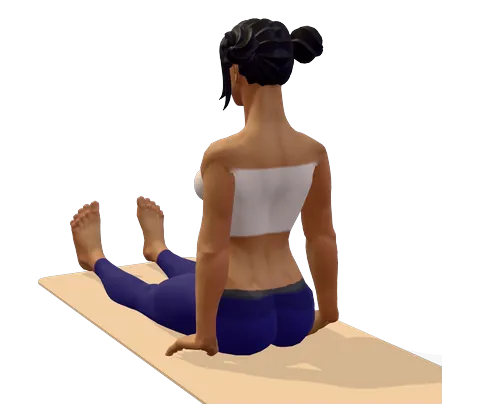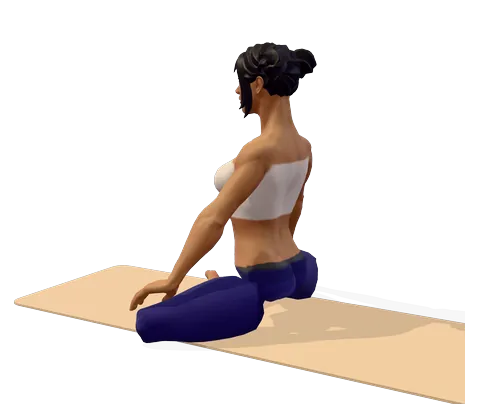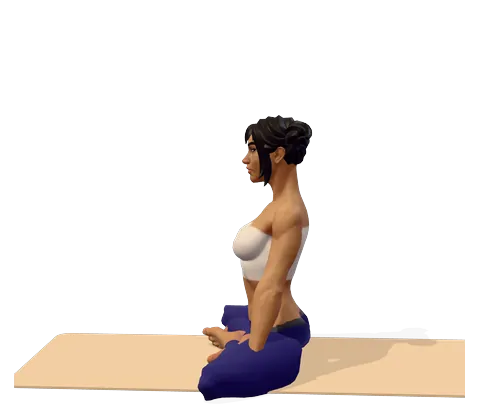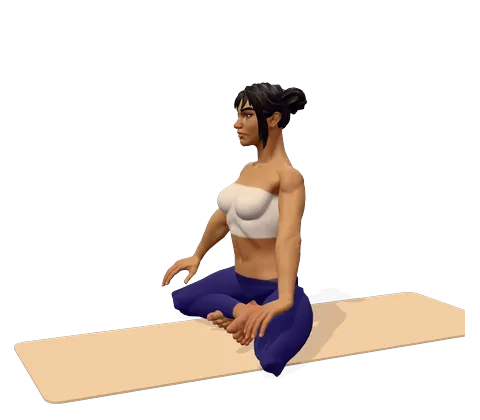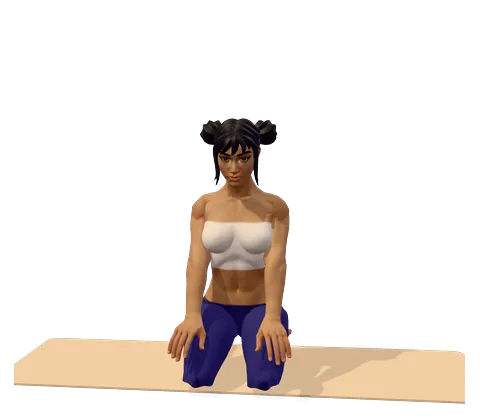
How to do Lion Pose step by step
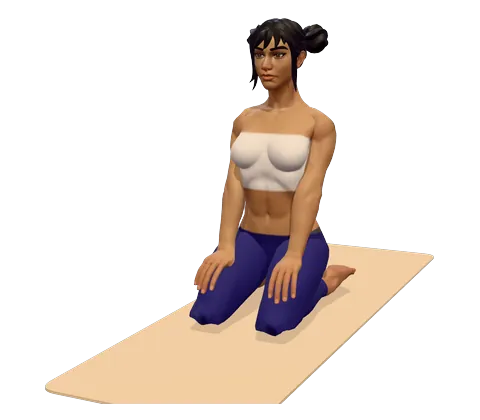
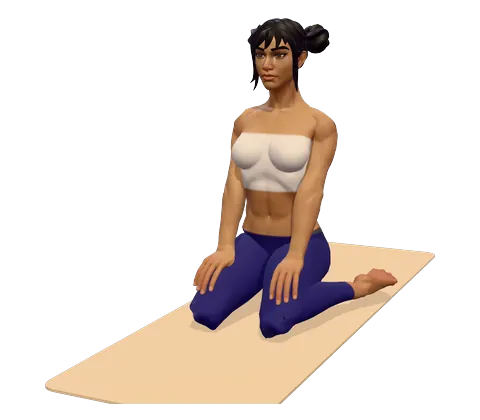
- Kneel and sit back on your heels, knees slightly apart. If kneeling hurts, put a cushion between your heels and hips, or sit on a chair.
- Place your hands on your knees, straighten your arms and spread your fingers wide like claws.
- Lean forward slightly and breathe in deeply through your nose.
- Open your mouth wide, stretch your tongue out and down toward your chin, and breathe out strongly through your mouth with a long "haaa" sound.
- As you breathe out, open your eyes wide and look up toward the point between your eyebrows.
- Close your mouth and breathe in through your nose. Repeat 3–5 times, then sit quietly for a few normal breaths.
Where you feel Lion Pose: what it stretches and strengthens
Stretch your tongue out, open your eyes wide, and roar. In the 3D guide, turn on Body guide: areas that stretch glow green and areas that work glow saffron.
Stretches
- Neck
Strengthens
- Arms
Benefits and precautions
Benefits
- Releases tension in the face, jaw, tongue and throat
- A long, full breath out that helps you let go of stress and reset your breathing
- Stretches the muscles at the front of the neck and the root of the tongue
- Used by singers and speakers as a warm-up for the face and voice
- Playful and energising — a favourite in yoga for kids
- Part of our yoga routines for asthma and sinus comfort, alongside medical care
Avoid or modify if
- Knee injury — sit cross-legged or on a chair instead of kneeling
- Jaw (TMJ) problems — open the mouth only as far as is comfortable
- Neck injury — keep the head level rather than tipping it back
- Recent face, mouth or dental surgery — wait until it has healed
- Asthma — keep the breath out gentle and stop if you start to wheeze; keep your reliever inhaler nearby
- Stop if you feel dizzy or light-headed and return to normal breathing
Lion pose (Simhasana) is part posture, part breathing exercise. You kneel with your hands on your knees, breathe in through the nose, then breathe out forcefully through a wide-open mouth with the tongue stretched down toward the chin — the "lion's breath". It takes less than a minute, needs no flexibility, and releases tension in places most yoga poses never reach: the face, jaw, tongue and throat. Here is how to do it, what it is good for, a version for kids and who should take care.
What is lion pose? Simhasana meaning
The Sanskrit name of lion pose in yoga is Simhasana: simha means lion and asana means seat or pose, so the Simhasana meaning is "lion seat". The lion's breath meaning is just as literal: you breathe out like a roaring lion. The same word also means "throne" in Sanskrit and Hindi — a lion seat fit for a king. That is why you meet it outside yoga too: Simhasana Dvatrimsika, "Thirty-two tales of the throne", is a famous collection of Indian folk stories, and "simhasanam" in English is simply throne. In Hindi, the lion pose yoga name is सिंहासन.
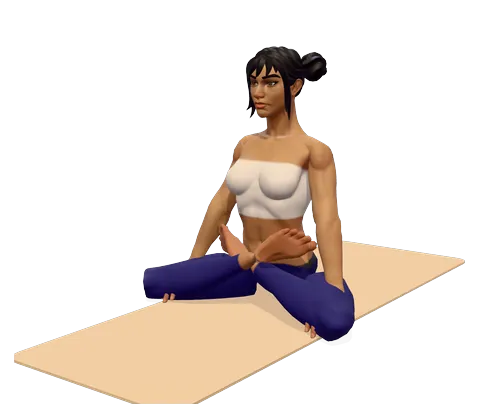
The pose is old. The Hatha Yoga Pradipika, a classic 15th-century text, lists Simhasana among its most important seated poses and says it is held in high regard by yogis. The traditional version is done with the ankles crossed under the body; most teachers today use the simpler kneeling seat shown in the 3D guide. In yoga classes, lion's breath is also often taught on its own as a breathing technique.
How to do lion pose and lion's breath
Follow the lion pose yoga steps above. The difference between a half-hearted lion and a useful one lies in these details:
- Tongue down, not just out. The tongue is what makes lion pose in yoga different from a big sigh: stretch it toward your chin. You should feel a pull at the root of the tongue and the front of the throat.
- Breathe out from the belly. Let the "haaa" come from deep in the abdomen, not just the throat. It should be long and strong, never strained.
- Claws and gaze. Spreading the fingers wide (the lion hand gesture, sometimes called simha mudra or Simhasana mudra) and looking up toward the eyebrow centre add to the effect. Some traditions look at the tip of the nose instead.
- Relax between rounds. Close the mouth, breathe in through the nose and let the face go soft before the next roar. After the last round, Simhasana makes a lively opening to a few minutes of quiet meditation.
How many times, and when?
Three to five rounds is enough. Lion's breath works well first thing in the morning, before public speaking or singing, or as a quick reset in the middle of a stressful day. You can also add it to the start or end of any session on our practice page.
Lion pose benefits
What does lion pose do? The Simhasana yoga benefits are simple and immediate:
- Face and jaw: we hold a lot of tension in the jaw, especially when stressed or concentrating. The wide mouth and stretched tongue release it. This is why lion pose is popular in face yoga; the face yoga benefits are relaxation and circulation, not proven wrinkle removal.
- Throat and neck: the stretch reaches the tongue and the muscles at the front of the neck, which is why singers and speakers use it as a warm-up.
- A long breath out: a slow, full exhale is one of the simplest ways to calm down, and the sound makes it hard to hold on to tension. It suits a stress-relief routine.
Lion's breath for asthma and sinuses
Simhasana is part of our yoga for asthma and yoga for sinusitis plans, as a way to practise a relaxed, complete breath out and to loosen the face. It is not a treatment: keep using your inhaler and prescribed medicine, keep the breath gentle, and stop if you start to wheeze. And to answer a common question honestly: lion pose in yoga does not help with weight loss.
Lion pose for kids
Children love lion breathing because it is loud and funny, and in kids yoga lion pose is usually the favourite. Ask them to be a lion: claws out, big breath in, then roar with the tongue out. It is one of the best animal breathing exercises for kids — a safe way to let off steam and then settle. Keep it to a few roars and follow it with a quiet breath. See our yoga for kids guide for more playful poses.
Lion pose yoga variations
- Lion pose yoga for beginners and seniors: do the lion's breath sitting on a chair with your hands on your knees. The breath and face work are the same.
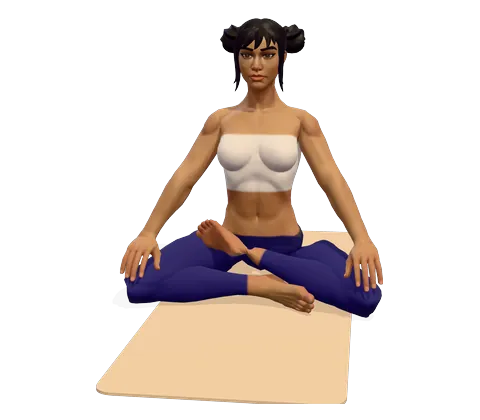
- Cross-legged: sit in easy pose if kneeling is uncomfortable.
- Traditional seat: cross the ankles under the body and sit on them, as the old texts describe; it is harder on the knees and ankles.
- In lotus: an advanced version done from lotus pose, leaning forward onto the hands. Only with a comfortable, pain-free lotus.
The kneeling position itself is Vajrasana, so if you can sit there comfortably, you already have the base for lion pose.
Lion's breath vs other breathing exercises
Lion's breath is a short, expressive practice. For a calmer sound-based breath, try Bhramari (humming bee breath), which uses a soft hum instead of a roar. Many teachers use lion's breath to release tension first and a quiet practice such as Bhramari afterwards.
Lion pose precautions
Lion pose is gentle, but check the caution box above. Adapt the seat for sore knees, open the mouth gently if you have jaw problems, and do not throw the head back if your neck is sensitive. If you feel dizzy, stop and breathe normally.
सिंहासन (Simhasana) — हिंदी में: घुटनों के बल बैठकर एड़ियों पर बैठ जाएँ और हाथ घुटनों पर रखें, उँगलियाँ फैलाएँ। नाक से गहरी साँस लें, फिर मुँह खोलकर जीभ बाहर निकालें और "हा" की आवाज़ के साथ ज़ोर से साँस छोड़ें, नज़र भौंहों के बीच रखें। 3–5 बार करें। सिंहासन के फायदे: चेहरे, जबड़े और गले का तनाव कम होता है, साँस पूरी तरह बाहर निकलती है और मन हल्का होता है। घुटने में दर्द हो तो कुर्सी पर बैठकर करें।
Health conditions this pose is used for
Yoga for asthma · Yoga for snoring and sleep apnea · Yoga for cold and cough · Yoga for sinusitis and allergies · Yoga for glowing skin and acne
Where this practice is used
Chakras: Vishuddha (Throat Chakra)
Frequently asked questions
What is lion pose good for?
It releases tension in the face, jaw, tongue and throat, and the long breath out through the mouth helps you let go of stress. It is also a fun breathing exercise for children.
How do I do lion's breath?
Sit on your heels with your hands on your knees. Breathe in through your nose, then open your mouth wide, stretch your tongue toward your chin and breathe out strongly with a "haaa" sound, looking up. Repeat 3–5 times.
What does Simhasana mean in English?
"Simha" means lion and "asana" means seat or pose, so Simhasana is lion pose. In everyday Sanskrit and Hindi the word also means throne.
What are the benefits of lion's breath in yoga?
A full, relaxed exhale, less tension in the jaw and face, a stretch for the tongue and throat, and a quick mood lift. Singers and speakers use it as a vocal warm-up.
Can kids do lion pose?
Yes — it is one of the most popular poses in kids yoga. Let them roar a few times, then settle with a quiet breath.
Who should be careful with lion pose?
People with knee injuries (sit on a chair), jaw or TMJ problems (open gently), neck injuries (keep the head level), recent face or dental surgery, and asthma (keep the breath gentle and stop if you wheeze).
This page is for general education. Check with your doctor before starting yoga if you are pregnant, have a medical condition or an injury. Stop if you feel pain, dizziness or shortness of breath.