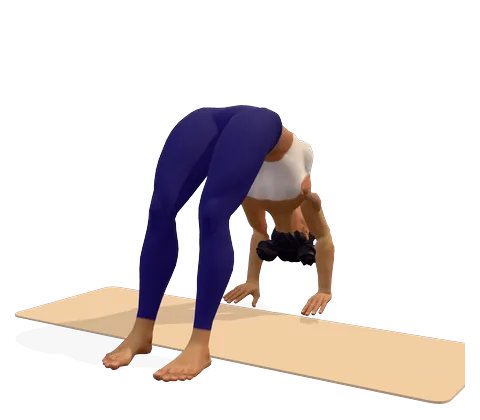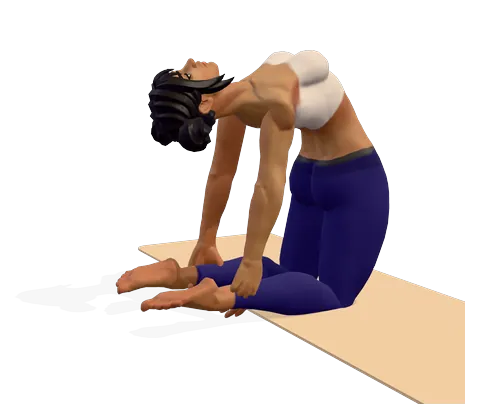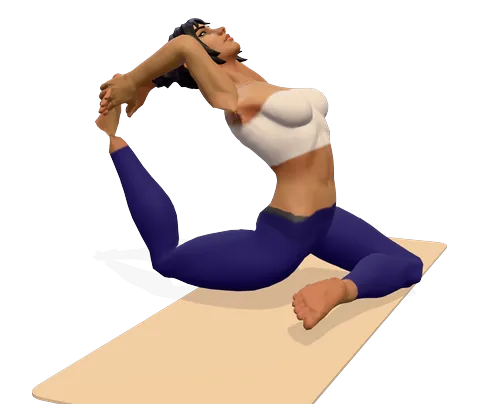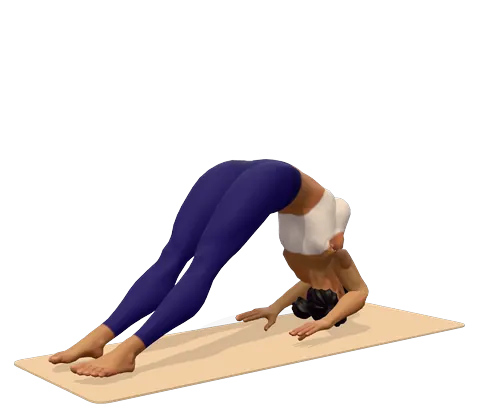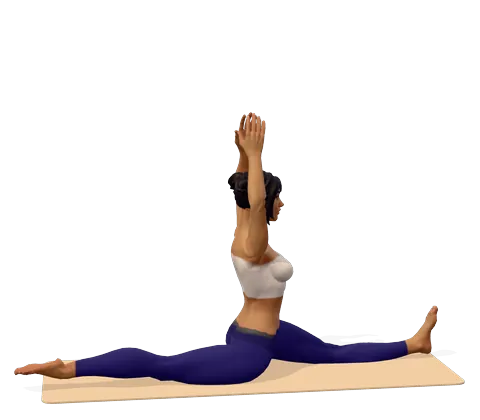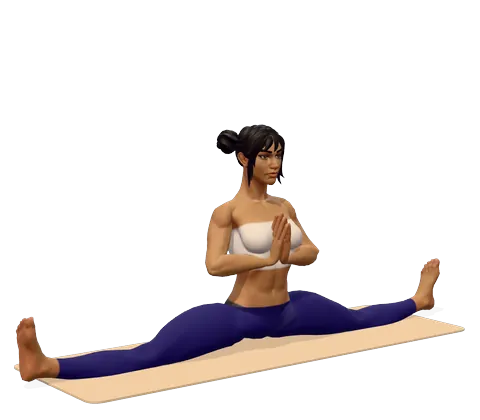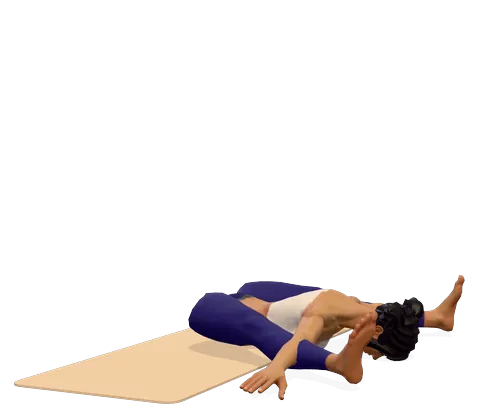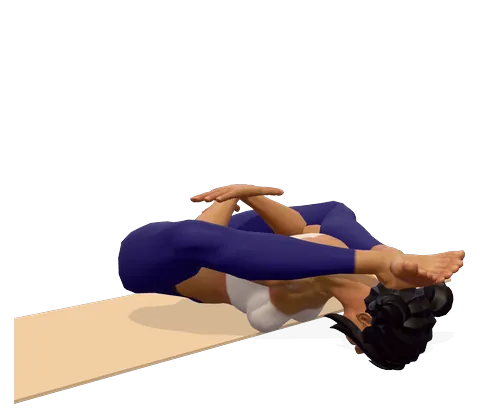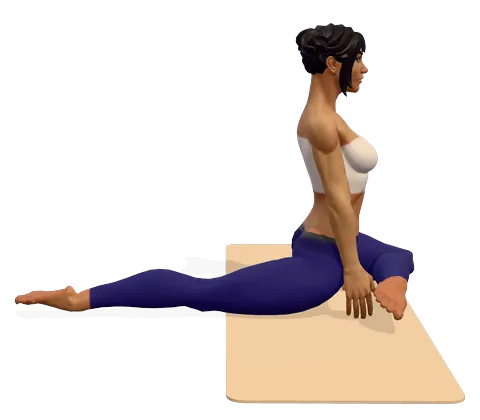
How to do Pigeon Pose step by step
- Start on all fours or in downward-facing dog. Bring your left knee forward and place it on the mat behind your left wrist.
- Let your left shin rest across the mat, with the left foot somewhere in front of your right hip. Beginners keep the foot close to the groin; a more open hip lets the shin come closer to parallel with the front of the mat.
- Slide your right leg straight back, knee and top of the foot on the floor, toes pointing straight back.
- Square your hips to the front. If your left hip is floating, put a folded blanket or block under it so your weight is even.
- Place your fingertips on the floor beside your hips, lift your chest and lengthen your spine. Stay here for a few breaths.
- For sleeping pigeon, walk your hands forward and fold over the front leg, resting on your forearms or a block. Hold for 5–10 breaths or longer if comfortable.
- To come out, tuck your right toes, press into your hands and step back to downward dog or all fours. Repeat on the right side.
Where you feel Pigeon Pose: what it stretches and strengthens
Square your hips and sink into the front hip. In the 3D guide, turn on Body guide: areas that stretch glow green and areas that work glow saffron.
Stretches
- Glutes
- Hip flexors
Strengthens
- Spine
Benefits and precautions
Benefits
- Deeply stretches the outer hip and buttock, including the piriformis and gluteal muscles
- Stretches the hip flexors and front thigh of the back leg
- Can ease stiffness in the hips after long sitting, running or cycling
- May relieve buttock tightness that feels like sciatica when the piriformis is tight
- The forward-folding version is calming and suits slow and yin practice
Avoid or modify if
- Knee injury or pain in the front knee — use reclined pigeon (figure-4) on your back instead
- Hip replacement — ask your surgeon; deep hip rotation may be restricted
- Sacroiliac joint pain, groin strain or sharp hip pain
- Sciatica from a disc problem — ask a physiotherapist first, and stop if leg pain increases
- Pregnancy — support your hips with a bolster and do not fold flat over your belly
Pigeon pose (Eka Pada Rajakapotasana) is a deep hip opener: one leg bends in front of you with the shin across the mat, while the other leg stretches straight back. It targets the outer hips and buttocks, the areas that tighten most with sitting, running and cycling, and it is one of the most popular stretches in modern yoga. This guide covers how to do it correctly, the muscles it stretches, sleeping pigeon, knee-safe variations and when to choose a gentler option.
What is pigeon pose in yoga?
What is pigeon pose in Sanskrit? The full name, Eka Pada Rajakapotasana, breaks down as eka ("one"), pada ("leg" or "foot"), raja ("king"), kapota ("pigeon") and asana ("pose"): "one-legged king of the pigeons pose". The pigeon pose meaning comes from the shape of the full backbend, where the lifted chest looks like a proud pigeon puffing out its breast.
Strictly, the upright hip stretch most classes teach is the preparation for that full backbend, the king pigeon pose, in which the back foot is held overhead. Iyengar yoga also separates Eka Pada Rajakapotasana 1 (front shin across the mat) from Eka Pada Rajakapotasana 2 (front foot flat as in a lunge). The kneeling backbend called Kapotasana is a different, very advanced pose.
In Hindi the pigeon pose name is कपोतासन (Kapotasana), since kapota means pigeon.
How to do pigeon pose correctly
The steps above show how to do pigeon pose step by step. These pigeon pose cues make the difference between a good hip stretch and a sore knee:
- Level hips first. Most people tip toward the front-leg side. A folded blanket or yoga block under that hip keeps the pelvis level and protects the knee and lower back.
- Front foot flexed. Pull the toes of the front foot back toward the shin. An active foot helps keep the knee stable.
- Back leg straight behind you. The back knee points down, not out to the side. Look back once to check.
- Angle of the shin. A shin parallel to the front of the mat is an advanced goal. Keeping the front heel near the groin is safer for most knees.
- Stretch in the hip, not the knee. You should feel it deep in the outer hip and buttock. Any twist or pain in the knee means you need a modification.
How long to hold
Upright, hold for 5 breaths. In the folded version, 1–2 minutes per side is common. In yin yoga, the same shape is called swan (upright) and sleeping swan (folded), and it is held for 3–5 minutes. That is the main difference in pigeon pose vs swan pose: the name and the long, passive hold.
Sleeping pigeon pose
Sleeping pigeon is the forward-folding version. From the upright shape, walk your hands forward and lower onto your forearms, a block or a bolster, and let your forehead rest. Supporting your chest on a bolster makes it restful rather than intense. This version stretches the outer hip more strongly, so ease in slowly and breathe into any tight spot.
Pigeon pose benefits
Eka Pada Rajakapotasana benefits centre on the hips. The main effects are:
- Outer hips and buttocks. The front leg's external rotation gives a deep glute stretch, reaching the piriformis and the deep rotators.
- Hip flexors. The back leg gets a strong stretch through the front of the hip, which long sitting tends to shorten.
- Hip mobility. Regular practice helps many people feel freer in squats, cross-legged sitting and running. It is part of our yoga for hip pain and tight hips plan.
- Calm. The mental benefits people describe come mostly from the slow breathing and long holds of the folded version.
Pigeon pose benefits are the same for female and male practitioners, although men often have tighter outer hips and may need more support at first.
Is pigeon pose good for sciatica?
It depends on the cause. When buttock and leg pain comes from a tight piriformis muscle pressing on the sciatic nerve, a gentle stretch for the piriformis may help. When sciatica comes from a disc in the lower back, a deep hip stretch can irritate the nerve. Try the reclined version first, stop if pain spreads further down the leg, and see our yoga for sciatica plan or a physiotherapist.
Pigeon pose for lower back pain
Tight hips can pull on the lower back, so loosening them helps some people. Keep the hips level, because a tilted pelvis twists the lower spine. For more ideas see yoga for back pain.
What muscles does the pigeon pose stretch?
| Leg | Muscles stretched |
|---|---|
| Front (bent) leg | Piriformis, gluteus maximus and medius, deep hip rotators, outer thigh |
| Back (straight) leg | Psoas and iliacus (hip flexors), rectus femoris, quadriceps |
| Trunk (folded version) | Muscles of the lower back |
Pigeon pose anatomy explains why the knee is at risk: if the hip cannot rotate outward enough, the twist moves into the knee, which is built to bend, not rotate.
Pigeon pose variations for beginners: modifications and alternatives
How do you do pigeon pose when you can't get your hip down or your knee hurts? Choose one of these:
- Reclined pigeon (figure-4): the pigeon pose lying down on your back. Cross one ankle over the opposite thigh and draw both legs toward you. This figure-4 glute stretch is the safest alternative for knees.
- Pigeon pose with a bolster or block: a bolster under the front hip, or a block under the forehead in the folded version.
- Pigeon pose on a table or bed: stand beside a table, bed or counter top and rest the front shin on it, with the back leg standing. Physiotherapists often use this version.
- Pigeon pose in a chair: sit tall, place one ankle on the opposite knee and lean forward slightly. Good for office breaks and chair yoga.
- Standing pigeon: a balance with one ankle crossed over the standing thigh, like a one-legged chair pose. Its advanced cousin is flying pigeon pose.
Half pigeon pose vs pigeon pose
"Half pigeon" is the name many teachers use for the hip stretch described on this page, to separate it from the full backbend with the foot held overhead. Double pigeon is a seated pose with both shins stacked, like a strong cross-legged position.
Pigeon pose sequence, pregnancy and precautions
Warm up with a few rounds of cat and cow, low lunges and downward dog. From downward dog, step one knee forward into pigeon; from pigeon, step back to downward dog and change sides. You can practise it with voice guidance in the Hip Opener session on our guided sessions page.
Skip or modify this pose with a knee injury, after a hip or knee replacement unless your surgeon agrees, and with sacroiliac or groin pain. In pregnancy, a bolster under the hips helps and the belly should not be squashed; many midwives prefer the chair version.
कपोतासन (Pigeon Pose) — हिंदी में: हाथों और घुटनों के बल आएँ। बायाँ घुटना आगे लाकर बाएँ हाथ के पीछे रखें और दायाँ पैर सीधा पीछे फैलाएँ। कूल्हे बराबर रखें, ज़रूरत हो तो कूल्हे के नीचे कंबल रखें, और छाती उठाएँ या आगे झुककर आराम करें। हर तरफ़ 30 सेकंड से 1 मिनट रुकें। इसके फायदे: कूल्हों और नितंबों की जकड़न कम होती है और लंबे समय तक बैठने से आई अकड़न में राहत मिलती है। घुटने में दर्द हो तो पीठ के बल लेटकर यह स्ट्रेच करें।
Health conditions this pose is used for
Yoga for hip pain and tight hips
Where this practice is used
Chakras: Svadhisthana (Sacral Chakra)
Frequently asked questions
What is pigeon pose good for?
It stretches the outer hips, buttocks and hip flexors, which tighten with sitting and sports. Many people use it to ease stiff hips and a tight lower back.
How long should I hold pigeon pose?
Hold the upright version for about 5 breaths and the folded version for 1–2 minutes per side. In yin yoga it is held for 3–5 minutes.
Why does pigeon pose hurt my knee?
If the hip cannot rotate enough, the twist goes into the knee. Bring the front foot closer to your groin, put a blanket under the hip and flex the front foot, or switch to reclined figure-4 pigeon on your back.
Is pigeon pose good for sciatica?
It may help when the pain comes from a tight piriformis, but it can aggravate sciatica from a disc problem. Start with the reclined version and ask a physiotherapist if leg pain increases.
Can I do pigeon pose after a hip replacement?
Only if your surgeon or physiotherapist agrees. Deep hip rotation may be restricted for months after surgery, depending on the operation.
What is the difference between pigeon pose and king pigeon pose?
Pigeon is the hip stretch with the chest upright or folded forward. King pigeon adds a deep backbend, with the back knee bent and the foot held overhead.
What is pigeon pose called in Hindi?
It is called कपोतासन (Kapotasana). The Hindi box on this page sums up the steps and main pigeon pose benefits in Hindi.
This page is for general education. Check with your doctor before starting yoga if you are pregnant, have a medical condition or an injury. Stop if you feel pain, dizziness or shortness of breath.