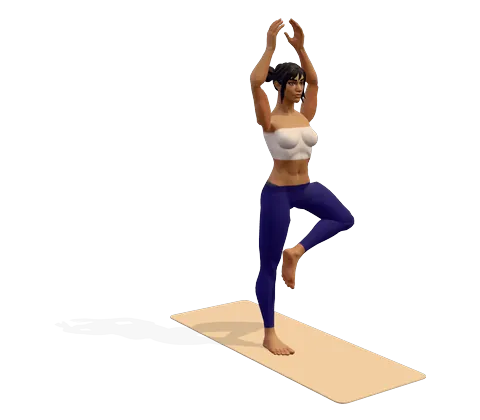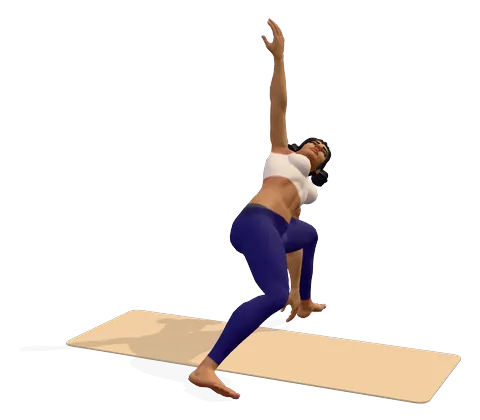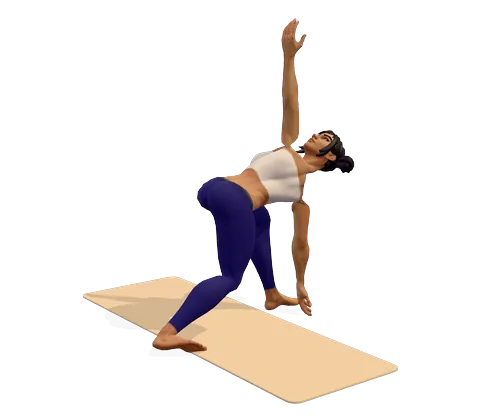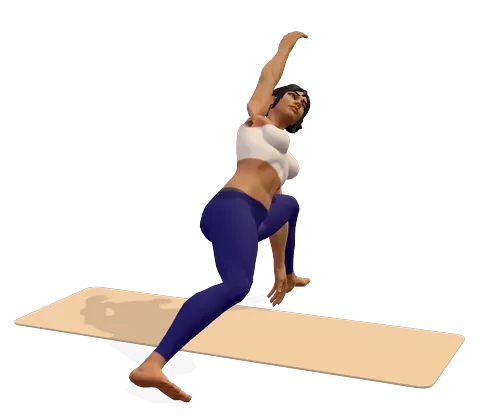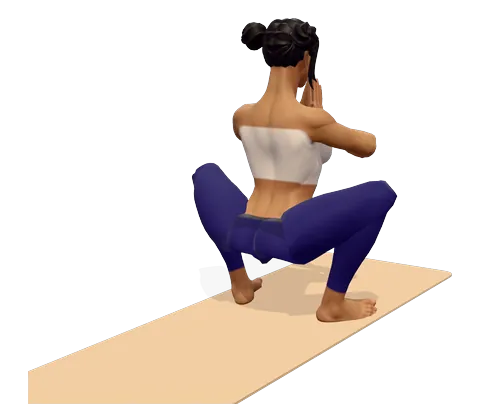
How to do Garland Pose step by step
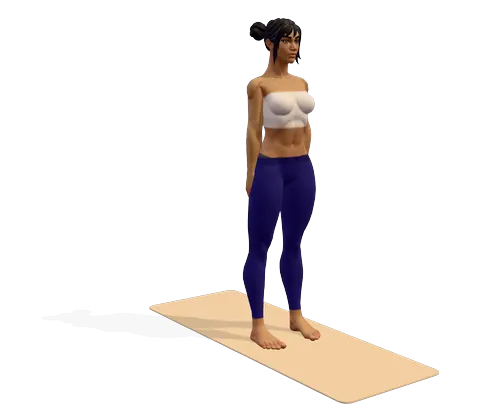
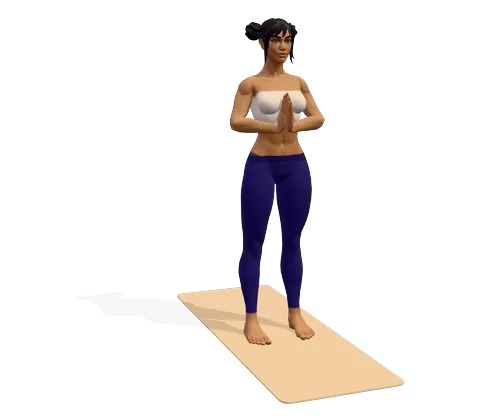
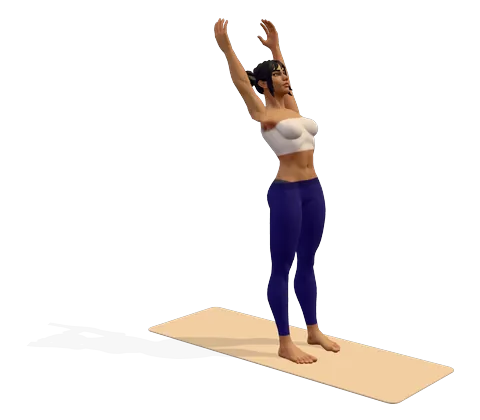
- Stand with your feet a little wider than your hips and turn your toes out about 45 degrees.
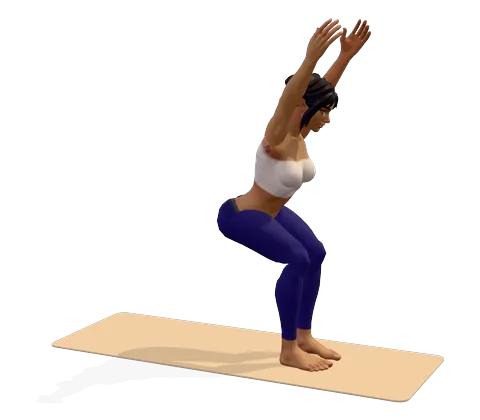
- Breathing out, bend your knees and lower your hips slowly toward the floor, between your heels. Keep your heels down if you can; if they lift, roll a blanket under them.
- Let your knees open wider than your torso. Bring your palms together in front of your chest in prayer position.
- Press your elbows gently against the inside of your knees, and let your knees press back into your elbows. This helps lift and lengthen the spine.
- Lift your chest, relax your shoulders and look straight ahead. Let your lower back lengthen toward the floor.
- Hold for 5–8 slow breaths (30–60 seconds). If your hips don’t reach low, sit on a block or a thick book.
- To come out, place your hands on the floor, shift your weight forward and straighten your legs into a forward bend, or sit back onto the floor.
Where you feel Garland Pose: what it stretches and strengthens
Press elbows into knees and lift your chest tall. In the 3D guide, turn on Body guide: areas that stretch glow green and areas that work glow saffron.
Stretches
- Inner thighs
- Lower back
- Ankles
Strengthens
- Abs
Benefits and precautions
Benefits
- Opens the hips, groin and inner thighs
- Stretches the ankles, calves, and lower back
- Strengthens the thighs and the small muscles of the feet
- Encourages an upright spine and open chest
- A natural squatting position traditionally linked to easier digestion and bowel movements
- Useful preparation for arm balances such as crow pose
Avoid or modify if
- Knee injury or pain when fully bent — sit on a high block or skip the pose
- Ankle injury or very stiff ankles — roll a blanket under the heels
- Recent hip or groin injury, or hip replacement — follow your surgeon’s or physiotherapist’s advice on deep bending
- Pregnancy — use a block under the hips; skip deep squats late in pregnancy if your baby is breech, if you have pelvic girdle pain or if your midwife advises against it
- Stop if you feel sharp pain in the knees or lower back
Garland pose (Malasana) is a deep squat with the heels on the floor, the knees wide and the palms pressed together at the chest. Many people know it as the yogi squat or yoga squat. It is one of the most natural shapes the human body makes — children squat like this easily — yet after years of chairs, many adults find it hard. This guide explains how to do garland pose step by step, what it is good for, how to make it easier, and who should take care.
What is garland pose in yoga?
Garland pose is a squatting asana. The Sanskrit name combines mala, meaning "garland" or "string of beads", and asana, meaning "pose". One explanation is that the arms and legs form a curve like a garland hung around a neck. In Hindi it is written मालासन (malasana). So what is a yoga squat, and is it the same? Yes — in most classes today, garland pose, Malasana and yogi squat are three names for one shape.
In B.K.S. Iyengar's classic book, the name Malasana is given to a harder version with the feet together and the arms wrapped around the shins. The wide-footed squat on this page is the version most teachers use now.
How to do garland pose correctly (Malasana kaise kare)
Follow the steps above, then use these points to fine-tune your yoga squat:
- Heels first. If your heels lift, you are balancing on your toes and the knees take extra strain. A rolled blanket under the heels solves this at once.
- Knees follow toes. Point the knees in the same direction as the toes. If the knees collapse inward, turn the feet out more.
- Use the elbow–knee press. The gentle push between elbows and knees opens the hips and lifts the chest at the same time.
- Long spine, not rounded. If you slump, put a block under your hips. Height is more useful than depth.
- Breathe into the back. The yogi squat breathing cue: feel each inhale widen the back of the ribs and each exhale let the hips drop a little.
How long to do garland pose
Hold for 30 seconds to 1 minute. If you want to relearn squatting, you can repeat it a few times a day — for example while waiting for the kettle. Some people take a "yogi squat challenge" of a few minutes a day; build up slowly, and only if your knees are happy.
Garland pose benefits (Malasana ke fayde)
What is Malasana good for? The main garland pose benefits are for mobility:
- Hips and groin. The wide knees stretch the inner thighs and open the hips. It is part of our yoga for tight hips plan and the Hip Opener session in the guided sessions.
- Ankles and calves. Keeping the heels down asks for deep ankle bending, which tends to stiffen with age and shoes.
- Lower back. Sitting low lets the lower back lengthen gently, and many people find it eases stiffness from long sitting.
- Digestion. Squatting is a natural toilet posture, and it appears in our yoga for constipation and yoga for digestion plans. Traditional texts say the squat massages the belly; modern research on this specific pose is limited.
- Balance and strength. Lowering in and rising out of a squat works the thighs and feet — the everyday strength you use to get up from the floor.
Benefits for women and men
Garland pose benefits for women and men are mostly the same. Women often meet it in prenatal yoga and in our yoga for PCOS plan, where hip openers are used to relax the pelvic area. The squat also asks you to relax and then gently engage the pelvic floor. For men, it is a useful counter to tight hips from sitting, running or weight training.
Garland pose muscles used
| Stretches | Strengthens / works |
|---|---|
| Inner thighs (adductors) and groin | Quadriceps and gluteal muscles (entering and leaving) |
| Calves, Achilles tendon and ankles | Small muscles of the feet and ankles |
| Lower back and buttocks | Back muscles that keep the chest upright |
Garland pose for beginners: Malasana modifications
- Garland pose with blocks: sit on one or two blocks (or a thick book). This is the best start for stiff hips or knees.
- Blanket under the heels: if your heels float, a rolled blanket gives you a stable base.
- Hold on to something: hold a table leg, door frame or chair to lower down and rise with control.
- Back against a wall: slide down a wall into the squat to keep the spine upright.
- Garland pose on tiptoes: lift the heels for a balance and foot-strength challenge — not a fix for stiff ankles.
Yogi squat variations
- Garland pose with a twist (revolved garland pose): place your left hand on the floor and reach the right arm up, then change sides. Skip deep twists in pregnancy.
- Yogi squat reach: walk the hands forward on the floor and let the head drop to stretch the back.
- Garland pose with feet together: the harder, classic version with the knees wide and the torso folded forward.
- Toward crow: from the squat, place the hands down and lean forward — the starting point for crow pose.
Malasana vs deep squat, Asian squat and goddess pose
Malasana vs deep squat: a gym deep squat is a strength movement, usually with feet parallel and a weight. The yogi squat vs Asian squat question is simpler — they are nearly the same everyday resting squat, heels down; yoga just adds the prayer hands and the elbow–knee press. Compared with goddess pose, garland pose has the feet closer and the hips much lower.
Is Malasana safe? Garland pose contraindications and precautions
For most people, yes — especially with a block. Garland pose and knee pain do not mix well if your knees hurt when fully bent, so raise the seat or skip it and see our yoga for knee pain plan. In pregnancy the yogi squat is widely used with support, but follow the pregnancy note in the caution box and your midwife's advice. If your lower back aches, sit higher and keep the spine long.
मालासन (Malasana) — हिंदी में: पैरों को कूल्हों से थोड़ा चौड़ा रखें और पंजे बाहर की ओर करें। घुटने मोड़कर धीरे-धीरे नीचे बैठें, एड़ियाँ ज़मीन पर रहें। हथेलियाँ छाती के सामने जोड़ें और कोहनियों से घुटनों को हल्का बाहर दबाएँ। 30–60 सेकंड रुकें। मालासन के फायदे: कूल्हे, टखने और जाँघें खुलती हैं, पीठ सीधी रहती है और पाचन में मदद मिल सकती है। घुटने में दर्द हो तो नीचे ब्लॉक रखें।
Health conditions this pose is used for
Yoga for hip pain and tight hips · Yoga for leg cramps · Yoga for pcos and pcod · Yoga for irregular periods · Yoga for pelvic floor and urinary incontinence · Yoga for prostate health · Yoga for male fertility · Yoga for erectile dysfunction · Yoga for digestion · Yoga for constipation · Yoga for gas and bloating
Where this practice is used
Chakras: Muladhara (Root Chakra)
Frequently asked questions
What is garland pose good for?
Garland pose (Malasana) opens the hips, groin and ankles, lengthens the lower back and strengthens the legs and feet. It is also a natural squatting position that many people find helpful for digestion.
What is the difference between garland pose and yogi squat?
In most classes there is none — garland pose, Malasana and yogi squat are names for the same deep, wide-kneed squat with the palms together.
How long should I hold Malasana?
Hold for 30 seconds to 1 minute. You can repeat it a few times a day to rebuild your squat, as long as your knees feel comfortable.
Why can’t I keep my heels down in a yogi squat?
Usually stiff ankles or calves. Roll a blanket under your heels or sit on a block. Over weeks of practice the ankles often loosen.
Is Malasana safe during pregnancy?
It is common in prenatal yoga with a block under the hips. Skip deep squats late in pregnancy if your baby is breech or you have pelvic girdle pain, and always follow your midwife’s advice.
Is garland pose good for knee pain?
Not usually during a flare. Deep knee bending can aggravate painful knees. Sit on a high block, or choose poses from a knee-friendly routine instead.
Garland pose kya hota hai?
Garland pose is Malasana (मालासन) — a deep squat with the palms joined at the chest. "Mala" means garland.
This page is for general education. Check with your doctor before starting yoga if you are pregnant, have a medical condition or an injury. Stop if you feel pain, dizziness or shortness of breath.