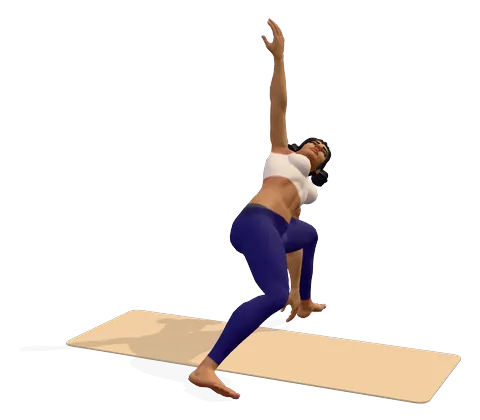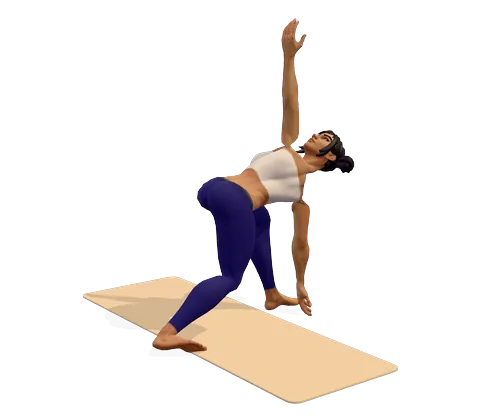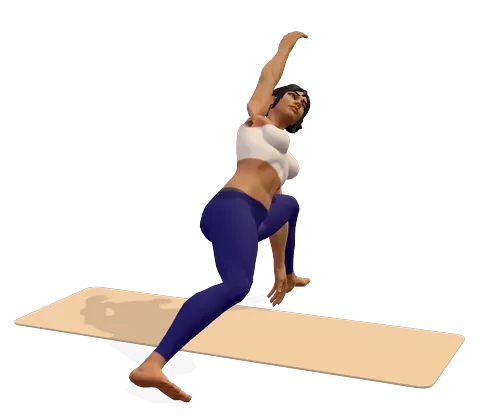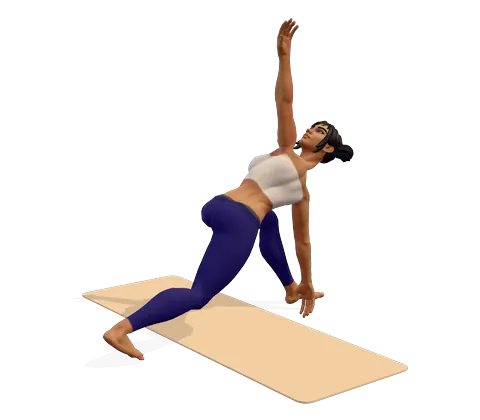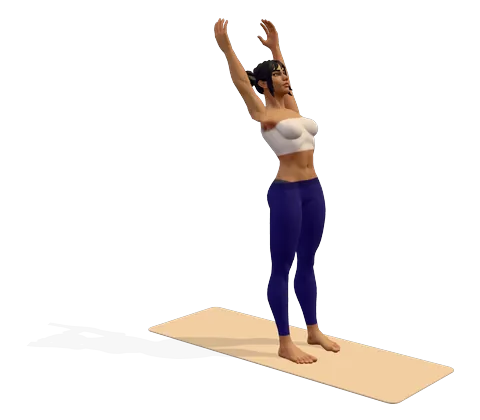
How to do Raised Arms Pose step by step
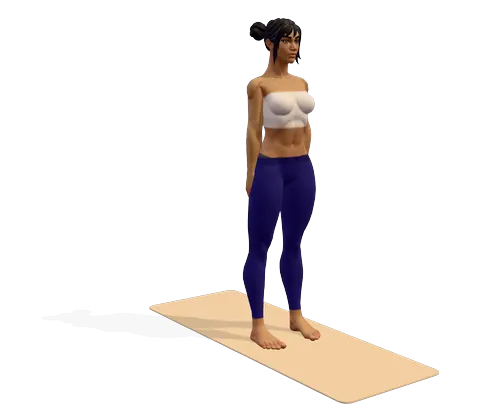
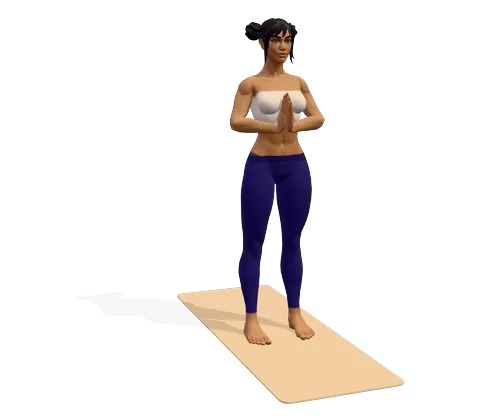
- Stand with your feet together or hip-width apart, weight even, and start with your palms joined at your chest or your arms by your sides.
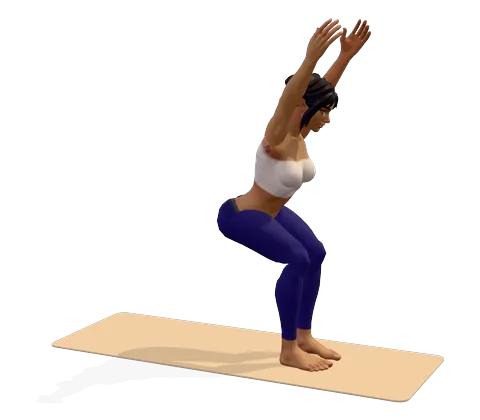
- Breathing in, sweep your arms forward and up until they are beside your ears, shoulder-width apart, palms facing each other.
- Firm your legs and press your feet into the floor. Draw your belly in gently to support your lower back.
- Lift your chest and lean back only a little, bending from the upper back rather than the waist. Keep your hips over your feet.
- Let your gaze travel up toward your hands without dropping your head back. Keep your neck long.
- Stay for 1–3 breaths (up to about 15 seconds), reaching up through your fingertips.
- Breathing out, come back to upright and lower your arms, or fold forward into the next step of Surya Namaskar.
Where you feel Raised Arms Pose: what it stretches and strengthens
Reach up and back, lifting your chest without crunching your lower back. In the 3D guide, turn on Body guide: areas that stretch glow green and areas that work glow saffron.
Stretches
- Abs
- Chest
- Shoulders
Strengthens
- Upper back
- Glutes
Benefits and precautions
Benefits
- Stretches the front of the body: shoulders, chest, abdomen and hip flexors
- Improves shoulder mobility and the ability to reach overhead
- Gently extends the upper back, countering the rounded shape of sitting
- Opens the rib cage so the breath in feels fuller
- Strengthens the legs and back muscles that hold you upright while you reach
- Warms the spine in Surya Namaskar before the forward fold
Avoid or modify if
- Frozen shoulder or shoulder injury — raise your arms only to a comfortable height, or keep your hands on your hips
- Neck problems or cervical spondylosis — keep your gaze forward and skip the head tilt
- Lower back pain, spondylolisthesis or spinal stenosis — stay upright and skip the backbend
- Vertigo, dizziness or low blood pressure — keep the backbend tiny and the eyes on a fixed point; stop if the room spins
- Uncontrolled high blood pressure or heart disease — keep arms up only briefly and never hold your breath
- Pregnancy — reach up but keep the backbend very small
Raised arms pose (Hasta Uttanasana) is a standing stretch in which you reach both arms overhead and lean back a little. It is the second position of Surya Namaskar, coming straight after Prayer Pose on an in-breath, and the eleventh position on the way back up. Done well, it wakes up the whole front of the body in a few seconds. Done carelessly, it can pinch the lower back or strain the neck. This guide shows the difference.
What is Hasta Uttanasana?
The meaning of Hasta Uttanasana comes straight from the Sanskrit: hasta means "hand", ut means "intense" or "upward", tana means "stretch" and asana means "pose". Together: "the pose of the raised, stretched hands". Hasta Uttanasana in Hindi is written हस्त उत्तानासन, and the pronunciation is roughly "HUSS-tah oot-tahn-AHS-uh-nuh". In English you will see it called raised arms pose, arms raised pose or upward salute.
Some books also number it "2. Hasta Uttanasana (raised arms pose)", because it is step two of the sun salutation. The shape is always the same: feet grounded, arms reaching up, chest lifting.
Hasta Uttanasana vs Urdhva Hastasana
The two names are often used for the same pose. Urdhva Hastasana meaning: urdhva = "upward", hasta = "hand". In most schools there is a useful difference:
| Hasta Uttanasana | Urdhva Hastasana (upward salute) | |
|---|---|---|
| Where you meet it | Classical Surya Namaskar (Hatha, Sivananda, Indian syllabi) | Iyengar, Ashtanga and Vinyasa classes |
| Spine | Upright, then a gentle backbend | Upright and long; little or no backbend |
| Gaze | Up toward the hands | Forward, or up at the thumbs |
| Main feel | Stretch across chest and belly | Length through the sides of the body |
And the difference between Tadasana and Urdhva Hastasana? Urdhva Hastasana is simply mountain pose with the arms raised. If you cannot keep your Tadasana alignment once the arms go up, that is your cue to lower them a little.
How to do Hasta Uttanasana safely
The steps above give the procedure. These points keep the backbend where it belongs:
- Reach up before you lean back. First grow tall, as if lifting your ribs away from your hips. Only then let the chest tip up and back.
- Bend in the upper back, not the waist. If you feel a crease or pinch in your lower back, you have gone too far. Come up a little and draw the belly in.
- Hips stay over the feet. Pushing the hips forward is the most common mistake; it turns the pose into a lower-back hinge.
- Arms shoulder-width. Joining the palms overhead is traditional, but keeping them apart is easier on stiff shoulders.
- Neck long. Look up with the eyes and chin together; do not drop the head back.
Hasta Uttanasana for beginners
Start with Urdhva Hastasana for beginners: arms up, no backbend, feet hip-width apart. Once that feels easy, add a slight lift of the chest for one breath. Practising near a wall gives you something to reach for and a safe reference if balance wobbles.
Hasta Uttanasana benefits
What is Hasta Uttanasana good for? Mainly the shoulders, upper back and breathing. Reaching overhead takes the shoulders through their full range, which most people rarely do in daily life. That is why it is part of our plan for frozen shoulder, where you raise the arms only as far as they move comfortably.
Lifting the arms also lifts the rib cage, so the breath in feels bigger. Arm-raising with the breath is used in yoga routines for COPD and breathing difficulties, as part of wider pulmonary rehabilitation, not instead of it. The benefits of Hasta Uttanasana in Surya Namaskar are also about warming up: it stretches the front of the body right before you fold forward.
A short list of the benefits of raising arms above head in this way: better posture, looser shoulders, a more open chest and a quick energy lift, which is why it is a favourite in morning yoga.
Does raising your arm above your heart raise blood pressure?
For most people, briefly raising your arms above your heart does not meaningfully change blood pressure. Two things are worth knowing, though. First, if you measure blood pressure with the cuffed arm held above heart level, the reading comes out falsely low, so always measure with the arm resting at heart height. Second, holding the arms overhead for a long time is effortful, and effort combined with breath-holding can push blood pressure up. If you have high blood pressure, keep the arms up for one or two breaths, breathe continuously, and see our yoga for high blood pressure plan.
Hasta Uttanasana variations
- Palms together overhead: the classical Sivananda version; the arms hug the ears.
- Upward salute side bend: hold one wrist and lean to the side to stretch the waist and ribs. Repeat on the other side.
- Baddha Hasta Uttanasana: interlock the fingers, turn the palms up and stretch; a stronger shoulder stretch.
- Seated or in a chair: sit tall in Easy Pose or on a chair and raise the arms. Easy pose with raised arms is a good Urdhva Hastasana modification for seniors and anyone with balance problems.
- Hands on the hips: for sore shoulders, keep the hands on the hips and lift only the chest.
Hasta Uttanasana and Padahastasana: what comes next
In Surya Namaskar you move from raised arms straight into Hasta Padasana, also called Padahastasana ("hands to feet pose"), on the out-breath. It is the standing forward bend: fold from the hips, bend the knees as much as you need and let the hands rest by your feet. Raising the arms first lengthens the spine so the fold starts long rather than rounded.
Hasta Uttanasana precautions and contraindications
The Urdhva Hastasana contraindications are the same as those listed above, and they mostly ask you to change the pose rather than skip it. With back problems, drop the backbend and simply reach up. With neck pain, keep your eyes forward. With shoulder pain, raise your arms only as high as they go without pinching. If you feel dizzy, lower the arms and stand still before moving on. You can follow a gentle version with the voice guide in our guided sessions.
हस्त उत्तानासन (Hasta Uttanasana) — हिंदी में: सीधे खड़े हों, पैर साथ रखें। साँस लेते हुए दोनों हाथ कानों के पास से ऊपर उठाएँ और छाती को थोड़ा ऊपर-पीछे ले जाएँ, कमर से नहीं बल्कि पीठ के ऊपरी हिस्से से। 1–3 साँस रुकें और साँस छोड़ते हुए वापस आएँ। हस्त उत्तानासन के फायदे (Hasta Uttanasana ke fayde): कंधे और छाती खुलते हैं, साँस गहरी होती है और शरीर में ताज़गी आती है। कमर, गर्दन या कंधे में दर्द हो तो पीछे न झुकें।
Health conditions this pose is used for
Yoga for frozen shoulder · Yoga for desk workers and sitting all day · Yoga for hip replacement recovery · Yoga for shoulder pain · Yoga for tennis elbow · Yoga for carpal tunnel syndrome · Yoga for height and posture · Yoga for jet lag and travel fatigue · Yoga for stroke recovery · Yoga for copd · Yoga for bronchitis · Yoga for cold hands and feet (circulation) · Yoga for recovery after surgery
Frequently asked questions
What is Hasta Uttanasana and its benefits?
Hasta Uttanasana (raised arms pose) is a standing stretch with the arms overhead and a gentle backbend. It stretches the chest, shoulders and abdomen, improves shoulder mobility, opens the breath and warms the spine in Surya Namaskar.
What is the difference between Hasta Uttanasana and Urdhva Hastasana?
They are often used as names for the same pose. In most schools Hasta Uttanasana includes a gentle backbend with the gaze up, while Urdhva Hastasana keeps the spine upright and long.
How long should I hold raised arms pose?
In Surya Namaskar, for one breath in. On its own, 1–3 breaths (up to about 15 seconds) is enough; holding longer mainly tires the shoulders.
Is raised arms pose safe for lower back pain?
The upright version usually is. Skip the backbend, draw the belly in and keep the hips over the feet. Stop if you feel pinching in the lower back.
Why do my arms get tired when raised?
Holding the arms overhead uses the shoulder muscles continuously, so they tire quickly, especially if they are weak or tight. Keep holds short and lower the arms before they shake. Sudden weakness in one arm is different: get urgent medical help.
What does Hasta Uttanasana mean in English?
Hasta means hand, ut means intense or upward and tana means stretch, so it means raised arms pose or "upward hand stretch".
This page is for general education. Check with your doctor before starting yoga if you are pregnant, have a medical condition or an injury. Stop if you feel pain, dizziness or shortness of breath.