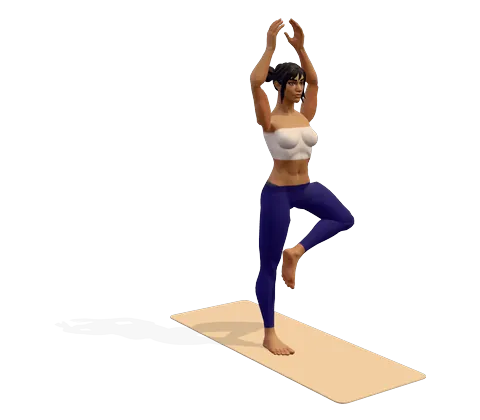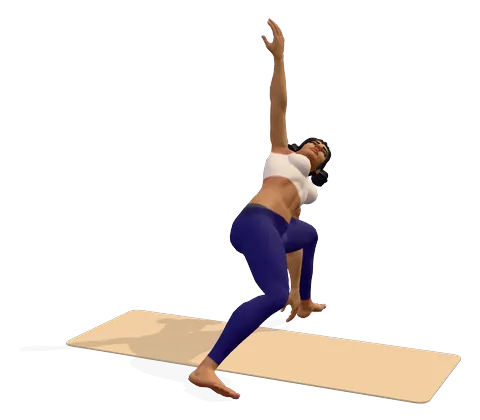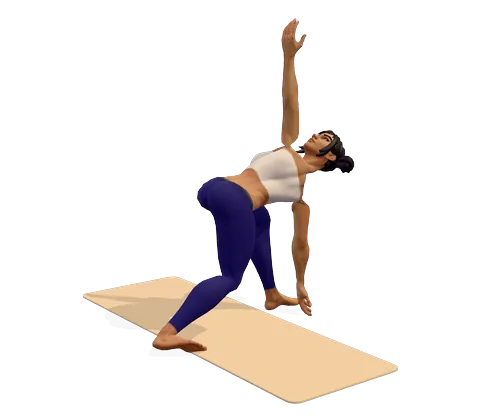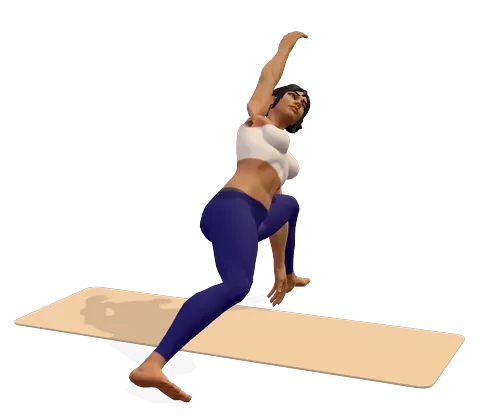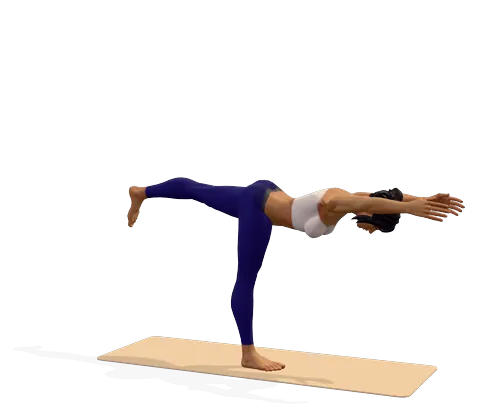
How to do Warrior III Pose step by step
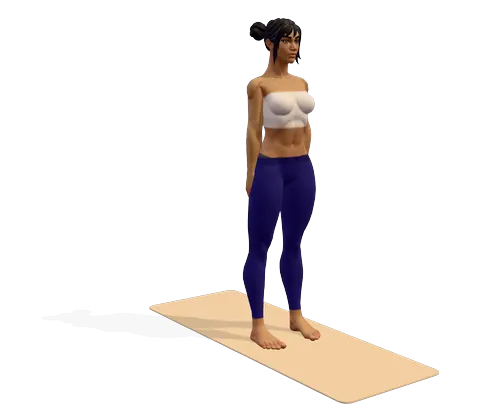
- Stand in mountain pose with your hands on your hips. Shift your weight onto your right foot and keep a soft bend in the right knee.
- Step your left foot back onto the toes, as if in a short high lunge.
- Breathe out and hinge forward from the hips as you lift your left leg behind you, until your chest and left leg are roughly parallel to the floor.
- Keep both hips level: turn the toes of the lifted foot down toward the floor. Press back through your left heel.
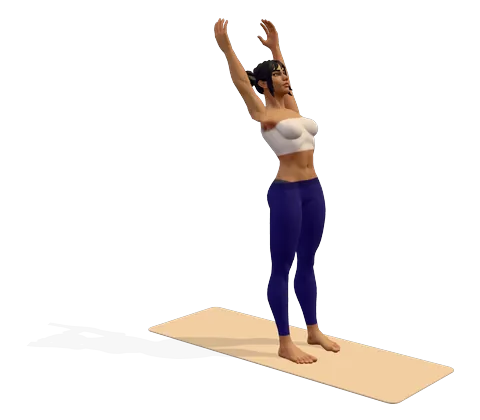
- When you feel steady, reach your arms forward alongside your ears, palms facing each other. Look at the floor a little ahead of you.
- Hold for 3–5 breaths (about 15–20 seconds).
- To come out, lower the left foot to the mat as you bring your chest up, return to standing and repeat on the other leg.
Where you feel Warrior III Pose: what it stretches and strengthens
Reach long from head to lifted heel, keeping hips level. In the 3D guide, turn on Body guide: areas that stretch glow green and areas that work glow saffron.
Stretches
- Hamstrings
Strengthens
- Glutes
- Abs
- Lower back
Benefits and precautions
Benefits
- Strengthens the ankle, knee, hamstrings and buttocks of the standing leg
- Strengthens the back of the body: glutes, back muscles and the back of the shoulders
- Works the deep core muscles that keep the pelvis level
- Challenges balance and body awareness on one foot
- Stretches the hamstring of the standing leg
- Demands full attention, which trains concentration
Avoid or modify if
- Ankle, knee or hamstring injury in the standing leg — practise with hands on a wall or chair, or skip it
- Low back pain or a disc problem — lift the leg only as high as your back stays neutral, hands on blocks
- Dizziness, vertigo or low blood pressure — keep a wall within reach and come up slowly
- Pregnancy — balance changes as the belly grows; use a wall or chair, or choose a two-footed pose
- Shoulder pain — keep your hands on your hips or arms alongside your body
Warrior III pose (Virabhadrasana III) is the balancing member of the warrior family. You stand on one leg and tip forward until your arms, body and lifted leg form a long horizontal line, like the letter T. It builds strength along the whole back of the body and asks for steady focus. This guide covers what Warrior 3 is, how to get into it step by step, balance tips, benefits and muscles, beginner variations with blocks and how it compares with similar poses.
What is Warrior 3 pose in yoga?
What is a warrior pose? The warrior poses are standing poses named after Virabhadra, a fierce hero created by Shiva in Hindu mythology. In modern retellings, Warrior III represents his swift, decisive forward movement. The warrior 3 pose Sanskrit name, Virabhadrasana III, means "pose of the hero Virabhadra, third form" (vira "hero", bhadra "auspicious", asana "pose"). So the Warrior 3 pose meaning is about committed, balanced action.
Is Warrior 3 a balance pose? Yes — it is one of the main standing balances in yoga, alongside tree pose and dancer pose. Because the body is horizontal, it is harder than tree pose, which is why teachers often practise tree pose before Warrior III.
What are the warrior series in order?
The usual order is Warrior I (arms up, hips forward), Warrior II pose (arms out, hips open to the side) and Warrior III (balancing on one leg). Warrior pose 1 2 3 flows well in that order, because Warrior I already sets up the forward-facing hips you need for Warrior III.
How to do Warrior 3 pose step by step
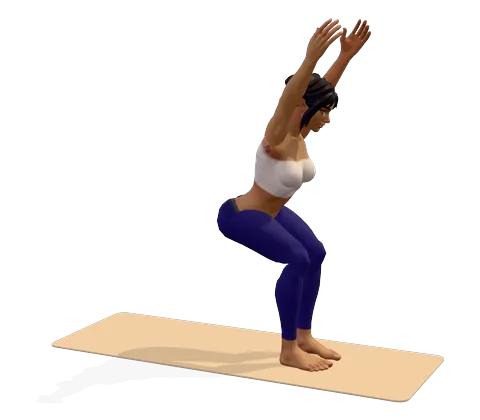
The steps above give the Warrior 3 pose instructions from standing. Many people find it easier to enter from Warrior I or a high lunge: lean the chest forward over the front thigh, then straighten the front leg as the back leg lifts. The 3D guide shows the pose balancing on the right leg with the left leg lifted.
Virabhadrasana III balance tips and Warrior 3 pose alignment cues
- Warrior 3 foot position: spread the toes of the standing foot and press evenly through the big toe, little toe and heel. Gripping with the toes makes you wobble more.
- Soft standing knee. A slight bend stops the knee from locking and gives your balance a shock absorber.
- Toes of the lifted foot point down. The lifted hip tends to roll open toward the ceiling. Pointing the toes to the floor levels the pelvis.
- Reach in two directions. Push back through the lifted heel and forward through the crown of the head or the fingertips. The pull in both directions steadies you.
- Fix your gaze. Pick a still point on the floor a little ahead of your standing foot and keep your eyes there.
- Go lower before you go longer. Your leg does not need to be at hip height. Alignment matters more than height.
Warrior 3 yoga pose benefits
What is Warrior 3 pose good for? The main Virabhadrasana III benefits are strength and balance. The standing leg works in every direction to keep you upright, while the glutes, back muscles and shoulders hold the long line of the body against gravity. Practising one-legged balances regularly can help you feel steadier on your feet, which matters more as we get older — our yoga for seniors guide shows supported versions.
Warrior III also trains attention: it is very hard to hold while thinking about something else. That is why it appears in the Balance and Focus session in our guided sessions.
Warrior 3 muscles worked: what muscles does Warrior 3 work?
| Body part | Warrior 3 pose muscles used |
|---|---|
| Standing leg | Gluteus medius and maximus, hamstrings, quadriceps, calf and ankle stabilisers |
| Lifted leg | Gluteus maximus and hamstrings (to hold the leg up) |
| Trunk | Muscles along the spine, deep abdominals and obliques |
| Arms and shoulders | Deltoids, trapezius and the muscles between the shoulder blades |
Warrior 3 pose for beginners: variations and modifications
These Warrior 3 variations for beginners let you learn the shape before you add the full balance:
- Hands on a wall: stand one leg-length from a wall, place your palms on it at hip height and walk back until your body is horizontal. This is the most helpful of the Warrior 3 modifications for beginners.
- Warrior 3 pose with blocks: place two blocks under your shoulders and rest your fingertips on them. This "Warrior 3 hands down" version takes most of the balance away.
- Chair support: hold the back of a sturdy chair.
- Lifted leg lower: keep the toes just off the floor at first.
Warrior 3 arm variations
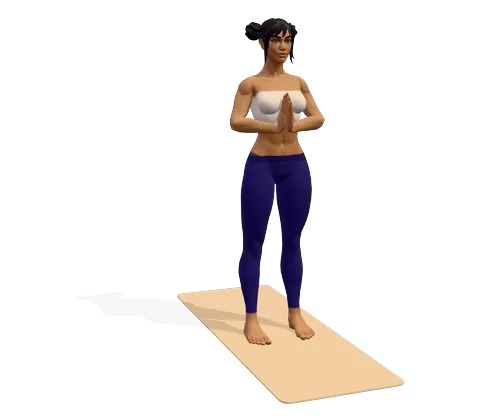
Hands on hips is the steadiest. Arms reaching forward (as in the 3D guide) is the classic form. Hands in prayer at the chest is in between. Arms swept back beside the body turns it into the "airplane" version.
Warrior 3 pose for kids
Children love it as the "aeroplane" pose. Let them hold a wall or a partner's hands, and keep it playful and short. See yoga for kids for more ideas.
Warrior 3 vs airplane pose, half moon and standing split
- Warrior 3 vs airplane pose: the legs and body are the same; in the airplane pose the arms stretch back along the body like wings, which shifts the weight toward the hips and makes it a little easier.
- Warrior 3 vs half moon: in half moon the hips and chest open to the side and one hand rests on the floor or a block, so it is a side-facing balance.
- Warrior 3 vs standing split: in the standing split you fold down with both hands to the floor and lift the back leg as high as possible, so it is a forward fold with a split rather than a horizontal balance.
- Warrior 3 vs balancing stick: balancing stick (Tuladandasana in Bikram yoga) is almost the same shape, with the arms overhead and palms pressed together.
Warrior 3 prep poses and sequence
Good Warrior three prep poses warm the hamstrings, hips and balance: mountain pose, tree pose, pyramid pose and Warrior I. A simple Warrior 3 sequence for beginners: mountain, tree on each side, Warrior I, then Warrior III at a wall. Is Warrior III a peak pose? For beginners it often is; in a Warrior 3 peak pose sequence, earlier poses prepare the hamstrings and hips so the balance feels steady. As a Warrior 3 counter pose or cool down, fold forward in a standing forward bend and let the legs relax.
Warrior 3 pose contraindications
See the caution box above. Balance poses are safe for most people when you have support within reach; the main risk is falling. If you have osteoporosis or a history of falls, always practise next to a wall or chair. Stop if you feel strain in the standing knee or pain in the lower back.
वीरभद्रासन 3 (Warrior III) — हिंदी में: सीधे खड़े होकर हाथ कमर पर रखें और वज़न दाहिने पैर पर लाएँ। साँस छोड़ते हुए आगे झुकें और बायाँ पैर पीछे उठाएँ, जब तक शरीर और पैर ज़मीन के समानांतर न हो जाएँ। हाथ आगे फैलाएँ और 15–20 सेकंड रुकें। वीरभद्रासन 3 के फायदे: पैरों, कूल्हों और पीठ में ताकत, बेहतर संतुलन और एकाग्रता। घुटने या टखने में चोट हो तो दीवार का सहारा लें।
Frequently asked questions
What are the benefits of Warrior 3 pose?
Warrior 3 strengthens the standing leg, buttocks, back and shoulders, works the deep core, and trains balance and concentration.
Why do I wobble in Warrior 3?
Wobbling is normal — your ankle muscles are constantly adjusting. Spread your toes, soften the standing knee, fix your gaze on one point and practise with your hands on a wall or blocks until it steadies.
How long should I hold Warrior 3?
Beginners can hold it for 3–5 breaths (about 15–20 seconds) on each leg. It is better to repeat a short, steady hold than to hang on while losing alignment.
Should my leg be at hip height in Warrior 3?
Not at first. Keep the hips level and the back long, even if the leg is lower. Height comes with strength in the glutes and hamstrings.
What are the Virabhadrasana 3 contraindications?
Take care with ankle, knee or hamstring injuries in the standing leg, low back pain, dizziness or low blood pressure, and in pregnancy. Use a wall or chair for support.
What is Virabhadrasana 3 in Hindi?
It is वीरभद्रासन 3 (Warrior 3 pose in Hindi). The Hindi box above explains the steps and the Virabhadrasana 3 benefits in Hindi.
This page is for general education. Check with your doctor before starting yoga if you are pregnant, have a medical condition or an injury. Stop if you feel pain, dizziness or shortness of breath.