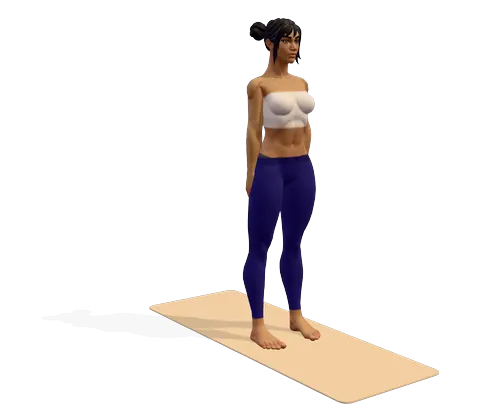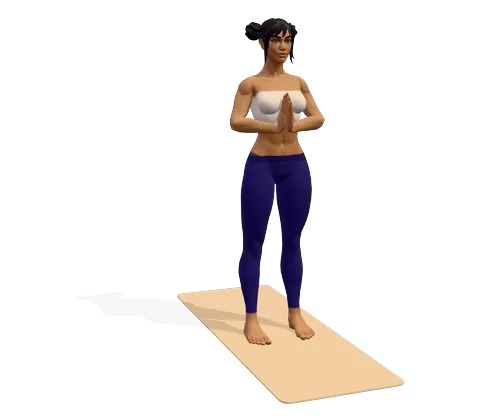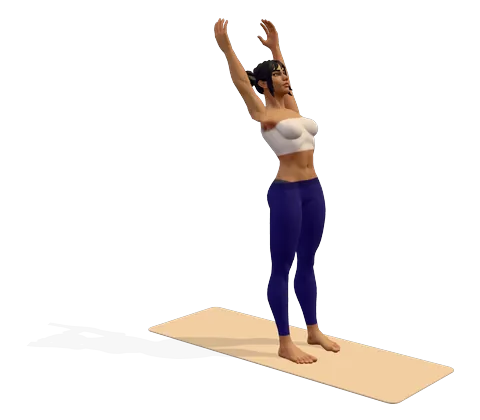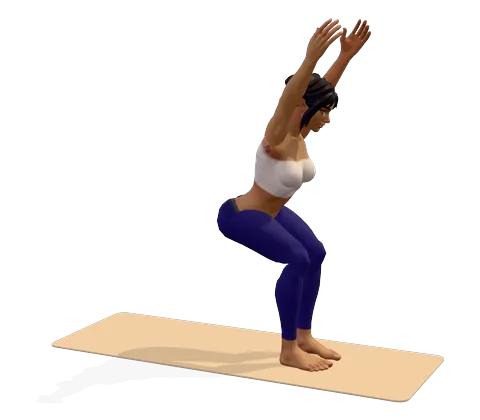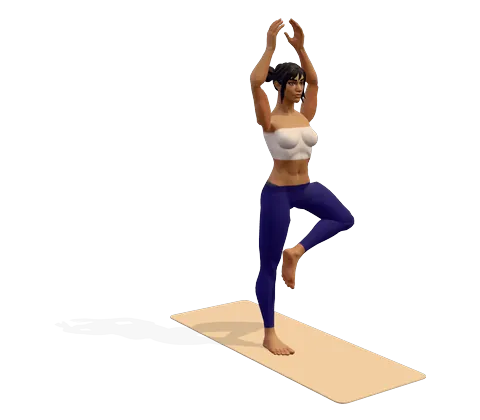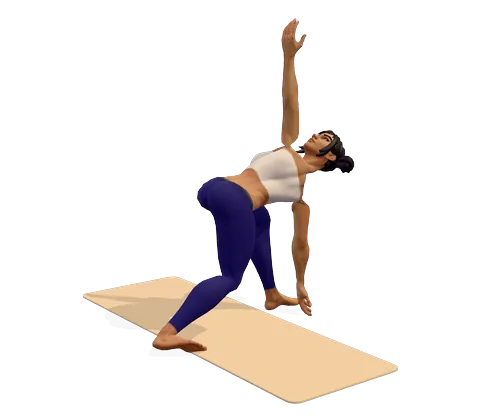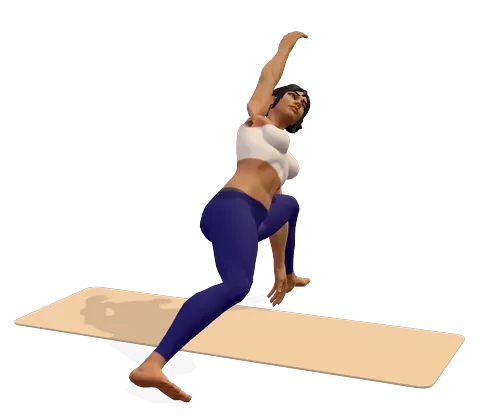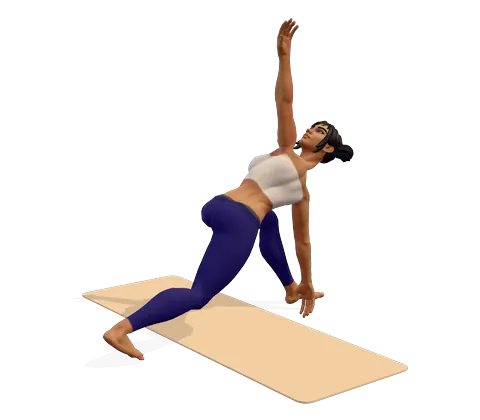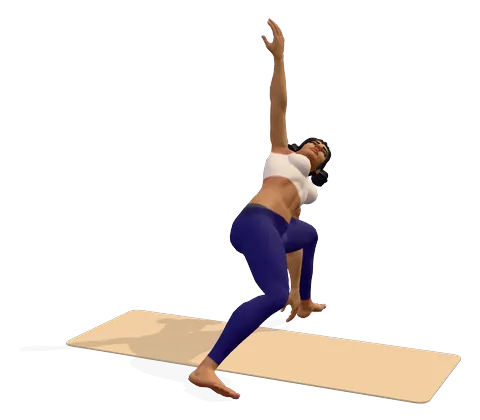
How to do Triangle Pose step by step
- Stand with your feet about one leg-length apart (roughly 1–1.2 metres), parallel, and raise your arms out to shoulder height.
- Turn your left foot out 90 degrees so the toes point to the left end of the mat. Turn your right foot in slightly. Line up your left heel with the arch of your right foot.
- Keep both legs straight but not locked. Breathe in and reach your left arm out to the left, sliding your hips a little to the right.
- Breathing out, hinge at the left hip and tip your body sideways. Rest your left hand on your shin, ankle or a block — not on the knee.
- Stretch your right arm straight up so both arms form one line. Open your chest toward the side of the room and keep both sides of your waist long.
- Turn your head to look up at your right hand, or look straight ahead if your neck prefers. Hold for 20–30 seconds (3–6 breaths).
- Breathe in, press through your feet and reach your right arm up to lift yourself back to standing. Turn the feet and repeat on the right side.
Where you feel Triangle Pose: what it stretches and strengthens
Lengthen both sides of your waist and open your chest to the side. In the 3D guide, turn on Body guide: areas that stretch glow green and areas that work glow saffron.
Stretches
- Hamstrings
- Side waist
- Inner thighs
Strengthens
- Front thighs
- Abs
Benefits and precautions
Benefits
- Stretches the hamstrings, calves and inner thighs of the front leg
- Lengthens the sides of the waist and opens the chest and shoulders
- Strengthens the legs, ankles and the core muscles that hold the torso sideways
- Improves hip mobility and awareness of hip alignment
- Encourages deeper breathing into the side ribs
- Builds balance and steadiness in a wide stance
Avoid or modify if
- Low blood pressure or dizziness — look down at the floor instead of up and come up slowly
- Neck pain or cervical problems — keep your head in line with the spine and look forward or down
- Hamstring tear or strong sciatic pain — bend the front knee slightly and shorten the stance
- Sacroiliac (SI) joint or hip pain — reduce the stance and do not force the hips open
- Knee hyperextension — keep a micro-bend in the front knee and do not lean on the knee
- Pregnancy — practise with your back near a wall, a block under the hand and a shorter stance; ask your midwife or doctor first
Triangle pose (Trikonasana) is a standing pose in which your legs, torso and arms make a series of triangles: feet wide, one hand reaching down the front leg and the other reaching up to the ceiling. It is a staple of almost every yoga style because it does several things at once: it stretches the hamstrings and the sides of the body, strengthens the legs and core, and teaches you how the hips line up. This page covers how to do triangle pose correctly, what it is good for, the muscles involved, variations and precautions.
What is Trikonasana?
The Sanskrit is simple: tri means "three", kona means "angle" and asana means "pose", so the Trikonasana meaning is "three-angle pose" or triangle pose. Trikonasana in Hindi is त्रिकोणासन.
Trikonasana vs Utthita Trikonasana
What is the difference between Trikonasana and Utthita Trikonasana? Mostly the name. Utthita means "extended", and Iyengar-based styles call the classic pose Utthita Trikonasana to separate it from its revolved form. So the extended triangle and the plain triangle are one pose with two names, and Utthita Trikonasana benefits are the same.
Konasana vs Trikonasana
In many Indian school syllabi, Konasana ("angle pose") is a simpler standing side bend, feet apart and one arm reaching over the head, while Trikonasana adds the wide stance with one hand lowered down the leg. Konasana is a good warm-up before triangle.
How to do triangle pose correctly (Trikonasana kaise kare)
The steps above show the left side first, as the 3D guide does. These triangle pose cues fix the usual problems:
- Reach out before you tip down. Slide your torso sideways over the front leg first, then lower. Dropping straight down collapses the lower side of the waist.
- Hand lower on the leg is not better. A hand on the shin with a long spine beats a hand on the floor with a rounded back. Use a block if you need one.
- Never press on the knee. Rest the hand above or below the knee joint.
- Front knee soft. Straight but not locked; lift the kneecap by firming the thigh.
- Chest open, not the hip forced. Let the back hip roll open only as far as it goes. It is fine if your chest faces slightly toward the floor.
- Back foot grounded. Press the outer edge of the back foot down; that anchors the whole pose.
How long to hold triangle pose? 20–30 seconds per side for most people, or up to a minute when you are comfortable. Do it after a few warm-up poses, not first thing when the hamstrings are cold.
Triangle pose benefits
What is triangle pose good for? The main benefits are flexibility and strength together. The front leg's hamstrings and calf get a long stretch, the inner thigh opens, and the sides of the waist lengthen as the chest turns up. At the same time the legs work to hold a wide stance and the obliques and back muscles hold the torso sideways against gravity.
Many people also find it opens the breath, because the upper side of the rib cage has room to expand. Standing poses like this build the stamina for longer practices, which is why Trikonasana is part of our yoga for weight loss plan.
Is Trikonasana good for belly fat?
No single pose removes fat from one place. Triangle pose works the side abdominal muscles, and a regular practice that includes flowing standing poses, plus diet and daily movement, can help reduce overall body fat over time. See our yoga for belly fat plan for an honest routine.
Is Trikonasana good for back pain?
For many people with general stiffness, yes: it lengthens the side body and the hamstrings, and tight hamstrings often go with a stiff lower back. Keep the spine long, use a block and avoid pulling yourself deeper. If you have sciatica, a disc problem or SI joint pain, shorten the stance and follow our yoga for back pain plan or your physiotherapist’s advice. Stop if pain spreads down the leg.
Triangle pose muscles stretched and worked
| Stretched | Strengthened |
|---|---|
| Hamstrings and calf of the front leg | Quadriceps of both legs |
| Inner thighs (adductors) and groin | Obliques and deep core, holding the torso sideways |
| Sides of the waist and the lower ribs | Glutes and outer hip of the front leg |
| Chest and front of the shoulders | Muscles along the spine and the upper back |
Triangle pose for beginners and modifications
- Use a block under the lower hand, on its tallest height, inside or outside the front foot.
- Shorter stance: bring the feet closer if you feel strain in the hamstrings or hip.
- Back against a wall: stand with your back near a wall to feel whether your chest is open or tipping forward.
- Top hand on the hip if your shoulder is sore or the arm tires.
- Gaze down or forward if looking up strains your neck or makes you dizzy.
- Triangle pose with bent knee: a soft front knee takes pressure off tight hamstrings.
Kids enjoy it as "make a triangle with your arms and legs"; keep it short and playful. The triangle pose benefits for kids are the same stretch and balance, in a game.
Triangle pose vs similar poses
- Triangle pose vs extended side angle: in extended side angle the front knee bends to 90 degrees and the top arm reaches over the ear. It is stronger for the legs; triangle stretches the hamstrings more.
- Triangle pose vs revolved triangle: in revolved triangle the hips face forward and the opposite hand comes down, adding a twist. It is harder and needs more balance.
- Triangle pose vs pyramid pose: pyramid pose is a forward fold over the front leg with the hips square, a stronger hamstring stretch.
A simple triangle pose sequence
Warm up with Mountain Pose and a few side bends, move into Warrior II, straighten the front leg and reach into triangle. Then bend the knee again for extended side angle and finish with a wide-legged forward bend. Triangle pose to half moon is a common next step for more experienced students. You can practise these poses with voice guidance in our guided sessions.
Trikonasana contraindications and precautions
Who should not do Trikonasana without changes? Anyone with the issues in the caution list above: low blood pressure or dizziness, neck problems, a recent hamstring or hip injury, and SI joint pain. During pregnancy, many people can practise a supported version with a shorter stance and their back near a wall, but ask your midwife or doctor first, especially in the third trimester.
त्रिकोणासन (Trikonasana) — हिंदी में: पैरों को लगभग एक टाँग जितना फैलाएँ, बायाँ पंजा बाईं ओर मोड़ें। साँस छोड़ते हुए बाईं ओर झुकें और बायाँ हाथ पिंडली पर रखें, दायाँ हाथ ऊपर सीधा करें और ऊपर देखें। 20–30 सेकंड रुकें, फिर दूसरी तरफ़ करें। त्रिकोणासन के फायदे (Trikonasana ke fayde): जाँघों के पीछे और कमर के किनारे की मांसपेशियों में खिंचाव, पैर मज़बूत और छाती खुली होती है। चक्कर आते हों या गर्दन में दर्द हो तो नीचे की ओर देखें।
Health conditions this pose is used for
Yoga for osteoporosis and bone health · Yoga for flat feet · Yoga for weight loss · Yoga for high cholesterol · Yoga for fatty liver · Yoga for gallstones
Frequently asked questions
What is Trikonasana and its benefits?
Trikonasana (triangle pose) is a wide-legged standing pose with one hand down the front leg and the other arm up. It stretches the hamstrings, inner thighs and sides of the waist, strengthens the legs and core, and opens the chest.
How long should I hold triangle pose?
Hold for 20–30 seconds (3–6 breaths) on each side. With practice you can stay up to a minute.
Where should my hand go in triangle pose?
On the shin, the ankle or a block, wherever you can keep your spine long. Avoid pressing on the knee.
What is the difference between triangle and extended triangle pose?
None in shape. Utthita means extended, and some styles use Utthita Trikonasana as the full name to separate it from revolved triangle.
Who should not do Trikonasana?
Avoid it or modify it with low blood pressure, dizziness, neck problems, a recent hamstring or hip injury, or SI joint pain. In pregnancy, use a wall and a block and ask your midwife or doctor first.
Is triangle pose good for sciatica?
Sometimes, if it is done gently with a short stance and a bent front knee. If it increases pain or tingling down the leg, stop and ask a physiotherapist.
Why do I feel triangle pose in my lower back?
Usually because the hand is reaching too low and the spine is bending. Raise the hand onto a block or the shin and lengthen both sides of the waist.
This page is for general education. Check with your doctor before starting yoga if you are pregnant, have a medical condition or an injury. Stop if you feel pain, dizziness or shortness of breath.