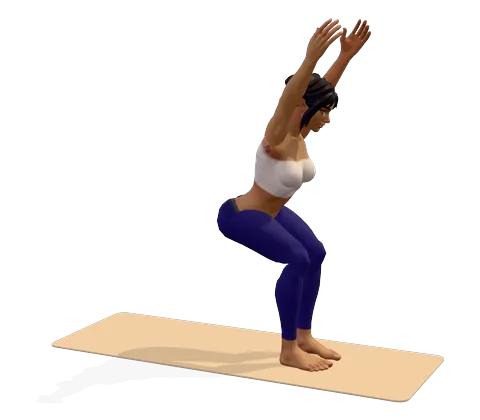
How to do Chair Pose step by step
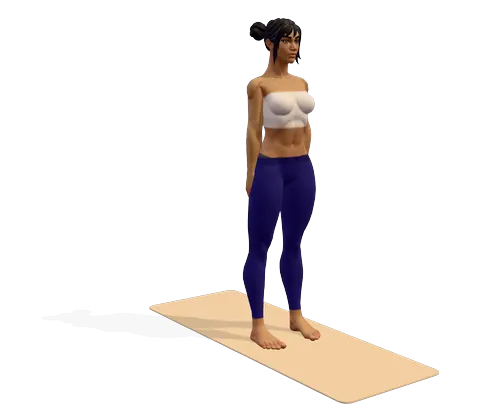
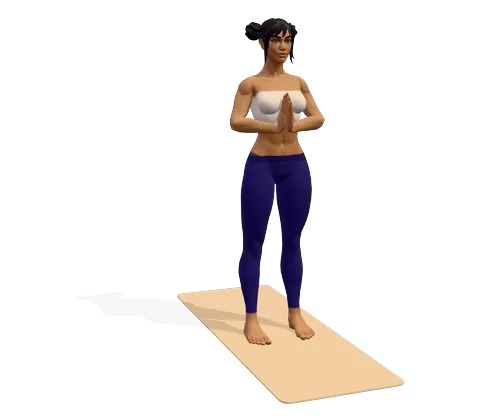
- Stand in Mountain Pose with your feet together, or hip-width apart if your knees or balance prefer it.
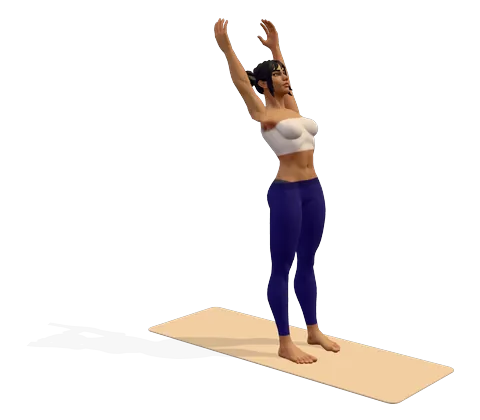
- Breathing in, raise your arms forward and up beside your ears, palms facing each other.
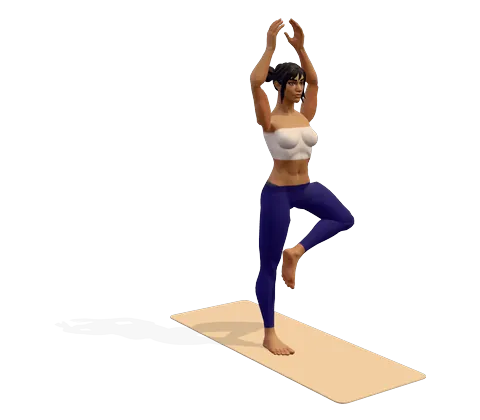
- Breathing out, bend your knees and send your hips back and down, as if sitting on a chair behind you.
- Lean your chest forward slightly so your weight stays over your heels. Keep your knees pointing straight ahead, in line with your toes.
- Draw your belly in, lengthen your tailbone toward the floor and keep your back long. Relax your shoulders away from your ears.
- Hold for 20–30 seconds (3–6 breaths), sinking only as low as you can while breathing smoothly.
- To come out, breathe in and press through your feet to straighten your legs, then lower your arms as you breathe out.
Where you feel Chair Pose: what it stretches and strengthens
Sit your hips back and feel your thighs working hard. In the 3D guide, turn on Body guide: areas that stretch glow green and areas that work glow saffron.
Stretches
- Ankles
Strengthens
- Front thighs
- Glutes
- Shoulders
Benefits and precautions
Benefits
- Strengthens the thighs, glutes, calves and ankles
- Builds the leg strength that supports the knee joint
- Works the muscles along the spine and the shoulders as you reach up
- Trains balance and the ability to sit down and stand up with control
- Warms the whole body quickly and raises the heart rate
- Builds focus and staying power when the legs start to burn
Avoid or modify if
- Acute knee injury, recent knee surgery or knee pain during the pose — keep the bend very shallow or use a wall
- Low blood pressure or dizziness — keep the hands on the hips or at the chest and come up slowly
- Shoulder injury — reach the arms forward at shoulder height, or keep the hands at the chest
- High blood pressure or heart disease — keep holds short, hands at the chest, and never hold your breath
- Lower back pain — lean the chest forward less, do not arch the lower back and keep the belly engaged
- Pregnancy — stand with feet hip-width apart, bend only a little and hold briefly
Chair pose (Utkatasana) is a standing squat with the arms reaching up: you bend your knees, sit your hips back and hold, as if lowering onto a chair that is not there. It looks easy and takes about ten seconds to feel otherwise. It is one of the most effective poses for leg strength, it is used in yoga plans for knee health, and in Ashtanga it opens every round of the second sun salutation. This page covers how to do chair pose correctly, the muscles it works, its benefits, variations and who should modify it.
What is chair pose in yoga?
The chair pose Sanskrit name gives a clue: utkata means "fierce", "powerful" or "intense" and asana means "pose". So the Utkatasana meaning is "fierce pose" or "powerful pose". In Bikram and hot yoga it is called awkward pose, which is honest: nothing about it feels natural at first. Utkatasana in Hindi is उत्कटासन. The English name, chair pose, simply describes the shape.
Chair pose is not the same as chair yoga. Chair yoga is a gentle style done sitting on, or holding, a real chair; chair pose needs no chair at all.
How to do chair pose correctly (Utkatasana kaise kare)
The steps above take you in and out of the pose. These chair pose cues fix the usual mistakes:
- Hips back, not knees forward. Think "sit" rather than "bend". Your knees can move a little past your toes, but the movement should come mainly from the hips.
- Weight in the heels. You should be able to wiggle your toes. If you cannot, shift back.
- Knees in line with the toes. Do not let them fall inward; press them gently toward the little-toe side.
- Long back, not arched. A slight forward lean of the chest is correct. A big arch in the lower back is not: draw the belly in and the tailbone down.
- Soft shoulders. If raising the arms hunches your shoulders, widen the arms or bring them forward.
Chair pose for beginners: feet together or apart?
Both are correct. Feet together (the classical version) makes the inner thighs work and balance harder. Feet hip-width apart is steadier and kinder to the knees and lower back, so it is the better choice for beginners, seniors and pregnancy.
How long to hold chair pose
Start with 3–5 breaths (about 20–30 seconds) and repeat two or three times with rests between. To make chair pose harder, hold longer, sink lower, lift your heels onto tiptoe or add small "pulses", bobbing up and down a few centimetres. For kids, turn it into a game of sitting on an invisible chair while someone counts.
Chair pose muscles worked
| Main muscles working | Also used |
|---|---|
| Quadriceps (front of the thighs) | Hamstrings and inner thighs (adductors) |
| Gluteus maximus and medius (buttocks) | Calves and the small muscles around the ankles |
| Erector spinae (muscles along the spine) | Deep abdominals that steady the pelvis |
| Shoulders and upper back, holding the arms up | Muscles between the shoulder blades |
So what muscles does chair pose work most? The quads and glutes, held under load, which is why the thighs start to burn quickly. It also gives a gentle stretch to the calves and the front of the shoulders.
Chair pose benefits
What is chair pose good for? The biggest benefit is leg strength that carries into daily life: climbing stairs, getting up from a low seat, carrying shopping. Strong thigh muscles help support the knee, which is why a shallow Utkatasana appears in our plan for knee pain and osteoarthritis. Stay in a pain-free range and let your physiotherapist guide you if you have a diagnosed knee problem.
Because it uses large muscles, chair pose also warms you up and lifts the heart rate, and it is part of our yoga for weight loss flow. On its own it burns a modest number of calories; flowing through several rounds counts for more. Standing strength work of this kind is also used gently for low blood pressure, as the leg muscles help push blood back toward the heart. Come up slowly if you feel light-headed.
Some teachers also speak of chair pose benefits in spiritual terms: staying calm while the legs burn is practice in staying steady under pressure. Whatever you call it, it builds determination.
Chair pose variations and modifications
- Against a wall: stand with your back to a wall and slide down a little. Chair pose vs wall sit: the wall sit is lower, with the back upright on the wall; Utkatasana leans forward and needs more balance.
- Hands at the chest or on the hips: a good modification for sore shoulders, high blood pressure or fatigue.
- With a block: squeeze a block between the thighs to keep the knees in line.
- Chair pose on tiptoes: lift the heels for a stronger balance and calf challenge.
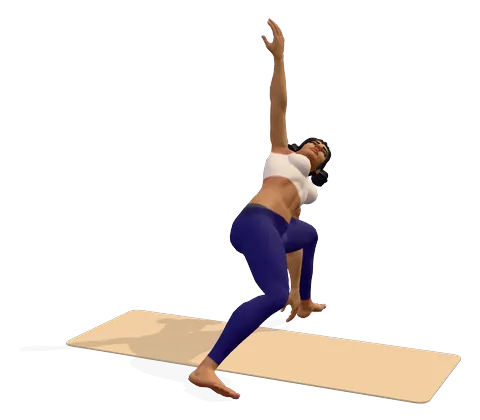
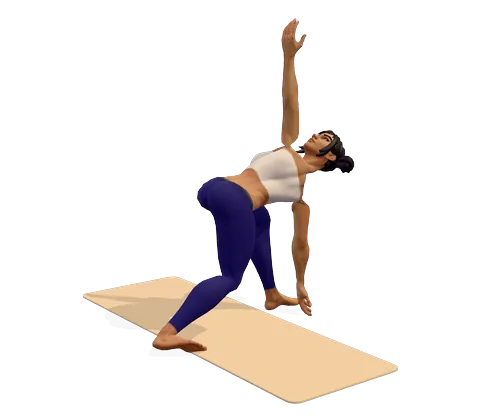
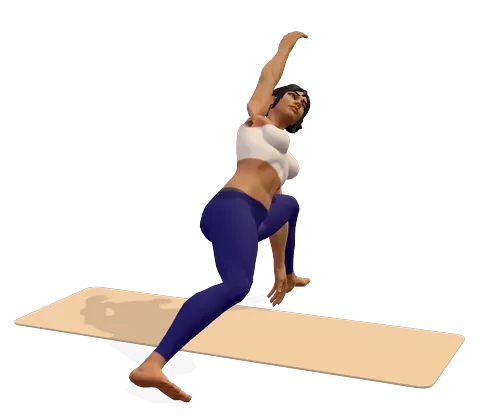
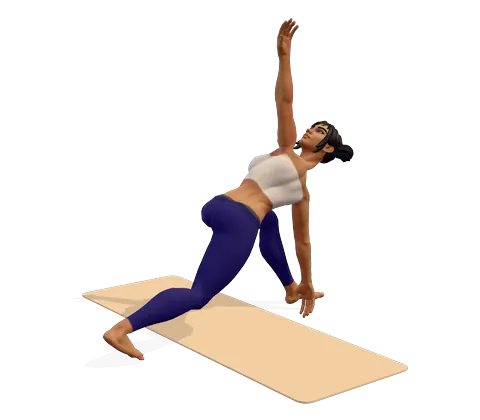
- Chair pose twist (Parivrtta Utkatasana): join the palms at the chest and hook one elbow outside the opposite knee. How to do revolved chair pose: keep the knees level and twist from the ribs, not the neck. Skip deep twists in pregnancy.
- Chair pose variations for seniors: hold the back of a real chair, bend the knees only a little and come back up. Ten slow repeats is a useful strength exercise.
Chair pose vs squat
A gym squat is a movement, usually repeated and often loaded with weights. Chair pose is a held, bodyweight squat with the arms raised and the torso leaning forward, so it trains endurance and balance more than maximum strength. Compared with a deep yoga squat such as Garland Pose, chair pose is shallower and keeps the heels grounded. And compared with Goddess Pose, which is its wide-legged cousin, it works the inner thighs less and the front of the thighs more.
A short chair pose sequence
Start in Mountain Pose, breathe in to raise the arms, breathe out into chair pose, hold three breaths, then fold into a standing forward bend. Come back up through chair pose and stand. Repeat three times. It fits into any guided session for strength or balance, and the voice will count your breaths for you.
Chair pose precautions and contraindications
Few people need to avoid Utkatasana entirely, but many need to adjust it. Use the caution list above: bend less with knee pain, keep the hands low with shoulder pain or high blood pressure, and come up slowly if you tend to feel dizzy. Good chair pose prep includes Mountain Pose and a few gentle squats holding a chair back.
उत्कटासन (Utkatasana) — हिंदी में: पैर साथ रखकर खड़े हों और हाथ ऊपर उठाएँ। साँस छोड़ते हुए घुटने मोड़ें और कूल्हों को पीछे ले जाएँ, जैसे किसी कुर्सी पर बैठ रहे हों। वज़न एड़ियों पर रखें और 20–30 सेकंड रुकें। उत्कटासन के फायदे (Utkatasana ke fayde): जाँघें, कूल्हे और पिंडलियाँ मज़बूत होती हैं, घुटनों को सहारा मिलता है और संतुलन बढ़ता है। घुटने में तेज़ दर्द हो तो कम झुकें या दीवार का सहारा लें।
Health conditions this pose is used for
Yoga for knee pain and osteoarthritis · Yoga for osteoporosis and bone health · Yoga for flat feet · Yoga for balance and fall prevention · Yoga for weight loss · Yoga for low blood pressure · Yoga for high cholesterol · Yoga for fatty liver · Yoga for healthy weight gain · Yoga for pelvic floor and urinary incontinence · Yoga for adhd and attention · Yoga for self-confidence · Yoga for cold hands and feet (circulation)
Where this practice is used
Chakras: Muladhara (Root Chakra)
Frequently asked questions
What is Utkatasana and its benefits?
Utkatasana (chair pose) is a standing squat with the arms raised. It strengthens the thighs, glutes, calves and back, builds the leg strength that supports the knees, improves balance and warms the body quickly.
How long should I hold chair pose?
Start with 20–30 seconds (3–6 breaths) and repeat two or three times. Build up slowly; a smooth breath matters more than the length of the hold.
Is chair pose good for knee pain?
Often yes, in a shallow, pain-free range, because it strengthens the muscles that support the knee. Keep the knees in line with the toes, use a wall if needed, and stop if the pain gets sharper.
Should my knees go past my toes in chair pose?
A little is fine for most people. What matters more is that the movement comes mainly from sitting the hips back and that the knees track in line with the toes.
Why is Utkatasana called fierce pose?
Utkata means fierce, powerful or intense in Sanskrit. The name reflects the strength and determination the pose asks for.
Can chair pose hurt my lower back?
It can if you arch the lower back to lift the chest. Lean forward less, draw the belly in and let the tailbone point down. If pain continues, keep the hands on the hips and bend less.
What is the difference between chair pose and chair yoga?
Chair pose is a standing squat with no chair. Chair yoga is a gentle style of yoga done sitting on or holding a real chair.
This page is for general education. Check with your doctor before starting yoga if you are pregnant, have a medical condition or an injury. Stop if you feel pain, dizziness or shortness of breath.