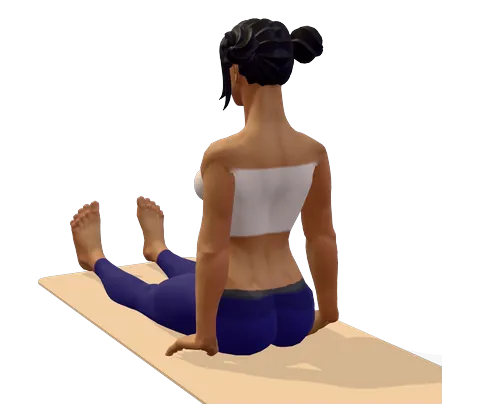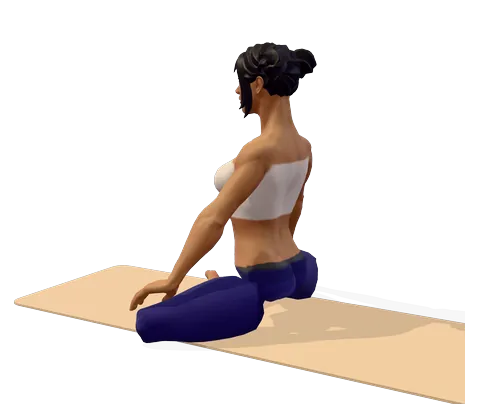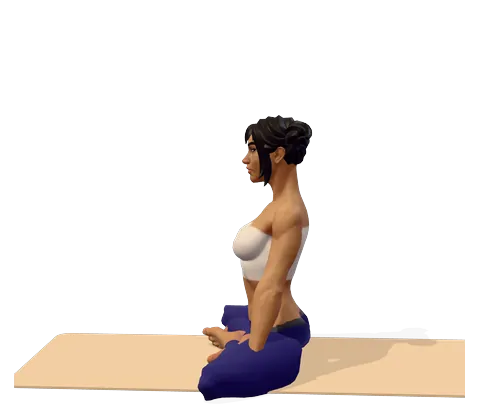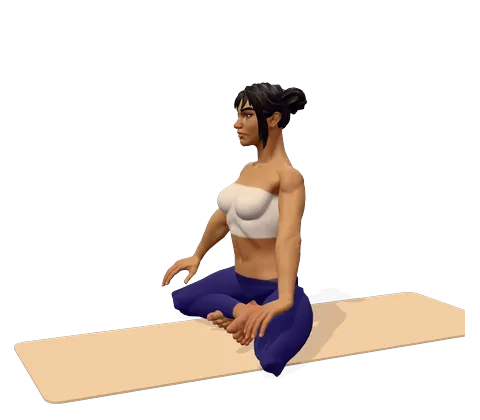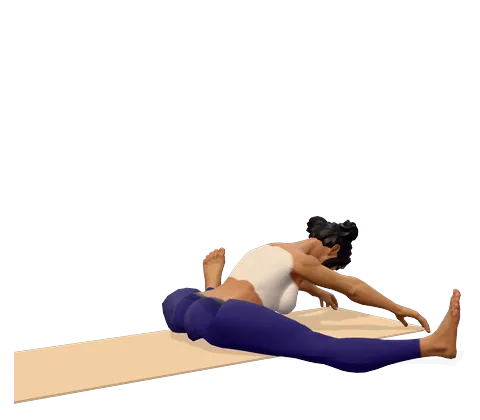
How to do Wide-Angle Seated Forward Bend step by step
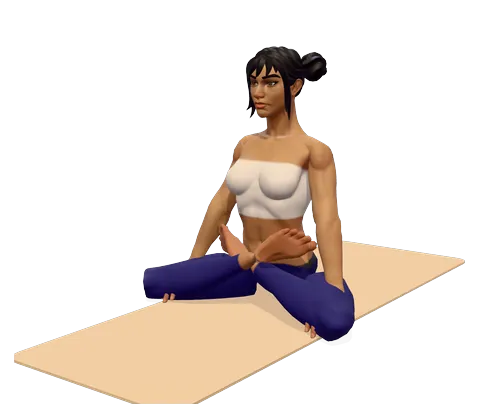
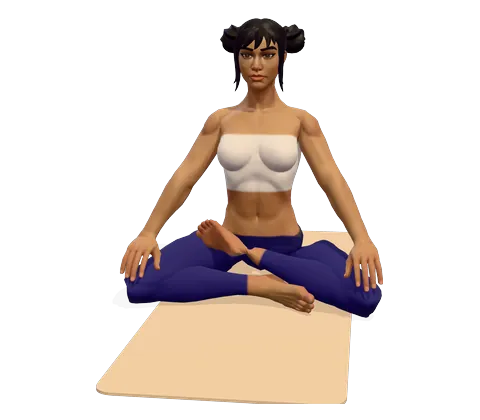
- Sit in staff pose with your legs straight. If your lower back rounds, sit on the edge of a folded blanket.
- Open your legs wide to the sides, as far as you can while your kneecaps and toes still point straight up to the ceiling.
- Press the backs of your thighs into the floor and flex your feet. Place your hands on the floor behind your hips and lift your chest tall.
- Move your hands to the floor in front of you. Breathing out, tip your pelvis forward and fold from the hips, keeping the spine long.
- Walk your hands forward only as far as your back stays long. Rest on your forearms, a block or a bolster if you like.
- Hold for 30 seconds to 1 minute, breathing slowly. Let the inner thighs soften with each breath out.
- To come out, walk your hands back, lift your chest on a breath in, and slowly bring your legs together with your hands under the knees.
Where you feel Wide-Angle Seated Forward Bend: what it stretches and strengthens
Keep your kneecaps pointing up and walk your hands forward. In the 3D guide, turn on Body guide: areas that stretch glow green and areas that work glow saffron.
Stretches
- Inner thighs
- Hamstrings
- Lower back
Strengthens
- Front thighs
Benefits and precautions
Benefits
- Stretches the inner thighs (adductors), hamstrings and calves
- Lengthens the lower back and the muscles along the spine
- Improves hip mobility for seated poses, squats and wide stances
- A calming forward bend that encourages slow, steady breathing
- Prepares the body for side splits and other wide-leg poses
Avoid or modify if
- Hamstring tear or groin strain — keep the legs narrower, the knees slightly bent and stay upright
- Herniated disc, sciatica or acute lower back pain — sit upright with a long spine and skip the fold
- Pregnancy — keep the chest lifted or fold only onto a high bolster, leaving room for the belly
- Knee pain behind the joint — bend the knees a little and place a rolled towel under them
- Never bounce or pull yourself forward with your hands
Wide-angle seated forward bend (Upavistha Konasana) is a seated straddle: you open your legs wide, then fold forward between them. It stretches the inner thighs and the backs of the legs at the same time and teaches you to bend from the hips instead of the waist. For most beginners the real pose is sitting tall with the legs apart — the fold comes later. Below you will find how to do Upavistha Konasana, its benefits, props, variations and who should keep it gentle.
What is Upavistha Konasana?
The Sanskrit name of the seated wide angle pose has three parts: upavistha means "seated", kona means "angle" and asana means "pose". So the Upavistha Konasana meaning in English is "seated angle pose", named for the wide angle between the legs; that is the most literal translation. In yoga classes it is also called seated wide angle pose, seated wide-legged forward fold or simply the seated straddle.
This wide angle seated forward bend is a yoga pose from the Ashtanga primary series and is taught often in Iyengar yoga. What about the difference between Konasana and Trikonasana? In many Indian classes, Konasana on its own is a standing side bend and Trikonasana is the triangle pose; the upavistha version is seated.
How to do Upavistha Konasana correctly
The steps above show the full movement. These points decide whether you feel a good stretch or just strain:
- Knees face the ceiling. If your kneecaps roll inward as you fold, bring the legs closer together.
- Width is personal. Around 90 degrees between the legs is a good start; wider is not better if the knees turn in.
- Sit on a lift. A folded blanket tips the pelvis forward, and that is where the forward bend really comes from.
- Fold with a long front body. Lead with the chest, not the head. A rounded back means you have gone past your hips' range.
- Feet active. Flexed feet protect the backs of the knees.
How long to hold it
Stay for 30 seconds to 1 minute in an active class. In a slower practice, 2–3 minutes resting on a bolster lets the inner thighs release. Come up slowly if you feel light-headed.
Wide angle seated forward bend benefits (Upavistha Konasana ke fayde)
The first of the seated wide-legged forward fold benefits is flexibility. The pose stretches the adductors, the hamstrings and the calves together, which helps with squats, running strides and sitting comfortably on the floor. Because you must tilt the pelvis forward to fold, it also trains the hip hinge that protects your back when you bend to lift.
It shares the calming benefits of every seated forward bend in yoga: the head moves toward the floor and the breath slows. In Iyengar yoga, Upavistha Konasana benefits for female practitioners are said to include comfort in the pelvic area, which is a traditional view rather than a proven one. It burns little energy, so treat this seated forward bend as a stretch, not a cardio exercise.
Upavistha Konasana muscles stretched
| Stretches | Works gently |
|---|---|
| Adductors (inner thighs) | Quadriceps, which press the backs of the legs down |
| Hamstrings and calves | Hip flexors, which help tip the pelvis forward |
| Lower back and muscles along the spine | Muscles that keep the spine long as you fold |
Wide angle seated forward bend for beginners
Upavistha Konasana for beginners usually starts with tight hamstrings. These Upavistha Konasana modifications keep the stretch where it belongs:
- Stay upright: hands behind your hips, chest lifted. This alone is a full stretch for many bodies.
- Hands on blocks: fold only as far as a block or bolster in front of you.
- Soft knees: a small bend in the knees, with a rolled towel beneath, eases the backs of the legs.
- Chair seated forward bend: sit on the front of a chair with the feet wide, and fold forward with your hands on your thighs.
Upavistha Konasana variations
- Parsva Upavistha Konasana (side seated wide angle pose): parsva means "side". Turn your chest toward one leg and fold over it, then repeat on the other side. Parsva Upavistha Konasana benefits include a stretch along the side of the waist.
- Parivrtta Upavistha Konasana (revolved seated wide angle pose): reach one arm over your head toward the opposite foot, turning the chest up. This seated straddle side bend opens the ribs and waist.
- Upavistha Konasana B: in Ashtanga yoga, you hold your feet and balance on your sit bones with the legs lifted in a wide V. Often called Urdhva Upavistha Konasana — urdhva means "upward", so the upward-facing wide angle seated pose — it needs strong abdominals and hamstrings.
- Yin version: in yin yoga the Upavistha Konasana shape is called dragonfly, held for 3–5 minutes with a relaxed, rounded back on a bolster.
How it compares with similar poses
Compared with seated forward bend, where the legs are together, the wide legs add an inner-thigh stretch and give the belly more room. Wide-legged forward bend is the standing wide forward bend, with gravity helping you fold. Straight angle pose is the full side split, the far end of this stretch. And head-to-knee pose is a single-leg forward bend that is often easier to learn first.
Upavistha Konasana precautions and contraindications
Read the caution box before practising. The two most common problems are rounding the lower back to get the chest down and forcing the legs wider than the knees allow. If you feel a sharp pull at the sit bones, behind the knee or in the groin, come up and narrow your stance. With sciatica or a disc problem, keep the spine upright; a physiotherapist can advise which stretches suit you.
Upavistha Konasana in pregnancy
The wide legs leave space for the belly, so a supported version is often used in prenatal classes: sit on a blanket, keep the chest lifted, and fold only onto a high bolster. Avoid deep folding and overstretching, and ask your doctor or midwife if you are unsure.
Upavistha Konasana prep and sequence
Good Upavistha Konasana preparatory poses are bound angle pose for the inner thighs and head-to-knee pose for the hamstrings. Standing poses such as extended side angle pose warm the legs first. Afterwards, bring the legs together and rest. Add it to your own routine with the sequence builder.
उपविष्ठ कोणासन (Upavistha Konasana in Hindi: steps and benefits): पैरों को सामने फैलाकर बैठें और फिर दोनों पैरों को जितना आराम से हो सके, दोनों ओर चौड़ा खोलें; घुटने और पंजे ऊपर की ओर रहें। रीढ़ सीधी रखते हुए कूल्हों से आगे झुकें और हाथों को ज़मीन पर आगे बढ़ाएँ। 30 सेकंड से 1 मिनट रुकें। उपविष्ठ कोणासन के फायदे: जाँघों के अंदरूनी हिस्से, पैरों के पीछे की मांसपेशियों और कमर में खिंचाव आता है। कमर दर्द, स्लिप डिस्क या साइटिका में आगे न झुकें, सीधे बैठें।
Frequently asked questions
What is Upavistha Konasana good for?
It stretches the inner thighs, hamstrings and calves, lengthens the lower back and improves hip mobility. Like other forward bends it can also feel calming.
How wide should my legs be in wide-angle seated forward bend?
As wide as you can while your kneecaps and toes still point up to the ceiling. For many people that is about 90 degrees. If the knees roll in, bring the legs closer.
What if I cannot fold forward at all?
That is normal at first. Sit on a folded blanket, keep your hands behind you and lift your chest. Over weeks, move your hands to the floor or a block in front of you.
What is Upavistha Konasana B?
In Ashtanga yoga, Upavistha Konasana B is a balance on the sit bones with the legs lifted wide and the hands holding the feet. It is much harder than the forward bend.
Is Upavistha Konasana safe in pregnancy?
A supported version is often used: sit on a blanket, keep the chest lifted and fold only onto a high bolster. Avoid deep folding and check with your doctor or midwife.
What is the difference between Upavistha Konasana and Paschimottanasana?
Both are seated forward bends. In Paschimottanasana the legs are together, so the stretch is mainly in the hamstrings. In Upavistha Konasana the legs are wide, which adds an inner-thigh stretch.
This page is for general education. Check with your doctor before starting yoga if you are pregnant, have a medical condition or an injury. Stop if you feel pain, dizziness or shortness of breath.