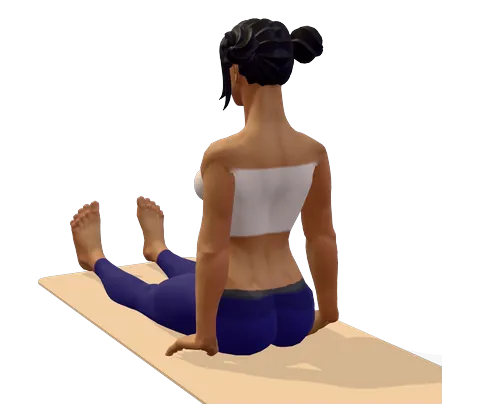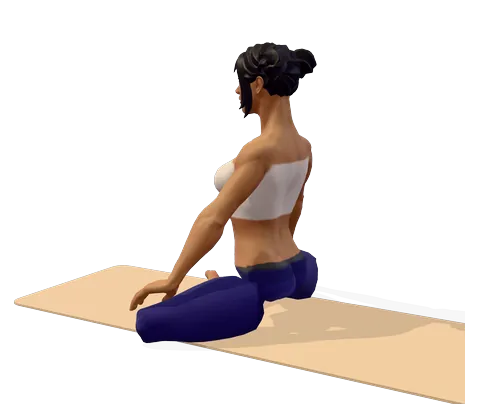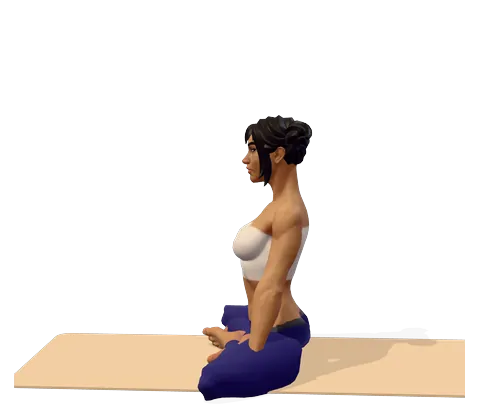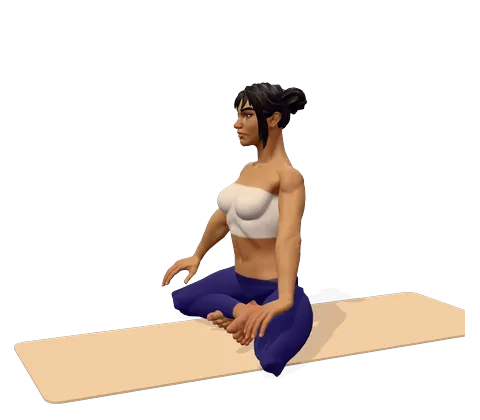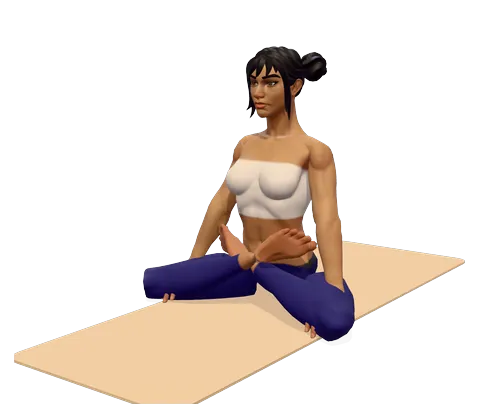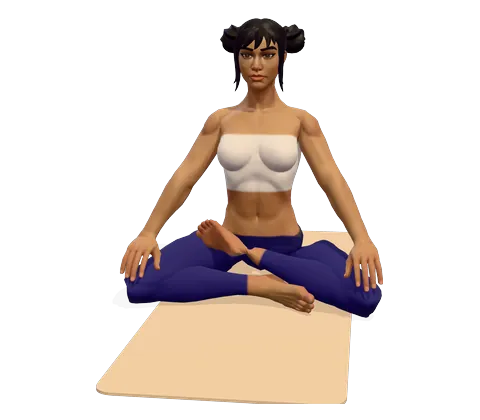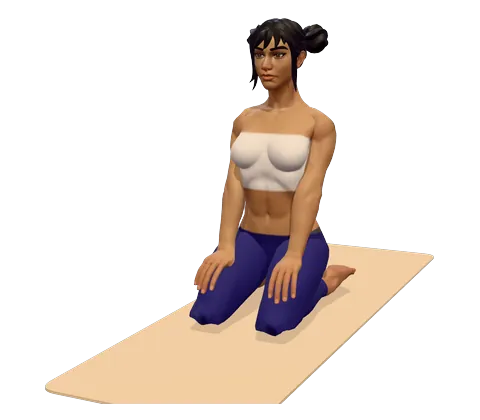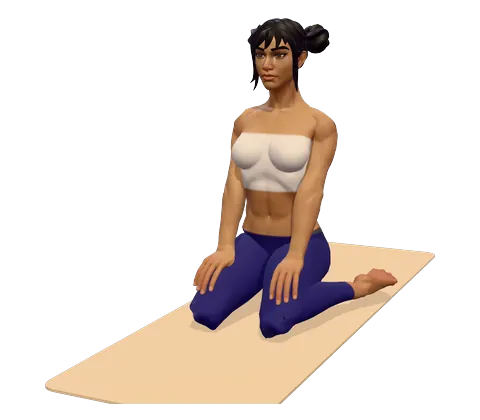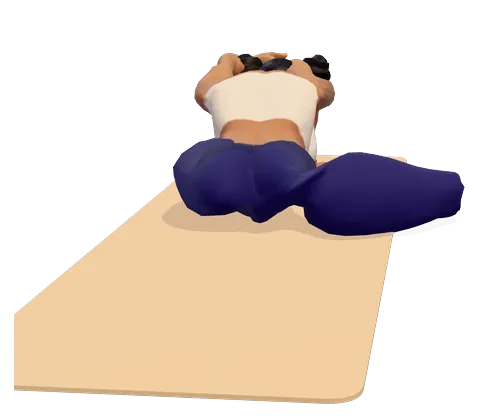
How to do Head-to-Knee Pose step by step
- Sit on the floor with both legs straight in front of you. If your lower back rounds, sit on the edge of a folded blanket.
- Bend your right knee and place the sole of the right foot against your inner left thigh, letting the knee drop out to the side. Put a cushion or block under the knee if it floats high or aches.
- Keep the left leg straight, with the kneecap and toes pointing up. Turn your chest slightly to the left so your breastbone lines up with the middle of the left leg.
- Breathe in and lengthen your spine, sitting tall or reaching the arms up.
- Breathe out and fold forward from the hips over the left leg. Hold your shin, ankle or foot, or a strap around the foot, and keep the back as long as you can.
- Stay for 5–8 slow breaths (30–45 seconds). Lengthen as you breathe in; let the fold settle a little as you breathe out. Relax your neck.
- Breathe in to come up slowly, straighten the right leg and repeat on the other side.
Where you feel Head-to-Knee Pose: what it stretches and strengthens
Fold over the straight leg with a long spine. In the 3D guide, turn on Body guide: areas that stretch glow green and areas that work glow saffron.
Stretches
- Hamstrings
- Lower back
- Side waist
Strengthens
- Front thighs
Benefits and precautions
Benefits
- Stretches the hamstrings and calf of the straight leg and the muscles along the back
- Opens the hip and inner thigh of the bent leg
- Easier to control than a full two-legged forward bend, and it shows you the difference between your left and right side
- A quiet, calming pose that many people use to slow down in the evening
- Gently compresses the abdomen; traditionally practised for digestion and used in yoga routines for period discomfort
- Prepares the body for deeper forward bends such as Paschimottanasana
Avoid or modify if
- Knee injury or knee replacement — support the bent knee on a block or place the foot lower on the calf; skip versions B and C
- Acute low back pain, a disc problem or sciatica that worsens when you fold — keep the back straight and fold very little, or skip it
- Hamstring strain — bend the straight knee and stretch only lightly
- Pregnancy — fold only a little and keep the belly free of the thigh; later in pregnancy simply sit tall
- Recent abdominal surgery or hernia — avoid forward folds until your doctor says it is safe
Head-to-knee pose (Janu Sirsasana) is a one-legged seated forward bend: one leg stays straight, the other folds in with the foot against the inner thigh, and you bend forward over the straight leg. Because only one hamstring is stretched at a time, it is kinder than a full seated forward bend and a good place to learn how to fold from the hips. This guide covers the meaning, alignment, benefits, muscles, the A, B and C variations, the revolved version and who should be careful.
Janu Sirsasana meaning and pronunciation
The Sanskrit name is literal: janu means knee, sirsa (also spelt shirsha) means head, and asana means pose — head-to-knee pose in English. You will also see it written Janu Shirshasana. To pronounce Janu Sirsasana, say "JAH-noo sheer-SHAH-sah-nah". In Hindi, Janu Sirsasana is written जानु शीर्षासन, with the same meaning.
Despite the similar name, it has nothing to do with Sirsasana, the headstand. There is no weight on the head: it is a gentle seated pose that almost anyone can adapt.
How to do Janu Sirsasana correctly (Janu Sirsasana kaise kare)
Start from Staff pose and follow the steps above. The name is misleading: aiming your head at your knee makes most people round the back and strain the neck. Instead:
- Fold from the hips. Think of taking your belly button toward the thigh, not your nose toward the knee.
- Sit high enough. A folded blanket under the sitting bones tilts the pelvis forward, so the back can stay long.
- Keep the straight leg awake. Firm the thigh, flex the foot slightly and keep the kneecap pointing up; do not lock the knee hard.
- Square the chest. The bent-knee side tends to hang back. Turn the chest toward the straight leg before you fold.
- Use a strap. If you cannot reach the foot without rounding, loop a strap or towel around it and walk your hands along it.
How long to hold head-to-knee pose
Hold for 30–45 seconds (5–8 breaths) on each side, once or twice. Stretching is more comfortable after a short warm-up, so place it in the middle or end of a session rather than first thing.
Janu Sirsasana benefits
The main head-to-knee pose benefits are physical: a steady stretch for the hamstrings, calf and back of the straight leg, and an opening for the hip and groin of the bent leg. Long hours of sitting tighten the hamstrings, which pull on the pelvis and can add to lower-back stiffness, so a regular gentle stretch helps many people move more easily.
Forward folds are also quieting. With the eyes down and the breath slow, the pose suits an evening practice or a stress-relief routine. It appears in our yoga for period pain plan, where a soft, supported fold can ease cramping for some women. Traditional texts say the light pressure on the belly supports digestion; that is tradition, not tested fact. The Janu Sirsasana benefits for male and female bodies are the same, and runners and cyclists often like it for tight hamstrings.
Janu Sirsasana muscles
| Stretches | Works |
|---|---|
| Hamstrings and calf (gastrocnemius) of the straight leg | Quadriceps of the straight leg, which keep it firm |
| Erector spinae and quadratus lumborum (lower back) | Hip flexors, which help draw the trunk forward |
| Adductors and groin of the bent leg | Deep core, which supports the spine as you fold |
Head-to-knee pose for beginners: modifications
These Janu Sirsasana variations for beginners keep the stretch without strain:
- Tight hamstrings: bend the straight knee a little and rest it on a rolled blanket.
- Knee discomfort: place the bent-leg foot against the calf instead of the thigh, and support that knee with a block.
- Stiff back: keep your hands on the thigh and just lean forward with a long spine — this is the full pose for you.
- Rest version: put a bolster or cushions on the straight leg and rest your forehead on them.
Janu Sirsasana variations: A, B, C and revolved
In the Ashtanga primary series (see Ashtanga yoga) the pose comes in three forms, often called Janu Sirsasana A, B, C:
- A: the version on this page — heel near the groin, knee out to the side.
- B: you sit on the heel of the bent leg, which lifts the pelvis and changes the stretch.
- C: the toes of the bent leg stay on the floor and the heel turns up toward the belly. It puts real twisting force on the knee; only try it with healthy knees and experienced guidance.
Parivrtta Janu Sirsasana (revolved head-to-knee pose) keeps the same legs but turns the chest up to the ceiling and bends sideways over the straight leg, the top arm reaching for the foot. Parivrtta Janu Sirsasana benefits are mainly a strong stretch along the side of the waist and ribs, much like gate pose. In Yin yoga the same shape is called half butterfly and is held for several minutes with a relaxed, rounded back.
The standing head-to-knee pose from hot yoga is a different pose: you balance on one leg while holding the other foot out in front, so it needs strong balance and very open hamstrings. The standing head-to-knee pose benefits are mainly balance, focus and leg strength.
Janu Sirsasana vs Paschimottanasana
Paschimottanasana folds over both legs at once, so any tightness in either hamstring or the lower back limits you. Janu Sirsasana works one side at a time, lets the pelvis tilt more freely and shows you which side is tighter. Practising Janu Sirsasana and Paschimottanasana in that order is a classic sequence.
Janu Sirsasana precautions and contraindications
The caution box above lists who should avoid or modify it. Two signals to respect: a pulling or burning feeling behind the knee of the straight leg (bend it), and pain inside the bent knee (support it or lower the foot). With a disc problem, rounding forward under load is the risky part, so keep the fold small and the back long, and ask your physiotherapist first.
Preparatory poses and what to do after
Good Janu Sirsasana preparatory poses are reclining hand-to-big-toe pose for the hamstrings and bound angle pose for the hips. Afterwards, gently extend the spine with a tabletop or a small bridge. You can add all of these to a flow in the guided sessions.
जानु शीर्षासन कैसे करें (Janu Sirsasana in Hindi): दोनों पैर सामने सीधे करके बैठें। दायाँ घुटना मोड़कर तलवा बाईं जाँघ के अंदर लगाएँ। साँस लेते हुए रीढ़ सीधी करें और साँस छोड़ते हुए बाएँ पैर पर आगे झुकें, हाथों से पैर या पिंडली पकड़ें। 30–45 सेकंड रुकें, फिर दूसरी तरफ़ करें। जानु शीर्षासन के फायदे (Janu Sirsasana ke fayde): जाँघ के पीछे की मांसपेशियाँ और कमर खिंचती है, मन शांत होता है। घुटने या कमर में चोट हो तो सावधानी से करें।
Health conditions this pose is used for
Yoga for period pain and menstrual cramps · Yoga for irregular periods · Yoga for pms (premenstrual syndrome)
Frequently asked questions
What are the Janu Sirsasana benefits and contraindications?
Benefits: it stretches the hamstrings, calf and back, opens the hip of the bent leg and calms the mind. Contraindications: take care or skip it with a knee injury, a disc problem or sciatica that worsens when you fold, a hamstring strain, recent abdominal surgery or late pregnancy.
Do I have to touch my head to my knee?
No. Keep your back long and fold from the hips. For most people the chest moves toward the thigh long before the head reaches the knee, and forcing it only rounds the spine.
What is the difference between Janu Sirsasana A, B and C?
In A the heel rests near the groin, in B you sit on the heel, and in C the toes stay down and the heel turns up toward the belly. C is hard on the knee and only for experienced students with healthy knees.
How do I do revolved head-to-knee pose?
Set up the legs the same way, then turn your chest up to the ceiling and bend sideways over the straight leg, holding the foot with the lower hand and reaching the top arm overhead.
Is Janu Sirsasana the same as Sirsasana?
No. Sirsasana is the headstand. Janu Sirsasana is a seated forward bend; "janu" means knee.
What is Janu Sirsasana in English?
Head-to-knee pose, sometimes called head-to-knee forward bend.
This page is for general education. Check with your doctor before starting yoga if you are pregnant, have a medical condition or an injury. Stop if you feel pain, dizziness or shortness of breath.