Ashtanga yoga is a demanding, breath-led style in which you move through the same set sequence of poses every time you practise. Each movement is matched to a breath. The word also has an older meaning, covered first.
What is ashtanga yoga? Two meanings (Ashtanga yoga kya hai)
In Sanskrit, ashta means "eight" and anga means "limb", so in English ashtanga yoga means "eight-limbed yoga". In India, and in school syllabuses such as Class 11 physical education, the term refers to the eight limbs of yoga described by Patanjali in the Yoga Sutras. More in what is yoga.
| Limb | Meaning in English |
|---|---|
| 1. Yama | Ethical restraints, such as non-violence and truthfulness |
| 2. Niyama | Personal observances, such as cleanliness and contentment |
| 3. Asana | Steady, comfortable posture |
| 4. Pranayama | Breath control |
| 5. Pratyahara | Drawing the senses inward |
| 6. Dharana | Concentration |
| 7. Dhyana | Meditation |
| 8. Samadhi | Complete absorption |
Everywhere else, the usual ashtanga yoga definition is Ashtanga Vinyasa yoga, the dynamic method taught by K. Pattabhi Jois, whose teachers see the sequence as a doorway to the other seven limbs. The rest of this page is about that method.
Founder and history
Pattabhi Jois (1915–2009) studied with T. Krishnamacharya and opened his ashtanga yoga institute in Mysore, South India, in 1948. Western students arrived from the 1960s, and much of modern "flow" yoga grew out of the method. Some former students have since described forceful or inappropriate hands-on adjustments by Jois, and many teachers now ask before touching a student. You can always say no to an adjustment.
The ashtanga series and the primary series sequence
There are six types of ashtanga yoga series. The primary series (Yoga Chikitsa, "yoga therapy") works on strength and forward bends; the intermediate series (Nadi Shodhana, "nerve cleansing") adds backbends and deeper hip work; four advanced series follow. A full primary practice takes about 90 minutes, and the ashtanga yoga postures (asanas) always run in this order:
- Sun Salutations A and B, usually five of each.
- Standing poses such as Big Toe Pose, Triangle, Side Angle and wide-legged forward bends.
- Seated poses such as Seated Forward Bend, Marichyasana twists and Boat Pose, each joined by a short "vinyasa": chaturanga, upward dog, downward dog, then a jump through to sitting.
- Finishing poses: backbend, shoulder stand, headstand and lotus, then rest.
Three techniques hold ashtanga yoga together: Ujjayi breathing, the energy locks called bandhas, and a fixed gaze point for each pose (drishti). Many classes begin with an opening mantra.
Mysore style or led class?
In a Mysore-style room everyone practises from memory at their own pace, and the teacher adds new poses one at a time when you are ready. In a led class the teacher counts every breath in Sanskrit. A traditional ashtanga yoga daily practice runs six days a week, with rest on Saturdays and new- and full-moon days.
Is ashtanga yoga hard?
Yes, it is one of the most demanding styles. Why is ashtanga yoga so hard? There are dozens of chaturangas in a class, deep forward folds and binds, jumps back and through, and no skipping poses you dislike. Ashtanga yoga does count as strength training for the arms, shoulders and core.
Is ashtanga yoga bad for you? Not for most healthy people who progress slowly. The risk comes from forcing: overuse strain in the wrists, shoulders and hamstring attachments, and knee injuries from pulling into lotus. Bend your knees in every ashtanga yoga forward fold, use a block, and never force a bind.
Ashtanga yoga benefits
Ashtanga Vinyasa yoga has been studied less than gentler styles, so evidence on its health and therapeutic benefits is limited. Small studies and broader yoga research suggest the following, and the benefits for men and women are the same:
- Strength and endurance: the workout benefits of ashtanga yoga come from repeated vinyasas that build upper-body and core strength and raise your heart rate.
- Flexibility: daily forward folds and twists steadily lengthen the hamstrings and hips.
- Mind: the mental and spiritual benefits of ashtanga yoga come from counting breaths and holding a gaze point, a moving meditation.
- Weight loss: ashtanga yoga burns more calories than slow yoga; estimate yours with the yoga calories calculator. Sweating does not "detox" the body — your liver and kidneys do that.
Ashtanga yoga for beginners: how to start
Is ashtanga good for beginners? It can be, if you start small. This quick beginners guide covers the basics: learn Sun Salutation A, then B, then add the standing poses — ashtanga yoga for beginners often means this "half primary series". Useful variations for beginners: drop your knees for chaturanga, bend your knees in folds, and stop when your breath turns ragged.
Choose a gentler style, or ask your doctor first, if you are pregnant, have high blood pressure, heart disease or glaucoma (headstand and strong locks are not for you), osteoporosis, or a wrist, shoulder or knee injury. Most seniors find ashtanga yoga too strenuous and enjoy Hatha yoga more.
A 30-minute ashtanga-style practice at home
This ashtanga yoga sequence for beginners is a shortened home practice. Hold each pose for five breaths.
- Stand in Samasthiti (Mountain Pose) and take five Ujjayi breaths.
- Sun Salutation A three times, then B twice (Chair Pose and Warrior I added).
- Big Toe Pose, Triangle and Extended Side Angle, five breaths each side.
- Wide-legged forward bend, then sit in Staff Pose.
- Seated Forward Bend, Head-to-Knee Pose and a Marichyasana twist.
- Boat Pose three times, then Bound Angle Pose.
- Easy cross-legged seat for ten breaths, then five minutes of Savasana.
Warm up with the Surya Namaskar session in guided practice, or put these poses into the session builder and let the 3D figure and voice keep you on track.
Ashtanga yoga vs vinyasa and hatha yoga
Ashtanga yoga vs vinyasa: Vinyasa flow grew out of Ashtanga and uses the same breath-linked movement, but the order of poses changes every class and music is common. Ashtanga keeps one fixed sequence, so you can measure progress. See Vinyasa yoga.
Ashtanga vs hatha: hatha classes are slower, pause between poses and vary the sequence. Ashtanga is continuous and far more athletic.
Here is ashtanga yoga in Hindi, with its main benefits:
अष्टांग योग (Ashtanga Yoga) — हिंदी में: अष्टांग का अर्थ है "आठ अंग"। पतंजलि के योग सूत्र में ये आठ अंग हैं: यम, नियम, आसन, प्राणायाम, प्रत्याहार, धारणा, ध्यान और समाधि। आज दुनिया में "अष्टांग योग" एक तेज़ शैली भी है जिसमें हर दिन आसनों का एक तय क्रम साँस के साथ किया जाता है। इसके फायदे: ताकत, लचीलापन और एकाग्रता बढ़ती है। शुरुआत सूर्य नमस्कार से करें और ज़बरदस्ती कोई आसन न करें।
Other types of yoga
Poses you will meet in Ashtanga Yoga
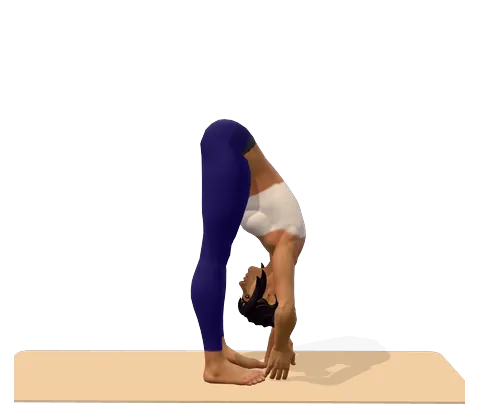 Big Toe PosePadangusthasana
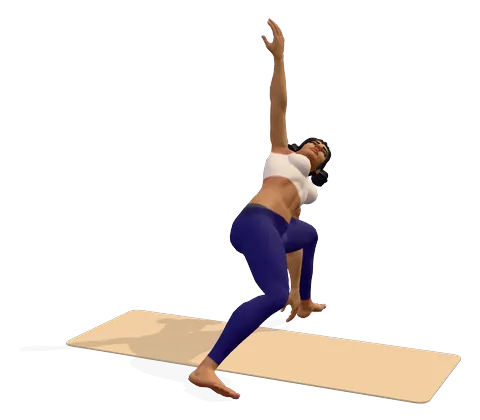 Triangle PoseTrikonasana
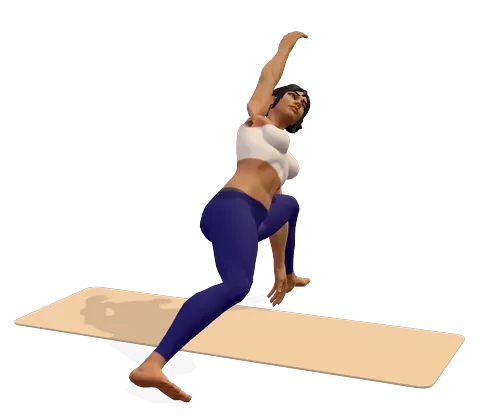 Extended Side Angle PoseUtthita Parsvakonasana
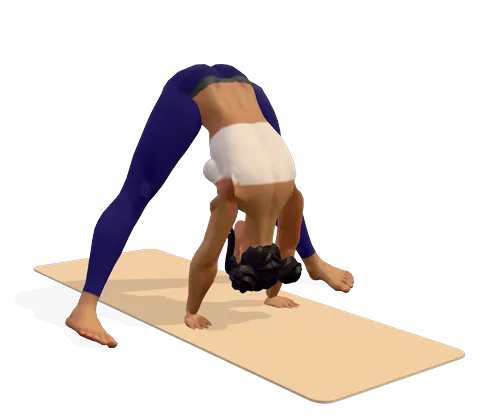 Wide-Legged Forward BendPrasarita Padottanasana
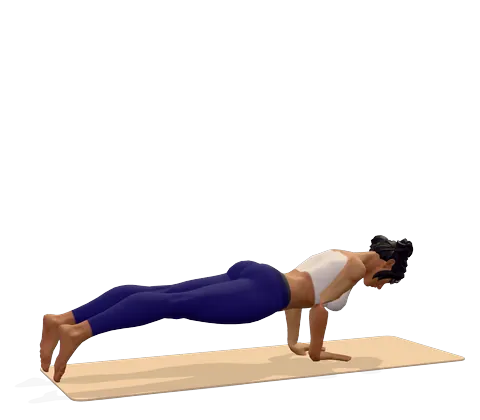 Four-Limbed Staff PoseChaturanga Dandasana
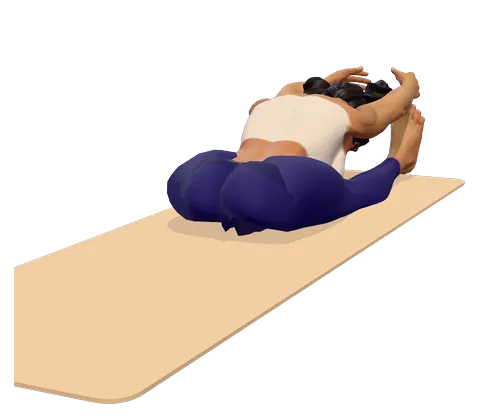 Seated Forward BendPaschimottanasana
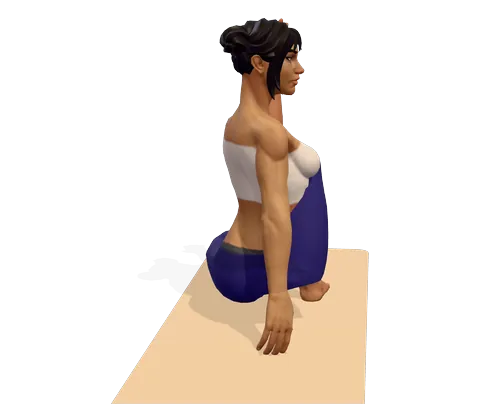 Marichi’s PoseMarichyasana
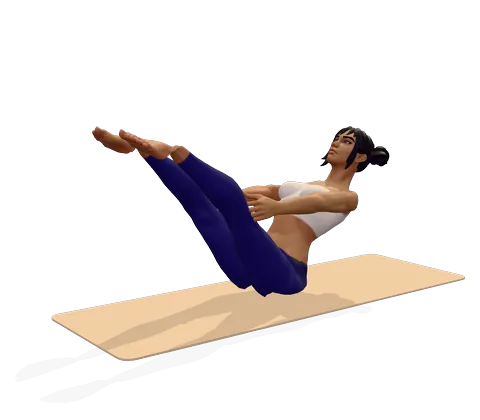 Boat PoseNaukasana
Frequently asked questions
What is ashtanga yoga in simple words?
A set sequence of poses done in the same order every time, each movement linked to a breath. The word also means the eight limbs of yoga described by Patanjali.
Is ashtanga yoga the same as hot yoga?
No. It is practised in a normal room; you get hot from the effort, not from heaters.
What are the 8 steps of ashtanga yoga?
Yama, niyama, asana, pranayama, pratyahara, dharana, dhyana and samadhi: ethics, self-discipline, posture, breath control, turning the senses inward, concentration, meditation and absorption.
Is ashtanga yoga good for beginners?
Yes, if you start with Sun Salutations and a few standing poses and add more slowly. Beginners who jump straight into the full primary series often strain their wrists or hamstrings.
What is the difference between ashtanga and vinyasa?
Both link movement and breath. Ashtanga follows a fixed sequence; vinyasa classes change the poses and order each time.
How often should I practise ashtanga?
Traditionally six days a week. Beginners do well with three short sessions a week, building up as strength and recovery allow.