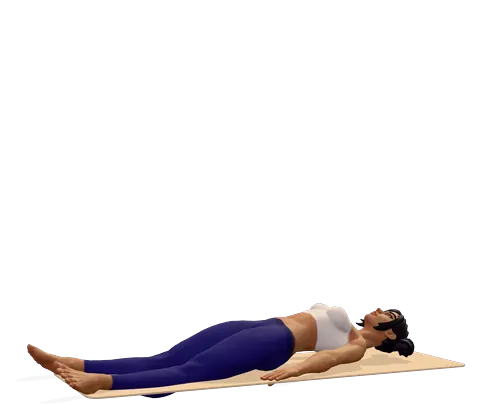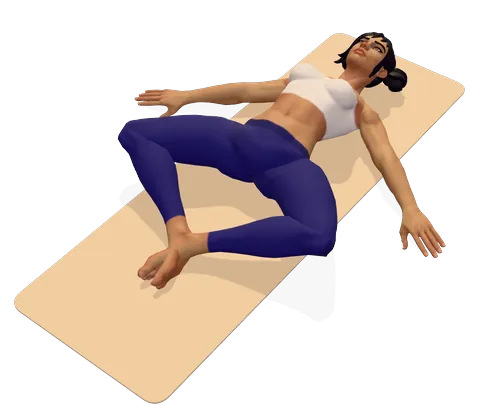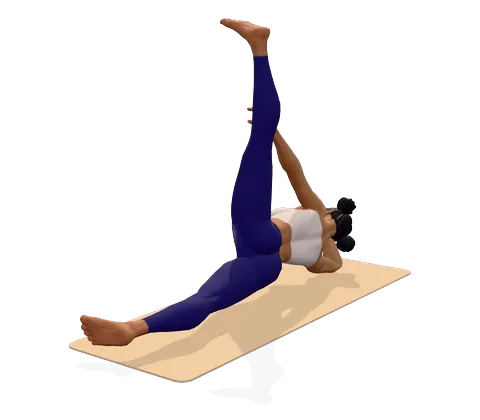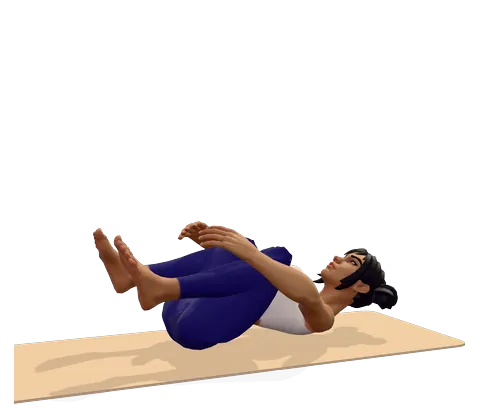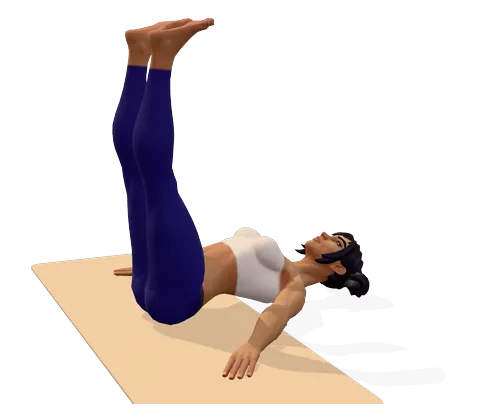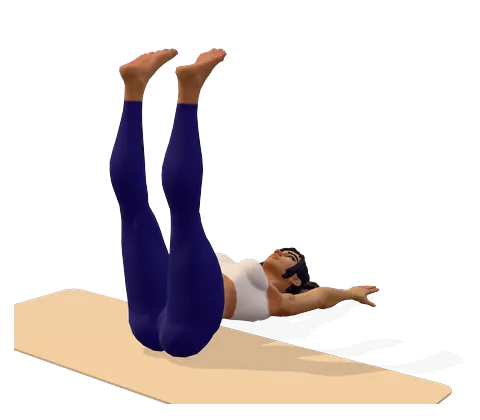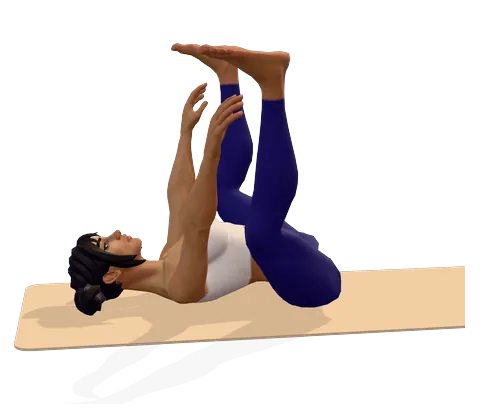
How to do Happy Baby Pose step by step
- Lie on your back on a mat. Breathe out and hug both knees toward your chest.
- Open your knees a little wider than your body, bringing them toward your armpits.
- Point the soles of your feet up to the ceiling so your ankles sit right above your knees and your shins are vertical.
- Hold the outer edges of your feet with your hands (or your ankles, shins or the backs of your thighs if your feet are far away).
- Gently draw your knees down toward the floor with your hands while you press your feet up into your hands. Keep your tailbone and lower back heavy on the mat.
- Relax your shoulders and the back of your head on the floor. Stay for 5–10 slow breaths (30–60 seconds); you can rock softly from side to side.
- To come out, let go of your feet, bring your knees together and place your feet on the floor. Rest for a few breaths.
Where you feel Happy Baby Pose: what it stretches and strengthens
Pull your feet down and let your lower back melt. In the 3D guide, turn on Body guide: areas that stretch glow green and areas that work glow saffron.
Stretches
- Inner thighs
- Glutes
- Lower back
Benefits and precautions
Benefits
- Stretches the inner thighs, groin and the back of the hips
- Gently releases the lower back and lets the spine rest on the floor
- Helps relax the pelvic floor and the hips after sitting or running
- A calming pose for the end of a session or before bed
- Prepares the hips for squats and seated poses
Avoid or modify if
- Pregnancy after the first trimester — keep it short, or ask your midwife; skip it if lying on your back makes you dizzy
- Knee injury — hold the backs of your thighs instead of your feet
- Hip replacement — ask your surgeon before bending the hip this deeply
- Neck pain — put a folded blanket under your head and keep the head on the floor
- Recent abdominal surgery or a hernia
Happy baby pose (Ananda Balasana) is a gentle hip opener done on your back. You bend your knees wide, point your soles to the ceiling and hold your feet, just as babies do when they play with their toes. It stretches the inner thighs and hips, lets the lower back rest, and usually feels good straight away. Below you will find how to do happy baby pose correctly, what it stretches, the benefits, easier versions and when to skip it.
What is happy baby pose in yoga?
Happy baby pose is a supine hip stretch that sits near the end of many yoga sessions, after the active standing work and before relaxation. The happy baby pose Sanskrit name is Ananda Balasana: ananda means "bliss" or "happiness", bala means "child" and asana means "pose". Some teachers use the name happy child pose, or dead bug pose in more athletic classes.
The name is literal: babies strike a happy baby pose naturally when they lie on their backs and grab their feet, before they learn to sit. Adults lose that ease through years of sitting, which is part of why the shape feels so freeing again.
In Hindi, the happy baby pose meaning is आनंद बालासन: "the pose of the happy child".
How to do happy baby pose correctly
The steps above show the full happy baby pose step by step. These happy baby pose cues keep the alignment right:
- Ankles over knees. Your shins should point straight up. If the feet drift toward your face or out to the sides, the stretch moves out of the hips.
- Push and pull. Press your feet up into your hands while your hands draw the knees down. This gentle tug-of-war deepens the stretch without force.
- Heavy tailbone. Let the lower back and sacrum stay on the mat. If your tailbone lifts, ease off.
- Shoulders down. Happy baby pose shoulders should be relaxed on the floor. If they lift, hold your ankles or shins instead of your feet.
- Soft breath. Breathe into the belly and let the groin soften a little more with each exhale.
Happy baby pose: how long to stay
Stay for 30–60 seconds (5–10 breaths) in an active class. In a slow, yin-style or bedtime practice you can stay 2–3 minutes. Rocking gently from side to side massages the muscles along the spine.
Happy baby pose benefits
What does happy baby pose do? It opens the hips in a position where gravity and your arms do most of the work, so you can relax into the stretch.
Hips, inner thighs and groin
The main benefits of happy baby pose are for tight hips and inner thighs, common after long hours of sitting, running or cycling. It is one of the poses in our yoga for hip pain and tight hips plan, and it prepares the hips for deep squats such as garland pose, which has the same shape turned upright.
Happy baby pose for lower back pain
Lying on your back with the knees drawn up lets the lower back flatten and rest, and gentle rocking often feels soothing. Many people with a stiff lower back enjoy it, and it fits well next to the poses in our yoga for back pain plan. With sciatica, happy baby pose is best tried one leg at a time; stop if pain travels down your leg.
Pelvic floor, digestion and calm
Happy baby pose for the pelvic floor is popular with pelvic health physiotherapists, who use it to help people relax tight pelvic floor muscles. If your pelvic floor is weak or you have a prolapse, ask a specialist what suits you. For trapped gas, knees-to-chest shapes like happy baby pose and wind-relieving pose can make the belly feel easier. And because it is slow and restful, it helps you wind down before corpse pose or sleep.
Happy baby pose benefits for men, women and weight loss
The benefits are the same for everyone. Men often have tighter hips and hamstrings, so they may need the modified version with a strap at first. For women, the gentle pelvic opening is often welcome during period discomfort. Happy baby pose benefits for weight loss are small: it is a relaxing stretch, not a calorie-burning exercise.
Happy baby pose anatomy: what does it stretch?
| Area | Muscles stretched |
|---|---|
| Inner thighs | Adductors (groin muscles) |
| Back of the hips | Gluteus maximus and the deep hip rotators |
| Back of the legs | Hamstrings, more as you straighten the legs |
| Lower back | Muscles along the lower spine, which lengthen as the tailbone releases |
If you sit with an anterior pelvic tilt (a large arch in the lower back), happy baby pose teaches the pelvis to rest in a more neutral position, though strengthening the belly and glutes matters just as much.
Happy baby pose variations and modifications
- Half happy baby pose: keep one foot on the floor and hold the other foot. This one-sided version is easier on the hips and the lower back and a good happy baby pose beginner option.
- With a strap: loop a strap or towel around each foot if you cannot reach. Modified happy baby pose can also mean holding the backs of the thighs.
- Against a wall: lie with your buttocks near a wall and press the soles of your feet into it. The wall holds your legs, so your arms can rest.
- Happy baby pose with straight legs (advanced): hold the big toes and slowly straighten both legs out to the sides, stretching the hamstrings and inner thighs strongly.
Why does happy baby pose hurt?
If happy baby pose hurts, the cause is usually one of these: pinching at the front of the hip (bring the knees less deep or a little wider), strain in the knees (hold the thighs, not the feet), a lifting tailbone (ease off) or a sore neck (put a blanket under the head). Sharp pain in the hip joint or groin, or pain after a hip replacement, means stop and ask a physiotherapist.
Happy baby pose and child pose: similar poses and a short sequence
Happy baby pose and child's pose have similar names and a similar feeling of rest, but child's pose folds you forward over your knees while happy baby opens the hips on your back. A happy baby pose alternative with the same calming effect is reclining bound angle pose. A simple evening sequence: child's pose, a supine twist, happy baby, then corpse pose. You will find happy baby in the Hip Opener and Bedtime sessions on our guided sessions page.
In pregnancy, happy baby pose is usually fine in the first trimester. Later on, keep it short, open the knees wide around the belly and roll to your side if you feel dizzy or short of breath. Children love it too, so happy baby pose yoga for kids is a playful way to end a session.
आनंद बालासन (Ananda Balasana) — हिंदी में: पीठ के बल लेटें और दोनों घुटने छाती की ओर लाएँ। घुटनों को थोड़ा फैलाकर बगलों की ओर ले जाएँ, तलवे छत की ओर रखें और हाथों से पैरों के बाहरी किनारे पकड़ें। कमर ज़मीन पर टिकी रहे; 30–60 सेकंड तक धीरे-धीरे साँस लें। इसके फायदे: कूल्हे और जाँघों के अंदर का हिस्सा खुलता है, कमर को आराम मिलता है और मन शांत होता है। घुटने या कूल्हे की सर्जरी के बाद डॉक्टर से पूछकर ही करें।
Health conditions this pose is used for
Yoga for hip pain and tight hips · Yoga for spinal stenosis · Yoga for spondylolisthesis · Yoga for gas and bloating
Where this practice is used
Chakras: Svadhisthana (Sacral Chakra)
Frequently asked questions
What is happy baby pose good for?
It stretches the inner thighs, groin and hips, lets the lower back rest on the floor and helps you relax. It is often used at the end of a yoga session or before sleep.
How long should you hold happy baby pose?
Hold it for 30–60 seconds (5–10 breaths). In a slow or bedtime practice you can stay for 2–3 minutes.
Is happy baby pose good for lower back pain?
Many people find it soothing because the lower back can rest and lengthen. Keep the tailbone down, rock gently, and stop if pain increases or spreads down a leg.
What if I cannot reach my feet?
Hold your ankles, shins or the backs of your thighs, or loop a strap around each foot. You can also do half happy baby with one leg at a time.
Can I do happy baby pose during pregnancy?
Usually yes in the first trimester. Later, keep it short, open the knees wide and roll onto your side if you feel dizzy. Ask your midwife if you are unsure.
Does happy baby pose help the pelvic floor?
It can help you relax tight pelvic floor muscles. If you have a weak pelvic floor or a prolapse, ask a pelvic health physiotherapist which exercises suit you.
What is happy baby pose called in Hindi?
It is called आनंद बालासन (Ananda Balasana): "ananda" means happiness and "bala" means child. The Hindi box on this page sums up the steps and happy baby pose benefits in Hindi.
This page is for general education. Check with your doctor before starting yoga if you are pregnant, have a medical condition or an injury. Stop if you feel pain, dizziness or shortness of breath.