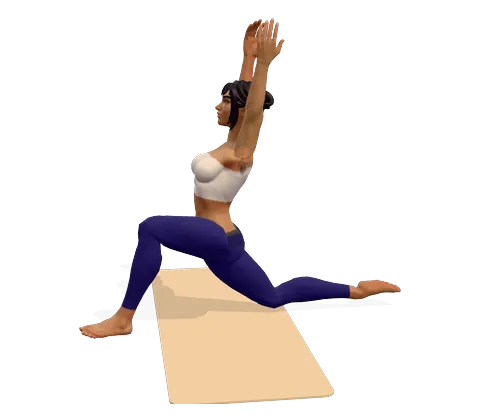
How to do Low Lunge Pose step by step
- Start on your hands and knees, or step back from a standing forward bend. Step your left foot forward between your hands so the left knee sits over the left ankle.
- Lower your right knee to the mat and slide the right leg back until you feel a stretch at the front of the right hip. Rest the top of the right foot on the floor. Pad the knee with a folded blanket if it feels hard.
- Bring your hands to your left thigh and lift your chest upright. Draw your lower belly gently in and let your tailbone point down.
- Breathing in, sweep your arms up beside your ears, palms facing each other, shoulders relaxed.
- Breathing out, let your hips sink forward and down. Keep the front knee over the ankle rather than past the toes, and lift through the chest.
- Hold for 5 slow breaths (about 30 seconds). Gaze forward, or slightly up if your neck is comfortable.
- To come out, bring your hands down beside the front foot, tuck the back toes and step back to hands and knees or downward dog. Repeat with the right foot forward.
Where you feel Low Lunge Pose: what it stretches and strengthens
Sink your hips forward and feel the front of the back hip open. In the 3D guide, turn on Body guide: areas that stretch glow green and areas that work glow saffron.
Stretches
- Hip flexors
- Front thighs
- Chest
Strengthens
- Glutes
Benefits and precautions
Benefits
- Stretches the hip flexors and front of the thigh on the back leg
- Opens the groin and hips, which tighten with long sitting
- Strengthens the front leg, buttocks and core for balance
- Lifts and opens the chest and shoulders when the arms reach up
- Prepares the body for deeper hip openers, backbends and the splits
- Can relieve stiffness in the front of the hips linked to sitting-related back discomfort
Avoid or modify if
- Knee pain in the back knee — pad it with a blanket, or keep the back knee lifted in a high lunge
- Recent knee, hip or groin injury — ask your physiotherapist first
- Lower back pain that worsens when you arch — keep your hands on your thigh and your chest upright
- Neck problems — keep your gaze forward instead of looking up
- Poor balance, high blood pressure or dizziness — keep hands on blocks or hips instead of overhead
- Pregnancy — usually fine with a wider stance and hands on blocks; ask your doctor or midwife
Low lunge pose (Anjaneyasana) is a kneeling lunge: one foot forward, the back knee on the mat and the arms reaching up. It stretches the hip flexors that shorten when we sit, strengthens the legs and gently lifts the chest. This guide explains how to do low lunge correctly, its benefits, the muscles used, crescent lunge and twist variations, how it differs from similar lunges, and who should adapt it.
What is low lunge pose?
A low lunge is any lunge where the back knee rests on the floor. In yoga the arms-up version is called Anjaneyasana, and many studios call it low crescent lunge or crescent moon pose because the body curves slightly like a new moon. The Sanskrit name comes from Anjaneya, a name of Hanuman (son of Anjani), the monkey god famous for his great leap, plus asana, "pose". So the Anjaneyasana meaning in English is "Hanuman's pose" — fitting, since this lunge is the first step toward the splits, Hanumanasana.
Anjaneyasana pronunciation: ahn-jah-nay-AHS-uh-nuh. In Hindi, low lunge pose is written अंजनेयासन.
How to do low lunge pose correctly (Anjaneyasana kaise kare)
Follow the steps above, then check these alignment points. They are the same low lunge pose cues a teacher would give you in class:
- Find the right length. If the front knee shoots far past the ankle, walk the front foot forward. If you feel nothing at the front of the back hip, slide the back knee further away.
- Tuck the tailbone slightly. The stretch you want is at the front of the back hip. Gently drawing the tailbone down moves it there and protects the lower back from over-arching.
- Hips square. Point both hip bones forward. The back hip likes to swing open.
- Lift out of the waist. Arms reach up from the sides of the ribs, not by hunching the shoulders.
- Protect the kneecap. The back knee should rest just above the kneecap, on the lower thigh, and a folded blanket makes a big difference.
How long to hold low lunge
Hold for 30 seconds to 1 minute per side. In a flowing class you may pass through it for a single breath; for a real hip-flexor stretch, stay longer and let the hips sink a little more with each exhale.
Low lunge pose benefits
What is a low lunge good for? Its main job is to open the front of the hip. The deep hip flexor (psoas) connects the spine to the thigh, so when it is tight from sitting it can pull on the lower back. Anjaneyasana benefits include:
- Tight hips and hip flexors: one of the core poses in our yoga for hip pain and tight hips plan and in the Hip Opener session.
- Leg strength and stability: the front thigh and buttock work to hold you steady, and the kneeling position makes balance easy.
- A gentle backbend: with the arms up, the chest lifts and the belly lengthens, which can help counter slouching.
- Runners, cyclists and desk workers: all tend to have short hip flexors; a regular lunge stretch helps balance this.
The benefits for women and men are the same. Some women find hip openers like this comfortable during periods, but skip it if it causes discomfort.
Low lunge muscles used
| Stretches | Strengthens |
|---|---|
| Hip flexors (psoas, iliacus) of the back leg | Front-leg quadriceps and gluteal muscles |
| Quadriceps, especially rectus femoris, of the back leg | Deep core muscles that steady the pelvis |
| Chest, abdomen and sides of the waist (arms up) | Back muscles and shoulders (arms overhead) |
Low lunge pose for beginners: Anjaneyasana modifications
- Hands on blocks: keep your hands on blocks either side of the front foot. This is the easiest start and the same shape as equestrian pose in Surya Namaskar.
- Hands on the front thigh: an upright version that takes pressure off the lower back.
- Low lunge with a chair: hold a chair beside you if balance is tricky.
- Blanket under the back knee: the simplest fix for sensitive knees.
Low lunge pose variations
- Cactus arms: bend the elbows to 90 degrees and open the chest.
- Side bend: reach the arm on the back-leg side up and over toward the front-leg side to stretch the waist.
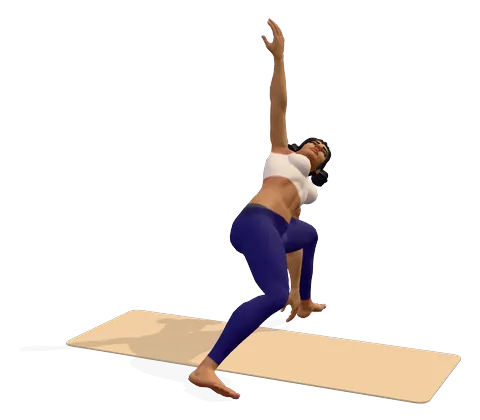
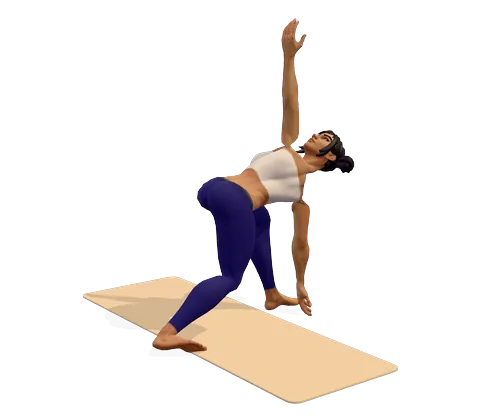
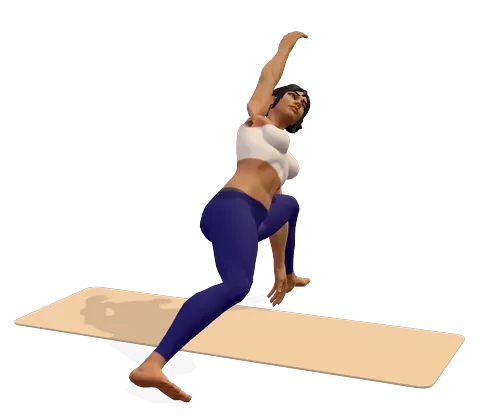
- Crescent lunge twist (revolved low lunge): with the back knee on the floor, bring the hands to prayer and hook the opposite elbow outside the front knee. For an open twist, place one hand down and reach the other arm up. Avoid deep twists in pregnancy.
- Quad stretch: bend the back knee and hold the back foot — a step toward king pigeon shapes.
- Low lunge to pyramid or half splits: shift the hips back over the back knee and straighten the front leg to stretch the hamstrings.
Crescent lunge vs low lunge, high lunge and warrior 1
The names overlap, so here is a simple guide:
- Low lunge (Anjaneyasana): back knee down, arms up — steady and restful.
- High lunge or crescent lunge: back knee lifted, back heel up, arms overhead. It needs more leg strength and balance. In the crescent lunge vs high lunge debate, most teachers use the two names for the same pose.
- Crescent lunge vs warrior 1: in Warrior I the back heel is down and the back foot turns out; in a crescent lunge the back heel lifts and the foot points straight forward.
- Low lunge vs lizard pose: in lizard the hands (or forearms) go inside the front foot and the hips sink lower — a deeper hip opener.
- Anjaneyasana vs Ashwa Sanchalanasana: equestrian pose keeps the hands on the floor and the gaze forward; low lunge lifts the torso and arms.
Low lunge in a sequence
Warm up with cat–cow and a few rounds of Surya Namaskar, which already include a lunge. Move from downward dog into low lunge, then half splits or a twist, and back to downward dog before the other side. You can play the Hip Opener session in the guided sessions, with the 3D figure and voice leading each side.
Low lunge pose precautions and contraindications
Anjaneyasana is gentle, but the back knee takes weight, so always pad it. If you feel a pinch in the lower back, lower your arms and tuck the tailbone more. Sharp knee or groin pain means come out. If you have had a recent hip or knee operation, follow your surgeon's or physiotherapist's advice before lunging.
अंजनेयासन (Anjaneyasana) — हिंदी में: बायाँ पैर आगे रखें और दायाँ घुटना पीछे ज़मीन पर टिकाएँ। आगे का घुटना टखने के ऊपर रहे। साँस लेते हुए दोनों हाथ कानों के पास ऊपर उठाएँ और कूल्हों को धीरे से नीचे व आगे जाने दें। 30 सेकंड रुकें, फिर दूसरी ओर करें। अंजनेयासन के फायदे: कूल्हे और जाँघ के आगे की मांसपेशियाँ खुलती हैं, पैर मज़बूत होते हैं और छाती खुलती है।
Health conditions this pose is used for
Yoga for desk workers and sitting all day · Yoga for hip pain and tight hips · Yoga for plantar fasciitis and heel pain · Yoga for leg cramps · Yoga for jet lag and travel fatigue
Where this practice is used
Chakras: Svadhisthana (Sacral Chakra)
Frequently asked questions
What is Anjaneyasana and its benefits?
Anjaneyasana (low lunge pose) is a kneeling lunge with the arms raised. It stretches the hip flexors and thighs, strengthens the legs and core, opens the chest and prepares you for backbends and the splits.
Is low lunge good for beginners?
Yes. With the back knee down and hands on blocks or the front thigh, it is one of the easiest lunges and a good first hip opener.
How long should I hold a low lunge?
Hold 30 seconds to 1 minute on each side for a good hip-flexor stretch. In a flow you may hold it for a single breath.
What is the difference between crescent lunge and low lunge?
In a low lunge the back knee rests on the floor. In a crescent (high) lunge the back knee lifts and the back heel is up, so it needs more strength and balance.
Why does my back knee hurt in low lunge?
Usually the kneecap is pressing into a hard floor. Fold a blanket under the knee and rest on the lower thigh just above the kneecap. If it still hurts, practise a high lunge instead.
Does low lunge help lower back pain?
It may ease back discomfort caused by tight hip flexors from sitting. Keep the tailbone slightly tucked, and stop if arching increases your pain. For ongoing back pain, see a physiotherapist.
What does Anjaneyasana mean?
Anjaneya is a name for Hanuman, son of Anjani, and asana means pose — so it is "Hanuman’s pose", a first step toward the splits.
This page is for general education. Check with your doctor before starting yoga if you are pregnant, have a medical condition or an injury. Stop if you feel pain, dizziness or shortness of breath.